
Add real ambiance and zone heat to your Shelby County home.
With a heating season about as demanding as a long, cold Midwest winter and winter lows near 10°F, Shelby County homes need every bit of heat they can get in the coldest stretches—electric units add fast, no-mess warmth to a bedroom, sunroom, or finished basement without touching your furnace. Find the right unit and connect with a trusted local dealer.
Every Project Starts From One of These Five Situations
Simple, flexible heat for rural Iowa homes.
Shelby County sits in USDA climate zone 5A, with average winter lows around 10°F and a heating season that stretches from October into April—comparable to what you'd see in Madison, Wisconsin. Most homes here already lean on wood (oak, hickory, maple, and walnut are all common locally) or propane for primary heat, but electric fireplaces and inserts have carved out a real niche as the easy add-on: no venting, no gas line, no chimney sweep on the calendar.
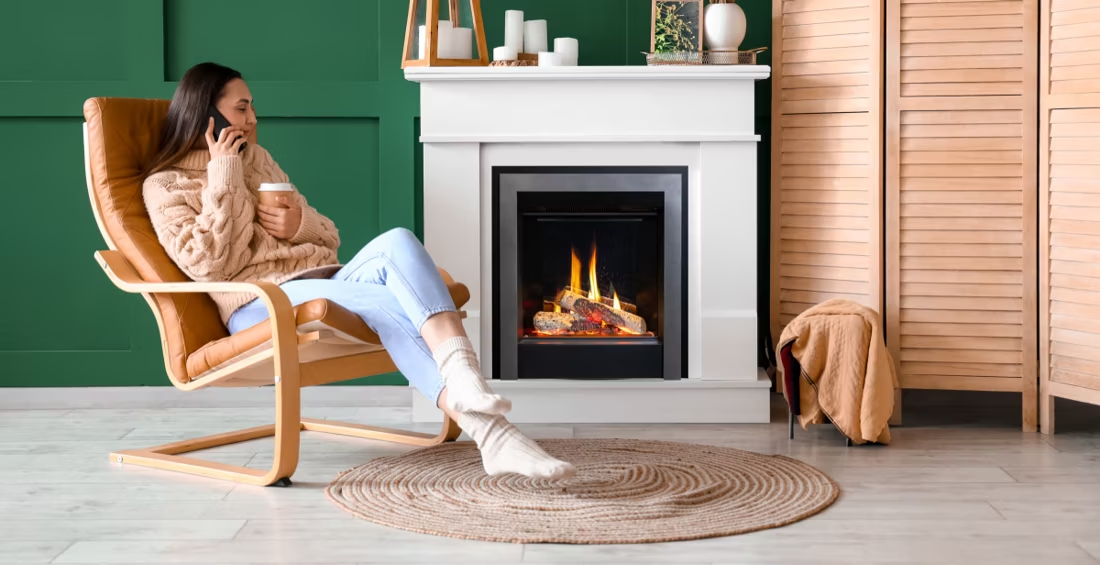
For a farmhouse outside Harlan or a ranch home in Elk Horn or Kimballton, an electric unit is often the fastest way to warm up a single room—a converted porch, a basement rec room, a bedroom on the far end of the ductwork—without an HVAC contractor or a permit fight. Plug-in models need nothing but an outlet; built-in units need a dedicated circuit, which most local electricians handle in an afternoon. Either way, it's supplemental heat and ambiance, not a wood-stove replacement, and that's exactly the role it plays well in a county where the primary heat source is usually something else.
Three steps. No salesperson until you're ready.
Tell us about your project
Your zip code, your situation, and the fuel you're leaning toward—or let the answers point you to one.
See what's actually available
The brands dealers within 100 miles genuinely carry—real options, never a catalog mirage.
Get your dealer & Project Guide
A trusted local dealer, plus the free Project Guide & Parts List that names every component of the job.
Frequently Asked Questions
How much does an electric fireplace installation cost in Shelby County?
Most electric fireplace and insert installations in Shelby County run $400 to $1,200. A plug-in freestanding unit or a simple insert into an existing mantel surround sits at the low end—often just the cost of the unit itself plus an hour of an electrician's time if a dedicated circuit is wanted. Built-in wall units or larger linear models that require new framing, a dedicated 120V or 240V circuit, and finish carpentry land at the higher end. There's no venting or chimney work to factor in, which is why electric installs cost a fraction of what a wood or gas project runs in this same climate.
Will an electric fireplace actually heat my house?
An electric fireplace will heat a room, not a house. Most units are rated for 400 to 1,500 square feet depending on ceiling height and insulation, and they work by cycling a built-in heater—typically 1,500 watts, the standard max for a household circuit. In a Shelby County winter with lows around 10°F, that's enough to comfortably raise the temperature in a bedroom, den, or basement space, but it won't keep pace with a whole farmhouse the way a wood stove or the home's furnace does. Think of it as zone heat: warm the room you're actually using and turn down the thermostat everywhere else.
Do I need a permit for an electric fireplace in Shelby County?
Plug-in electric fireplaces typically don't require a permit since there's no venting, gas line, or structural work involved—you're just plugging into an existing outlet. Built-in electric fireplaces that require a new dedicated circuit generally need an electrical permit, since that's new wiring work. A licensed local electrician pulling the permit is the simplest path, and most hearth retailers who sell built-in electric units can coordinate that as part of the install rather than leaving you to sort it out with the county on your own.
What's the difference between a plug-in electric fireplace and a built-in unit?
A plug-in electric fireplace is freestanding or a simple insert that runs on a standard outlet—it can go anywhere in the house and you can move it if you rearrange a room. A built-in unit is installed into a wall or custom surround, wired to a dedicated circuit, and designed to look more like a permanent fixture, similar to a gas or wood-burning fireplace. For a rental or a room you're not ready to commit to, plug-in is the practical choice. For a primary living space in a Harlan or Portsmouth home where you want it to look like it's always been there, built-in is worth the extra electrical work.
How does an electric fireplace compare to a wood stove for a Shelby County winter?
Wood stoves burning local oak, hickory, or maple can heat an entire home and keep running through a power outage—a real consideration in rural Shelby County where outages can stretch for hours during winter storms. Electric fireplaces need power to run, so they go dark exactly when you might want backup heat most. What electric does well is convenience and zero maintenance: no wood to split and stack, no chimney to sweep, no ash to haul out, and instant on-off operation with a remote. For most Shelby County homes, electric works best as a supplement to an existing wood or propane heat source, not a replacement for it.
Are electric fireplaces expensive to run?
A typical 1,500-watt electric fireplace running on high for several hours a day costs somewhere in the range of a few dollars a week to run, depending on your local electric rate and how often you use it. That's cheaper than most people expect, largely because the flame effect itself uses very little power—nearly all the electricity goes to the heating element, and most units let you run the flame visual with the heater off, which costs pennies. Compared to running a whole-house furnace longer to heat a room you're not using, an electric fireplace in that one room can actually reduce your overall heating cost.
Can an electric fireplace be installed in an existing masonry fireplace?
Yes—electric inserts are one of the more popular options for homeowners in Shelby County's older farmhouses who have an existing wood-burning fireplace they no longer use but don't want to remove. The insert slides into the existing opening, plugs into a nearby outlet or a new dedicated circuit, and gives you the look of a fire without cutting wood, cleaning ash, or dealing with the drafts that come with an open masonry chimney. It's a common upgrade for a fireplace that's mostly decorative anyway.
Do electric fireplaces need any maintenance?
Very little. There's no chimney to sweep, no gas line to inspect, and no ash to remove. Occasional dusting of the unit and an annual check that the fan and heating element are running cleanly covers most of it. LED-based flame effects last for years without bulb replacement in most current models. This low-maintenance profile is a big part of why electric units are a popular add-on in Shelby County homes where the primary heat source—wood or propane—already demands its own seasonal upkeep.
Electric vs. gas fireplace—which is right for my Shelby County home?
Gas fireplaces put out real, substantial heat and can serve as a genuine secondary heat source during a cold snap or power outage if you're on propane, which is common outside Harlan's limited natural gas service area. Electric fireplaces put out less heat, require no gas line or venting, and cost far less to install and run for ambiance. If you're looking to meaningfully offset heating costs in a room you use often, gas is usually the stronger investment despite the higher upfront cost. If you want a low-cost, low-hassle way to add warmth and a fire-like look to a bedroom, basement, or den, electric is the simpler and cheaper path. A local dealer can walk through both options against your specific room and budget.
Can I put a TV above my fireplace?
Yes—with an asterisk. Fireplaces are hot and TVs don't like heat. Either put a mantel between them to deflect rising warmth, or choose a fireplace with heat-management technology that creates a cool zone on the wall above—the wall stays around 125 degrees, barely warm, while the room still gets full heat. If you like clean lines and don't want a mantel, heat management is the answer.
Does an electric fireplace need a vent or chimney?
No—that's its superpower. An electric fireplace needs a wall and an outlet, period. No vent pipe, no gas line, no clearances to design around, which is why it works in bedrooms, offices, apartments, and walls where venting a gas or wood unit would be impractical or impossible. Installation is typically the simplest and least expensive of any fireplace type.
Can I install a fireplace myself?
If you're putting a fire in your house on purpose, it's best to work with an expert. Unless you're genuinely experienced in framing, gas line, vent pipe, and the national code on clearances to combustibles, have a professional do it—and ideally the same company that sells you the fireplace, so warranty, service, and liability all live under one roof.
How much should I budget for a fireplace?
For an average home—covering the fireplace, the vent pipe, and basic installation—a budget between $3,900 and $5,500 gives you a lot of options across wood, gas, and pellet. By the time you add finish work, gas line, and electrical, the average complete installation lands between $5,000 and $12,000 all-in. In a remodel or new build, a good rule is to put about 2.5% of the total project cost toward the fireplace.
Find your electric fireplace in Shelby County.
Tell us a bit about your home and we'll match you with the right electric fireplace or insert, plus a free Project Guide & Parts List—and connect you with a trusted local dealer in Shelby County.
Find Your Fireplace →