
Pellet stoves are the exception, not the rule, in Osceola County.
Propane and natural gas run this stretch of northwest Iowa farm country, but a handful of Osceola County homeowners still choose pellet heat for supplemental warmth or backup during outages. We'll connect you with a regional dealer who actually carries and installs it.
Every Project Starts From One of These Five Situations
Prairie farm country runs on propane, not pellets.
Osceola County sits in the far northwest corner of Iowa around Sibley, with Ocheyedan, Ashton, Harris, and May City rounding out a county of just under 4,500 people. This is flat, open prairie farmland—climate zone 6A, a winter heating season on par with some of the coldest in the country, and winter lows that average around 5°F, colder in many years than Fargo, North Dakota. It's a legitimately harsh heating climate. But the tree cover that supports a wood-and-pellet culture elsewhere just isn't here: oak, hickory, maple, and walnut grow in scattered river-bottom stands along the Ocheyedan River and in farmstead windbreaks, not in the kind of forest acreage that produces cutting permits, sawmills, or a pellet-stove retail presence.
Add to that the fact that propane is the default rural heating fuel across this part of Iowa, and dedicated pellet stove dealers are genuinely scarce in Osceola County—most hearth retailers who stock pellet equipment are based farther out in Sioux Falls or Sioux City. That doesn't mean pellet heat is off the table. Regional pellet brands like Lignetics and Indeck Energy Services supply farm co-ops and ag suppliers across northwest Iowa, so fuel is obtainable even where dealers aren't common. If you're set on a pellet stove for supplemental heat in a shop, a rural outbuilding, or as backup warmth during winter power interruptions, a regional dealer can size the unit correctly and give you a firm installed quote—we just won't pretend it's the mainstream choice here.
Three steps. No salesperson until you're ready.
Tell us about your project
Your zip code, your situation, and the fuel you're leaning toward—or let the answers point you to one.
See what's actually available
The brands dealers within 100 miles genuinely carry—real options, never a catalog mirage.
Get your dealer & Project Guide
A trusted local dealer, plus the free Project Guide & Parts List that names every component of the job.
Frequently Asked Questions
How much does a pellet stove installation cost in Osceola County?
Because so few dealers in Osceola County stock and install pellet stoves regularly, pricing here is less standardized than in areas with an established pellet-heat market. Nationally, a mid-size pellet stove with professional installation typically runs $3,500 to $6,500, including the venting kit and a hearth pad if needed. Expect the low end if you have an existing masonry hearth to work with and the higher end for a new freestanding install in a shop, garage, or addition. Get a firm quote from a regional retailer serving northwest Iowa—travel distance from Sioux Falls or Sioux City may factor into the estimate.
Why are pellet stoves so uncommon in Osceola County?
Two things work against pellet heat here. First, Osceola County is prairie farmland with limited woodlot acreage—the wood-and-pellet retail infrastructure that thrives in forested regions never really took root in a county built around row crops and windbreaks. Second, propane and natural gas are the entrenched default for rural Iowa heating, so most hearth and HVAC dealers in the area build their business around gas appliances rather than pellet equipment. Pellet stoves still get installed occasionally for supplemental heat or backup, but you'll be working with a regional specialist rather than a dealer down the road in Sibley.
Where can I buy pellet fuel near Osceola County?
Pellet fuel isn't sold on every corner here, but it is obtainable. Regional brands like Lignetics and Indeck Energy Services distribute through farm supply stores and ag co-ops across northwest Iowa, and some hardware stores in Sibley or nearby Sioux County carry bagged pellets seasonally, especially by pre-order. Because demand is low, it's worth calling ahead before winter to confirm stock or arrange a bulk order—running out mid-January in a county with one of the longest, coldest heating seasons around is not a position you want to be in.
Pellet stove or propane heater—which makes more sense in Osceola County?
For most Osceola County homes, propane wins on pure practicality: it's the established local fuel, delivery infrastructure already exists, and furnaces or space heaters are what local HVAC contractors know best. A pellet stove makes sense as a secondary heat source—supplemental warmth in a main living area, heat for a detached shop or workshop, or a hedge against propane price swings. Where pellet stoves lose ground is reliability during outages, since propane furnaces with standard ignition also need electricity, so neither fuel gives you true off-grid backup without a generator.
Do I need a permit to install a pellet stove in Osceola County?
Yes—a new pellet stove installation typically requires a building permit through the Osceola County building department, covering the appliance clearance, hearth pad, and vent termination. If you're inside Sibley city limits, check whether the city handles permitting separately from the county. Most installers who regularly work in this part of northwest Iowa will pull the permit as part of the job, but confirm that upfront since pellet-specific experience is limited among local contractors.
Will a pellet stove keep my home warm during a power outage?
No—pellet stoves rely on an electric auger to feed fuel and a blower to circulate heat, so they shut down when the power does, just like a propane furnace with standard ignition. Some models offer a battery backup that runs the auger and blower for a few hours on a deep-cycle battery, which is worth asking about given how winter ice storms and high winds across open Osceola County farmland can knock out power for extended stretches. If true off-grid heat is the priority, most local homeowners lean toward a generator setup rather than relying on the stove alone.
What's the best pellet stove for a cold climate like Osceola County's?
With one of the longest, coldest heating seasons around and average winter lows around 5°F, you want a stove with a large hopper capacity and a high maximum BTU output rather than an entry-level unit designed for milder climates. Look at models from Harman or England's Stove Works, both known for hopper sizes that can run 24+ hours on a full load and heat outputs suited to serious cold. A regional dealer serving northwest Iowa can walk you through sizing based on your square footage and insulation, since undersizing is a common mistake in a county this cold.
How much pellet fuel storage should I plan for in Osceola County?
Given the cold here, a pellet stove used as a supplemental or secondary heat source typically burns 1.5 to 3 tons of pellets over a full heating season, and a stove run more aggressively for primary supplemental heat in an outbuilding or shop could use more. Since local retail stock is thin, most Osceola County pellet users buy in bulk—a full-season order delivered or picked up at once from a farm supply source—rather than restocking bag by bag through winter. Plan storage space accordingly: a ton of bagged pellets takes up roughly the footprint of a standard pallet.
Pellet stove vs. wood stove—does either make sense in Osceola County?
Both are genuinely niche choices here, for the same underlying reason: Osceola County's farmland geography never developed the dense woodlot base or dealer network that supports either fuel elsewhere. Between the two, pellet stoves have a practical edge for most homeowners—no cutting, splitting, or hauling cordwood in a county with limited timber access, and cleaner operation with less ash. Wood stoves still appeal to anyone with access to oak, hickory, or walnut from a farmstead windbreak or river-bottom stand and a preference for heat that doesn't depend on electricity. Either way, expect to source your dealer and installer from outside the immediate county.
How often does a pellet stove need cleaning?
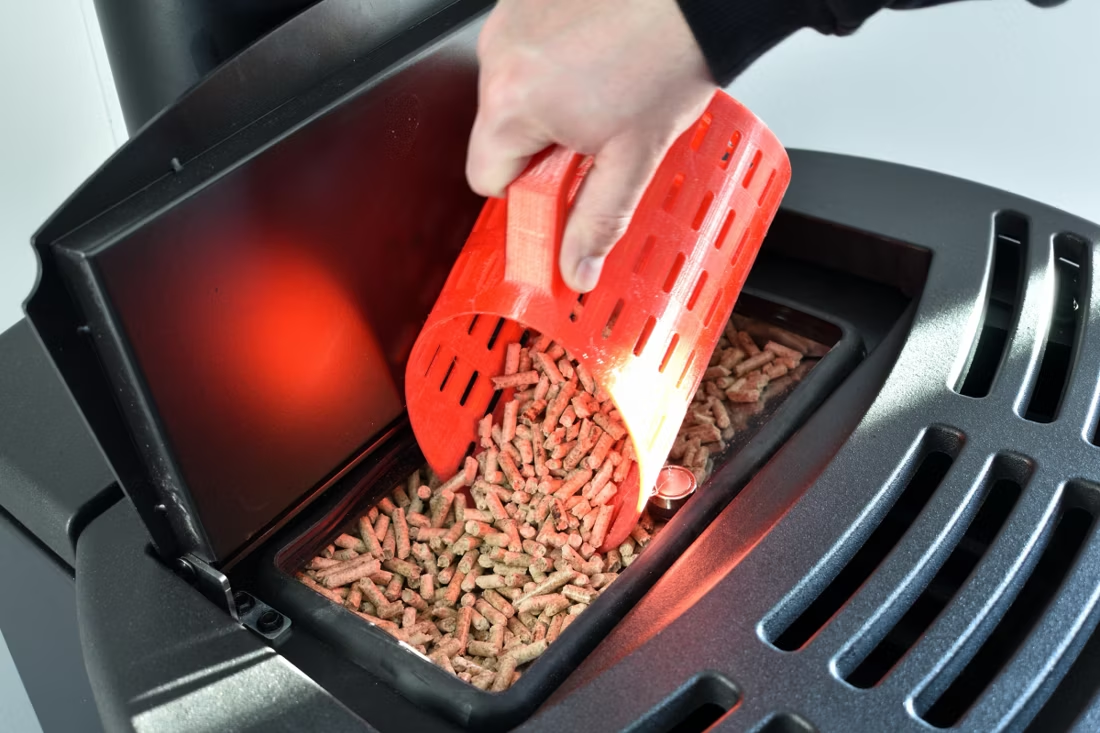
A clean pellet stove is a happy pellet stove. Plan on cleaning the burn pot about once a week when you're burning regularly—ash and clinkers gum up the air holes just like a pellet barbecue. Most pellet stove problems trace back to skipped cleaning that nobody explained up front. Some designs make it easy with a trapdoor burn pot: pull a lever and the gunk drops into the ash pan.
Why is a fireplace insert so efficient?
An insert does two things: it seals the chimney completely, so you stop losing air you already paid to heat, and it radiates warmth into the room through the firebox and glass. Most add a heat-exchange fan that pulls cool room air underneath, wraps it around the hot firebox, and pushes it back out warm. Your home is more efficient before you've even lit the first fire.
Can a fireplace actually lower my heating bill?
Yes—by creating a comfort zone. A furnace heats every square foot of the house just to warm the one room you're in; a gas fireplace on low burns roughly a sixth of the gas a typical furnace does. Set the furnace around 55–60 degrees as a baseline, then heat the rooms your family actually uses. Families who heat this way commonly save $20–$60 a month.
How much should I budget for a fireplace?
For an average home—covering the fireplace, the vent pipe, and basic installation—a budget between $3,900 and $5,500 gives you a lot of options across wood, gas, and pellet. By the time you add finish work, gas line, and electrical, the average complete installation lands between $5,000 and $12,000 all-in. In a remodel or new build, a good rule is to put about 2.5% of the total project cost toward the fireplace.
Pellet Brands Stocked Around Osceola County
Manufacturers will point you to the nearest stocking dealer.
Find a pellet stove dealer serving Osceola County.
Tell us about your home and heating goals, and we'll match you with a regional dealer who genuinely stocks and installs pellet equipment in northwest Iowa—plus a free Project Guide & Parts List with the exact vent kit and components for your project.
Find Your Fireplace →