
Find the right fireplace for an Osceola County winter.
Fireplace resources for Sibley, Ashton, Harris, May City, Melvin, and Ocheyedan—matched with a trusted local dealer who knows what actually works here.
Every Project Starts From One of These Five Situations
Prairie winters, practical heat choices in Osceola County, Iowa.
Osceola County sits in the far northwest corner of Iowa, on flat, wind-exposed prairie with no tree cover to break the cold coming down from the Dakotas and Minnesota. At climate zone 6A, with a long, demanding winter heating season, and average winter lows around 5°F, the county's winters run comparable to Fargo, North Dakota—long, hard, and wind-driven. You'd expect wood heat to be everywhere given oak, hickory, maple, and walnut grow in local shelterbelts and fence rows, but with a countywide population under 4,500, there's no dedicated wood-stove or pellet-stove dealer network here. Most of that oak and hickory ends up split for outdoor burn piles or backup firewood, not fed through an EPA-certified stove sold by a local retailer.
What that means practically: this hub focuses on gas and electric fireplaces, since those are the fuels with real local retail and service support. You'll find dealers, installers, and fuel suppliers covering every town in the county—from Sibley, the county seat, out to Ashton, Harris, May City, Melvin, and Ocheyedan. If you're set on wood or pellet, you'll likely be working with a dealer based outside the county (Sheldon, Spencer, or Worthington, MN)—worth knowing before you start shopping.
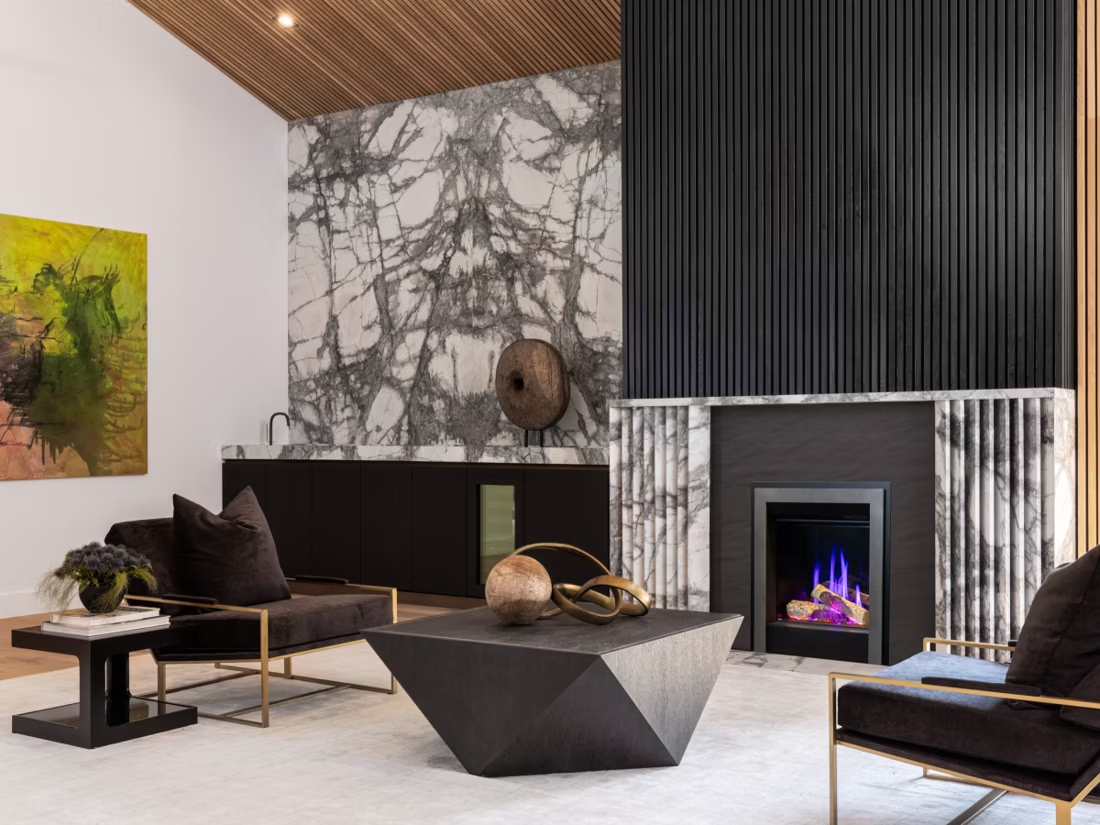
Four fuels. One honest answer for Osceola County.
Three steps. No salesperson until you're ready.
Tell us about your project
Your zip code, your situation, and the fuel you're leaning toward—or let the answers point you to one.
See what's actually available
The brands dealers within 100 miles genuinely carry—real options, never a catalog mirage.
Get your dealer & Project Guide
A trusted local dealer, plus the free Project Guide & Parts List that names every component of the job.
Frequently Asked Questions
Which fuel works best in Osceola County?
For most homes here, it comes down to gas or electric. Gas fireplaces and inserts—whether tied to natural gas or a propane tank, which is common on rural Osceola County properties—give you instant, reliable heat during the kind of sustained cold this county sees (a long, demanding winter heating season, lows around 5°F most winters). Electric fireplaces work well as supplemental heat in bedrooms, additions, or homes where running a gas line isn't practical. Wood and pellet stoves are technically an option—oak, hickory, and walnut grow locally, and pellet brands like Lignetics and Indeck Energy Services supply the wider region—but with under 4,500 people countywide, there's no dedicated hearth dealer stocking or installing them here. Homeowners who want wood or pellet heat typically end up working with a retailer in Sheldon, Spencer, or Worthington, MN, which adds travel time and cost most people decide isn't worth it for a secondary heat source.
Do I need a permit to install a fireplace in Osceola County?
In most cases, yes, particularly for gas fireplace and insert installations, which require a permit and licensed gas-fitter for the line work, plus a separate electrical permit if the unit needs a dedicated circuit. Built-in electric fireplaces that involve new wiring generally need an electrical permit too; simple plug-in electric units typically don't. Osceola County's building department, based out of the courthouse in Sibley, handles permitting for the unincorporated county and coordinates with individual towns like Ashton and Ocheyedan on their own requirements. Most gas dealers who serve this area handle the permit paperwork as part of the installation quote, so it's worth asking upfront rather than pulling one yourself.
Is wood burning restricted or uncommon in Osceola County?
There are no air quality restrictions here—Osceola County doesn't have the inversion or non-attainment issues that trigger burn advisories elsewhere. Wood burning just isn't common as a primary heat source through a retail hearth appliance. Plenty of rural properties burn oak, hickory, and walnut in outdoor fire pits or older wood stoves that predate current EPA standards, but new wood stove installs are rare enough that no local dealer maintains inventory or a certified installer on staff. If you're set on a wood-burning appliance, expect to source it through a dealer outside the county and budget for the extra delivery and installation coordination that involves.
Can one local dealer handle both gas and electric fireplace installs?
Yes—in a county this size, the retailers and contractors who do serve Osceola County tend to cover both fuels rather than specializing narrowly, since neither fuel alone would support a dedicated business here. Expect the same dealer or a partnered electrician to handle a gas fireplace conversion and a built-in electric unit on the same visit if you're doing both. This also means fewer options to comparison-shop between specialists, so it's worth confirming a dealer's actual installation experience with your specific fuel and unit type before committing, rather than assuming broad listing means deep expertise in every category.
How does fireplace service and installation work in a county this small?
Most technicians serving Osceola County are based in larger nearby towns—Sheldon, Spencer, or Worthington, MN—and travel in for appointments, similar to how rural service works across a lot of northwest Iowa. Expect a modest trip charge worked into the quote for towns like Harris, May City, or Melvin that sit further from those hubs. Scheduling ahead of the coldest months (September–October) gets you faster service than calling mid-January when every propane furnace and gas fireplace in the region is getting checked at once. If you're relying on a gas fireplace as backup heat during outages, an annual pre-season inspection is worth the small travel fee just to confirm the pilot and gas line are in good shape before temperatures drop toward that 5°F average low.
What's the typical cost range for a gas or electric fireplace in Osceola County?
Gas fireplace, insert, or stove installation typically runs $4,500–$10,000 depending on whether you're tying into existing propane or natural gas service versus running new gas line and venting—costs skew toward the higher end for standalone rural properties without a nearby gas main. Electric fireplace installation is considerably cheaper: $200–$3,000 for the unit itself, plus $400–$1,200 in labor if it's a built-in requiring a dedicated circuit rather than a simple plug-in model. Because dealers serving this county often travel in from Sheldon, Spencer, or Worthington, MN, ask whether a trip or travel fee is baked into your quote before comparing prices between retailers.
How much should I budget for a fireplace?
For an average home—covering the fireplace, the vent pipe, and basic installation—a budget between $3,900 and $5,500 gives you a lot of options across wood, gas, and pellet. By the time you add finish work, gas line, and electrical, the average complete installation lands between $5,000 and $12,000 all-in. In a remodel or new build, a good rule is to put about 2.5% of the total project cost toward the fireplace.
Wood, gas, pellet, or electric—how do I choose?
Match the fuel to your life, not the other way around. Wood: lowest fuel cost and total power-outage independence, but you're hauling and stacking. Gas: press a button, set a thermostat, no maintenance to speak of. Pellet: wood economics with automatic feeding, in exchange for weekly cleaning and a need for electricity. Electric: plugs in anywhere with honest supplemental heat. Nobody regrets the fuel that fits how they actually live.
Can a fireplace actually lower my heating bill?
Yes—by creating a comfort zone. A furnace heats every square foot of the house just to warm the one room you're in; a gas fireplace on low burns roughly a sixth of the gas a typical furnace does. Set the furnace around 55–60 degrees as a baseline, then heat the rooms your family actually uses. Families who heat this way commonly save $20–$60 a month.
Does a fireplace add value to my home?
On average, a fireplace adds back to the home about the same amount you spent installing it. Add the monthly savings from heating the rooms you actually use instead of the whole house—often hundreds of dollars a year—and the value case is strong before you even count what a fire does for how your family uses the room.
Stove and Fireplace Dealers in Osceola County
Listings include WhyFire partner dealers, dealers we have verified as authorized for the brands we recommend, and established local businesses that carry hearth products. Every listing shows which one it is. The ones marked Preferred run on WhyFire's software, so they can show you real pricing and book your appointment right here. No manufacturer pays for placement. How we verify dealers →
Kozy Heat Gallery
Holland House Design
Fireplace Professionals, Inc
Hjellming Construction
Get matched with a dealer serving Osceola County.
Tell us about your gas or electric fireplace project and we'll match you with a trusted local dealer, then send your free Project Guide & Parts List—the exact parts, vent kit, and recommended installer for your home in Osceola County.
Find Your Fireplace →