
Steady pellet heat for Mitchell County's coldest nights.
With a long, cold heating season and winter lows averaging 6°F, Mitchell County asks a lot of a heating appliance. A pellet stove or insert delivers even, thermostat-controlled heat from Osage to St. Ansgar to Stacyville—and we'll connect you with a local dealer who can size and install it right.
Every Project Starts From One of These Five Situations
Convenient heat for a genuinely hard winter.
Mitchell County sits in north-central Iowa near the Minnesota line, a farm county of roughly 5,750 people spread across Osage, St. Ansgar, Stacyville, Riceville, and McIntire, with the Cedar River cutting through the middle. At Climate Zone 6A and with a long, cold heating season, winters here run closer to Duluth, Minnesota than to the rest of Iowa—long stretches below zero, sustained snow cover, and a heating season that starts in October and doesn't let go until April. Oak, hickory, maple, and walnut grow in the county's farm windbreaks and river-bottom woodlots, and plenty of households already burn wood cut from their own land. But not everyone wants to split and stack a winter's worth of cordwood.
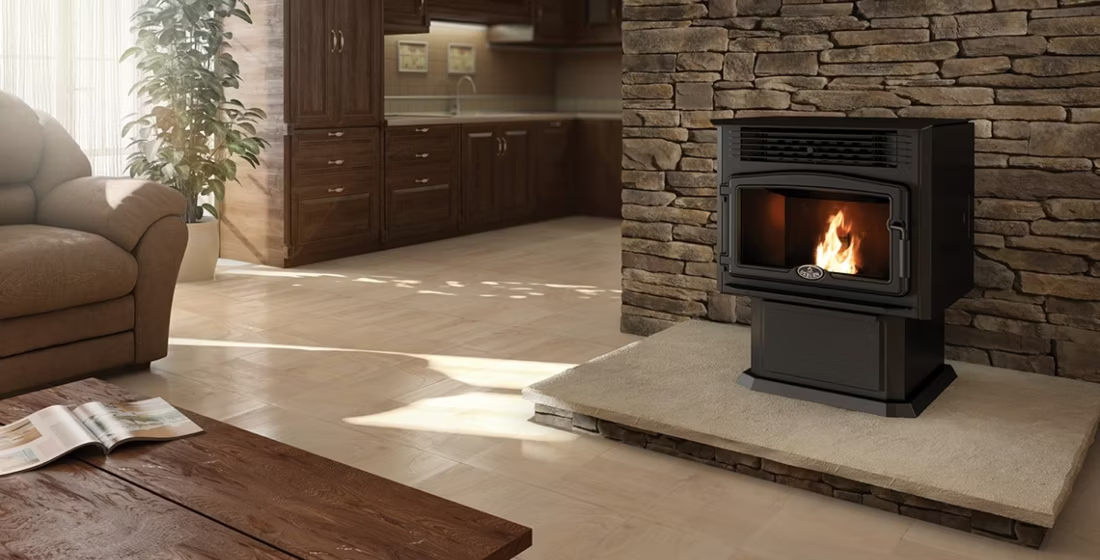
That's where a pellet stove earns its place. Load the hopper, set the thermostat, and get consistent heat output without the daily fire-tending that wood requires—a real advantage during the stretch of Mitchell County winter when temperatures barely climb above zero for days at a time. Iowa doesn't impose winter burn curfews here, so choosing pellet isn't about dodging an air-quality rule—it's about convenience and even heat output in a county that sees genuinely severe cold. Regional supply comes through brands like Lignetics and Indeck Energy Services, both of which distribute into the Upper Midwest, so fuel access isn't the bottleneck it can be in more remote parts of the country.
Three steps. No salesperson until you're ready.
Tell us about your project
Your zip code, your situation, and the fuel you're leaning toward—or let the answers point you to one.
See what's actually available
The brands dealers within 100 miles genuinely carry—real options, never a catalog mirage.
Get your dealer & Project Guide
A trusted local dealer, plus the free Project Guide & Parts List that names every component of the job.
Frequently Asked Questions
How much does a pellet stove installation cost in Mitchell County?
A freestanding pellet stove installation typically runs $3,000 to $6,000 in this part of Iowa, depending on the model, hopper capacity, hearth pad requirements, and vent-pipe run through an exterior wall. Converting an existing wood-burning fireplace to a pellet insert usually costs a bit more—often $4,000 to $7,500—since it involves fitting the insert to the masonry opening and running a liner. Given how few dealers are based inside Mitchell County itself, expect some installers to travel from Mason City, Charles City, or even Rochester, Minnesota, which can add a modest trip charge to the quote.
What size pellet stove do I need for a Mitchell County home?
With a long, demanding heating season and winter lows averaging 6°F, Mitchell County homes generally need a mid-to-large pellet stove rather than the smallest units on the market—even for supplemental heat. A small pellet stove (rated for roughly 1,000 sq ft) is fine for a single room or a well-insulated cabin, but older farmhouses and larger two-story homes common in Osage and St. Ansgar usually call for a medium or large unit with a bigger hopper so it can run longer between reloads on the coldest nights. A local dealer will walk your home's square footage, insulation, and ceiling height before recommending a specific model—sizing is one of the few things worth getting a professional opinion on rather than guessing from a box label.
Where can I find a pellet stove dealer near me in Mitchell County?
Because Mitchell County's population is small and spread across towns like Osage, St. Ansgar, Riceville, and Stacyville, most residents end up working with a dealer based in a nearby regional hub—Mason City, Charles City, or across the border in Rochester, Minnesota. That's not a downside: those dealers cover Mitchell County regularly and know the local building departments and typical home types. What matters more than proximity is whether the installer is trained specifically on pellet appliances, since venting, hopper placement, and electrical hookup differ meaningfully from a wood stove install. We match homeowners with a trusted dealer who actually services this part of Iowa rather than a big-box installer working from a generic checklist.
What's the difference between a pellet stove and a pellet insert?
A pellet stove is a freestanding appliance that sits on a hearth pad and vents through a wall or existing chimney chase—it can go almost anywhere in the home with the right clearances. A pellet insert is built to slide into an existing masonry fireplace opening, turning an old wood-burning fireplace into an automated, thermostat-controlled heat source using the existing chimney as the vent path. For Mitchell County homes with an older fireplace already in place—common in the county's farmhouses—an insert is often the simpler retrofit. Homes without an existing fireplace opening are better suited to a freestanding stove.
Do I need a permit to install a pellet stove in Mitchell County?
Most permanent pellet stove and insert installations require a building permit, issued through your city's building office if you're inside Osage, St. Ansgar, or another incorporated town, or through the county's building department if you're in unincorporated Mitchell County. The permit process typically checks hearth clearances, wall penetration for the vent pipe, and electrical hookup for the auger and blower. Most established dealers handle the permit paperwork as part of the installation quote, so it's worth asking upfront whether that's included.
What's the best pellet stove for Mitchell County's climate?
Look for a stove with a larger hopper and higher continuous BTU output—Mitchell County's stretch of sub-zero nights means you'll want a unit that can run for 24+ hours on a full load without needing a middle-of-the-night refill. Established brands like Harman and Quadra-Fire build models specifically rated for sustained cold-climate output rather than mild-climate convenience use. Pair that with pellets from a regional supplier like Lignetics or Indeck Energy Services, both of which distribute through the Upper Midwest, and you're less exposed to the fuel shortages that can hit areas dependent on a single distant supplier during a hard winter.
What happens to my pellet stove during a power outage?
Pellet stoves need electricity to run the auger that feeds fuel and the blower that circulates heat, so a standard unit will shut down in a power outage—worth planning for in a county where ice storms and heavy snow can knock out rural power lines for a day or more. A small battery backup or inverter can keep a pellet stove running through a short outage, and a portable or standby generator is a common solution for homes that rely on pellet as a primary heat source. If backup heat during outages is a priority, ask your dealer about battery-backup compatibility when you're comparing models—it's not standard on every stove.
Where do I buy pellets and how many do I need for a Mitchell County winter?
Pellets are sold by the 40-lb bag or by the ton (a ton is roughly fifty bags), with regional supply coming through brands like Lignetics and Indeck Energy Services that distribute across the Upper Midwest. A Mitchell County home using a pellet stove as primary heat through a winter as long and cold as this one typically burns 2 to 4 tons over the season, depending on home size and insulation; supplemental use runs less. Buying early in the fall, before the coldest stretch hits, and storing pellets somewhere dry—a garage or basement, not an open shed—protects the fuel from the moisture that causes pellets to swell and jam an auger.
Pellet stove vs. wood stove—which makes more sense in Mitchell County?
Wood is abundant here—oak, hickory, maple, and walnut from farm windbreaks and river-bottom woodlots are common, and burning your own cut wood costs far less than buying pellets by the ton. Wood also keeps working with no electricity, which matters during a rural power outage. Pellet stoves trade that self-sufficiency for convenience: no splitting or stacking, more consistent heat output overnight, and less ash and mess—but they depend on power for the auger and blower, and on buying fuel rather than cutting it. Plenty of Mitchell County households run both: wood for backup and ambiance, pellet for the daily convenience of thermostat-controlled heat through the long stretch of winter.
Why is a fireplace insert so efficient?
An insert does two things: it seals the chimney completely, so you stop losing air you already paid to heat, and it radiates warmth into the room through the firebox and glass. Most add a heat-exchange fan that pulls cool room air underneath, wraps it around the hot firebox, and pushes it back out warm. Your home is more efficient before you've even lit the first fire.
Why is my open fireplace making my house colder?
Open fireplaces suck—literally. As the fire burns, it consumes air your furnace already paid to heat and pulls it out through the chimney, so the house is actually colder after the fire goes out than before you lit it. An insert fixes this: it seals the chimney, puts fixed glass across the front, and turns that hole in your house into a real heat source.
Does a fireplace add value to my home?
On average, a fireplace adds back to the home about the same amount you spent installing it. Add the monthly savings from heating the rooms you actually use instead of the whole house—often hundreds of dollars a year—and the value case is strong before you even count what a fire does for how your family uses the room.
Can I install a fireplace myself?
If you're putting a fire in your house on purpose, it's best to work with an expert. Unless you're genuinely experienced in framing, gas line, vent pipe, and the national code on clearances to combustibles, have a professional do it—and ideally the same company that sells you the fireplace, so warranty, service, and liability all live under one roof.
Stove and Fireplace Dealers in Mitchell County
Pellet Brands Stocked Around Mitchell County
Manufacturers will point you to the nearest stocking dealer.
Find your pellet stove in Mitchell County.
Tell us about your home and we'll put together a free Project Guide & Parts List—the right pellet stove or insert, the parts and vent kit it needs, and a match with a trusted local dealer who installs in Mitchell County.
Find Your Fireplace →