
Find the right pellet stove for Mills County winters.
Steady, thermostat-controlled heat for the six-month heating season along the Loess Hills—from Glenwood to Malvern to Emerson. We match you with a trusted local dealer who sizes the unit and pulls the permit.
Every Project Starts From One of These Five Situations
A hopper full of pellets, a long cold season, and less work than a woodpile.
Mills County sits in USDA climate zone 5A with a winter season and average lows near 12°F—a season closer in length and severity to Madison, WI than to most of the lower Midwest. The Loess Hills terrain and open farmland mean wind-driven cold snaps are common, and homeowners here are used to running supplemental heat for a full six months of the year. Unlike wood, which is genuinely abundant here given the county's oak, hickory, maple, and walnut stands, pellet appeals to a different kind of household—one that wants consistent, thermostat-set heat without splitting, stacking, or seasoning cordwood.
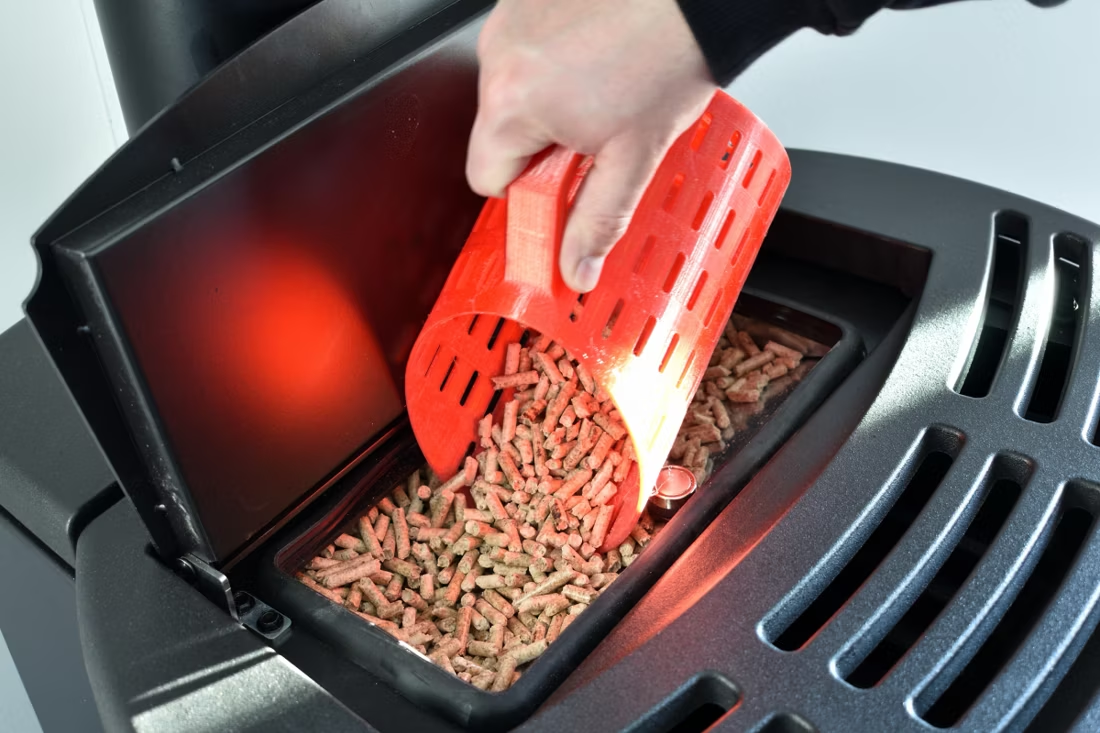
Regional pellet supply runs through brands like Lignetics and Indeck Energy Services, both of which distribute into this part of Iowa, so sourcing fuel is not the obstacle it can be in more remote counties. Mills County has no air quality non-attainment issues or burn restrictions, which means pellet stoves here are chosen on comfort and convenience grounds rather than regulatory ones. A modern pellet insert or freestanding stove gives Glenwood, Malvern, and Emerson-area homes auto-ignition, a hopper that runs 24-plus hours on a fill, and far less ash than a wood-burning setup—a real advantage for anyone heating a farmhouse or acreage property through an Iowa winter without wanting to tend a fire every few hours.
Three steps. No salesperson until you're ready.
Tell us about your project
Your zip code, your situation, and the fuel you're leaning toward—or let the answers point you to one.
See what's actually available
The brands dealers within 100 miles genuinely carry—real options, never a catalog mirage.
Get your dealer & Project Guide
A trusted local dealer, plus the free Project Guide & Parts List that names every component of the job.
Frequently Asked Questions
How much does a pellet stove installation cost in Mills County?
Pellet stove and insert installations in Mills County typically run in the range most Midwest installers quote for a straightforward setup: unit cost, a 3-inch PL vent kit run through an exterior wall or existing chimney, and a hearth pad if the stove needs additional clearance protection. Costs move higher if the home has no existing masonry chimney and needs a fresh through-wall vent path, or if the electrical circuit for the auger and blower needs to be added or relocated. A local dealer will give you a firm number after seeing the install location in person—venting length and wall material matter more to the final price than the stove itself.
What size pellet stove do I need for my Mills County home?
Sizing comes down to square footage, ceiling height, and how exposed the home is to wind—a real factor for acreage properties along the Loess Hills where farmhouses often catch more wind than in-town lots in Glenwood or Malvern. Smaller units suit a single large room or an open-concept main floor; larger units are sized for supplemental whole-home heat in a typical 1,800-2,800 sq ft farmhouse. Given the county's long, Madison, WI-caliber winter season, most local dealers size slightly generous rather than tight, since a pellet stove running near its max output constantly wears the auger and igniter faster. A local dealer will size the unit for free during an in-home visit.
Where can I buy pellet stove pellets in Mills County?
Regional supply runs through Lignetics and Indeck Energy Services, both of which distribute pellets into southwest Iowa, so most local hearth dealers and farm supply stores can order or stock bags without a long wait. Buying a season's supply—typically 2 to 3 tons for a home using pellet as primary heat, less for supplemental use—in late summer or early fall avoids the price bump and availability squeeze that can hit in January during a cold stretch. Softwood pellets burn hotter with less ash; hardwood blends burn a bit cooler but some homeowners prefer them. Your local dealer can tell you what's actually moving through the supply chain locally that season.
What's the difference between a pellet stove and a pellet insert?
A pellet stove is a freestanding unit on its own hearth pad, vented through a wall or existing chimney with a PL vent kit—it can go almost anywhere in the house with the right clearances. A pellet insert is built to slide into an existing masonry fireplace opening, using the existing chimney as a chase for the vent liner while sealing off the old open firebox. For Mills County homes with an existing wood fireplace that's rarely used, an insert is often the more efficient upgrade since it reuses the chimney you already have. Homes without an existing fireplace opening are usually better suited to a freestanding stove.
Do I need a permit to install a pellet stove in Mills County?
Most pellet stove and insert installations require a building permit through the local jurisdiction—Glenwood, Malvern, and unincorporated Mills County each route permits differently, so it's worth confirming with your installer before work starts. Because pellet stoves need a dedicated electrical circuit for the auger, hopper feed, and combustion blower, an electrical inspection is sometimes bundled into the same permit. Most local dealers handle the permitting as part of the installation, which is one of the practical reasons to work with a trusted installer rather than a big-box purchase and DIY install.
What happens to a pellet stove during a power outage?
This is the tradeoff worth understanding before buying: pellet stoves require electricity to run the auger that feeds fuel and the blower that pushes combustion air and distributes heat. Without power, a pellet stove simply won't run—no auger feed, no fire. For Mills County homes concerned about winter power outages during an ice storm or high-wind event along the open farmland here, a small battery backup or generator sized for the stove's draw (typically under 200 watts) can keep it running through an outage. Homeowners who want guaranteed heat with zero electrical dependency generally pair a pellet unit with a wood-burning appliance elsewhere in the house rather than relying on pellet alone for outage backup.
How much maintenance does a pellet stove need?
Pellet stoves need more routine attention than a wood stove but produce far less ash to deal with. Plan on emptying the ash pan every few days to weekly depending on use, cleaning the burn pot and heat exchanger tubes monthly during the season, and a full professional service annually—checking the auger motor, blower, igniter, and gaskets. Homes running the stove as primary heat through Mills County's full six-month season should expect to lean toward the more frequent end of that maintenance schedule. Skipping the annual service is the most common cause of igniter and auger motor failures reported by local dealers.
What's the best pellet stove for a Mills County winter?
Given average winter lows around 12°F and a heating season on par with Madison, WI, look for a pellet stove or insert with a heat output rated for your actual square footage rather than the minimum listed for the unit—running a stove near its max continuously through an Iowa cold snap shortens component life. Units with a larger hopper capacity reduce how often you need to refill during multi-day cold stretches, which matters for households that don't want to tend the stove daily. A local dealer can walk you through specific models suited to acreage homes versus in-town lots in Glenwood or Malvern, since wind exposure and square footage change the recommendation.
Pellet stove vs. wood stove—which is right for my Mills County home?
Wood is genuinely practical here—Mills County has real oak, hickory, maple, and walnut stands, no air quality restrictions on burning, and wood stoves keep working with zero electrical dependency during an outage. Pellet trades that off for real convenience: thermostat-set output, auto-ignition, a hopper that runs a day or more per fill, and far less ash and creosote to manage. For a household without easy access to a woodlot or the time to season cordwood, pellet is usually the better fit. For a farm property with standing timber and a priority on outage-proof heat, wood often wins. Some Mills County homes run both—wood for backup and ambiance, pellet for daily convenience in the main living space.
Why is my open fireplace making my house colder?
Open fireplaces suck—literally. As the fire burns, it consumes air your furnace already paid to heat and pulls it out through the chimney, so the house is actually colder after the fire goes out than before you lit it. An insert fixes this: it seals the chimney, puts fixed glass across the front, and turns that hole in your house into a real heat source.
Why is a fireplace insert so efficient?
An insert does two things: it seals the chimney completely, so you stop losing air you already paid to heat, and it radiates warmth into the room through the firebox and glass. Most add a heat-exchange fan that pulls cool room air underneath, wraps it around the hot firebox, and pushes it back out warm. Your home is more efficient before you've even lit the first fire.
How much should I budget for a fireplace?
For an average home—covering the fireplace, the vent pipe, and basic installation—a budget between $3,900 and $5,500 gives you a lot of options across wood, gas, and pellet. By the time you add finish work, gas line, and electrical, the average complete installation lands between $5,000 and $12,000 all-in. In a remodel or new build, a good rule is to put about 2.5% of the total project cost toward the fireplace.
Can I install a fireplace myself?
If you're putting a fire in your house on purpose, it's best to work with an expert. Unless you're genuinely experienced in framing, gas line, vent pipe, and the national code on clearances to combustibles, have a professional do it—and ideally the same company that sells you the fireplace, so warranty, service, and liability all live under one roof.
Pellet Brands Stocked Around Mills County
Manufacturers will point you to the nearest stocking dealer.
Get matched with a pellet stove dealer in Mills County.
Tell us about your home and heating goals and we'll send you a free Project Guide & Parts List—the vent kit, hopper size, and parts your project needs—along with our recommended local dealer.
Find Your Fireplace →