
Warm up any room in Mills County—no chimney required.
Plug-in, zone heat for the Loess Hills towns of Mills County—from Glenwood to Malvern, Pacific Junction to Silver City. Find the right electric fireplace or insert, and connect with a trusted local dealer.
Every Project Starts From One of These Five Situations
Zone heat that works with the furnace you already have.
Mills County sits along the Loess Hills in southwest Iowa, wedged between the Missouri River bottomland and the bluffs east of Glenwood, with just under 7,850 residents spread across Glenwood, Malvern, Emerson, Silver City, Pacific Junction, and Hastings. Climate zone 5A here means real winter—6,188 heating degree days a year and average lows around 12°F, roughly the same heating load as Madison, Wisconsin. Furnaces (natural gas from MidAmerican Energy in town, propane tanks out in the rural stretches) do the heavy lifting, but a 5A winter runs long enough that homeowners look for ways to take the edge off a single cold room without firing up the whole system.
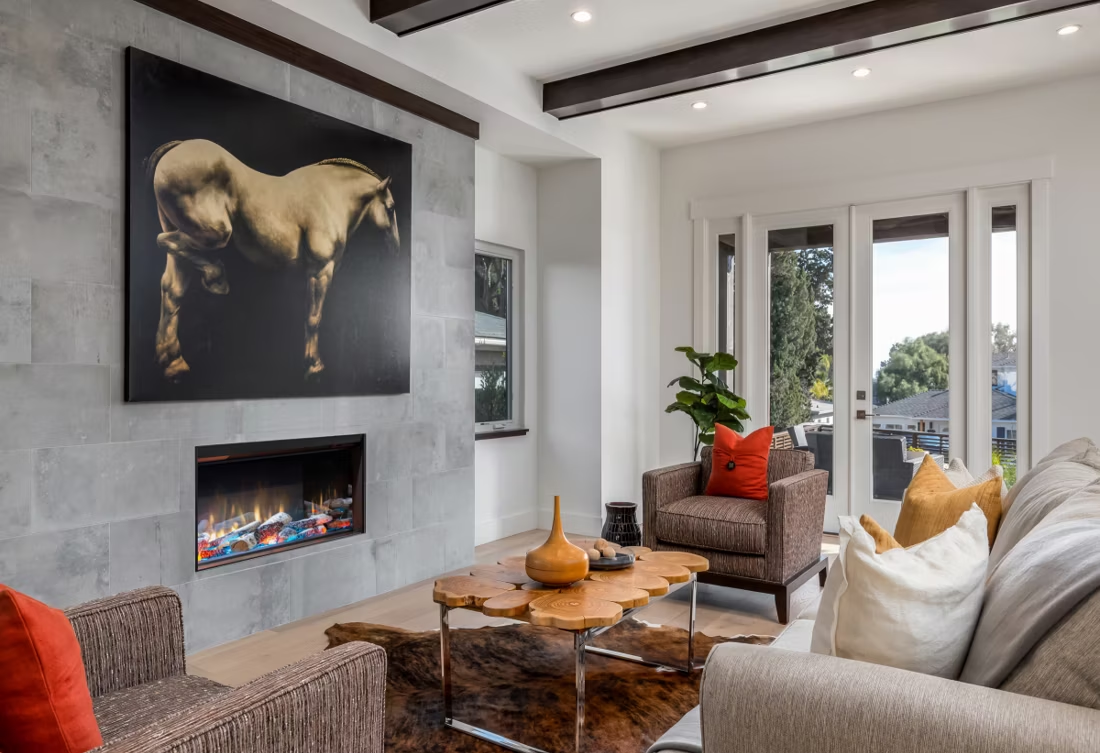
That's where electric fireplaces fit in Mills County. They're not going to replace a furnace against a Loess Hills wind chill, but they're an easy, no-venting way to add real, immediate warmth to a bonus room over the garage, a finished basement, a primary bedroom, or an addition that never quite got its own duct run. Because there's no combustion and no flue, there's no chimney sweep, no wood to split, and typically no building permit beyond an electrician pulling a dedicated circuit if the unit calls for one—Mills County Zoning & Planning handles that paperwork when it's needed. Most installs are a matter of an outlet (or a new circuit for larger built-ins) and a mounting bracket, which is a big part of why electric is the fastest and least disruptive hearth project available here.
Three steps. No salesperson until you're ready.
Tell us about your project
Your zip code, your situation, and the fuel you're leaning toward—or let the answers point you to one.
See what's actually available
The brands dealers within 100 miles genuinely carry—real options, never a catalog mirage.
Get your dealer & Project Guide
A trusted local dealer, plus the free Project Guide & Parts List that names every component of the job.
Frequently Asked Questions
How much does an electric fireplace installation cost in Mills County?
Electric fireplaces are the least expensive hearth project available in Mills County, typically running $300 to $1,500 installed. A basic plug-in insert or wall-mount unit that runs on a standard 120V outlet sits at the low end—no electrician needed beyond what's already in the wall. Larger built-in units, especially 240V models meant to actually take the chill off a bigger room, run higher once you add a dedicated circuit, which usually means an electrician's visit. Compare that to $4,500-plus for a wood or gas install with venting, and it's easy to see why electric is the go-to for a quick den or bedroom upgrade in Glenwood or Malvern homes.
What's the difference between an electric insert, wall-mount, and built-in?
An electric insert drops into an existing masonry fireplace opening and plugs into a nearby outlet—a common upgrade for older Glenwood and Malvern homes with a wood-burning fireplace that's rarely used. A wall-mount unit hangs like a flat-screen TV and needs only a nearby outlet, making it a popular choice for finished basements and additions that were never plumbed for gas or a chimney. A built-in electric fireplace is framed into a wall like a real fireplace, often on a dedicated 240V circuit for higher heat output, and is the closest electric option to a true focal-point fireplace. Local dealers can walk you through which format fits your framing and electrical panel.
Do I need a permit to install an electric fireplace in Mills County?
In most cases, no—because there's no combustion, no gas line, and no venting, electric fireplaces fall outside the building permit requirements that apply to wood and gas installs. The one exception is if your unit requires a new dedicated electrical circuit; that work should be pulled through a licensed electrician, and any panel or wiring changes may need to go through Mills County Zoning & Planning depending on scope. A simple plug-in unit on an existing outlet typically requires no permit at all.
Will an electric fireplace actually heat a room in a Mills County winter?
It depends on the room and your expectations. A typical electric fireplace puts out about 5,000-6,000 BTUs (roughly 1,500 watts), enough to comfortably warm a single room of 300-400 square feet with average insulation—a bonus room, bedroom, or finished basement space. It's not going to keep pace with a 12°F January morning across an entire Loess Hills farmhouse, and it's not meant to. Think of it as zone heat: it lets you turn down the thermostat on the rest of the house while keeping the room you're actually using warm, which is where most of the real savings comes from in a 6,188-HDD climate like Mills County's.
Will my electric fireplace work during a power outage?
No—and this is the biggest practical difference between electric and wood or gas heat. Because electric fireplaces run entirely on household power, an ice storm or line outage that knocks out electricity to Glenwood, Malvern, or the rural parts of Mills County served by MidAmerican Energy will take the fireplace down with it. If backup heat during winter outages matters to you, pair the electric fireplace's daily convenience with a wood stove or propane heater elsewhere in the house rather than relying on electric as your only fallback.
How much does it cost to run an electric fireplace in Mills County?
At typical MidAmerican Energy residential rates, a 1,500-watt electric fireplace running on high costs somewhere around 15-20 cents per hour to operate—a few dollars for an evening of use. Most owners run the heater setting only when they're actually in the room and switch to flame-only mode (a few watts, just for the visual effect) the rest of the time, which keeps monthly costs modest even through a long southwest Iowa winter.
Where do electric fireplaces make the most sense in a Mills County home?
The best fits are rooms without existing ductwork or a chimney: finished basements, three-season rooms that got closed in, bonus rooms over a garage, primary bedrooms, or older farmhouses around Emerson and Silver City where extending gas or running a new flue isn't practical. Because there's no venting requirement, an electric unit can go essentially anywhere there's a wall and an outlet—a real advantage over wood or gas in additions built without hearth clearances in mind.
Electric vs. wood or gas—which is right for my Mills County home?
Wood, burning local oak, hickory, or walnut, and gas both put out real heat and can serve as backup during a power outage—a meaningful consideration in a county that sees its share of winter ice storms. Electric can't match that heat output or outage resilience, but it wins on cost, simplicity, and flexibility: no chimney, no gas line, no permit hassle, and a fraction of the installed cost. For a primary heat source or a room you want to keep warm no matter what the grid is doing, wood or gas is the better call. For ambiance and quick supplemental warmth in a room that's otherwise hard to heat, electric is usually the right answer.
What size electric fireplace do I need?
Sizing an electric fireplace is mostly about the room, not the county's climate. A 26-34 inch insert or wall-mount unit suits a bedroom or den up to around 300 square feet, while a 50-inch-plus built-in linear unit can take the edge off a larger great room, though it's still best treated as supplemental heat rather than a whole-room solution on a cold snap. Local dealers serving Glenwood and the surrounding towns can match wattage and unit size to your specific room during a quick in-home or virtual consult.
Does an electric fireplace need a vent or chimney?
No—that's its superpower. An electric fireplace needs a wall and an outlet, period. No vent pipe, no gas line, no clearances to design around, which is why it works in bedrooms, offices, apartments, and walls where venting a gas or wood unit would be impractical or impossible. Installation is typically the simplest and least expensive of any fireplace type.
Can I put a TV above my fireplace?
Yes—with an asterisk. Fireplaces are hot and TVs don't like heat. Either put a mantel between them to deflect rising warmth, or choose a fireplace with heat-management technology that creates a cool zone on the wall above—the wall stays around 125 degrees, barely warm, while the room still gets full heat. If you like clean lines and don't want a mantel, heat management is the answer.
Can a fireplace actually lower my heating bill?
Yes—by creating a comfort zone. A furnace heats every square foot of the house just to warm the one room you're in; a gas fireplace on low burns roughly a sixth of the gas a typical furnace does. Set the furnace around 55–60 degrees as a baseline, then heat the rooms your family actually uses. Families who heat this way commonly save $20–$60 a month.
Can I install a fireplace myself?
If you're putting a fire in your house on purpose, it's best to work with an expert. Unless you're genuinely experienced in framing, gas line, vent pipe, and the national code on clearances to combustibles, have a professional do it—and ideally the same company that sells you the fireplace, so warranty, service, and liability all live under one roof.
Find your electric fireplace in Mills County.
Tell us a bit about your home and we'll match you with a trusted local Mills County dealer, plus a free Project Guide & Parts List—the exact unit, mounting hardware, and electrical requirements for your space.
Find Your Fireplace →