
Steady heat for Madison County winters, without splitting a single log.
From the farmhouses outside Winterset to the covered-bridge back roads of the county, pellet heat delivers thermostat-simple warmth through Madison County's long, 6,870-degree-day winters. Find the right stove or insert and connect with a trusted local dealer.
Every Project Starts From One of These Five Situations
Reliable heat for the county's farmhouses and cold nights.
Madison County is small—just under 8,800 people spread across rolling farmland south of Des Moines, anchored by Winterset and its famous covered bridges. It sits in climate zone 5A with roughly 6,870 heating degree days a year and average winter lows near 10°F, colder than most of the country but not the extreme, sub-zero-for-weeks cold you'd find in Bismarck or Fargo. It's the kind of cold that settles in from November through March and asks a home to hold steady heat for months, not just survive a handful of hard nights. Many of the county's older farmhouses were built around oak, hickory, maple, and walnut woodlots and have burned cordwood for generations—pellet stoves have become the natural next step for homeowners who want that same steady radiant warmth without stacking, splitting, or hauling wood every week.
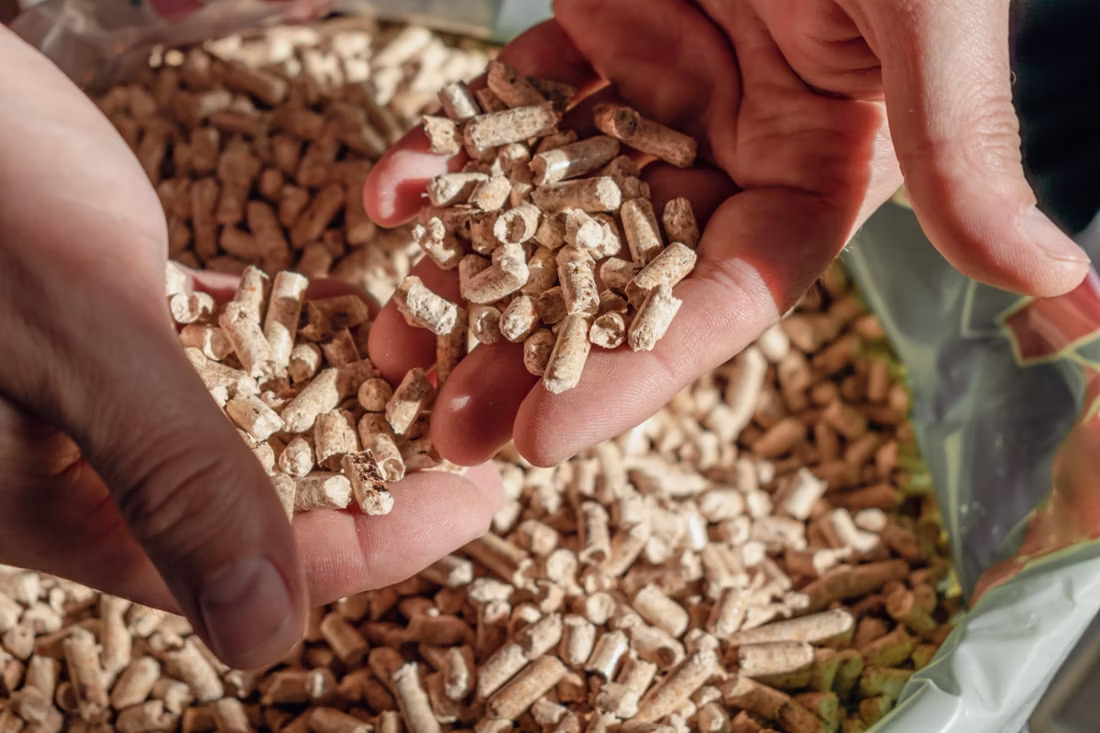
Two regional pellet brands, Lignetics and Indeck Energy Services, supply much of the hardwood pellet fuel sold to Madison County homes, typically through farm-supply stores, co-ops, and hearth dealers serving the greater Des Moines exurbs. Madison County has no air-quality non-attainment designation and no winter burn-curtailment periods, so unlike counties dealing with inversion smoke advisories, pellet—and wood—appliances here can run on cold nights without restriction. The tradeoff is that pellet stoves need electricity to run the auger and blower, worth planning around given how common ice storms and power blips are in an Iowa winter. For most homeowners here, the payoff is a hopper you load once a day, a thermostat that holds the temperature, and a clean burn that doesn't demand the labor a wood stove does.
Three steps. No salesperson until you're ready.
Tell us about your project
Your zip code, your situation, and the fuel you're leaning toward—or let the answers point you to one.
See what's actually available
The brands dealers within 100 miles genuinely carry—real options, never a catalog mirage.
Get your dealer & Project Guide
A trusted local dealer, plus the free Project Guide & Parts List that names every component of the job.
Frequently Asked Questions
How much does a pellet stove installation cost in Madison County?
A typical pellet stove installation in Madison County runs roughly $3,000 to $6,000, depending on the unit, whether you need a new dedicated electrical outlet, and how the vent pipe routes through an exterior wall. Pellet inserts going into an existing masonry fireplace tend to land toward the higher end once a liner and finishing surround are added. Because pellet venting doesn't require a full masonry chimney, installs in Madison County's older farmhouses are often simpler and less expensive than a comparable wood stove project—your local dealer can give you a firm number after seeing the install location.
What size pellet stove or insert do I need for my home?
Sizing comes down to square footage, ceiling height, insulation, and whether the stove is your primary heat or a supplement to a furnace. Many of Madison County's homes are older farmhouses with less insulation than newer construction, so given winter lows around 10°F, it's usually smart to size slightly up rather than down. A mid-size hopper (40-60 lbs) running on a low-to-medium feed rate can heat a well-sealed 1,500-2,000 sq ft home for 24 to 40 hours between refills; larger, drafty farmhouses may need a bigger hopper or a stove rated for a wider heat range. A local dealer familiar with the county's older housing stock can size this properly during an in-home visit.
Where can I find certified pellet stove installers near me?
Look for installers with NFI (National Fireplace Institute) certification, which covers pellet-specific venting and electrical requirements—different from wood-burning credentials since pellet stoves need a dedicated outlet and a properly sized PL vent pipe rather than a full chimney. Local hearth dealers who carry Lignetics or Indeck Energy Services pellet fuel typically also handle installation and can advise on the electrical work upfront. Given Madison County's rural layout, expect a modest travel charge for installs outside Winterset proper.
What's the difference between a pellet stove and a pellet insert?
A pellet stove is a freestanding unit on its own hearth pad, vented through a wall with PL pipe—it can go almost anywhere with the right clearances and an electrical outlet nearby. A pellet insert fits into an existing masonry fireplace opening, using a liner run up the existing chimney (or a through-wall vent kit) to convert an old wood fireplace into an automated, thermostat-controlled heat source. For Madison County's older farmhouses with existing wood fireplaces, an insert often makes sense because it reuses the opening you already have. Homes without an existing fireplace are usually better suited to a freestanding stove.
Do I need a permit to install a pellet stove in Madison County?
Most new pellet stove and insert installations require a building permit through Madison County's building department, along with an electrical inspection if a new dedicated outlet is being added for the stove's auger and blower motor. There's no cutting-permit or curtailment paperwork to worry about the way there is with wood—Madison County has no non-attainment designation, so there are no seasonal burn restrictions on pellet appliances. Most local dealers handle the permitting as part of the installation.
What's the best pellet stove for Madison County's climate?
For a county running roughly 6,870 heating degree days with winter lows near 10°F, look for a stove with a large-capacity hopper and a reliable auto-ignition system so it can restart itself after a brief power blip without you having to manually relight it. Brands commonly carried by regional dealers alongside Lignetics and Indeck Energy Services fuel—names like Harman, Quadra-Fire, and Napoleon—offer models with wide heat-output ranges suited to older, less-insulated farmhouses common throughout the county. Ask your local dealer to match hopper size and BTU range to your specific square footage and insulation level.
How often should my pellet stove's vent be inspected and cleaned?
Pellet venting doesn't build creosote the way a wood chimney does, but the burn pot, ash pan, and glass need cleaning weekly during heavy winter use, and the vent pipe and exhaust fan should get a full inspection and cleaning once a year—typically before the burning season starts each fall. Skipping the annual service is the most common cause of feed and ignition problems, and it's a quick job for a local hearth technician familiar with pellet systems.
Where can I buy pellet fuel in Madison County?
Lignetics and Indeck Energy Services are the two regional pellet brands most commonly stocked by farm-supply stores, co-ops, and hearth dealers serving Madison County and the greater Des Moines area. Hardwood pellets typically sell by the 40-lb bag or by the ton (a ton covers roughly 50 bags), with pricing in line with broader Midwest averages. Buying by the ton ahead of the season, rather than bag by bag as you go, is usually the better value for anyone running a pellet stove as a primary heat source through the county's full winter.
Pellet stove vs. wood stove—which is right for my home?
Wood stoves burn the oak, hickory, maple, and walnut that many Madison County properties already have growing on them, work without electricity—useful during winter power outages—and offer the lowest fuel cost if you're cutting your own. Pellet stoves trade that self-sufficiency for convenience: load the hopper, set the thermostat, and let auto-ignition handle the rest, with less mess and no chimney creosote to manage. Because Madison County has no air-quality restrictions on either fuel, the choice really comes down to whether you value the hands-on ritual and outage-proof heat of wood, or the low-labor, consistent output of pellet. Many local homeowners land on pellet as a low-maintenance backup to a wood stove or furnace, especially in newer builds without a chimney already in place.
What's the difference between an insert and a zero-clearance fireplace?
An insert is a fireplace that slides into a pre-existing wood-burning fireplace—if you don't have one, there's nothing to insert it into. A zero-clearance fireplace is built into a framed wall, which makes it the answer for remodels and new construction. Simple test: existing masonry fireplace means insert; blank or framed wall means zero-clearance.
What do I measure to size a fireplace insert?
Four numbers tell you what fits: the front width, the front height, the back width, and the overall depth of your existing fireplace opening. Grab a tape measure, jot those down, and snap a photo of the wall—those two things do more to move your project forward than anything else you can do today.
What is an in-home preview and do I need one?
It's a visit where a hearth professional measures your space, confirms the model you picked actually works in your home, and walks the specs—framing, gas line, venting, finish work—before anything is ordered. Some details you just can't know until you see the house. Never make a down payment without one; it's the single most-skipped step that burns buyers.
Can a fireplace actually lower my heating bill?
Yes—by creating a comfort zone. A furnace heats every square foot of the house just to warm the one room you're in; a gas fireplace on low burns roughly a sixth of the gas a typical furnace does. Set the furnace around 55–60 degrees as a baseline, then heat the rooms your family actually uses. Families who heat this way commonly save $20–$60 a month.
Pellet Brands Stocked Around Madison County
Manufacturers will point you to the nearest stocking dealer.
Find your pellet stove in Madison County.
Tell us a bit about your home and we'll match you with a trusted local dealer, plus a free Project Guide & Parts List—the exact parts, including the vent kit, for your pellet project in Madison County.
Find Your Fireplace →