
Modern warmth for Madison County's oldest homes.
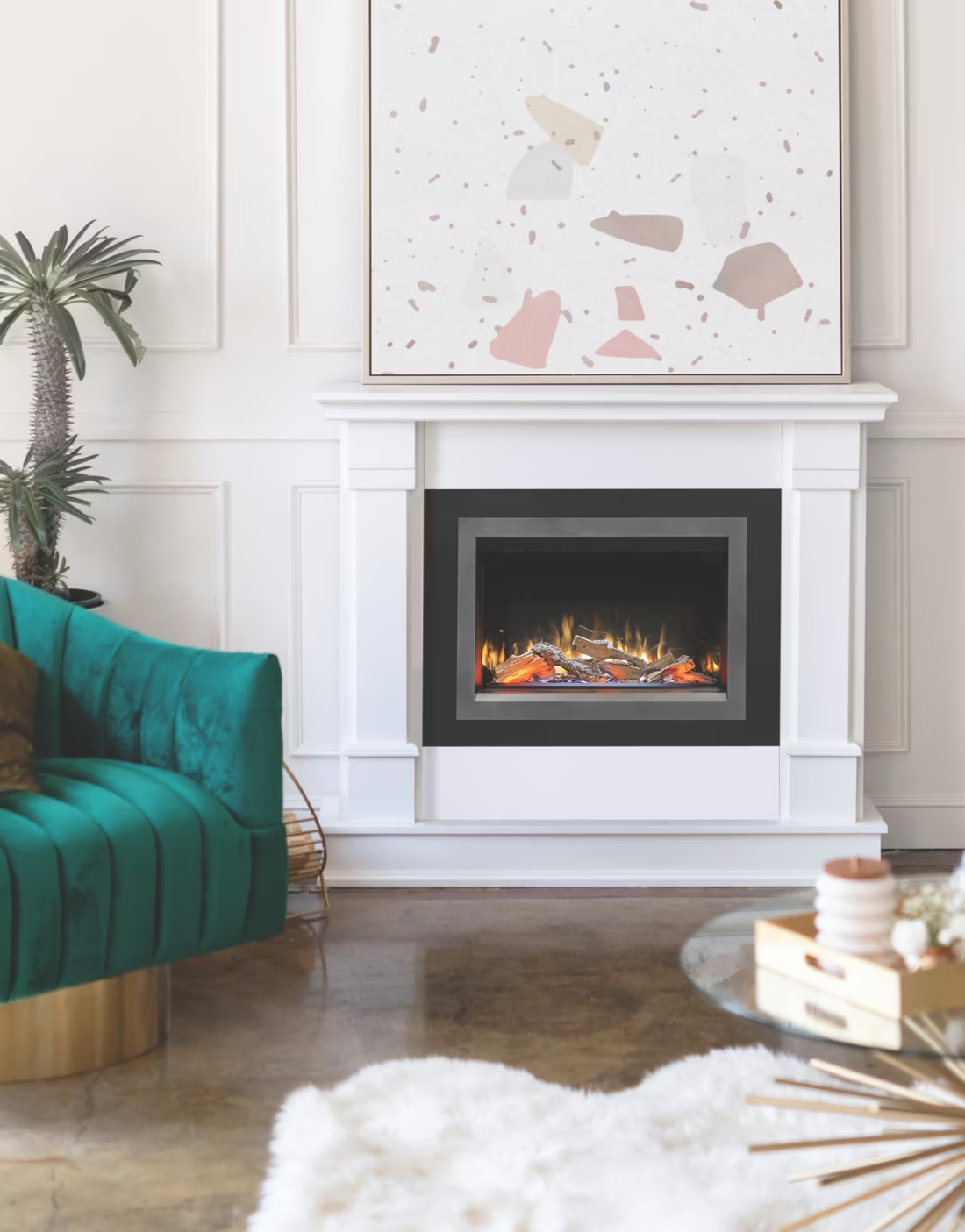
From Winterset's 1876 courthouse square to farmhouses tucked along the covered bridge corridor, electric fireplaces add real warmth and ambiance without a chimney, a gas line, or a permit fight. Find the right unit and connect with a trusted local dealer.
Every Project Starts From One of These Five Situations
Warmth without the wood pile or the gas line.
Madison County sits in south-central Iowa's rolling farmland, home to about 8,801 people, six historic covered bridges, and winters as cold and long as Minneapolis, MN, with average lows near 10°F. The county's oak, hickory, maple, and walnut timber along Middle River and North River has fueled wood stoves for generations, but plenty of homes here—especially in Winterset's historic district, newer additions, and finished basements—lean on electric fireplaces for supplemental warmth and atmosphere that doesn't require touching a chimney or running a gas line.
That matters in a county built around preserved 19th-century architecture. Many of the farmhouses and downtown storefronts near the Cutler-Donahoe or Roseman bridges carry preservation considerations that make adding a masonry chimney or new gas venting a real hassle. An electric fireplace or insert sidesteps that entirely—zero-clearance installation, no venting, and in most cases nothing more than a standard or dedicated outlet. It's also a natural fit for the county's short-term rentals and bed-and-breakfasts that fill up during the Madison County Covered Bridge Festival each October, where guests want the look and feel of a fire without the woodsmoke or upkeep.
Three steps. No salesperson until you're ready.
Tell us about your project
Your zip code, your situation, and the fuel you're leaning toward—or let the answers point you to one.
See what's actually available
The brands dealers within 100 miles genuinely carry—real options, never a catalog mirage.
Get your dealer & Project Guide
A trusted local dealer, plus the free Project Guide & Parts List that names every component of the job.
Frequently Asked Questions
How much does an electric fireplace installation cost in Madison County?
Most electric fireplace projects in Madison County run $300 to $2,500. A freestanding or plug-in insert that drops into an existing masonry opening or a media console sits at the low end and typically needs no electrical work beyond an existing outlet. A built-in wall unit or a linear electric fireplace tied to a dedicated 240V circuit, with custom trim or a mantel surround, runs toward the higher end once an electrician is involved. Because there's no venting, chimney, or gas line to account for, electric projects are consistently the most affordable and fastest hearth upgrade available to homeowners here.
Will an electric fireplace actually heat a room during a Madison County winter?
An electric fireplace will comfortably heat a single room—most units put out 4,500 to 9,000 BTU, enough for a living room or bedroom addition. But with average winter lows near 10°F and a long, Minneapolis-cold winter heating season on the books, an electric fireplace is not a whole-home heat source here. Most Madison County homes rely on a propane furnace or wood stove as primary heat, with the electric fireplace working as zone heat for the room you actually live in—turning down the thermostat elsewhere while the fireplace covers the space you're using.
Do I need a permit to install an electric fireplace in Madison County?
In most cases, no. A plug-in electric insert or freestanding unit that uses a standard outlet typically doesn't require a permit anywhere in the county. If you're adding a built-in wall unit that needs a new dedicated 240V circuit, that electrical work usually does require a permit—through your city's building office if you're in Winterset, Earlham, St. Charles, or Peru, or through Madison County's building department if you're in unincorporated farmland. A licensed electrician handling the circuit work will typically pull that permit as part of the job.
Can I add an electric fireplace to a historic farmhouse without altering the structure?
Yes, and it's one of the more common reasons homeowners in Madison County choose electric. Many of the farmhouses scattered around the covered bridge corridor predate 1900, and altering a chimney, cutting new venting, or running a gas line through original plaster and lath isn't something owners want to take on. An electric fireplace or insert needs none of that—it sits in an existing fireplace opening, mounts on a wall, or drops into built-in cabinetry with no structural change and no exterior venting required.
What's the difference between an electric fireplace, insert, and stove?
A built-in electric fireplace is designed to be framed into a wall like a window, giving a clean, flush look for new construction or remodels. An electric insert is sized to slide into an existing masonry fireplace opening, which makes it the natural choice for Madison County's older farmhouses and downtown Winterset buildings that already have a fireplace but no working chimney. An electric stove is a freestanding cabinet-style unit that plugs in and sits on the floor, mimicking a wood stove's look without any venting requirement at all—a good option for additions or finished basements with no existing hearth.
Are electric fireplaces a good fit for short-term rentals near the covered bridges?
They're a popular choice. Madison County's covered bridges—Roseman, Holliwell, Cedar, Cutler-Donahoe, Hogback, and McBride—draw steady tourist traffic, especially during the Covered Bridge Festival every October, and a number of local farmhouses and cottages operate as short-term rentals. Electric fireplaces give guests the visual warmth of a fire with none of the liability or cleanup of wood, and none of the gas-line and CO-detector requirements that come with a gas unit. For an owner managing a property remotely, that's a meaningful simplification.
What happens to my electric fireplace during a power outage?
An electric fireplace won't run without grid power, which is worth planning around in a rural county where winter ice storms occasionally knock out lines for a day or more. If your electric fireplace is your only supplemental heat in a room, it's worth having a backup—many Madison County homes already keep a propane furnace or a wood stove for exactly this reason. A generator sized to run a built-in electric unit is another option some homeowners add when they know they're leaning on electric heat regularly.
Electric vs. propane vs. wood—which fuel makes sense for my Madison County home?
Most homes in Madison County run on propane furnaces for primary heat since natural gas lines don't reach far past Winterset's core, with wood stoves as a longstanding backup using the county's abundant oak, hickory, and walnut. Electric fireplaces aren't meant to replace either—they're best used as clean, no-maintenance zone heat and ambiance for a specific room, addition, or basement where running propane line or a chimney isn't practical. If you're weighing a full heating system, propane or wood; if you're weighing a hearth upgrade for one room, electric is usually the simplest answer.
What does an electric fireplace cost to run in Madison County?
A typical electric fireplace draws around 1,500 watts on the heat setting, which at typical central Iowa electric rates works out to roughly 15 to 20 cents an hour to run—a fraction of the cost of running a propane furnace for the same room. MidAmerican Energy and the local rural electric cooperatives that serve most of Madison County's farmland don't apply any special rate for fireplace use, so running cost is just a function of wattage and hours used. Most owners run the heat function only when the room is occupied and use the flame-only setting the rest of the time, which draws only a few watts.
Can I put a TV above my fireplace?
Yes—with an asterisk. Fireplaces are hot and TVs don't like heat. Either put a mantel between them to deflect rising warmth, or choose a fireplace with heat-management technology that creates a cool zone on the wall above—the wall stays around 125 degrees, barely warm, while the room still gets full heat. If you like clean lines and don't want a mantel, heat management is the answer.
Does an electric fireplace need a vent or chimney?
No—that's its superpower. An electric fireplace needs a wall and an outlet, period. No vent pipe, no gas line, no clearances to design around, which is why it works in bedrooms, offices, apartments, and walls where venting a gas or wood unit would be impractical or impossible. Installation is typically the simplest and least expensive of any fireplace type.
How much should I budget for a fireplace?
For an average home—covering the fireplace, the vent pipe, and basic installation—a budget between $3,900 and $5,500 gives you a lot of options across wood, gas, and pellet. By the time you add finish work, gas line, and electrical, the average complete installation lands between $5,000 and $12,000 all-in. In a remodel or new build, a good rule is to put about 2.5% of the total project cost toward the fireplace.
Can I install a fireplace myself?
If you're putting a fire in your house on purpose, it's best to work with an expert. Unless you're genuinely experienced in framing, gas line, vent pipe, and the national code on clearances to combustibles, have a professional do it—and ideally the same company that sells you the fireplace, so warranty, service, and liability all live under one roof.
Find your electric fireplace in Madison County.
Tell us a bit about your home and we'll match you with the right electric fireplace, insert, or stove—and connect you with a trusted local dealer who can size the unit and handle any electrical work correctly.
Find Your Fireplace →