
Steady pellet heat for Kossuth County's long, cold winters.
With average winter lows around 6°F and a long, cold heating season stretching from mid-October into April, Kossuth County farmhouses and shops need heat that doesn't quit. A pellet stove delivers thermostat-set warmth without the daily splitting and stacking—and we'll connect you with a vetted local dealer who can size and install it right.
Every Project Starts From One of These Five Situations
Consistent heat without the wood pile chores.
Kossuth County is Iowa's largest county by land area—flat, wide-open farm ground stretching from Algona out to Bancroft, Titonka, Swea City, Lakota, and Ledyard. That openness means winter wind has nowhere to break, and the numbers back it up: winters colder and longer than most of the Midwest, with a heating load closer to Fargo, ND, and average winter lows near 6°F. The season here runs long, from mid-October well into April, and it doesn't ease up gradually—it can swing from mild to single digits in a matter of days.
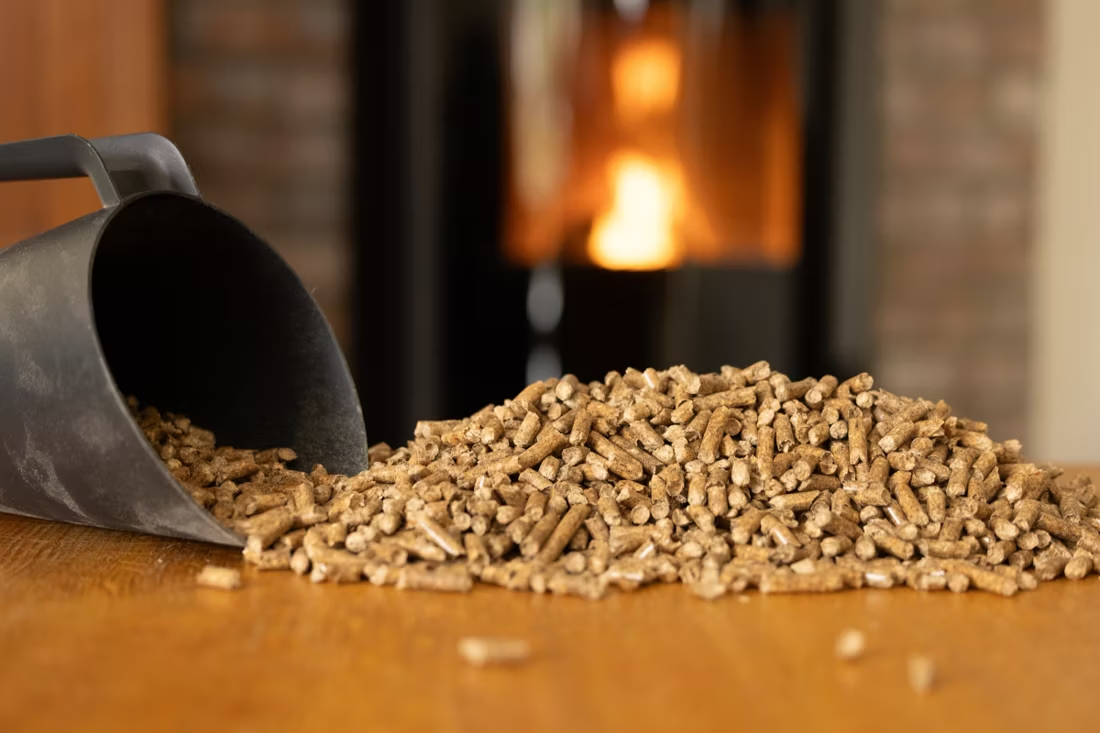
For a lot of Kossuth County households, that means a heat source that works on a farm schedule, not a firewood schedule. A pellet stove's hopper can run 24 to 40+ hours on a fill, which fits well around calving season, harvest, or simply not wanting to split oak and hickory rounds on a January evening. Regional hardwood pellet suppliers like Lignetics and Indeck Energy Services keep decent-quality fuel accessible without a long haul, and with no local air quality restrictions or non-attainment concerns, there's nothing stopping a pellet appliance from running full-time in the house or out in the shop. Many rural Kossuth County homes lean on propane or fuel oil as their primary furnace fuel—a pellet stove or insert in the main living space is a common, cost-effective way to cut into that bill during the coldest stretch of the year.
Three steps. No salesperson until you're ready.
Tell us about your project
Your zip code, your situation, and the fuel you're leaning toward—or let the answers point you to one.
See what's actually available
The brands dealers within 100 miles genuinely carry—real options, never a catalog mirage.
Get your dealer & Project Guide
A trusted local dealer, plus the free Project Guide & Parts List that names every component of the job.
Frequently Asked Questions
How much does a pellet stove installation cost in Kossuth County?
Most pellet stove installations in Kossuth County run in the neighborhood of $3,000 to $6,000, depending on the unit's BTU output, hopper capacity, and whether it's a freestanding stove venting through an exterior wall or an insert going into an existing fireplace. Because pellet stoves vent through a small PL-rated pipe rather than a full masonry chimney, installation is typically simpler and less costly than a wood stove install—a real advantage for older farmhouses without an existing flue. Shop or outbuilding installations can run lower since there's often less finish work involved. A local dealer will walk your specific space and give you a firm number.
What size pellet stove do I need for a Kossuth County home?
Sizing comes down to square footage, insulation, and how open your floor plan is—but given Kossuth County's cold, wind-exposed winters, it's smart to size toward the upper end of a stove's rated range rather than the lower end. A mid-size unit (around 40,000–50,000 BTU) comfortably heats 1,500 to 2,000 square feet in a reasonably tight home; older farmhouses with less insulation or higher ceilings often do better with a larger hopper and higher max BTU output. If you're heating a detached shop or garage in addition to living space, that's a separate sizing conversation—a local dealer can walk through both.
Where can I find a pellet stove dealer near Kossuth County?
With Kossuth County's population under 10,000 spread across a large rural footprint, dedicated hearth dealers are more likely based in a larger nearby trade hub—think Fort Dodge, Spencer, or Mason City—with technicians who travel out to Algona, Bancroft, Swea City, and the surrounding towns for installs and service. That's exactly the kind of local knowledge Find My Fireplace matches you with: a dealer who already knows the towns, the driving distances, and what actually holds up in this climate, rather than a big-box outlet guessing at your venting needs.
Where do I buy pellets in Kossuth County, and what do they cost?
Hardwood pellets from regional suppliers like Lignetics and Indeck Energy Services are typically available through farm co-ops, hardware stores, and hearth dealers serving the area, with pricing generally landing in the $230 to $300 per ton range depending on supply and season—buying early in the fall, before the coldest stretch drives up demand, is the usual local strategy. A ton lasts a typical household several weeks of steady burning, so most Kossuth County homes stock up with a pallet or two ahead of the season rather than buying bag by bag.
Do I need a permit to install a pellet stove in Kossuth County?
Most pellet stove installations require a building permit, and if you're outside city limits that means working with the Kossuth County zoning office based in Algona; installs within Algona, Bancroft, or another incorporated town go through that city's own permitting process. Because pellet venting is simpler than a masonry chimney, the permit process is usually straightforward—most local dealers pull the permit as part of the installation and handle the inspection sign-off for you.
Will my pellet stove work if the power goes out?
Not on its own—pellet stoves rely on electricity to run the auger that feeds fuel and the blower that pushes heat into the room, so a power outage shuts it down along with everything else. That matters in Kossuth County, where winter storms and ice can knock out rural electric service for hours at a time. Many farm households already run a backup generator for exactly this reason, and a small generator or battery backup is enough to keep a pellet stove running through an outage. If uninterrupted backup heat without any electricity is the top priority, a wood stove is worth considering alongside—plenty of local homes run both.
How often does a pellet stove need cleaning and maintenance?
Plan on cleaning the ash pan and glass every few days during heavy winter use, a deeper cleaning of the burn pot and heat exchanger tubes every couple of weeks, and a full professional service once a year—typically late summer, ahead of the October start to Kossuth County's heating season. Homes running a pellet stove as a primary heat source through the coldest months will burn through more fuel and generate more ash than a supplemental setup, so lean toward the more frequent end of that schedule.
Pellet stove vs. wood stove—which makes more sense for my Kossuth County home?
Wood is the traditional choice out here, and with oak, hickory, maple, and walnut common on local farm ground, plenty of households already have access to firewood. A wood stove also keeps working with zero electricity, which counts for something during a rural winter outage. A pellet stove trades that off for real convenience—load the hopper, set the thermostat, and walk away, with none of the splitting, stacking, or ash volume of cordwood, and a cleaner, more consistent burn. For a busy farm schedule or a household that wants set-it-and-forget-it heat in the main living space, pellet usually wins; for pure backup heat security during outages, wood still has the edge.
What's the best pellet stove for Kossuth County's cold winters?
Given average lows around 6°F and a heating season that runs six months or more, look for a pellet stove with a larger hopper (60+ lb capacity) and higher max BTU output (50,000 BTU or more) so it can run through the coldest overnight stretches without needing a refill at 2 a.m. Models with a good thermostat control and a proven auger feed system hold up best under the kind of continuous, heavy-use winter burning that's normal here rather than occasional weekend use. A local dealer can match specific models to your square footage and how hard you plan to run it.
Why is a fireplace insert so efficient?
An insert does two things: it seals the chimney completely, so you stop losing air you already paid to heat, and it radiates warmth into the room through the firebox and glass. Most add a heat-exchange fan that pulls cool room air underneath, wraps it around the hot firebox, and pushes it back out warm. Your home is more efficient before you've even lit the first fire.
What's the difference between an insert and a zero-clearance fireplace?
An insert is a fireplace that slides into a pre-existing wood-burning fireplace—if you don't have one, there's nothing to insert it into. A zero-clearance fireplace is built into a framed wall, which makes it the answer for remodels and new construction. Simple test: existing masonry fireplace means insert; blank or framed wall means zero-clearance.
How much should I budget for a fireplace?
For an average home—covering the fireplace, the vent pipe, and basic installation—a budget between $3,900 and $5,500 gives you a lot of options across wood, gas, and pellet. By the time you add finish work, gas line, and electrical, the average complete installation lands between $5,000 and $12,000 all-in. In a remodel or new build, a good rule is to put about 2.5% of the total project cost toward the fireplace.
Can a fireplace actually lower my heating bill?
Yes—by creating a comfort zone. A furnace heats every square foot of the house just to warm the one room you're in; a gas fireplace on low burns roughly a sixth of the gas a typical furnace does. Set the furnace around 55–60 degrees as a baseline, then heat the rooms your family actually uses. Families who heat this way commonly save $20–$60 a month.
Pellet Brands Stocked Around Kossuth County
Manufacturers will point you to the nearest stocking dealer.
Find your pellet stove in Kossuth County.
Tell us about your home or shop and we'll match you with a trusted local dealer serving Kossuth County, plus a free Project Guide & Parts List—the exact parts, including the vent kit, and a recommended installer for your pellet project.
Find Your Fireplace →