
Steady heat for the coldest, longest winters in Iowa.
With winter lows averaging 6°F and a heating season that rivals Fargo, ND in severity, Kossuth County asks a lot of any heating system. Find the right gas fireplace or insert for your farmhouse or in-town home, and connect with a trusted local dealer who can get it installed right.
Every Project Starts From One of These Five Situations
Reliable heat when the wind chill takes over.
Kossuth County is Iowa's largest county by land area, but one of its least densely populated—roughly 9,500 people spread across farmland, small towns, and the county seat of Algona. Sitting in Climate Zone 6A near the Minnesota border, winters here run long and hard: heating season typically stretches from October into April, and with a winter heating load rivaling Fargo, ND, Kossuth County's cold is more severe than the rest of the Midwest. Open farmland means wind-driven cold and the occasional ice storm that knocks out power for days at a time.
In town—Algona, Bancroft, Titonka, Swea City, Lakota, West Bend, and Whittemore—many homes have access to piped natural gas, making a direct-vent gas fireplace a straightforward add-on. Out on the farmsteads that make up most of the county, propane is the standard fuel, and it's often already on the property: grain dryers, hog confinement heaters, and shop furnaces mean many rural homeowners already have a propane tank and supplier relationship before they ever add a fireplace. Kossuth County has no air quality restrictions or burn curtailment days, so the choice between gas and wood here comes down to convenience rather than regulation—plenty of homes run a gas fireplace for daily use in the living room and keep a wood stove or insert on hand, burning the oak, hickory, maple, and walnut common to the region, as backup heat for when an ice storm takes the power out.
Three steps. No salesperson until you're ready.
Tell us about your project
Your zip code, your situation, and the fuel you're leaning toward—or let the answers point you to one.
See what's actually available
The brands dealers within 100 miles genuinely carry—real options, never a catalog mirage.
Get your dealer & Project Guide
A trusted local dealer, plus the free Project Guide & Parts List that names every component of the job.
Frequently Asked Questions
How much does a gas fireplace installation cost in Kossuth County?
A typical direct-vent gas fireplace or insert installation runs roughly $3,000 to $8,000, depending on the unit, the venting path, and whether new gas line work is needed. Homes in Algona or other towns with existing natural gas service and a fireplace already in place tend to land on the lower end. Rural farmsteads on propane are often a similar cost if a tank and supply line are already on the property for a grain dryer or shop heater—the fireplace hookup just taps into existing infrastructure. New propane tank installation or a long buried line run to a new farmhouse location adds to the total. A local dealer can give you a firm number after seeing the space.
Can I convert an existing wood fireplace to gas?
Yes, and it's a common project in older Kossuth County farmhouses. A gas insert typically slides into your existing masonry firebox and vents through a stainless liner run up the current chimney, so you keep the look of the fireplace while gaining instant, consistent heat. Cost usually falls in the $3,500 to $7,000 range locally, with the main variable being whether the home is already on natural gas or needs a propane line and regulator setup. It's a good option for homes where the original wood fireplace has gone unused for years but the masonry structure is still sound.
Is natural gas available in Kossuth County, or do I need propane?
It depends on where you are. Algona and several of the county's smaller incorporated towns—Bancroft, Titonka, Swea City, Lakota, West Bend, Whittemore—have natural gas service available to most in-town homes. Outside city limits, in the unincorporated farmland that makes up the majority of the county, propane is the standard fuel. Many rural properties already have a propane tank in place for a grain dryer, livestock building heater, or backup generator, which makes adding a propane fireplace relatively simple—your installer just taps into the existing supply rather than starting from scratch.
Will my gas fireplace still work if the power goes out?
Most direct-vent gas fireplaces will, which matters here—ice storms and high winds across the open farmland of Kossuth County can take down power lines for extended stretches. Units with intermittent pilot ignition (IPI) run on a small battery backup that kicks in automatically when the power drops, so the fireplace still lights on demand. Valor fireplaces take a different approach: they generate their own electricity from the pilot flame's thermocouple, so there's no battery to remember or replace. Either way, ask your local dealer about the ignition system before you buy if reliable heat during an outage is a priority.
What's the difference between a gas fireplace, insert, and stove?
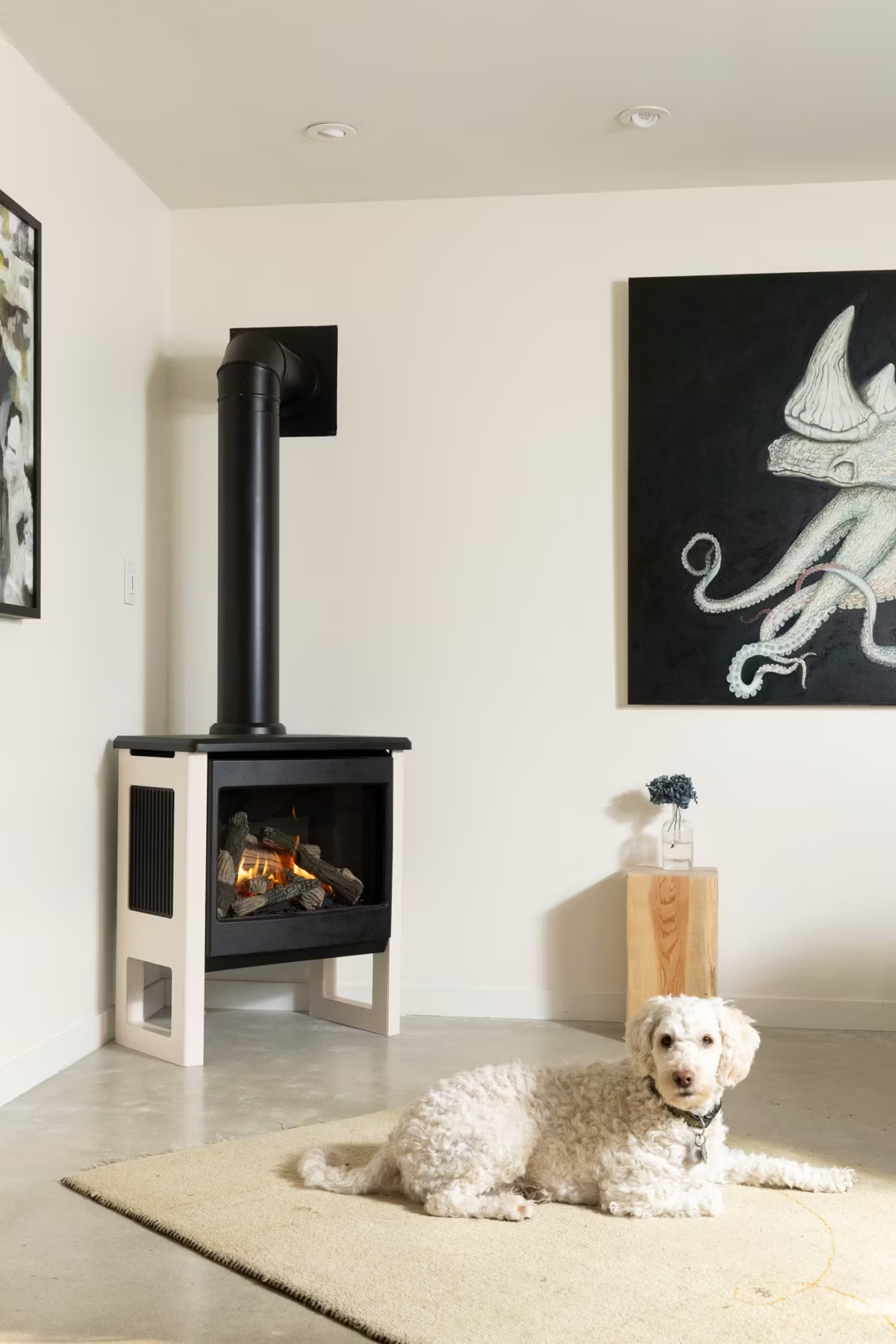
A gas fireplace is a built-in unit framed into a wall—the right call for new construction or a remodel without an existing fireplace. A gas insert is built to slide into an existing masonry firebox, using the chimney you already have as the vent path—the common choice for older Kossuth County farmhouses with a fireplace that's gone cold. A gas stove is a freestanding cabinet-style unit that sits on the floor like a wood stove but burns gas, often used where there's no existing chimney but floor space allows it. A local dealer can walk your home and tell you which fits your layout.
Do I need a permit to install a gas fireplace in Kossuth County?
Generally yes—both a building permit and gas line work require sign-off, whether you're inside Algona's city limits or in unincorporated Kossuth County. The gas connection itself needs to be run or certified by a licensed installer, which is one reason it's worth working with an established hearth dealer rather than a handyman: they coordinate the gas hookup, venting, and inspection together instead of leaving you to manage separate trades. Most local dealers handle the permitting as part of the installation.
Should I choose a vented or vent-free gas fireplace?
Vented (direct-vent) units draw combustion air from outside and exhaust it back outside through a sealed pipe—they're the standard, code-friendly choice and hold up well through a Kossuth County winter without any concessions on indoor air quality. Vent-free units burn without external venting and release some combustion byproducts into the room; Iowa allows them, but they come with strict room-sizing rules and aren't recommended as a primary heat source for a home dealing with a heating season as long and demanding as Kossuth County's. For serious winter heat output, direct-vent is the more common and more practical choice locally.
How often does a gas fireplace need to be serviced?
Plan on an annual inspection, ideally before the heating season starts in the fall. A technician checks the burner, pilot assembly, venting, and gas connections, and cleans the glass and interior. It's a much smaller job than chimney sweeping for a wood unit but just as important for safety, especially for units that run daily through a long Kossuth County winter. Most local service providers charge in the neighborhood of $150 to $250 for a standard inspection.
Should I get a gas fireplace or a wood stove for my Kossuth County home?
Gas gives you instant, thermostat-controlled heat with no wood handling—a real advantage for daily use in the living room through a long, cold season. Wood, burning the oak, hickory, maple, and walnut common across the county, still has a strong following here, particularly on farms where firewood is close at hand and a stove can keep a house warm through a multi-day power outage from an ice storm. Because Kossuth County has no burn restrictions or air quality curtailment days, there's no regulatory downside to running either—or both. It's common locally to see a gas fireplace in the main living space for everyday convenience and a wood stove in a shop, basement, or secondary space as backup heat.
Can I put a TV above my fireplace?
Yes—with an asterisk. Fireplaces are hot and TVs don't like heat. Either put a mantel between them to deflect rising warmth, or choose a fireplace with heat-management technology that creates a cool zone on the wall above—the wall stays around 125 degrees, barely warm, while the room still gets full heat. If you like clean lines and don't want a mantel, heat management is the answer.
Why is a fireplace insert so efficient?
An insert does two things: it seals the chimney completely, so you stop losing air you already paid to heat, and it radiates warmth into the room through the firebox and glass. Most add a heat-exchange fan that pulls cool room air underneath, wraps it around the hot firebox, and pushes it back out warm. Your home is more efficient before you've even lit the first fire.
Can a fireplace actually lower my heating bill?
Yes—by creating a comfort zone. A furnace heats every square foot of the house just to warm the one room you're in; a gas fireplace on low burns roughly a sixth of the gas a typical furnace does. Set the furnace around 55–60 degrees as a baseline, then heat the rooms your family actually uses. Families who heat this way commonly save $20–$60 a month.
Can I install a fireplace myself?
If you're putting a fire in your house on purpose, it's best to work with an expert. Unless you're genuinely experienced in framing, gas line, vent pipe, and the national code on clearances to combustibles, have a professional do it—and ideally the same company that sells you the fireplace, so warranty, service, and liability all live under one roof.
Find your gas fireplace in Kossuth County.
Tell us a bit about your home and heating goals, and we'll match you with a trusted local Kossuth County dealer—plus a free Project Guide & Parts List with the exact equipment, venting, and installation plan for your gas fireplace project.
Find Your Fireplace →