
Pellet stoves built to run through Hancock County winters.
With an average winter low of 6°F and over 7,700 heating degree days a year, Hancock County asks a lot of any heat source. Find the right pellet stove or insert and connect with a trusted local dealer who can size and install it correctly.
Every Project Starts From One of These Five Situations
Consistent heat without the wood-splitting.
Hancock County sits in north-central Iowa's corn and soybean belt, and its winters are genuinely severe—a 6A climate zone, an average winter low around 6°F, and roughly 7,721 heating degree days per year, putting it in the same cold-climate tier as Fargo, ND or International Falls, MN. Propane and LP furnaces do most of the primary heating work on rural acreages here, and plenty of homes with mature oak, hickory, maple, and walnut on the property still burn cordwood. But not everyone wants to cut, split, stack, and haul wood every winter, especially retirees and acreage owners who want dependable supplemental heat without the labor of a wood stove.
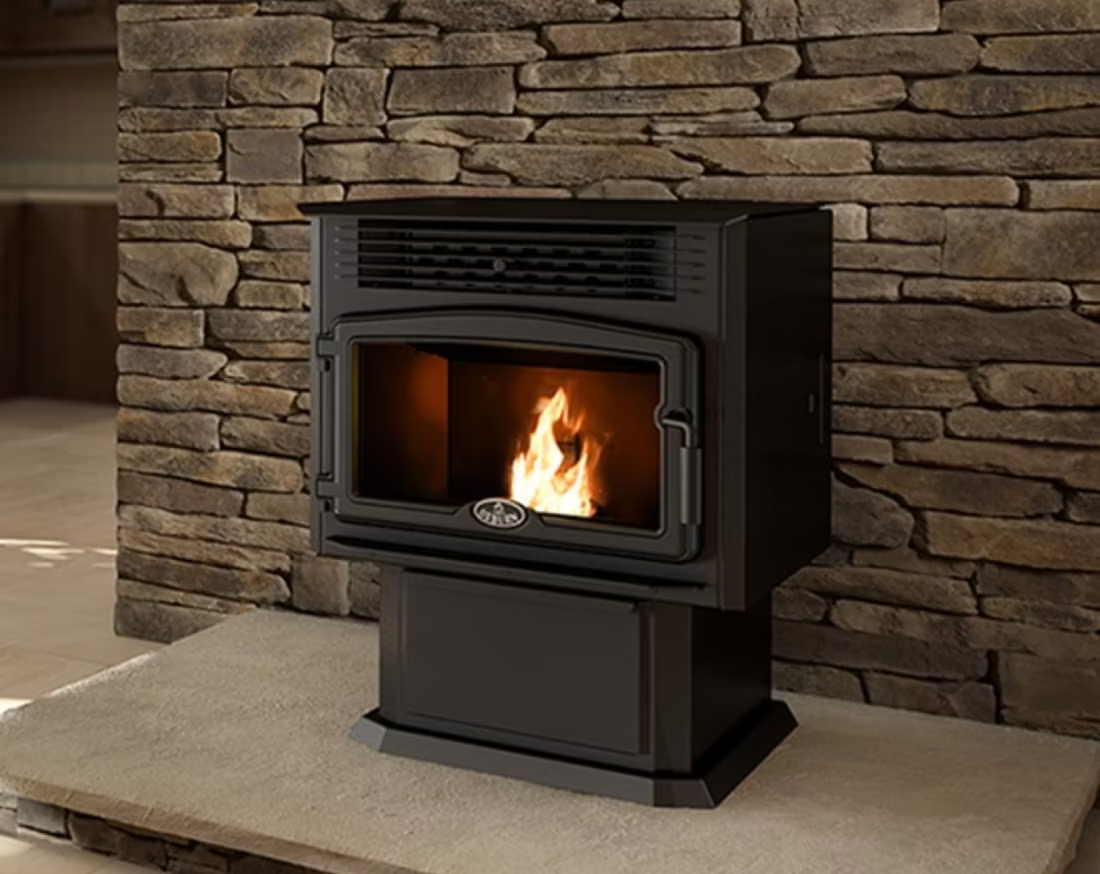
That's where a pellet stove or insert fits in. Set a thermostat, load the hopper, and get steady, even heat with far less mess than cordwood—no creosote buildup, no bark and bugs tracked across the floor, and a small ash pan instead of a full firebox to shovel out. Hancock County has no air-quality non-attainment issues or wintertime burn curtailment days, so a pellet stove can run whenever you want it to, unlike some western counties where wood-burning appliances get restricted during inversions. Regional hardwood pellet producers including Lignetics and Indeck Energy Services supply the upper Midwest, which generally means shorter shipping distances and more consistent pellet quality at farm stores and co-ops throughout the area than pellets trucked in from farther away.
Three steps. No salesperson until you're ready.
Tell us about your project
Your zip code, your situation, and the fuel you're leaning toward—or let the answers point you to one.
See what's actually available
The brands dealers within 100 miles genuinely carry—real options, never a catalog mirage.
Get your dealer & Project Guide
A trusted local dealer, plus the free Project Guide & Parts List that names every component of the job.
Frequently Asked Questions
How much does a pellet stove installation cost in Hancock County?
A freestanding pellet stove installation typically runs $3,000 to $6,500 in this part of Iowa, depending on the unit, hearth pad requirements, and whether venting has to be run through an exterior wall versus reusing an existing chimney chase. A pellet insert going into an existing masonry fireplace usually lands toward the lower end of that range since it reuses the chimney as a chase for the smaller flexible vent liner. Ask any local dealer for a firm number after they've seen your hearth or install location—venting length and wall material (brick versus wood-frame siding) are the two biggest swing factors on rural Hancock County homes.
What size pellet stove do I need for a Hancock County farmhouse?
With 7,721 heating degree days and winter lows regularly near or below zero, don't undersize. A stove rated for 40,000 to 50,000 BTU output is a reasonable target for a main living area in an older, less-insulated farmhouse—common in this part of the county—while a well-insulated newer build may get by with something smaller if the pellet stove is meant as supplemental rather than primary heat. Hopper capacity matters too: a larger hopper (60+ lb capacity) buys you a longer unattended burn on the coldest nights, which is worth asking about if the stove will be your main heat source in an outbuilding, shop, or rural home used part-time in winter.
Do I need a permit to install a pellet stove in Hancock County?
Most new pellet stove and insert installations require a building permit through the Hancock County Building & Zoning Department in Garner, particularly when new venting is run through an exterior wall or roof. The venting itself also needs to meet manufacturer clearance specs and, in most installs, draw outside combustion air rather than relying on room air—a detail a certified installer will already know to handle. Reputable local dealers typically pull the permit and schedule the inspection as part of the installation, so you shouldn't need to navigate the process yourself.
Pellet stove vs. wood stove—which makes more sense on a Hancock County acreage?
With mature oak, hickory, maple, and walnut common on rural properties here, self-cut firewood is genuinely accessible in Hancock County in a way it isn't everywhere—which is a real point in favor of wood. A wood stove also keeps working during a power outage, which matters on farmland where winter windstorms and ice can knock out electricity for hours or days. A pellet stove needs electricity to run its auger and combustion blower, so it goes dark in an outage unless you add a battery backup. What pellet stoves give up in storm-resilience they make up in convenience: no splitting, no stacking, no creosote, and more even, thermostatically controlled heat. Plenty of Hancock County homeowners run pellet as their everyday heat and keep a wood stove or fireplace as backup for outages.
Where do I buy pellets, and how should I store them?
Hardwood pellets from producers like Lignetics and Indeck Energy Services are typically available through farm supply stores, hardware stores, and co-ops across north-central Iowa, usually sold in 40-lb bags, often by the ton for the season. Expect to budget for several tons per heating season if pellet is your primary heat source through a Hancock County winter. Store bags off a concrete floor on a pallet in a dry outbuilding or garage—moisture is the enemy of pellet fuel, and damp pellets swell, jam augers, and burn poorly. Buying your season's supply in late summer or early fall, before demand picks up with the first cold snap, is standard practice locally.
How much maintenance does a pellet stove need?
Pellet stoves need more routine attention than a gas unit but far less than a wood stove's annual chimney sweep. Plan on emptying the ash pan every few days during heavy use, wiping the glass weekly, and vacuuming the burn pot and hopper area every couple of weeks. An annual professional service—checking the auger motor, combustion blower, gaskets, and venting—is worth scheduling before the season starts, especially given how many hours a stove will log through a Hancock County winter that regularly runs from October into April.
What's the best pellet stove for a cold Iowa winter?
Look for a stove with a stated heating capacity that comfortably exceeds your square footage, since manufacturer BTU ratings are often measured under milder conditions than a 6°F average winter low. A larger hopper reduces how often you're reloading during extended cold snaps, and a stove with a reliable thermostat or room-sensing control will cycle output up automatically overnight rather than requiring you to babysit the setting. Local dealers who carry Lignetics-compatible and other regionally common pellet brands can also confirm which stove models burn cleanly with the pellet fuel actually stocked nearby—fuel-stove compatibility affects performance more than people expect.
Are there rebates or tax credits for a pellet stove in Iowa?
Pellet stoves and inserts rated at 75% efficiency or higher generally qualify for the federal biomass stove tax credit (25C), which can cover a meaningful percentage of both equipment and installation costs up to an annual cap—worth confirming with your installer and tax preparer at the time of purchase, since credit percentages and caps have changed in recent years. Hancock County doesn't currently have a county-level rebate program for pellet appliances, so the federal credit is the main incentive to factor into your budget.
When's the best time of year to install a pellet stove in Hancock County?
Late summer through early fall is the ideal window—before the first hard freeze, and before local dealers' installation schedules fill up with the seasonal rush that hits every October as temperatures drop toward that 6°F average low. Installing early also gives you time to lay in your pellet supply while stock is fresh and before winter demand tightens availability at nearby farm stores and co-ops. Waiting until the season's first cold snap generally means a longer wait for both the stove and the installer.
Why is my open fireplace making my house colder?
Open fireplaces suck—literally. As the fire burns, it consumes air your furnace already paid to heat and pulls it out through the chimney, so the house is actually colder after the fire goes out than before you lit it. An insert fixes this: it seals the chimney, puts fixed glass across the front, and turns that hole in your house into a real heat source.
What's the difference between an insert and a zero-clearance fireplace?
An insert is a fireplace that slides into a pre-existing wood-burning fireplace—if you don't have one, there's nothing to insert it into. A zero-clearance fireplace is built into a framed wall, which makes it the answer for remodels and new construction. Simple test: existing masonry fireplace means insert; blank or framed wall means zero-clearance.
Can a fireplace actually lower my heating bill?
Yes—by creating a comfort zone. A furnace heats every square foot of the house just to warm the one room you're in; a gas fireplace on low burns roughly a sixth of the gas a typical furnace does. Set the furnace around 55–60 degrees as a baseline, then heat the rooms your family actually uses. Families who heat this way commonly save $20–$60 a month.
What is an in-home preview and do I need one?
It's a visit where a hearth professional measures your space, confirms the model you picked actually works in your home, and walks the specs—framing, gas line, venting, finish work—before anything is ordered. Some details you just can't know until you see the house. Never make a down payment without one; it's the single most-skipped step that burns buyers.
Pellet Brands Stocked Around Hancock County
Manufacturers will point you to the nearest stocking dealer.
Find your pellet stove in Hancock County.
Tell us about your home and heating needs, and we'll match you with the right pellet stove or insert plus a free Project Guide & Parts List—including the vent kit—and a recommended local dealer to install it.
Find Your Fireplace →