
Supplemental warmth built for Hancock County winters that dip into single digits.
With a 6°F average winter low and a heating season cold enough to sit alongside Fargo, ND, Hancock County homes need real heat where families actually live: finished basements, additions, and drafty farmhouse living rooms. I'll match you with a vetted local dealer who can size an electric unit for the room it's actually going in, not just sell you whatever's on the shelf.
Every Project Starts From One of These Five Situations
Room-by-room comfort for farm country's coldest stretches.
Hancock County covers roughly 400 square miles of flat north-central Iowa farmland around Garner, with Britt, Kanawha, Corwith, Woden, and Klemme spread across the rest of the county's grid of section roads. At population 7,569, it's a rural county where many homes are older farmhouses—two-story, balloon-framed, and often unevenly heated room to room. With winters comparable to Fargo, ND and winter lows averaging 6°F, the heating season here runs long and hard, closer to Fargo, ND than to most of the Midwest. That's exactly the kind of house where an electric fireplace earns its keep: not as the furnace's replacement, but as a zoned heat source for the room that never quite gets warm enough on its own.
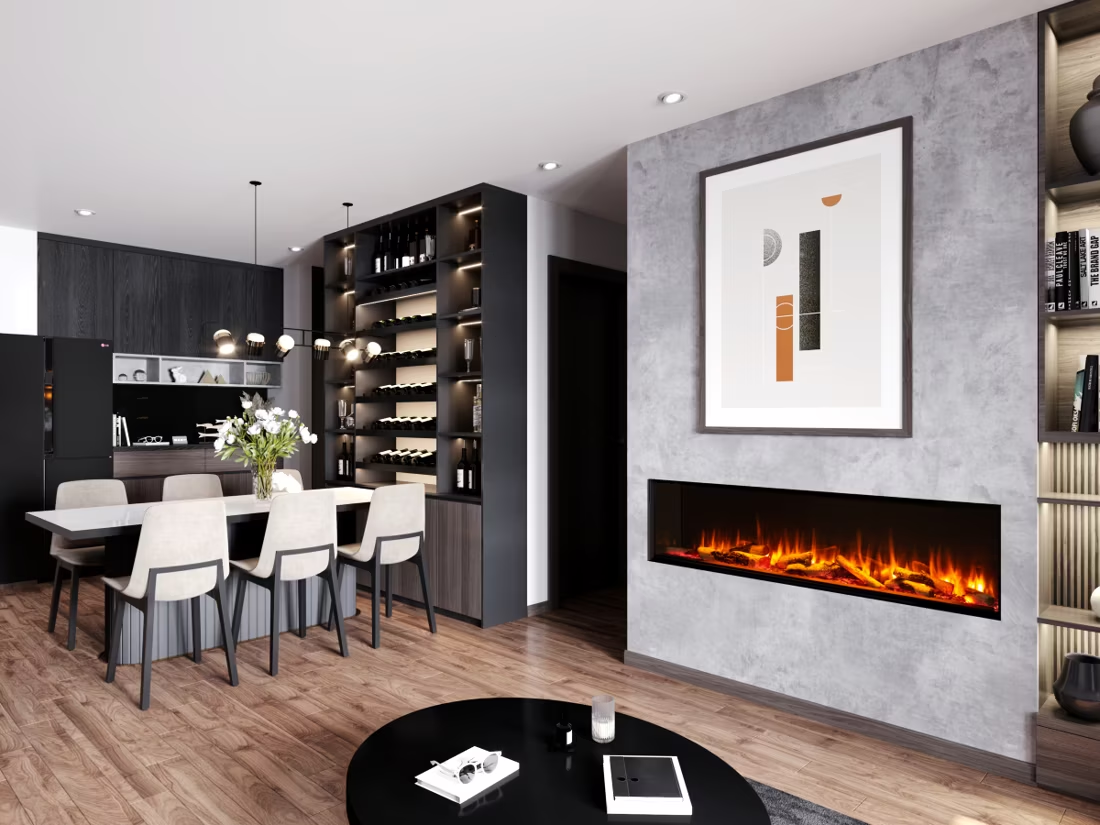
Electric fireplaces and inserts don't carry a heating load the way a furnace, wood stove, or propane system does in a climate this cold—nobody in Hancock County is running one as their only heat source through a January cold snap. What they're genuinely good for is a finished basement rec room, a three-season porch someone wants year-round, or a bedroom addition that's always the coldest room in the house. There's no venting, no gas line, and no county air quality restriction to navigate (Hancock County has none on record), which keeps installation simple. Many rural homes here are served by an electric cooperative rather than an investor-owned utility, so it's worth checking your rate structure before deciding how much you'll lean on electric resistance heat during the coldest months.
Three steps. No salesperson until you're ready.
Tell us about your project
Your zip code, your situation, and the fuel you're leaning toward—or let the answers point you to one.
See what's actually available
The brands dealers within 100 miles genuinely carry—real options, never a catalog mirage.
Get your dealer & Project Guide
A trusted local dealer, plus the free Project Guide & Parts List that names every component of the job.
Frequently Asked Questions
How much does an electric fireplace installation cost in Hancock County?
A plug-in electric fireplace or insert that uses an existing standard outlet typically runs $300 to $1,200 installed, mostly the cost of the unit itself plus mounting or a surround. A built-in wall unit or a larger insert that needs a new dedicated 120V or 240V circuit run from the panel—common in older Garner or Britt farmhouses with limited outlets near the install spot—adds electrician labor and can push the total to $1,500-$2,500. A local dealer can tell you within a few minutes of looking at your panel and wall which category your project falls into.
Can an electric fireplace actually heat a room through a Hancock County winter?
For most rooms, yes, as a supplement—not as the room's only heat source once temperatures fall into the single digits, which happens regularly given the county's 6°F average winter low. A properly sized electric insert can comfortably carry a finished basement or an addition on milder days and take the edge off the coldest ones, but with a long heating season that stretches from early fall well into spring, Hancock County's heating season is long enough that most homes still lean on a furnace, wood stove, or propane system for the bulk of it. Think of electric as the fix for the one room that's always cold, not a whole-house solution.
Do I need a permit to install an electric fireplace in Hancock County?
A simple plug-in unit generally doesn't require a permit since there's no gas line or venting involved. If your installer needs to run a new dedicated circuit—which is common for larger built-in units—that electrical work typically does require a permit through your local jurisdiction, whether that's Garner, Britt, Kanawha, or the county for unincorporated areas. A licensed electrician handling the circuit work usually pulls that permit as part of the job, so it's worth confirming with your dealer whether your specific unit needs new wiring before you budget for the install.
What does it cost to run an electric fireplace day-to-day?
Most electric fireplaces draw around 1,500 watts on the heat setting. At a typical rural Iowa electric cooperative rate, that works out to roughly 15-20 cents an hour of heat, or about $1-2 for a full evening of use. Compared to running a furnace to cover the same square footage through a long, Fargo-caliber winter, that's a reasonable cost for zoning heat into one room—but it's also why most Hancock County homeowners use electric fireplaces to supplement, not replace, their main heating system.
Electric fireplace vs. wood stove—which makes more sense for a Hancock County farmhouse?
Wood has deep roots here—oak, hickory, maple, and walnut from farm windbreaks and creek timber are common fuel sources, and a wood stove keeps working through a power outage, which matters on rural lines during an ice storm. An electric fireplace can't do that; it goes dark the moment the power does. Where electric wins is simplicity and zero maintenance: no chimney, no ash, no venting, and it can go almost anywhere there's an outlet. Many Hancock County households end up with both—wood or propane carrying the real heating load, electric handling ambiance and supplemental warmth in a room the main system doesn't reach well.
Is propane a bigger factor than electric heat in Hancock County?
For whole-house heating, yes, in most of the county outside town limits. Rural Hancock County homes without a natural gas main commonly run on propane for the furnace, with electric fireplaces used for supplemental, room-specific warmth rather than as a primary system. Inside Garner or the smaller towns, some homes have gas service and use electric fireplaces the same way—as a zoned add-on for a basement, sunroom, or bedroom rather than a fuel-cost play.
What type of electric fireplace works best in an older farmhouse?
For a drafty older two-story home, a wall-mounted or built-in insert with a strong infrared heating element tends to outperform a small tabletop or freestanding unit, since infrared heats objects and people directly rather than just circulating warm air that escapes through an old farmhouse's leaky envelope. A local dealer can also point you toward units with a supplemental fan-forced mode for faster room recovery on the coldest days, which matters more in a 6°F-average-low climate than it would somewhere milder.
Will an electric fireplace work as backup heat during a power outage?
No—electric fireplaces need grid power to run, so they're not a fallback when the power goes out, which is a real consideration on rural Hancock County lines during winter ice or wind events. If backup heat during an outage is a priority for your household, a wood stove or a propane unit with battery-backed ignition is the better choice for that specific role. Electric fireplaces are best thought of as a comfort and convenience feature for normal operating conditions, not an emergency heat source.
Are there any rebates for efficient electric heating equipment in Hancock County?
Some rural electric cooperatives serving Hancock County offer efficiency rebates or off-peak rate programs for qualifying electric heating equipment, though programs and eligibility change from year to year. It's worth a call to your specific electric provider before you buy, since a rebate can shift the math between a basic plug-in unit and a more efficient built-in model. A local dealer familiar with the area can usually tell you which brands and models have qualified for cooperative rebates in the past.
Do electric fireplaces actually produce heat?
Yes—most put out around 4,800–5,000 BTUs from a standard outlet, which comfortably warms a bedroom, office, or den as a comfort-zone heater. What they won't do is carry a whole house the way wood, gas, or pellet can. Think of electric as ambiance-first with honest supplemental heat: flames on with no heat in July, flames plus warmth in January.
Can I put a TV above my fireplace?
Yes—with an asterisk. Fireplaces are hot and TVs don't like heat. Either put a mantel between them to deflect rising warmth, or choose a fireplace with heat-management technology that creates a cool zone on the wall above—the wall stays around 125 degrees, barely warm, while the room still gets full heat. If you like clean lines and don't want a mantel, heat management is the answer.
What is an in-home preview and do I need one?
It's a visit where a hearth professional measures your space, confirms the model you picked actually works in your home, and walks the specs—framing, gas line, venting, finish work—before anything is ordered. Some details you just can't know until you see the house. Never make a down payment without one; it's the single most-skipped step that burns buyers.
How much should I budget for a fireplace?
For an average home—covering the fireplace, the vent pipe, and basic installation—a budget between $3,900 and $5,500 gives you a lot of options across wood, gas, and pellet. By the time you add finish work, gas line, and electrical, the average complete installation lands between $5,000 and $12,000 all-in. In a remodel or new build, a good rule is to put about 2.5% of the total project cost toward the fireplace.
Get your free Project Guide & Parts List for an electric fireplace in Hancock County.
Tell me about the room you're trying to warm up and I'll match you with a trusted local Hancock County dealer and send over a free Project Guide & Parts List—the right unit, the circuit requirements if you need one, and a recommended installer, with no big-box guesswork.
Find Your Fireplace →