
Steady heat for Grundy County's long, cold winters.
With a long, demanding winter heating season and average winter lows near 9°F, Grundy Center, Reinbeck, Dike, and the rest of Grundy County need heat that doesn't quit. Find the right pellet stove or insert and connect with a trusted local dealer.
Every Project Starts From One of These Five Situations
Consistent, thermostat-controlled heat for a county built on farmland and long winters.
Grundy County is flat, rural, and farm-driven—about 8,500 people spread across Grundy Center, Reinbeck, Dike, Wellsburg, Morrison, and Holland, with corn and soybean ground running to every horizon. Winters here are genuinely hard: Climate Zone 6A, average lows around 9°F, and a long, demanding heating season—a load closer to Fargo, ND than to most of the Midwest. Farmhouses, machine sheds, and shop buildings across the county need heat that can run for hours unattended, especially during the stretches of subzero wind that come through in January and February.
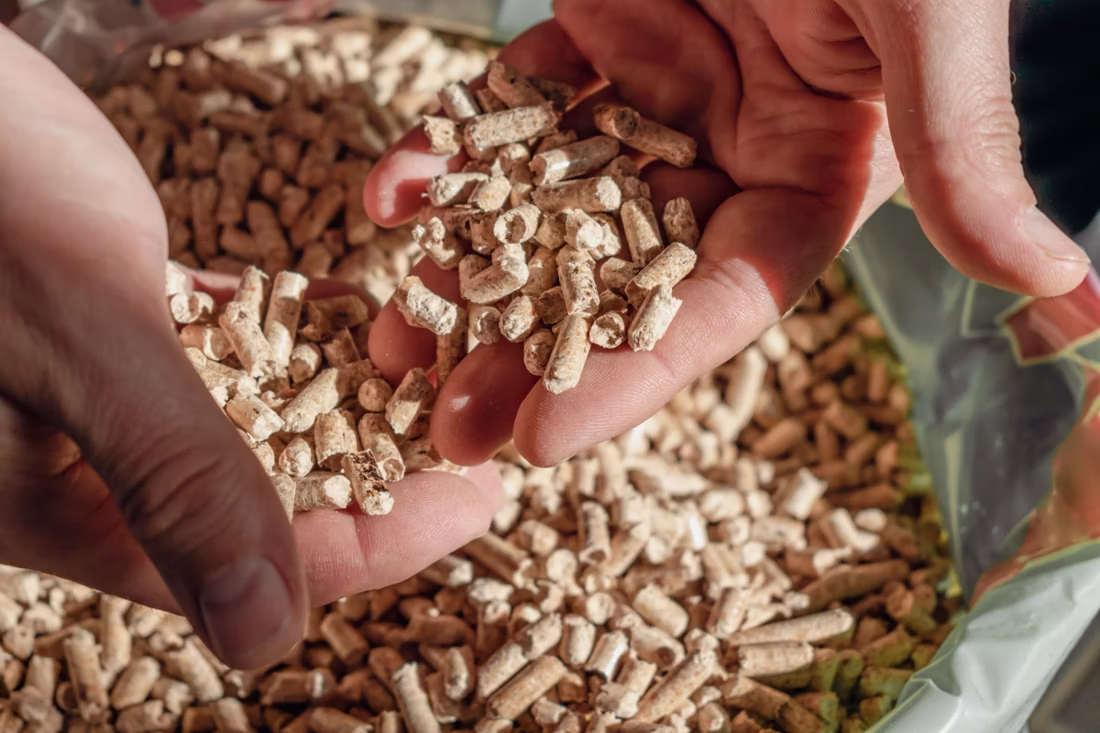
Pellet stoves fit that need well. Regional suppliers like Lignetics and Indeck Energy Services keep hardwood pellets available and reasonably priced throughout north-central Iowa, and a hopper-fed stove can hold a steady burn overnight without the wood-cutting, splitting, and stacking that comes with the oak, hickory, maple, and walnut that grow throughout the county. Grundy County has no air quality non-attainment issues or winter burn restrictions, so pellet appliances run without curtailment concerns—you're choosing pellet here for convenience and even heat output, not to get around a local air quality rule. For a farmhouse living room, a converted fireplace, or a heated shop, a properly sized pellet stove or insert delivers thermostat-like consistency that a wood stove can't quite match.
Three steps. No salesperson until you're ready.
Tell us about your project
Your zip code, your situation, and the fuel you're leaning toward—or let the answers point you to one.
See what's actually available
The brands dealers within 100 miles genuinely carry—real options, never a catalog mirage.
Get your dealer & Project Guide
A trusted local dealer, plus the free Project Guide & Parts List that names every component of the job.
Frequently Asked Questions
How much does a pellet stove installation cost in Grundy County?
Most pellet stove and insert installations run in the range of roughly $3,000 to $6,500 depending on the unit, whether you're installing into an existing masonry fireplace or a fresh location, and how much venting work is involved. A pellet insert dropped into an existing fireplace opening tends to land on the lower end, since it uses the existing chimney chase for the vent kit. A freestanding stove in a new spot—a farmhouse addition, a finished basement, or a heated outbuilding—costs more once you factor in the through-wall vent kit and any electrical work for the auger and blower. A local dealer covering Grundy County can give you a firm number after seeing the space.
What size pellet stove do I need for my home?
Sizing depends on square footage, ceiling height, insulation, and whether the stove is your primary or supplemental heat. Given Grundy County's long, demanding winter heating season and regular subzero wind chill, err toward the higher end of a size range rather than the low end—a stove rated for the exact square footage of a drafty older farmhouse will struggle on the coldest nights. Homes with vaulted ceilings, uninsulated additions, or older single-pane windows common in the county's older farmhouses typically need one size class up from what a square-footage chart alone would suggest. A local dealer can size the unit correctly during an in-home visit, which matters more here than the marketing numbers on a stove's spec sheet.
Where can I find certified pellet stove installers near me?
Grundy County is small and largely rural, so most hearth dealers who serve Grundy Center, Reinbeck, Dike, Wellsburg, and Morrison are based out of the Waterloo–Cedar Falls area and travel into the county for installs and service calls. Look for installers with NFI (National Fireplace Institute) certification, since pellet appliances have specific venting and electrical requirements that a general contractor may not be familiar with. Buying and installing through the same dealer simplifies warranty coverage if the auger motor, igniter, or control board ever needs service—parts that aren't stocked at a typical hardware store.
What's the difference between a pellet stove and a pellet insert?
A pellet stove is a freestanding unit that sits on its own hearth pad and vents through a wall or existing chimney chase—it can go almost anywhere with the right clearances, including a farmhouse mudroom, basement, or shop. A pellet insert is built to slide into an existing masonry fireplace opening, using the chimney you already have (with a proper liner and vent kit) rather than requiring new venting. For Grundy County homes with an older fireplace that rarely gets used for wood, an insert is often the simpler upgrade—it keeps the existing look while adding real, controllable heat output.
Do I need a permit to install a pellet stove in Grundy County?
Most new pellet stove or insert installations require a building permit through Grundy County's building department, since the install involves a vent kit through an exterior wall or chimney and often a dedicated electrical circuit for the auger and blower motor. Most local dealers handle the permit paperwork as part of the installation quote, so it's rarely something a homeowner has to manage directly. Because Grundy County has no air quality non-attainment designation, there are no seasonal burn restrictions or curtailment periods to worry about once the stove is installed and running.
What's the best pellet stove for Grundy County's climate?
For a climate with lows regularly near 9°F and stretches of subzero wind chill, look for a pellet stove with a large hopper capacity—40 to 60 pounds—so it can run overnight or through a full farm workday without a refill. Models with a thermostat feature and an automatic auger feed will hold a more consistent temperature during the kind of extended cold that hits north-central Iowa in January. If the stove is heating an older, less-insulated farmhouse or a shop building, size up rather than down, and ask a local dealer about backup power options since pellet stoves—unlike wood stoves—need electricity to run the feed system and blower.
Where can I buy pellets in Grundy County, and how much do they cost?
Regional brands like Lignetics and Indeck Energy Services supply hardwood pellets throughout north-central Iowa, and most hearth dealers or farm supply stores in the Waterloo–Cedar Falls area stock or can order pellets by the pallet (typically 50 forty-pound bags per ton). Pricing fluctuates with the season—expect to pay more if you're buying in October or November versus stocking up in the off-season. Buying a full winter's supply—often 2 to 4 tons for a primary-heat home given how long and cold the county's winters run—ahead of the cold season is the most common way locals avoid a mid-January price spike or shortage.
Will my pellet stove work during a power outage?
Not without a backup power source. Pellet stoves rely on an electric auger to feed pellets and a blower to distribute heat and exhaust combustion air, so a standard unit shuts down the moment the power goes out. This matters in Grundy County, where winter storms and high winds across open farmland can knock out rural electric service for extended stretches. Homeowners who want pellet heat as backup heat during outages typically pair the stove with a small generator or battery backup system sized to run the auger and blower—ask your local dealer about the wattage draw for the specific model you're considering.
Pellet stove vs. wood stove—which is right for my home?
Wood stoves burn cordwood—plentiful in Grundy County given the oak, hickory, maple, and walnut common to the area—work without electricity, and offer real backup heat during a power outage. Pellet stoves are more automated: load the hopper, set the thermostat, and let the auger feed itself, with less ash and no chimney creosote buildup to manage. For a farmhouse or shop where someone is around daily to maintain a wood fire, wood often wins on lower fuel cost. For a household that wants consistent, hands-off heat and doesn't want to deal with splitting and stacking cordwood, pellet is usually the better fit—as long as you have a plan for power outages.
How often does a pellet stove need cleaning?
A clean pellet stove is a happy pellet stove. Plan on cleaning the burn pot about once a week when you're burning regularly—ash and clinkers gum up the air holes just like a pellet barbecue. Most pellet stove problems trace back to skipped cleaning that nobody explained up front. Some designs make it easy with a trapdoor burn pot: pull a lever and the gunk drops into the ash pan.
Why is my open fireplace making my house colder?
Open fireplaces suck—literally. As the fire burns, it consumes air your furnace already paid to heat and pulls it out through the chimney, so the house is actually colder after the fire goes out than before you lit it. An insert fixes this: it seals the chimney, puts fixed glass across the front, and turns that hole in your house into a real heat source.
How much should I budget for a fireplace?
For an average home—covering the fireplace, the vent pipe, and basic installation—a budget between $3,900 and $5,500 gives you a lot of options across wood, gas, and pellet. By the time you add finish work, gas line, and electrical, the average complete installation lands between $5,000 and $12,000 all-in. In a remodel or new build, a good rule is to put about 2.5% of the total project cost toward the fireplace.
Does a fireplace add value to my home?
On average, a fireplace adds back to the home about the same amount you spent installing it. Add the monthly savings from heating the rooms you actually use instead of the whole house—often hundreds of dollars a year—and the value case is strong before you even count what a fire does for how your family uses the room.
Pellet Brands Stocked Around Grundy County
Manufacturers will point you to the nearest stocking dealer.
Find your pellet stove in Grundy County.
Tell us a bit about your home in Grundy County and we'll match you with a trusted local dealer and send over a free Project Guide & Parts List—the exact parts, vent kit included, for your pellet stove or insert project.
Find Your Fireplace →