
Heating help for every farmhouse and town lot in Grundy County.
Wood, gas, pellet, and electric fireplace resources for every city and rural community in Grundy County—from Grundy Center to Morrison. Find the right unit and connect with a trusted local hearth retailer.
Every Project Starts From One of These Five Situations
Flat, cold, and windy—heating a Grundy County home means planning for a real winter.
Grundy County sits in north-central Iowa, on rolling farmland with almost no elevation to speak of—but with a winter heating load that's comparable to what homeowners deal with in Fargo, ND or Duluth, MN. Winter lows average around 9°F, and open farmland means wind chill routinely makes it feel colder than the thermometer says. Oak, hickory, maple, and walnut are the wood species most commonly split and burned locally—a legacy of the timber stands along the Black Hawk Creek and the county's farm windbreaks. There are no local air quality non-attainment concerns here, so wood burning isn't restricted the way it is in western basin communities—it's simply a practical, time-tested way to heat a rural Iowa home through a long winter.
What you'll find on this hub: hearth retailers, service technicians, and fuel suppliers serving every community in the county—from Grundy Center as the county seat, out to Reinbeck, Dike, Stout, Morrison, and the unincorporated crossroads towns. Pick your fuel below to drill into specifics—local dealers, installation costs, recommended units, and the resources that match your project. Whether you're heating a farmhouse outside Wellsburg or a newer build in Grundy Center, this is the starting point.
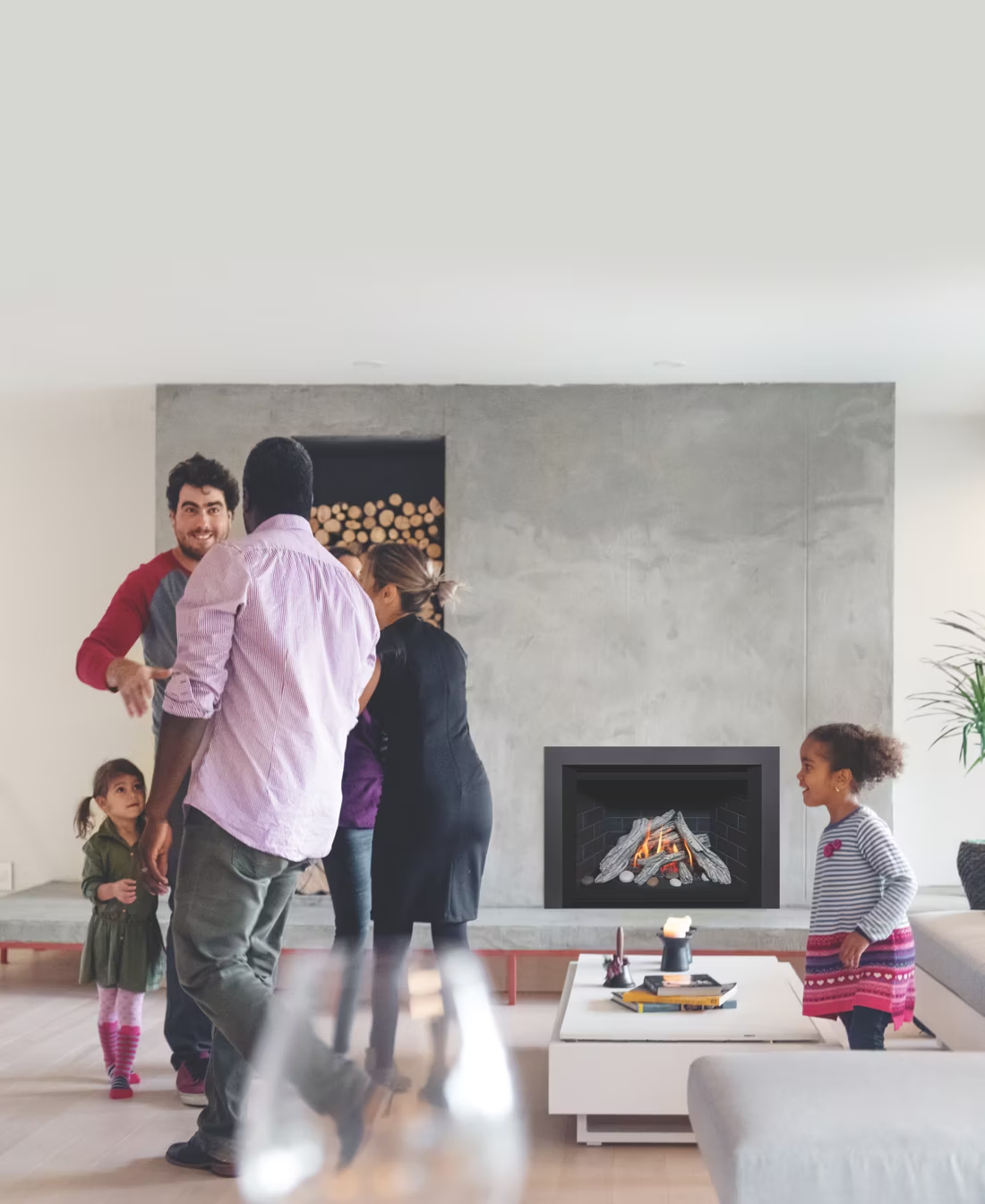
Four fuels. One honest answer for Grundy County.
Three steps. No salesperson until you're ready.
Tell us about your project
Your zip code, your situation, and the fuel you're leaning toward—or let the answers point you to one.
See what's actually available
The brands dealers within 100 miles genuinely carry—real options, never a catalog mirage.
Get your dealer & Project Guide
A trusted local dealer, plus the free Project Guide & Parts List that names every component of the job.
Frequently Asked Questions
Which fuel works best in Grundy County?
With a winter heating load on par with Fargo, ND and average winter lows near 9°F, Grundy County winters ask a lot of a heating system, and the answer usually comes down to your home and your priorities. Wood is a strong, traditional choice here—oak and hickory from local farm timber burn long and hot, and a well-loaded catalytic stove can carry a farmhouse through an overnight cold spell even if the power goes out. Gas is the convenience pick for in-town homes in Grundy Center or Reinbeck with natural gas service, or propane for farms further out—no wood-splitting, no ash, consistent heat at the flip of a switch. Pellet is the middle ground, with Lignetics and Indeck Energy Services product reasonably available in the region—less physical labor than cordwood, similar cozy heat. Electric works well as a supplemental heater for a bedroom or a finished basement, but with such a demanding winter, it's rarely anyone's sole source of heat. Many Grundy County households pair wood or pellet as a primary heat source with gas or electric as backup or zone heat.
Do I need a permit to install a fireplace in Grundy County?
In most cases, yes. New wood stoves, wood inserts, gas fireplaces, gas inserts, gas stoves, and pellet stoves typically require a building permit through the applicable city or county building department—whether that's the City of Grundy Center, Reinbeck, or the Grundy County building office for unincorporated areas and farmsteads. Gas installations also need a separate gas-line permit and a licensed gas fitter for the connection itself. Electric fireplaces generally skip the permit process unless you're doing a built-in installation that requires new wiring or a dedicated circuit. Most local hearth retailers pull the permit as part of the installation quote, so it's rarely something a homeowner has to sort out on their own.
Are there air quality restrictions on wood burning in Grundy County?
No—Grundy County has no designated non-attainment areas and no winter burn-curtailment program. That's a real difference from western basin counties where inversions trap smoke and trigger voluntary or mandatory burn bans. Here, the practical considerations are more about efficiency and safety than air quality rules: a modern EPA-certified wood stove burning seasoned oak or hickory will get more heat out of less wood, produce less visible smoke, and need less frequent chimney cleaning than an older, uncertified unit. If you're replacing an old stove, it's worth asking your local dealer about EPA 2020 NSPS-certified models even though nothing requires it here—the efficiency gains alone often pay for themselves over a few winters.
Can one local hearth retailer handle all four fuel types?
It depends on the dealer, but several retailers serving Grundy County—often based out of the Waterloo/Cedar Falls area or in Grundy Center itself—carry wood, gas, pellet, and electric under one roof, which makes cross-shopping easier if you're not sure which fuel fits your farmhouse or in-town home best. Smaller, more rural-focused dealers sometimes lean heavier on wood and pellet, since those fuels see more year-round demand outside city gas lines. If a retailer's page notes they specialize in one or two fuels, that's usually a sign of what they stock and service most often—worth confirming directly if you want to see all four in person before you decide.
How does service work in rural areas of Grundy County?
Most chimney sweeps and gas/pellet technicians serving Grundy County are based near Grundy Center or drive in from the Waterloo/Cedar Falls area, covering the farmsteads and small towns—Reinbeck, Dike, Stout, Morrison—as part of a wider service loop. Expect a modest trip fee for calls well outside town, and know that scheduling gets tighter in late fall as everyone tries to get their chimney swept or gas unit inspected before the first hard freeze. Booking your annual service in September or early October, before the rush, is the easiest way to avoid a mid-January wait. For farms relying on wood as a primary heat source, it's also worth keeping a small backup supply of dry, split wood on hand in case a January ice storm delays a scheduled delivery or service call.
What's the typical cost range for fireplace installation across all fuel types in Grundy County?
Costs vary by fuel and by how much venting or gas-line work is involved. Wood stove or insert installation: roughly $4,000–$8,500 for a typical retrofit, more if new chimney construction is required. Gas fireplace, insert, or stove: roughly $4,000–$10,000, with the lower end reserved for homes that already have gas service run to the room. Pellet stove or insert: roughly $4,000–$7,000 for a standard install. Electric fireplace: $200–$3,000 for the unit itself, plus $400–$1,200 in labor for anything beyond a simple plug-in installation, such as a built-in or wall-mount unit. For details tied to actual local retailer pricing, see the county + fuel pages above.
How much should I budget for a fireplace?
For an average home—covering the fireplace, the vent pipe, and basic installation—a budget between $3,900 and $5,500 gives you a lot of options across wood, gas, and pellet. By the time you add finish work, gas line, and electrical, the average complete installation lands between $5,000 and $12,000 all-in. In a remodel or new build, a good rule is to put about 2.5% of the total project cost toward the fireplace.
Can a fireplace actually lower my heating bill?
Yes—by creating a comfort zone. A furnace heats every square foot of the house just to warm the one room you're in; a gas fireplace on low burns roughly a sixth of the gas a typical furnace does. Set the furnace around 55–60 degrees as a baseline, then heat the rooms your family actually uses. Families who heat this way commonly save $20–$60 a month.
Does a fireplace add value to my home?
On average, a fireplace adds back to the home about the same amount you spent installing it. Add the monthly savings from heating the rooms you actually use instead of the whole house—often hundreds of dollars a year—and the value case is strong before you even count what a fire does for how your family uses the room.
What are the biggest mistakes people make buying a fireplace?
Five come up constantly: budgeting for the unit but not the full job (vent, gas line, electrical, finish work); drowning in options instead of starting from style and fuel; buying without an in-home preview; handing installation to a handyman instead of a pro; and giving up out of sheer indecision. Every one is avoidable with a clear plan—step one, step two, step three.
Stove and Fireplace Dealers in Grundy County
Listings include WhyFire partner dealers, dealers we have verified as authorized for the brands we recommend, and established local businesses that carry hearth products. Every listing shows which one it is. The ones marked Preferred run on WhyFire's software, so they can show you real pricing and book your appointment right here. No manufacturer pays for placement. How we verify dealers →
Hargrave Construction LLC
Kapaun & Brown, Inc
Find your fireplace in Grundy County.
Pick your fuel below and I'll match you with a trusted local dealer and send over a free Project Guide & Parts List—a plan for your project with the exact parts, including the vent kit, and the local pro who can install it.
Find Your Fireplace →