
Find your pellet stove in Fremont County.
Thermostat-controlled heat for the farms and river-bottom towns of Fremont County—from Sidney to Hamburg to Tabor. Find the right unit and get matched with a trusted local dealer.
Every Project Starts From One of These Five Situations
Consistent heat without the woodpile.
Fremont County sits in the far southwest corner of Iowa along the Missouri River, with Sidney as the county seat and around 4,300 residents spread across farmland, river bottoms, and small towns like Hamburg, Tabor, Farragut, and Randolph. The timbered bluffs along the river still carry stands of oak, hickory, maple, and walnut, and plenty of households here split their own firewood. But Fremont County sits in climate zone 5A, where winters bring stretches of single-digit cold pushed along by the same open, wind-driven weather systems that sweep through Fargo—and a lot of rural homeowners here want heat that doesn't depend on someone being home to feed the fire every few hours.
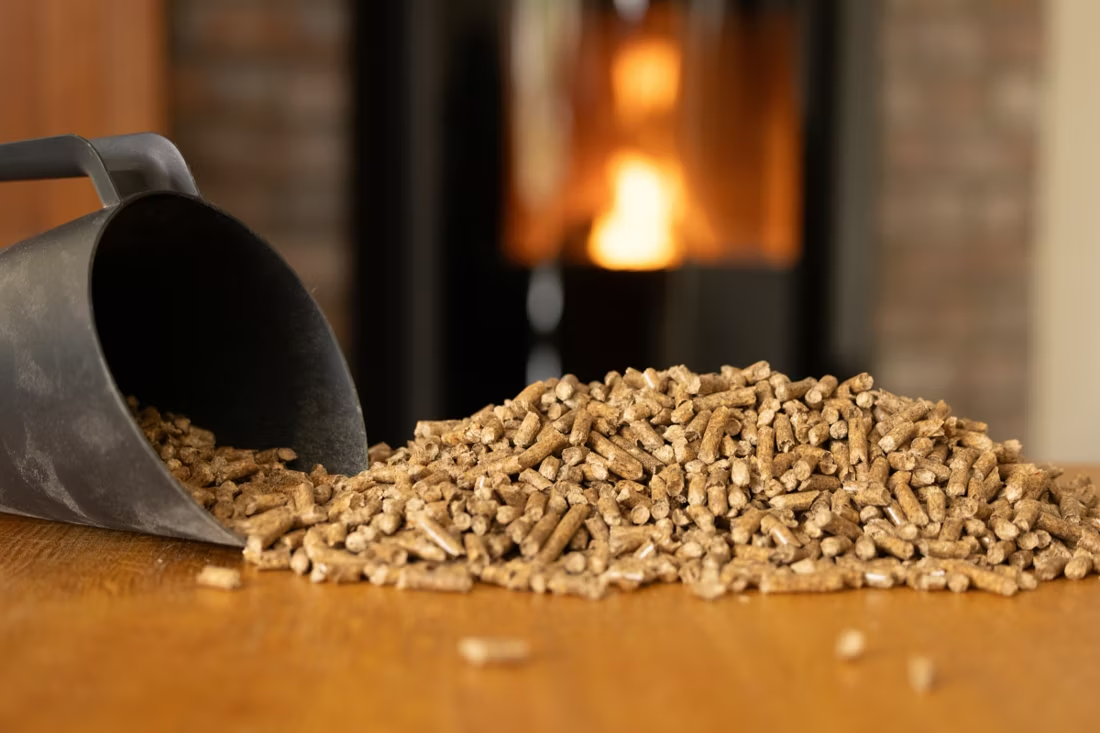
That's where pellet stoves fit in. Load the hopper, set the thermostat, and the auger and blower do the rest—no splitting, no stacking, no creosote buildup to sweep out every fall. Regional pellet brands like Lignetics and Indeck Energy Services keep bags in steady supply at farm and hardware stores throughout southwest Iowa, so fuel access isn't the issue it can be in more remote parts of the country. The tradeoff is that pellet stoves need electricity to run—worth planning for on acreages where ice storms occasionally knock out power for a day or more. Fremont County has no air quality non-attainment issues or inversion restrictions, so burning is unrestricted here compared to some Western counties, which makes pellet appliances an easy, low-maintenance option for the county's open farmland and small-town lots alike.
Three steps. No salesperson until you're ready.
Tell us about your project
Your zip code, your situation, and the fuel you're leaning toward—or let the answers point you to one.
See what's actually available
The brands dealers within 100 miles genuinely carry—real options, never a catalog mirage.
Get your dealer & Project Guide
A trusted local dealer, plus the free Project Guide & Parts List that names every component of the job.
Frequently Asked Questions
How much does a pellet stove installation cost in Fremont County?
Most pellet stove installations in Fremont County run in the $3,500 to $6,500 range, depending on the unit, whether you're venting through an exterior wall or an existing chimney, and whether any hearth pad or floor protection work is needed. A pellet insert going into an existing masonry fireplace typically lands on the lower end since it reuses the chimney chase. A freestanding stove in a farmhouse without existing venting—common on older acreages around Hamburg and Farragut—runs a bit higher once wall penetration and exterior vent termination are factored in. A local dealer will give you a firm number after seeing your space.
What size pellet stove do I need for my home?
Sizing depends on square footage, ceiling height, insulation, and whether the stove is your primary heat or a supplement to a furnace. In Fremont County's older farmhouses—many built with less insulation than a modern build in Sidney or Tabor—a mid-size unit rated for 1,500 to 2,000 square feet is a common starting point for whole-house supplemental heat, with smaller units suited to a single large living area. Zone 5A's cold snaps mean it's worth erring slightly larger rather than undersized, since a pellet stove running on high constantly wears down the auger and igniter faster than one that cycles normally. A local dealer will size your home for free.
Where can I find certified pellet stove installers near me?
Look for installers with NFI (National Fireplace Institute) pellet-specific certification, which covers the electrical, venting, and clearance requirements unique to pellet appliances. Because Fremont County is rural and lightly populated, most certified installers cover the whole county out of a shop based in a nearby larger town, with a modest travel charge for jobs out toward Farragut or Randolph. Ask any installer for proof of certification and manufacturer authorization before signing a contract—improper venting termination is the most common issue we see with pellet stove installs done by general handymen rather than hearth specialists.
What's the difference between a pellet stove and a pellet insert?
A pellet stove is a freestanding unit that sits on a hearth pad and vents through a wall or existing chimney—it can go almost anywhere in a room with the right clearances, which makes it a good fit for farmhouses without an existing fireplace. A pellet insert is built to slide into an existing masonry fireplace opening, turning an old wood-burning fireplace into an automated, thermostat-controlled heat source while keeping the original hearth's appearance. For Fremont County homes with an existing fireplace they rarely use, an insert is often the simpler upgrade. For homes without one, a freestanding stove is the more practical choice.
Do I need a permit to install a pellet stove in Fremont County?
Yes—a building permit is generally required for a new pellet stove installation, issued through the county building office at the Fremont County Courthouse in Sidney for unincorporated areas and rural acreages. Towns like Hamburg and Tabor may route permits through their own city office rather than the county, so it's worth confirming with your installer which jurisdiction applies to your address. Most local dealers handle the permit paperwork as part of the installation, so this typically isn't something you have to manage yourself.
What's the best pellet stove for Fremont County's climate?
For zone 5A's cold, wind-exposed winters, look for a pellet stove with a large hopper capacity—40 to 60 pounds—so it can run overnight without a refill during the coldest stretches. Models with a variable-speed auger and a good thermostat response handle the wide day-to-night temperature swings common in southwest Iowa better than fixed-rate units. Since pellet stoves need electricity, homes on rural acreages that see occasional ice-storm outages should also ask their dealer about battery backup or generator compatibility if the pellet stove is meant to serve as more than a supplemental heat source.
How often does a pellet stove need to be cleaned and serviced?
Pellet stoves need the burn pot and ash pan cleaned every few days to weekly during regular use, and a full internal cleaning—including the exhaust fan, hopper, and venting—once a year, typically before the heating season starts each fall. This is far less involved than sweeping a wood-burning chimney, but it still matters: a dirty burn pot is the most common cause of poor ignition and error codes on pellet units. Local dealers who sell pellet stoves in Fremont County typically also offer annual service visits.
Where can I buy pellets in or near Fremont County?
Bagged pellets from brands like Lignetics and Indeck Energy Services are widely stocked at farm supply and hardware stores across southwest Iowa, and most pellet stove dealers either sell fuel directly or can point you to a reliable local source. Buying a season's supply early—before the first cold snap hits—is common practice here, since demand spikes can lead to temporary shortages at smaller stores during the coldest months. Pellets are sold by the 40-pound bag, generally bundled by the ton (fifty bags), with pricing that fluctuates with wood pellet production costs regionally.
Pellet stove vs. wood stove—which is right for my home?
Wood stoves burn cordwood, work without electricity, and pair naturally with the oak, hickory, maple, and walnut growing along the river bluffs that many Fremont County landowners already have access to—a real advantage if you want heat that keeps running through a power outage. Pellet stoves trade that off for convenience: no splitting or stacking, a thermostat that holds a steady temperature, and less ash and mess, but they need electricity for the auger and blower. For farms and acreages where self-sufficiency and backup heat matter most, wood often wins. For in-town homes in Sidney or Hamburg where consistent, hands-off heat is the priority, pellet is usually the better fit.
How often does a pellet stove need cleaning?
A clean pellet stove is a happy pellet stove. Plan on cleaning the burn pot about once a week when you're burning regularly—ash and clinkers gum up the air holes just like a pellet barbecue. Most pellet stove problems trace back to skipped cleaning that nobody explained up front. Some designs make it easy with a trapdoor burn pot: pull a lever and the gunk drops into the ash pan.
What's the difference between an insert and a zero-clearance fireplace?
An insert is a fireplace that slides into a pre-existing wood-burning fireplace—if you don't have one, there's nothing to insert it into. A zero-clearance fireplace is built into a framed wall, which makes it the answer for remodels and new construction. Simple test: existing masonry fireplace means insert; blank or framed wall means zero-clearance.
Does a fireplace add value to my home?
On average, a fireplace adds back to the home about the same amount you spent installing it. Add the monthly savings from heating the rooms you actually use instead of the whole house—often hundreds of dollars a year—and the value case is strong before you even count what a fire does for how your family uses the room.
Can a fireplace actually lower my heating bill?
Yes—by creating a comfort zone. A furnace heats every square foot of the house just to warm the one room you're in; a gas fireplace on low burns roughly a sixth of the gas a typical furnace does. Set the furnace around 55–60 degrees as a baseline, then heat the rooms your family actually uses. Families who heat this way commonly save $20–$60 a month.
Pellet Brands Stocked Around Fremont County
Manufacturers will point you to the nearest stocking dealer.
Get your Fremont County pellet stove Project Guide.
Tell us a bit about your home and we'll put together a free Project Guide & Parts List—the right pellet stove or insert, the vent kit it needs, and a trusted local dealer to install it.
Find Your Fireplace →