
Find the right electric fireplace for your Fremont County home.
No gas line, no chimney, no cutting permit—just plug-in warmth for farmhouses and in-town homes from Sidney to Hamburg. We'll match you with a trusted local dealer who knows what actually works here.
Every Project Starts From One of These Five Situations
Simple, flexible heat for a small, spread-out county.
Fremont County sits in Iowa's climate zone 5A, tucked into the southwest corner of the state along the Missouri River bottomland, with a population under 4,500 spread across small towns like Sidney, Hamburg, Farragut, and Tabor plus a lot of farmland in between. Winters here are genuinely cold—closer to Fargo, ND or Bismarck, ND in feel than a milder Midwest city—but Fremont County homes rarely need a fireplace to carry the whole heating load. Most of the housing stock is older farmhouses and modest in-town homes already served by propane furnaces or electric baseboard, and an electric fireplace slots in as supplemental zone heat or a straightforward fireplace-look upgrade without touching the home's existing heating system.
That's the real appeal for a county this size: no gas line to run, no masonry chimney to maintain, and no cutting permit paperwork like the wood-burning households in the county still deal with for their oak, hickory, and walnut supply. An electric insert or built-in unit plugs into a standard outlet or a dedicated 240V circuit for larger units, gets installed in an afternoon, and adds real, controllable heat to a living room, bonus room, or bedroom without any combustion, venting, or air quality concerns—which matter to some Fremont County households near the Missouri River bottoms during harvest season dust and burn events elsewhere in the region.
Three steps. No salesperson until you're ready.
Tell us about your project
Your zip code, your situation, and the fuel you're leaning toward—or let the answers point you to one.
See what's actually available
The brands dealers within 100 miles genuinely carry—real options, never a catalog mirage.
Get your dealer & Project Guide
A trusted local dealer, plus the free Project Guide & Parts List that names every component of the job.
Frequently Asked Questions
How much does an electric fireplace installation cost in Fremont County?
Most electric fireplace installations in Fremont County run $400 to $1,200. A plug-in insert into an existing masonry or mantel surround sits at the low end—often just the unit cost plus an hour of labor. Built-in electric fireplaces that require a new wall opening, trim work, or a dedicated 240V circuit for a higher-output unit land at the higher end. Because there's no venting or gas line involved, electric is consistently the least expensive fireplace fuel to install for homeowners in and around Sidney and Hamburg.
Do I need a permit to install an electric fireplace in Fremont County?
For a simple plug-in insert on a standard 120V outlet, most Fremont County homeowners won't need a permit—it's treated like installing a large appliance. If your unit requires a new dedicated 240V circuit or any wall modification, an electrical permit through the county building office is the right move, and a licensed electrician should handle that portion of the work regardless. Local dealers who install electric units routinely will know exactly which projects in the county require sign-off and which don't.
Will an electric fireplace actually heat my Fremont County home in winter?
An electric fireplace is built for zone heating, not whole-home heating—it will comfortably warm a single room (living room, bedroom, or den) in the 400 to 1,500 square foot range, but it won't replace a furnace during a genuinely cold Fremont County stretch. Given the county's cold winters, think of electric as a way to take pressure off your existing propane or electric furnace in the rooms you use most, or as supplemental heat in a room addition or finished basement that your main system struggles to reach. For homeowners wanting a primary wood-burning-style heat source with real BTU output, wood or pellet is usually the better fit—a local dealer can walk you through the tradeoff.
What's the difference between an electric insert and a built-in electric fireplace?
An electric insert is sized to slide into an existing fireplace opening—masonry or a zero-clearance wood unit you're retiring—and typically plugs into a standard outlet behind the surround. A built-in electric fireplace is designed to be framed into a wall from scratch, often used in new construction, remodels, or rooms without an existing fireplace opening, like a finished basement or a new great room addition common in some of the newer builds around Sidney. For most Fremont County homes with an old masonry fireplace they no longer want to feed wood into, an insert is the simpler, lower-cost path.
Are electric fireplaces a good fit for older farmhouses in Fremont County?
Often, yes—with one caveat. Older farmhouses throughout the county sometimes have older electrical panels that weren't built with a 240V fireplace circuit in mind, so it's worth having a local dealer or electrician confirm your panel has capacity before committing to a larger built-in unit. Plug-in inserts on a standard outlet sidestep that issue entirely. For farmhouses that already burn wood as a primary heat source, an electric unit in a second living space (a den, a converted porch, a bedroom) is a common and easy addition since it doesn't compete with the existing wood-burning setup for chimney or venting space.
How does electric compare to wood heat for Fremont County homes?
Wood remains a strong option in Fremont County given the local supply of oak, hickory, maple, and walnut and the fact that there are no local air quality restrictions on burning. Wood also keeps working during a power outage, which matters on the rural stretches of the county where outages can run longer during winter storms. Electric loses that advantage—no power means no fireplace—but it wins on simplicity: no cutting permits, no chimney maintenance, no ash cleanup, and a lower upfront cost. Many households in the county end up with both: wood as a primary or backup heat source, electric as a low-maintenance accent in a second room.
Electric vs. pellet—which makes more sense for my Fremont County home?
Pellet stoves, using regionally available brands like Lignetics and Indeck Energy Services, offer meaningfully more heat output than electric and can serve as a real supplemental or even primary heat source for a Fremont County home, but they need electricity to run the auger and blower—so they're not a power-outage backup either. Electric fireplaces cost less to install and require zero fuel handling or ash cleanup, but produce less usable heat per unit. If you want ambiance plus modest room heat with minimum upkeep, electric wins. If you want a heavier duty supplemental heat source and don't mind loading a hopper, pellet is worth a look from a local dealer.
Can an electric fireplace be installed in a mobile home or manufactured home?
Yes, and this comes up often in a rural county like Fremont where manufactured and modular homes are common outside the small towns. Most plug-in electric inserts and many built-in units are approved for manufactured housing, but clearance requirements and electrical capacity can differ from a stick-built home. A local dealer familiar with manufactured housing installs in the area can confirm the right unit and make sure the electrical setup meets code for that specific structure.
Do electric fireplaces need any maintenance?
Very little. There's no chimney to sweep, no gas line to service, and no ash to remove. Occasional dusting of the unit, checking that the fan and heater elements are free of debris, and replacing LED lights on very old units (most modern LEDs last for years) covers it. That low-maintenance profile is part of why electric is a popular secondary fireplace choice for Fremont County homeowners who already handle the upkeep of a wood-burning stove or fireplace elsewhere in the house.
Do electric fireplaces actually produce heat?
Yes—most put out around 4,800–5,000 BTUs from a standard outlet, which comfortably warms a bedroom, office, or den as a comfort-zone heater. What they won't do is carry a whole house the way wood, gas, or pellet can. Think of electric as ambiance-first with honest supplemental heat: flames on with no heat in July, flames plus warmth in January.
Can I put a TV above my fireplace?
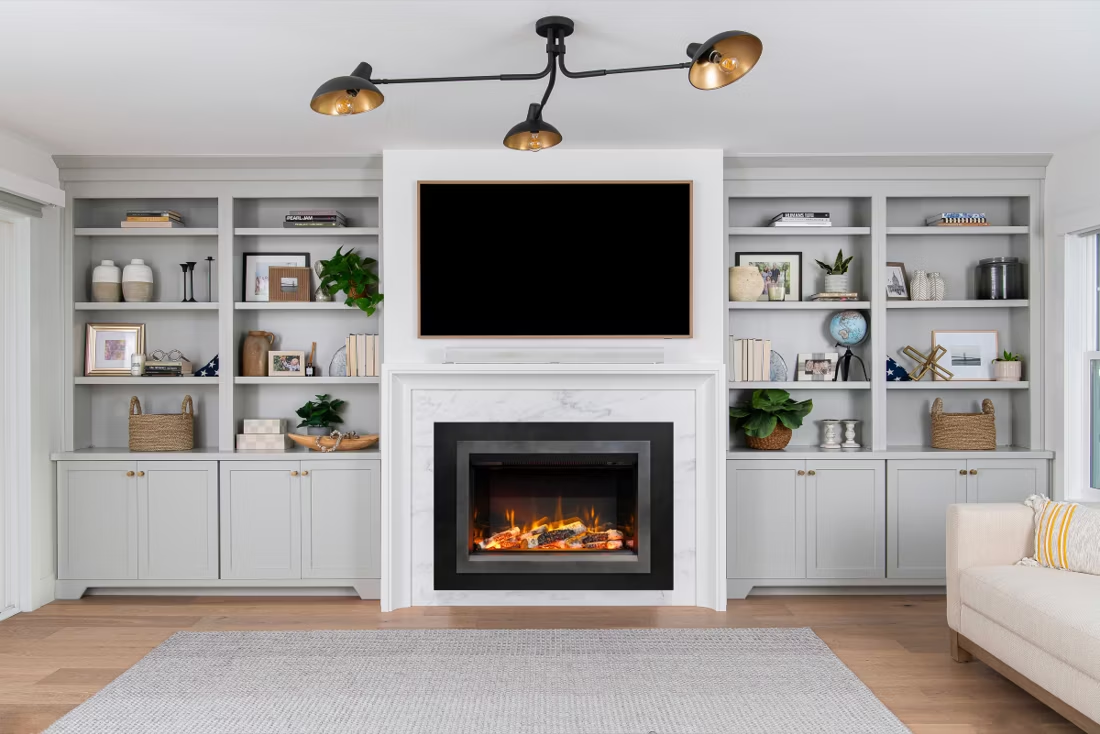
Yes—with an asterisk. Fireplaces are hot and TVs don't like heat. Either put a mantel between them to deflect rising warmth, or choose a fireplace with heat-management technology that creates a cool zone on the wall above—the wall stays around 125 degrees, barely warm, while the room still gets full heat. If you like clean lines and don't want a mantel, heat management is the answer.
How much should I budget for a fireplace?
For an average home—covering the fireplace, the vent pipe, and basic installation—a budget between $3,900 and $5,500 gives you a lot of options across wood, gas, and pellet. By the time you add finish work, gas line, and electrical, the average complete installation lands between $5,000 and $12,000 all-in. In a remodel or new build, a good rule is to put about 2.5% of the total project cost toward the fireplace.
Can I install a fireplace myself?
If you're putting a fire in your house on purpose, it's best to work with an expert. Unless you're genuinely experienced in framing, gas line, vent pipe, and the national code on clearances to combustibles, have a professional do it—and ideally the same company that sells you the fireplace, so warranty, service, and liability all live under one roof.
Get matched with a Fremont County electric fireplace dealer.
Tell us about your home and we'll send you a free Project Guide & Parts List—a plan for your electric fireplace project in Fremont County with the exact parts and a recommended local dealer.
Find Your Fireplace →