
Find the right pellet stove for Clinton County's long, cold winters.
With a winter heating season as long and cold as Madison, WI's along the Mississippi River, Clinton County homes need steady, low-maintenance heat. We'll match you with a trusted local dealer who can size and install the right pellet system for your home.
Every Project Starts From One of These Five Situations
Consistent heat for a river-valley climate zone that demands it.
Clinton County sits along the Mississippi River in eastern Iowa, in climate zone 5A, with average winter lows around 14 degrees and a long heating season—comparable to Madison, WI. Winters here are long, and the wood species that fill local timber stands (oak, hickory, maple, walnut) are the same hardwoods that get processed into the pellets homeowners burn. For households in Clinton, DeWitt, Camanche, and the surrounding county, pellet heat has become a practical answer to a real problem: keeping a house warm from November through March without babysitting a wood fire every few hours.
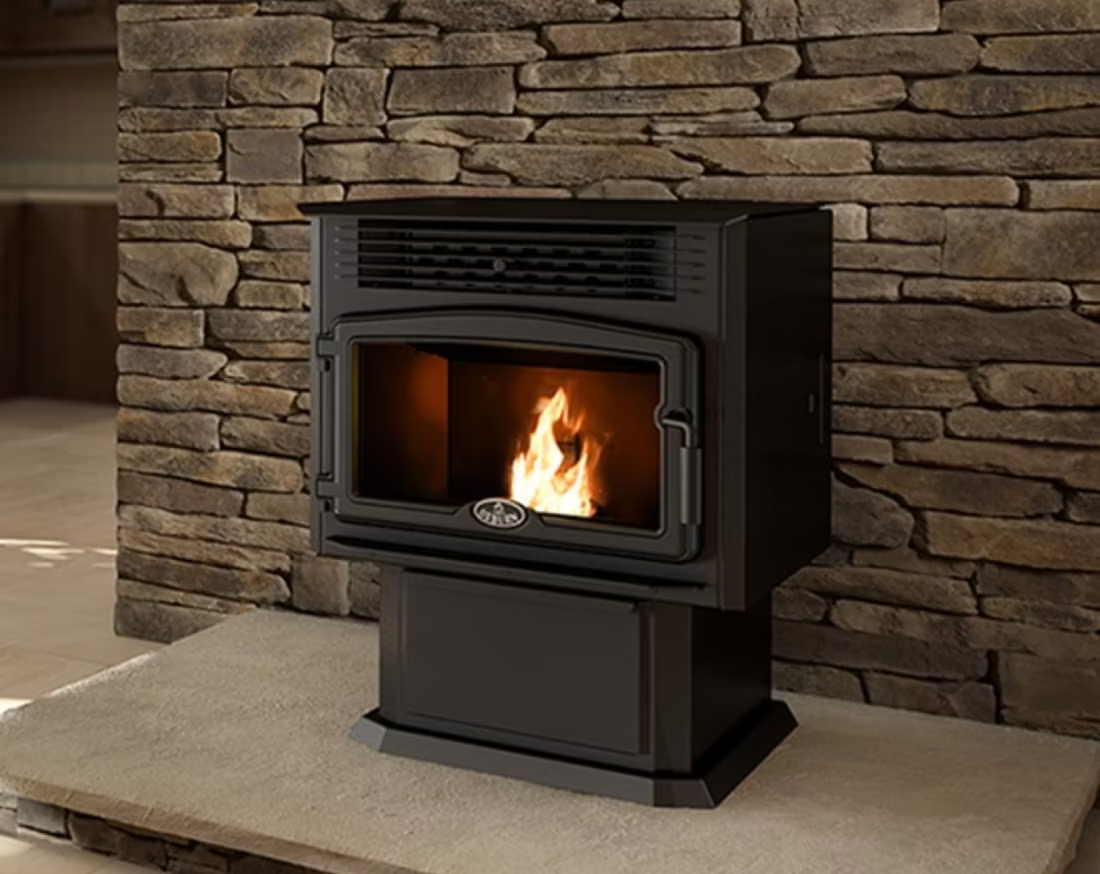
Regional pellet supply here runs through Lignetics and Indeck Energy Services, both of which distribute hardwood pellets into eastern Iowa, so homeowners aren't relying on long-haul trucking or scarce bag stock during a January cold snap. A pellet stove or insert gives Clinton County homes a thermostatically controlled burn, a hopper that only needs loading once or twice a day, and far less ash and creosote than cordwood—while still delivering real radiant heat that holds up against the county's sustained cold stretches.
Three steps. No salesperson until you're ready.
Tell us about your project
Your zip code, your situation, and the fuel you're leaning toward—or let the answers point you to one.
See what's actually available
The brands dealers within 100 miles genuinely carry—real options, never a catalog mirage.
Get your dealer & Project Guide
A trusted local dealer, plus the free Project Guide & Parts List that names every component of the job.
Frequently Asked Questions
How much does a pellet stove installation cost in Clinton County?
Pellet stove and insert installations in Clinton County typically run in the range most Midwest installers quote for a standard setup—factoring in the unit itself, exterior wall venting, and any electrical work for the hopper motor and auger. Inserts going into an existing masonry fireplace tend to land toward the lower end since the firebox opening is already in place; freestanding stoves in a new location cost more once wall penetration and hearth pad work are added. A local dealer will give you a firm number after seeing your home and current setup, but expect the range to shift based on how far your unit needs to vent and whether your electrical panel needs any upgrades to support it.
What size pellet stove do I need for a Clinton County home?
With a heating season as long and demanding as Madison, WI's, and winter lows regularly in the teens, Clinton County homes generally need to size on the higher end of manufacturer recommendations rather than the low end. A small pellet stove works for a single room or a well-insulated addition, but for whole-home supplemental heat in a typical Clinton or Camanche-area house, most local dealers steer homeowners toward mid-size units rated for 1,500 to 2,200 square feet. Older farmhouses with less insulation, common throughout the rural parts of the county, often need to size up further. A dealer visit to assess your square footage, ceiling height, and insulation level will get you a specific recommendation rather than a guess.
Are pellets easy to find in Clinton County during winter?
Yes. Two established regional suppliers—Lignetics and Indeck Energy Services—distribute hardwood pellets into eastern Iowa, which means local hearth dealers and hardware stores in the Clinton County area typically keep bag stock through the winter rather than running out during a hard freeze. It's still smart to buy a season's supply (roughly one to three tons for most homes, depending on how much you rely on the stove) in early fall before demand picks up, since even well-supplied markets can see temporary bag shortages during extended cold snaps in January and February.
Do I need a permit to install a pellet stove in Clinton County?
Most pellet stove and insert installations require a building permit, and if the unit needs a dedicated electrical circuit or outlet for the hopper motor, an electrical permit as well. Requirements vary by whether you're inside city limits (Clinton, DeWitt, Camanche) or in unincorporated Clinton County, so the local jurisdiction issuing the permit differs by location. The good news is that most established local dealers handle this paperwork as part of the installation, coordinating the permit application and the required inspection so you don't have to track down the right office yourself.
What's the difference between a pellet stove and a pellet insert?
A pellet stove is a freestanding unit that sits on a hearth pad and vents through an exterior wall—it can go almost anywhere in a home with the right clearances. A pellet insert is built to slide into an existing masonry fireplace opening, converting an old wood-burning fireplace into a pellet-fed heat source while venting through the existing chimney with a liner. For Clinton County's older housing stock—plenty of homes with existing brick fireplaces in Clinton and DeWitt—an insert is often the more straightforward retrofit. Homes without an existing fireplace, or new construction, are typically better suited to a freestanding stove.
Do pellet stoves work during a power outage?
No, not without a backup power source. Pellet stoves rely on electricity to run the auger that feeds pellets into the burn pot and the blower that distributes heat, so a standard outage will shut the unit down. Some homeowners in Clinton County pair a pellet stove with a small battery backup or generator specifically to keep it running through winter storm outages, which do happen along the Mississippi River corridor. If backup heat during outages without a generator is a priority, a wood stove is worth discussing with your dealer as either an alternative or a complementary second unit.
How often does a pellet stove need to be cleaned and serviced?
Pellet stoves need more frequent light maintenance than wood stoves but far less heavy cleaning. Plan on emptying the ash pan every few days during regular winter use, a deeper cleaning of the burn pot and glass weekly, and a full professional service—checking the auger, exhaust fan, gaskets, and venting—once a year, typically before the start of burning season in fall. Local hearth dealers who service what they sell can usually handle this in a single visit, and it's worth scheduling ahead of the coldest months rather than waiting for a mid-winter breakdown.
Pellet vs. wood stove—which makes more sense for a Clinton County home?
Wood stoves burn cordwood—plentiful locally given the oak, hickory, maple, and walnut common in eastern Iowa timber—run without electricity, and provide backup heat during power outages, which matters for rural stretches of Clinton County that can lose power in ice storms. Pellet stoves are more convenient day to day: load the hopper, set the thermostat, and let it run with less hands-on tending and far less ash than cordwood, but they need electricity to operate. For a primary residence where daily convenience and consistent output matter more than off-grid capability, pellet is often the better fit. For a rural property or a home that wants heat guaranteed during outages, wood is worth a serious look. Some Clinton County homeowners install both.
Are pellet stoves a good fit for Clinton County's climate specifically?
Yes. With a heating season as long and demanding as Madison, WI's, and winter lows averaging 14 degrees, Clinton County has a heating season demanding enough that a pellet stove's steady, thermostatically-controlled output is a genuine advantage rather than a novelty. Unlike warmer parts of the country where a pellet stove is mostly ambiance, homes here can realistically run one as a significant supplemental heat source through a full Iowa winter, cutting furnace runtime during the coldest stretches from December through February. Local supply through Lignetics and Indeck Energy Services means fuel access isn't a concern even in a demanding winter.
Why is a fireplace insert so efficient?
An insert does two things: it seals the chimney completely, so you stop losing air you already paid to heat, and it radiates warmth into the room through the firebox and glass. Most add a heat-exchange fan that pulls cool room air underneath, wraps it around the hot firebox, and pushes it back out warm. Your home is more efficient before you've even lit the first fire.
How often does a pellet stove need cleaning?
A clean pellet stove is a happy pellet stove. Plan on cleaning the burn pot about once a week when you're burning regularly—ash and clinkers gum up the air holes just like a pellet barbecue. Most pellet stove problems trace back to skipped cleaning that nobody explained up front. Some designs make it easy with a trapdoor burn pot: pull a lever and the gunk drops into the ash pan.
Can a fireplace actually lower my heating bill?
Yes—by creating a comfort zone. A furnace heats every square foot of the house just to warm the one room you're in; a gas fireplace on low burns roughly a sixth of the gas a typical furnace does. Set the furnace around 55–60 degrees as a baseline, then heat the rooms your family actually uses. Families who heat this way commonly save $20–$60 a month.
Does a fireplace add value to my home?
On average, a fireplace adds back to the home about the same amount you spent installing it. Add the monthly savings from heating the rooms you actually use instead of the whole house—often hundreds of dollars a year—and the value case is strong before you even count what a fire does for how your family uses the room.
Stove and Fireplace Dealers in Clinton County
Listings include WhyFire partner dealers, dealers we have verified as authorized for the brands we recommend, and established local businesses that carry hearth products. Every listing shows which one it is. The ones marked Preferred run on WhyFire's software, so they can show you real pricing and book your appointment right here. No manufacturer pays for placement. How we verify dealers →
The Fireplace Shop, Etc
Quad City Fireplaces
Pellet Brands Stocked Around Clinton County
Manufacturers will point you to the nearest stocking dealer.
Find your pellet stove in Clinton County.
Tell us a bit about your home and heating goals, and we'll match you with a trusted local dealer and send over a free Project Guide & Parts List—the exact parts, vent kit, and dealer recommendation for your Clinton County pellet project.
Find Your Fireplace →