
Plug-in warmth for Clinton County's Mississippi River winters.
No chimney, no gas line, no permit hassle—just zone heat and real flame look for the additions, basements, and river-town homes across Clinton County. Find the right unit and connect with a trusted local dealer.
Every Project Starts From One of These Five Situations
Reliable warmth without new gas lines or chimneys.
Clinton County sits along the Mississippi River in eastern Iowa, in climate zone 5A with a long, cold winter and average winter lows around 14 degrees—a cold-season load closer to Madison, Wisconsin than to most of the Midwest's warmer fringe. That's a real heating season, but it's one most Clinton County homes already handle with a furnace or heat pump. The fireplace question here is less about primary heat and more about which room needs a little extra warmth and ambiance without tearing into the wall."
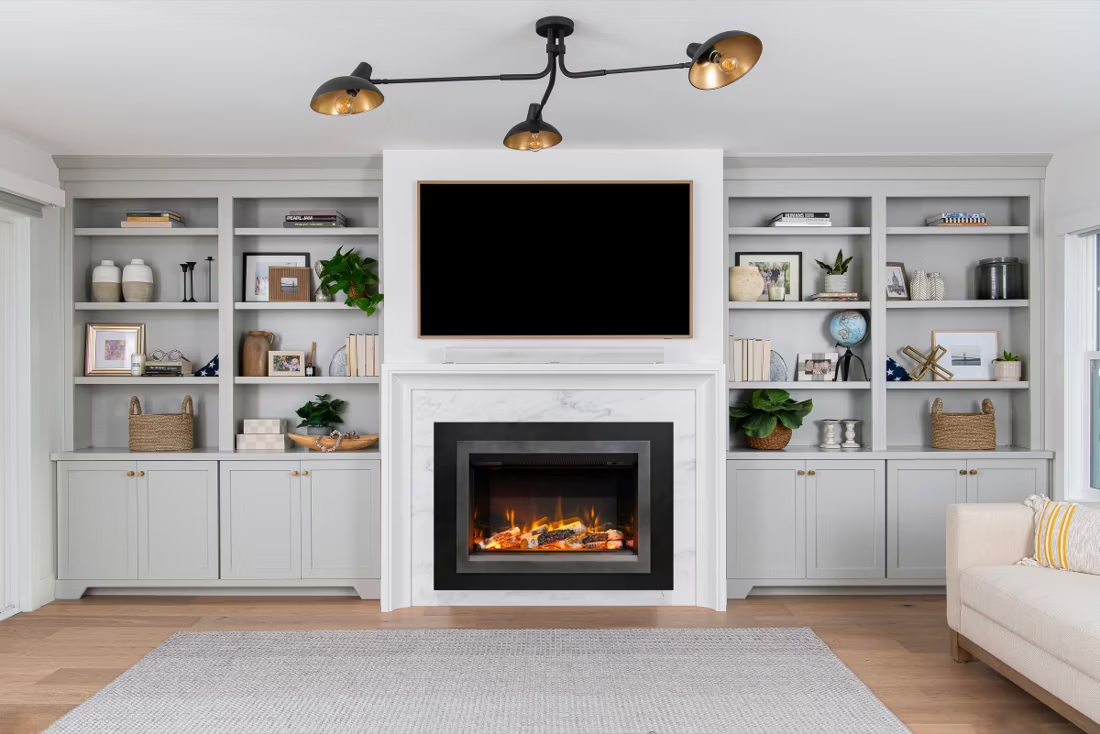
Much of Clinton's older housing stock—the river-town neighborhoods near downtown Clinton, the historic blocks in Lyons, the farmhouses scattered between DeWitt and Camanche—was never built with a masonry chimney or a gas line to the room where people actually want a fire. That's exactly where electric fireplaces earn their place: a 120-volt insert or built-in unit drops into a wall, bookshelf, or old non-functioning firebox, runs on standard household current from Alliant Energy, and needs no venting, no clearance to combustibles beyond what the manufacturer specifies, and typically no building permit for a simple plug-in unit. For homeowners who'd rather not deal with cutting and stacking local hardwoods like oak, hickory, or walnut, or who rent and can't modify a chimney, electric is often the most practical route to real ambiance and supplemental warmth.
Three steps. No salesperson until you're ready.
Tell us about your project
Your zip code, your situation, and the fuel you're leaning toward—or let the answers point you to one.
See what's actually available
The brands dealers within 100 miles genuinely carry—real options, never a catalog mirage.
Get your dealer & Project Guide
A trusted local dealer, plus the free Project Guide & Parts List that names every component of the job.
Frequently Asked Questions
How much does it cost to install an electric fireplace in Clinton County?
Plug-in electric fireplace inserts and stoves typically run $150 to $1,200 for the unit itself, and since most models need nothing more than a standard household outlet, installation can be as simple as setting the unit in place—no permit, no venting, no masonry work. Built-in electric fireplaces or wall-mounted linear units that require a dedicated circuit or minor framing usually add $200 to $600 in electrician and carpentry labor. Compare that to a wood or gas retrofit in an older Clinton or Lyons home with no existing chimney, where venting and framing alone can run into the thousands—it's the main reason electric wins out for a lot of secondary rooms and additions in the county.
Can an electric fireplace actually heat a room in a Clinton County winter?
It can take the edge off a room, but it isn't sized to be your primary heat source through a winter this long and cold, with lows that regularly sit around 14 degrees. Most electric fireplace heaters top out around 1,500 watts, which is enough to noticeably warm a bedroom, den, or finished basement room but won't carry a whole house the way a furnace does. Think of it as targeted zone heat—turn it on in the room you're actually using and let the central system idle back, rather than expecting it to replace your furnace on the coldest nights.
Do I need a permit for an electric fireplace in Clinton County?
Most plug-in electric fireplace inserts and freestanding units don't require a permit since they simply connect to an existing outlet, similar to any other appliance. If you're having a built-in unit wired to a new dedicated circuit, an electrician will typically pull an electrical permit through your local building department as part of that work—the fireplace itself isn't the issue, the new wiring is. This is a much lighter permitting lift than a wood or gas installation, which is part of the appeal for homeowners in older Clinton and Camanche homes who want to avoid a bigger project.
Will my electric fireplace work if the power goes out?
No—and this is worth being honest about. An electric fireplace is entirely dependent on grid power from Alliant Energy, so during a winter ice storm or extended outage it won't produce heat or flame effect, unlike a wood stove that keeps running regardless of utility service. If backup heat during outages matters to you—a real consideration given how cold Clinton County winters get—pair your electric fireplace's ambiance and everyday convenience with a separate wood-burning appliance or a generator, rather than relying on electric alone for emergency heat.
What's the best electric fireplace for a Clinton County home?
For supplemental heat in a bedroom, den, or basement rec room, look at models with a built-in 1,500-watt infrared or fan-forced heater and a thermostat, which will do more actual heating work through the cold months than a flame-effect-only unit. For older homes near downtown Clinton or Lyons with a non-functioning masonry fireplace, an electric insert sized to the existing firebox opening gives you the look of a working fireplace without any venting changes. For newer construction in areas like DeWitt or Camanche, a linear wall-mounted unit is popular for great rooms where a masonry hearth was never part of the plan. A local dealer can walk through wattage and room size with you directly.
Where does an electric fireplace make the most sense in a Clinton County home?
The best candidates are rooms without an existing chimney or gas line—finished basements, home additions, condos and apartments in and around Clinton, or older river-town houses where the original fireplace was bricked over decades ago. It's also a strong fit for renters or homeowners who want the ambiance of a fire without any structural work, since most units can be uninstalled and taken with you if you move. Homes that already have a working masonry or gas fireplace usually get more heating value from staying with that fuel, and adding electric elsewhere in the house for a second room.
Electric vs. wood—which is right for my Clinton County home?
Wood, burned in the oak, hickory, maple, and walnut common to eastern Iowa woodlots, delivers real radiant heat and keeps working when the power's out—a genuine advantage given how long and cold the local heating season runs. It requires a chimney, clearances, an annual sweep, and ongoing wood handling. Electric requires none of that: no venting, no ash, no permit for a simple plug-in unit, and it can go anywhere there's an outlet—but it produces no heat during an outage and won't carry a whole room the way a wood stove can on the coldest nights. Many Clinton County homeowners land on wood or gas for their main living space and add an electric unit to a bedroom, office, or basement where a chimney was never in the cards.
How much does it cost to run an electric fireplace in Clinton County?
A 1,500-watt electric fireplace running on high for a few hours a day adds a modest amount to a monthly Alliant Energy bill—generally less than most homeowners expect, since the heater cycles on and off with the thermostat rather than running continuously. Running it purely for the flame effect without the heater draws far less power, often only 30 to 50 watts, so leaving it on for ambiance on a mild evening costs very little. It's a fraction of the fuel cost of heating an equivalent space with propane or firewood, though it's also delivering far less total heat output.
Can I convert my old wood-burning fireplace to electric?
Yes—this is a common project for older homes in Clinton and Lyons with a masonry fireplace that's no longer used or was never properly maintained. An electric insert slides into the existing firebox opening and plugs into a nearby outlet or a newly run dedicated circuit, giving you flame-effect ambiance and zone heat without touching the chimney, which can simply be capped. It's usually the lowest-cost way to bring an unused fireplace back into daily use, and a local dealer can confirm the insert size that fits your specific opening.
Do electric fireplaces actually produce heat?
Yes—most put out around 4,800–5,000 BTUs from a standard outlet, which comfortably warms a bedroom, office, or den as a comfort-zone heater. What they won't do is carry a whole house the way wood, gas, or pellet can. Think of electric as ambiance-first with honest supplemental heat: flames on with no heat in July, flames plus warmth in January.
Can I put a TV above my fireplace?
Yes—with an asterisk. Fireplaces are hot and TVs don't like heat. Either put a mantel between them to deflect rising warmth, or choose a fireplace with heat-management technology that creates a cool zone on the wall above—the wall stays around 125 degrees, barely warm, while the room still gets full heat. If you like clean lines and don't want a mantel, heat management is the answer.
How much should I budget for a fireplace?
For an average home—covering the fireplace, the vent pipe, and basic installation—a budget between $3,900 and $5,500 gives you a lot of options across wood, gas, and pellet. By the time you add finish work, gas line, and electrical, the average complete installation lands between $5,000 and $12,000 all-in. In a remodel or new build, a good rule is to put about 2.5% of the total project cost toward the fireplace.
Can a fireplace actually lower my heating bill?
Yes—by creating a comfort zone. A furnace heats every square foot of the house just to warm the one room you're in; a gas fireplace on low burns roughly a sixth of the gas a typical furnace does. Set the furnace around 55–60 degrees as a baseline, then heat the rooms your family actually uses. Families who heat this way commonly save $20–$60 a month.
Stove and Fireplace Dealers in Clinton County
Listings include WhyFire partner dealers, dealers we have verified as authorized for the brands we recommend, and established local businesses that carry hearth products. Every listing shows which one it is. The ones marked Preferred run on WhyFire's software, so they can show you real pricing and book your appointment right here. No manufacturer pays for placement. How we verify dealers →
The Fireplace Shop, Etc
Quad City Fireplaces
Find your electric fireplace in Clinton County.
Tell us a bit about your home and we'll match you with the right electric fireplace or insert, plus a free Project Guide & Parts List with your recommended local dealer.
Find Your Fireplace →