
Find the right pellet stove for Clayton County's long, cold winters.
With a long, demanding heating season along the Mississippi bluffs, Clayton County homes need steady, low-maintenance heat. Get matched with a trusted local dealer who can size, permit, and install it right.
Every Project Starts From One of These Five Situations
Consistent heat for a driftless-region winter.
Clayton County sits in Iowa's driftless region, a landscape of steep bluffs and river valleys along the Mississippi that escaped the flattening of glacial ice sheets. That terrain means colder pockets and more variable winter conditions than much of eastern Iowa—winter lows average around 10°F, and the county sees a long, cold heating season putting it solidly in Climate Zone 6A alongside places like Madison, WI. Homes here have long relied on oak, hickory, maple, and walnut for wood heat, but pellet stoves have become a popular alternative for homeowners in Elkader, Guttenberg, Strawberry Point, and the smaller towns scattered through the county who want consistent output without the daily work of splitting and stacking cordwood.
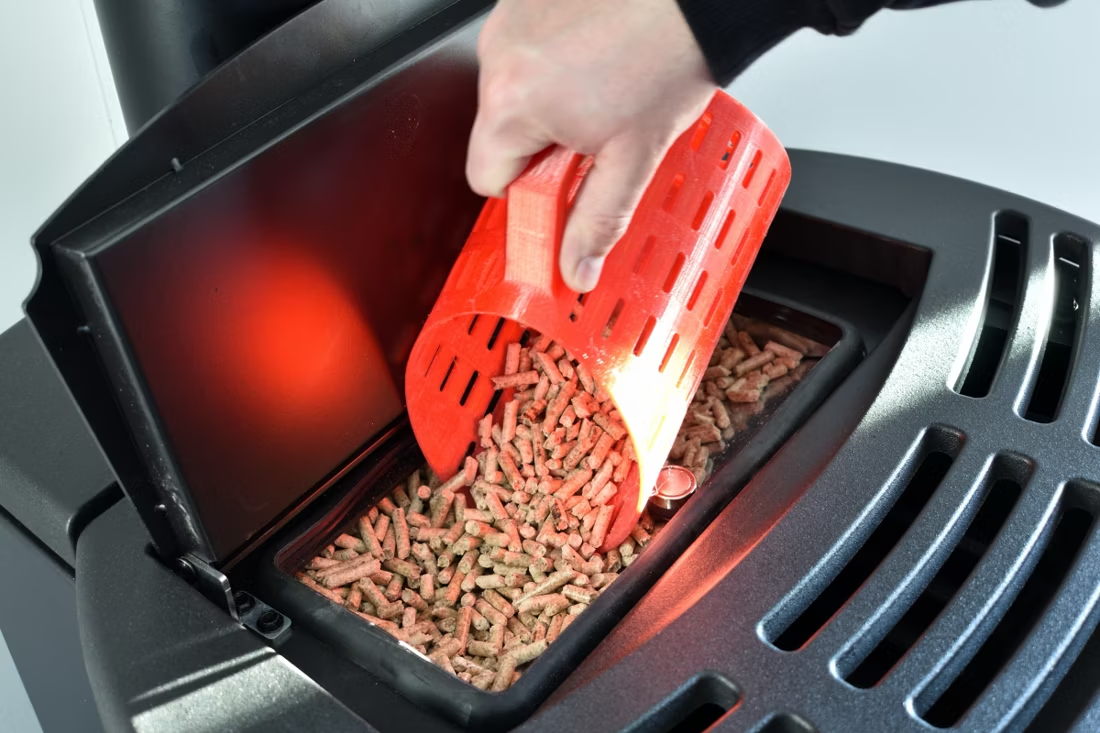
A pellet stove loads from a hopper, feeds itself with an auger, and holds a steady burn for 24 hours or more on a single fill—a real advantage during the stretch of sub-zero nights Clayton County sees most winters. Bagged hardwood pellets from regional suppliers like Lignetics and Indeck Energy Services are widely available through farm stores and hearth dealers across northeast Iowa, so fuel supply isn't the issue it can be in more remote parts of the country. The tradeoff is that pellet stoves need electricity to run the auger and blower, which matters if you're weighing backup heat during winter storms. A local dealer can walk you through that tradeoff against your home's layout and how you plan to use the stove.
Three steps. No salesperson until you're ready.
Tell us about your project
Your zip code, your situation, and the fuel you're leaning toward—or let the answers point you to one.
See what's actually available
The brands dealers within 100 miles genuinely carry—real options, never a catalog mirage.
Get your dealer & Project Guide
A trusted local dealer, plus the free Project Guide & Parts List that names every component of the job.
Frequently Asked Questions
How much does a pellet stove installation cost in Clayton County?
Pellet stove installations typically run in the same general range seen across similar rural Iowa counties—expect somewhere between $3,000 and $6,500 depending on the unit, whether you're venting through an exterior wall or an existing chimney, and whether electrical work is needed for a dedicated circuit. Installing a pellet insert into an existing masonry fireplace is usually on the lower end since it reuses the chimney chase. A freestanding stove in a room without existing venting costs more once wall penetration and exterior vent cap work are factored in. A local dealer will give you a firm number after seeing your home.
What size pellet stove do I need for a Clayton County home?
Sizing depends on square footage, insulation, and whether the stove is your primary or supplemental heat. Given the county's cold winters and long, demanding heating season, don't undersize—a stove that's borderline for a milder climate may struggle here on the coldest January nights. Farmhouses along the bluffs and older homes in Elkader or Guttenberg often have less insulation than newer construction, which pushes the sizing decision up a notch. A local dealer will size the unit to your specific square footage and construction rather than a generic chart.
Where do I buy pellets in Clayton County, and will supply be reliable?
Bagged hardwood pellets from brands like Lignetics and Indeck Energy Services are sold through farm supply stores and hearth dealers throughout northeast Iowa, and most Clayton County pellet stove owners stock up in fall before demand and prices tighten. Buying several tons at once when pellets first hit shelves in September or October is the standard approach locally, since supply can get tighter as winter progresses. Your local dealer can point you toward reliable suppliers near Elkader, Guttenberg, or wherever you're located in the county.
Will my pellet stove keep working if the power goes out?
No—pellet stoves need electricity to run the auger that feeds fuel and the blower that distributes heat, so a power outage stops the stove. This is worth weighing seriously in Clayton County, where rural ice storms and heavy snow can knock out power for extended stretches. Some homeowners pair a pellet stove with a small battery backup or generator sized to run the stove's low electrical draw, which is enough to keep it operating through most outages. If backup heat during outages is your top priority, a wood stove or fireplace is worth discussing with a local dealer as an alternative or supplement.
Do I need a permit to install a pellet stove in Clayton County?
Most jurisdictions in Clayton County require a building permit for new pellet stove installations, and the stove needs to meet current EPA emissions standards. Requirements can vary between incorporated towns like Elkader, Guttenberg, and Strawberry Point versus unincorporated areas of the county, so check with your local building office before starting. In practice, most homeowners never deal with this directly—the dealer handling your installation typically pulls the permit and coordinates the inspection as part of the job.
What's the difference between a pellet stove and a pellet insert?
A pellet stove is a freestanding unit that sits on its own hearth pad and vents through an exterior wall or existing chimney—it can go almost anywhere in a room with the right clearances. A pellet insert is built to slide into an existing masonry fireplace opening, turning an old wood-burning fireplace into a much more efficient heat source while reusing the chimney chase. For Clayton County homes with an existing fireplace—common in the county's older farmhouses and in-town homes—an insert is often the simpler retrofit. Homes without an existing fireplace are usually better suited to a freestanding stove.
How does a pellet stove compare to wood for heating a Clayton County home?
Wood offers higher heat output per load, works without electricity, and pairs well with the oak, hickory, maple, and walnut that's cut locally throughout the county—a real advantage during outages. Pellet stoves trade some of that off for convenience: automated feed, a steady burn without constant tending, less ash, and no splitting or stacking cordwood. For Clayton County homeowners who want lower daily effort and consistent output through the county's long heating season, pellet often wins. For those prioritizing outage-proof backup heat or already set up to process their own firewood, wood remains the better fit. Plenty of local homes run both.
How often does a pellet stove need cleaning and service?
Pellet stoves need more frequent attention than gas but less than a wood-burning chimney system. Plan on cleaning the burn pot and ash traps every few days to weekly during heavy winter use, a deeper cleaning of the exhaust and hopper monthly, and a full annual service—checking the auger, gaskets, and venting—typically done in late summer before the burning season starts. Skipping the annual service is the most common cause of feed problems and reduced heat output partway through a Clayton County winter.
Is a pellet stove a good fit for a rural Clayton County property?
Yes, with a few things to plan around. Pellet stoves work well on rural properties as long as you're comfortable keeping a fuel supply on hand—buying pellets by the ton in fall rather than picking up a few bags at a time is the standard approach out here, since trips to town take longer than in Elkader or Guttenberg proper. Electrical draw is low but real, so if your property is prone to outages, pairing the stove with a small backup power source is worth discussing with your installer. Beyond that, a pellet stove handles the county's long, cold heating season as well as anywhere in the Upper Midwest.
What's the difference between an insert and a zero-clearance fireplace?
An insert is a fireplace that slides into a pre-existing wood-burning fireplace—if you don't have one, there's nothing to insert it into. A zero-clearance fireplace is built into a framed wall, which makes it the answer for remodels and new construction. Simple test: existing masonry fireplace means insert; blank or framed wall means zero-clearance.
How often does a pellet stove need cleaning?
A clean pellet stove is a happy pellet stove. Plan on cleaning the burn pot about once a week when you're burning regularly—ash and clinkers gum up the air holes just like a pellet barbecue. Most pellet stove problems trace back to skipped cleaning that nobody explained up front. Some designs make it easy with a trapdoor burn pot: pull a lever and the gunk drops into the ash pan.
Can I install a fireplace myself?
If you're putting a fire in your house on purpose, it's best to work with an expert. Unless you're genuinely experienced in framing, gas line, vent pipe, and the national code on clearances to combustibles, have a professional do it—and ideally the same company that sells you the fireplace, so warranty, service, and liability all live under one roof.
How much should I budget for a fireplace?
For an average home—covering the fireplace, the vent pipe, and basic installation—a budget between $3,900 and $5,500 gives you a lot of options across wood, gas, and pellet. By the time you add finish work, gas line, and electrical, the average complete installation lands between $5,000 and $12,000 all-in. In a remodel or new build, a good rule is to put about 2.5% of the total project cost toward the fireplace.
Stove and Fireplace Dealers in Clayton County
Lil' Bit Of Country Stoves & Fireplaces
Pellet Brands Stocked Around Clayton County
Manufacturers will point you to the nearest stocking dealer.
Get your Clayton County pellet stove Project Guide & Parts List.
Tell us about your home and heating goals, and we'll match you with a trusted local dealer plus a free Project Guide & Parts List—sized venting, the right unit, and a plan built for Clayton County's winters.
Find Your Fireplace →