
Find the right electric fireplace for your Clayton County home.
Zone heat and ambiance for the bluff country towns of Elkader, Guttenberg, McGregor, and Strawberry Point—no chimney, no gas line, no venting. Find the right unit and connect with a trusted local dealer.
Every Project Starts From One of These Five Situations
Instant warmth, no chimney required.
Clayton County sits in the Mississippi River bluff country of northeast Iowa, with a population of just over 9,400 spread across small towns and farm townships from Elkader to Guttenberg to Monona. Winters here are genuinely cold—the county sits in climate zone 6A, averages 6,796 heating degree days a year, and sees average winter lows around 10°F, putting it in the same cold-climate territory as Madison, Wisconsin. Most homes in the county lean on propane furnaces or wood stoves burning local oak, hickory, maple, and walnut for their primary heat through a long Iowa winter.
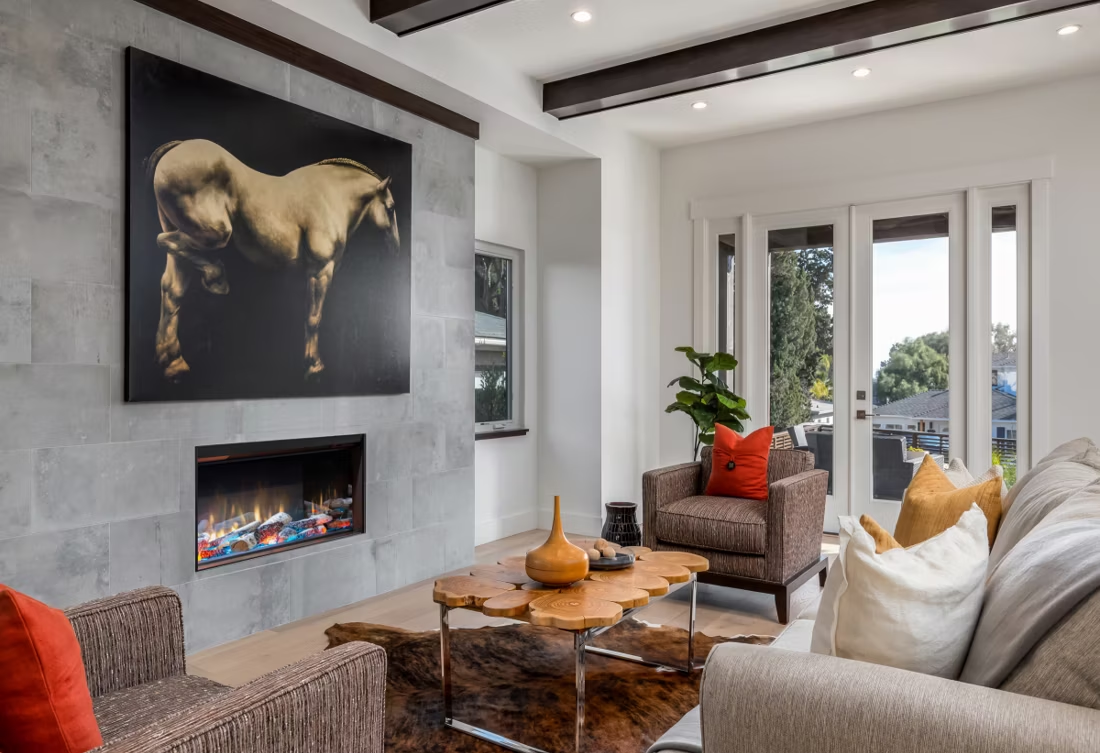
Electric fireplaces fill a different role here. With no chimney, no gas line, and no combustion byproducts, an electric insert or built-in unit can go into a finished basement, a farmhouse bedroom without existing ductwork, a river cabin near McGregor, or a rental property where a wood or gas install isn't practical. Because heating an entire Clayton County home on electric resistance heat gets expensive fast at nearly 6,800 heating degree days, most homeowners here use electric fireplaces as targeted zone heat or ambiance—supplementing a propane furnace or wood stove rather than replacing it outright.
Three steps. No salesperson until you're ready.
Tell us about your project
Your zip code, your situation, and the fuel you're leaning toward—or let the answers point you to one.
See what's actually available
The brands dealers within 100 miles genuinely carry—real options, never a catalog mirage.
Get your dealer & Project Guide
A trusted local dealer, plus the free Project Guide & Parts List that names every component of the job.
Frequently Asked Questions
How much does an electric fireplace installation cost in Clayton County?
Electric fireplaces are the least expensive hearth option to install because there's no venting, no gas line, and no chimney work involved. A plug-in freestanding unit or a basic insert can run as little as $300 to $800 including setup. Built-in wall units, mantel packages, or larger linear electric fireplaces that require dedicated electrical circuit work from an electrician typically run $1,200 to $2,500. Because there's no combustion appliance involved, this is one of the few hearth projects in Clayton County that most homeowners can get installed in a single afternoon.
Will an electric fireplace actually heat my room during a Clayton County winter?
It will comfortably heat a single room, but it won't replace your furnace on the coldest nights. Most electric fireplace inserts put out 4,000 to 5,000 BTUs—enough to noticeably warm a bedroom, den, or finished basement room, but not enough to carry a whole farmhouse when overnight lows average 10°F and the county racks up nearly 6,800 heating degree days a season. Think of it as supplemental zone heat you run in the room you're actually using, while your propane furnace or wood stove handles the rest of the house.
Do I need a permit to install an electric fireplace in Clayton County?
A plug-in electric fireplace that uses a standard household outlet typically doesn't require a permit. If you're installing a built-in unit that requires new electrical wiring, a dedicated circuit, or altering a wall for a recessed installation, Clayton County's building department may require an electrical permit, and the wiring itself should be done by a licensed electrician regardless of paperwork. Most local dealers can tell you upfront whether your specific install triggers a permit before work starts.
Is an electric fireplace a good fit for an older farmhouse without central air ducts to every room?
Yes—this is one of the most common reasons Clayton County homeowners choose electric. Many older farmhouses in the county were built before central ductwork reached every room, and running new duct or gas lines to a converted bedroom or bonus room can be costly. An electric insert or wall-mounted unit solves that problem without any venting or gas work, delivering targeted heat and the look of a fire to a room your furnace or wood stove doesn't reach efficiently.
Is it expensive to run an electric fireplace compared to my propane furnace?
Running an electric fireplace as supplemental heat for a few hours a day in one room is inexpensive—a few cents per hour on most residential electric rates through Alliant Energy or your local rural electric cooperative. Where costs add up is trying to heat an entire home on electric resistance heat through a Clayton County winter; propane or wood is almost always cheaper per BTU for whole-house heating at this HDD level. That's why most homeowners here use electric fireplaces for the room they're in, not as a furnace replacement.
What's the difference between an electric fireplace insert, a built-in unit, and a mantel package?
An electric insert is sized to slot into an existing masonry fireplace opening, giving an old wood-burning fireplace a clean, glowing flame effect and real supplemental heat without touching the chimney. A built-in unit is designed to be framed into a wall from scratch—common in new construction or remodels in Clayton County's newer homes near Elkader and Guttenberg. A mantel package pairs a freestanding or wall-mount electric unit with a surround, giving you a finished look without any construction. Homeowners with an existing fireplace almost always go with an insert; everyone else picks based on whether they're building new or want a no-construction option.
Will my electric fireplace work if the power goes out?
No—electric fireplaces require power to run the heating element and flame effect, so they'll shut off during an outage just like any other electrical appliance. In rural parts of Clayton County served by Alliant Energy or a local electric cooperative, winter storm outages do happen, which is why many homeowners here keep a wood stove or propane heater as backup even after adding an electric fireplace for everyday convenience.
What size electric fireplace do I need?
Sizing is mostly about the room, not the whole house, since electric units are typically supplemental. For a bedroom or den in the 150-300 square foot range, a standard 26- to 40-inch insert or built-in putting out 4,000-5,000 BTUs is usually enough. Larger open rooms or finished basements benefit from a wider linear unit or two smaller units. A local dealer can walk through your specific room dimensions and insulation to confirm sizing during a quick consultation.
Electric vs. wood vs. propane—which is right for my Clayton County home?
Wood stoves burning local oak, hickory, or maple offer real heat output and work without power during outages, which matters in rural parts of the county. Propane and gas units deliver consistent whole-house heat and are what most Clayton County furnaces already run on. Electric fireplaces don't compete with either as a primary heat source in this climate, but they win on installation simplicity, zero venting, and the ability to add ambiance and zone heat to a room where running gas or a chimney isn't practical. Many homes in the county end up with a mix—a furnace or wood stove for the whole house, and an electric fireplace in the room where it gets used most.
Can I put a TV above my fireplace?
Yes—with an asterisk. Fireplaces are hot and TVs don't like heat. Either put a mantel between them to deflect rising warmth, or choose a fireplace with heat-management technology that creates a cool zone on the wall above—the wall stays around 125 degrees, barely warm, while the room still gets full heat. If you like clean lines and don't want a mantel, heat management is the answer.
Do electric fireplaces actually produce heat?
Yes—most put out around 4,800–5,000 BTUs from a standard outlet, which comfortably warms a bedroom, office, or den as a comfort-zone heater. What they won't do is carry a whole house the way wood, gas, or pellet can. Think of electric as ambiance-first with honest supplemental heat: flames on with no heat in July, flames plus warmth in January.
Can I install a fireplace myself?
If you're putting a fire in your house on purpose, it's best to work with an expert. Unless you're genuinely experienced in framing, gas line, vent pipe, and the national code on clearances to combustibles, have a professional do it—and ideally the same company that sells you the fireplace, so warranty, service, and liability all live under one roof.
Can a fireplace actually lower my heating bill?
Yes—by creating a comfort zone. A furnace heats every square foot of the house just to warm the one room you're in; a gas fireplace on low burns roughly a sixth of the gas a typical furnace does. Set the furnace around 55–60 degrees as a baseline, then heat the rooms your family actually uses. Families who heat this way commonly save $20–$60 a month.
Stove and Fireplace Dealers in Clayton County
Lil' Bit Of Country Stoves & Fireplaces
Find your electric fireplace in Clayton County.
Tell us a bit about your home and we'll match you with the right electric fireplace, insert, or built-in unit—plus a free Project Guide & Parts List and a trusted local dealer to install it.
Find Your Fireplace →