
Keep Your Family Warm and Safe—No Matter What
With average winter lows near 11°F and a long, demanding heating season each year, Bremer County homes from Waverly to Tripoli to Readlyn lean on wood heat to get through the season. Find the right stove or insert, and connect with a trusted local dealer.
Every Project Starts From One of These Five Situations
Northeast Iowa hardwood, built for six-month winters.
Bremer County sits along the Cedar River in northeast Iowa, a landscape of farmland and river-bottom timber stands that puts the county in climate zone 6A—roughly on par with Minneapolis or Madison, Wisconsin for cold-season severity. With a long, demanding heating season and average winter lows around 11°F, the heating season here typically runs from mid-October through April. For county residents outside Waverly's natural gas lines—and even plenty inside them—a wood stove or insert isn't a novelty, it's a backup plan for the ice storms and sub-zero cold snaps that knock out power in this part of the state.
The county's river-bottom and farmstead woodlots produce good burning hardwood—oak, hickory, maple, and walnut are all common locally, and oak in particular is prized for its long, steady coal bed on the coldest nights. Bremer County has no air quality non-attainment designations and no winter burn curtailment periods, unlike parts of the West, so wood heat here isn't subject to the kind of Yellow/Red burn-ban restrictions some other regions deal with. For homeowners who'd rather skip the splitting and stacking, regional pellet brands like Lignetics and Indeck Energy Services are also stocked by area dealers as a lower-maintenance alternative.
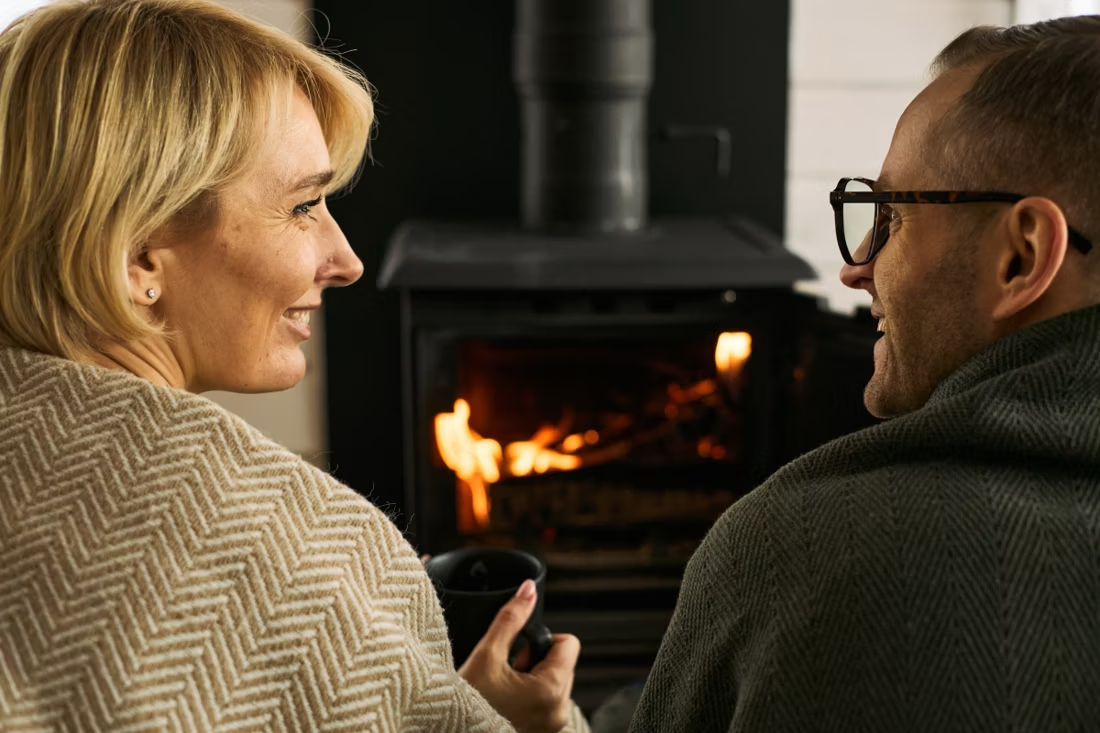
Three steps. No salesperson until you're ready.
Tell us about your project
Your zip code, your situation, and the fuel you're leaning toward—or let the answers point you to one.
See what's actually available
The brands dealers within 100 miles genuinely carry—real options, never a catalog mirage.
Get your dealer & Project Guide
A trusted local dealer, plus the free Project Guide & Parts List that names every component of the job.
Frequently Asked Questions
How much does a wood stove installation cost in Bremer County?
Most wood stove installations in Bremer County run in the $3,500 to $8,500 range, depending on the stove model, whether new Class A chimney pipe is needed, and whether the hearth pad has to be upgraded for code clearances. Older farmhouses around Tripoli, Sumner, and Denver that lack an existing masonry chimney tend to land on the higher end once through-roof venting is factored in, while homes converting an existing fireplace to an insert are usually on the lower end. Most local dealers include the permit paperwork with Bremer County in the install price, so it's worth asking upfront whether that's rolled in.
What size wood stove do I need for my home?
Sizing comes down to square footage, insulation level, and whether the stove is your primary or supplemental heat source. As a general guide for Bremer County's cold-climate housing stock: small stoves (up to roughly 1,000 sq ft) suit a single room or older farmhouse kitchen, medium stoves (1,000–2,000 sq ft) cover most main living areas, and large stoves handle a well-insulated whole home. Many of the county's older two-story farmhouses around Plainfield and Readlyn run drafty, so homeowners there often size up rather than down. A slightly undersized stove won't keep up when temperatures drop into the single digits; an oversized one will smolder and build creosote. Local dealers will size your space during a free in-home consultation.
Where can I find certified wood stove installers near me?
Look for NFI (National Fireplace Institute) or CSIA (Chimney Safety Institute of America) certified installers—both indicate formal training in wood-burning appliance venting and clearances. Dealers based in and around Waverly generally cover all of Bremer County, though installs out toward Frederika or the more rural edges of the county sometimes carry a small travel charge. Most dealers handle sales and installation together, which keeps warranty coverage and code sign-off simple. Skip handyman or general-contractor installs for wood appliances—improper clearances and venting are the most common cause of chimney fires in this part of Iowa's winters.
What's the difference between a wood stove and a wood insert?
A wood stove is a freestanding unit on its own hearth pad, vented through a chimney, and can go almost anywhere in a home with the right clearances. A wood insert slides into an existing masonry fireplace and uses that fireplace's chimney (usually with a stainless liner), turning a drafty open hearth into a real heat source. For older Bremer County homes with an existing fireplace—common in the county's original farmhouses and older Waverly neighborhoods—an insert is usually the better upgrade. Newer homes without a masonry fireplace already in place are typically better suited to a freestanding stove.
Do I need a permit to install a wood stove in Bremer County?
Yes—a building permit is required for new wood stove installations through the Bremer County zoning and building office, and the stove itself needs to meet current EPA 2020 NSPS emissions standards. Most local dealers handle the permit filing as part of the installation, so it's rarely something homeowners have to manage themselves. There's no winter burn curtailment program in Bremer County, since the county doesn't carry an air quality non-attainment designation—so once your stove is installed and permitted, you're not restricted to certain burn days the way some western counties are.
What's the best wood stove for Bremer County's climate?
With winter lows averaging around 11°F and stretches that dip well below zero, catalytic stoves from brands like Blaze King are worth a look for Bremer County homes—they can hold a fire 20+ hours on a single load, which matters on the coldest overnight stretches common to a climate this close to Minneapolis in severity. For homes using wood as supplemental rather than primary heat, non-catalytic models from Pacific Energy or Lopi are simpler to run and still put out solid heat. Given the oak, hickory, and walnut common in local woodlots, either type will burn clean and hot—talk to a local dealer about your home's square footage and construction type for a specific model recommendation.
How often should my chimney be inspected and cleaned?
The CSIA recommends an annual inspection for any wood-burning appliance, and that holds true in Bremer County—ideally scheduled in late summer or early fall before the heating season starts in October. Homes burning wood as a primary heat source through a full Iowa winter may need a mid-season cleaning if creosote builds up faster than expected, especially with denser hardwoods like oak that burn hot but can glaze a flue if the stove is run too cool. Local chimney sweeps in the Waverly area offer Level 1 inspections and full sweeps—worth budgeting for annually rather than skipping.
Where can I get firewood in Bremer County?
Firewood in Bremer County typically comes from private farmland and river-bottom woodlots along the Cedar River rather than public forest permits, since the county is almost entirely private agricultural land. Local sellers and farmers often sell seasoned cordwood—mostly oak, hickory, maple, and walnut—by the cord (a stacked 4×4×8 foot pile), with prices generally running $180 to $280 per cord depending on species and how well-seasoned it is. Oak and hickory command a bit more due to their longer burn time and higher heat output. Many rural residents also cut their own from farmstead groves, which keeps costs down but requires planning a season ahead so wood has time to properly season.
Wood stove vs. pellet stove—which is right for me?
Wood stoves burn cordwood, work without electricity—a real advantage during the ice storms that periodically knock out power across rural Bremer County—and pair naturally with the oak and hickory available from local farmland. Pellet stoves burn compressed wood pellets (regional brands like Lignetics and Indeck Energy Services are both available through area dealers), are simpler to load and thermostat-control, and produce less ash—but they need electricity to run the auger and blower, so they can't serve as backup heat during an outage. For county homes where storm-related outages are a real concern, wood tends to be the safer primary choice. For in-town homes prioritizing convenience with reliable power, pellet is a solid option. Local dealers carry both.
What's the difference between an insert and a zero-clearance fireplace?
An insert is a fireplace that slides into a pre-existing wood-burning fireplace—if you don't have one, there's nothing to insert it into. A zero-clearance fireplace is built into a framed wall, which makes it the answer for remodels and new construction. Simple test: existing masonry fireplace means insert; blank or framed wall means zero-clearance.
Why is a fireplace insert so efficient?
An insert does two things: it seals the chimney completely, so you stop losing air you already paid to heat, and it radiates warmth into the room through the firebox and glass. Most add a heat-exchange fan that pulls cool room air underneath, wraps it around the hot firebox, and pushes it back out warm. Your home is more efficient before you've even lit the first fire.
Can a fireplace actually lower my heating bill?
Yes—by creating a comfort zone. A furnace heats every square foot of the house just to warm the one room you're in; a gas fireplace on low burns roughly a sixth of the gas a typical furnace does. Set the furnace around 55–60 degrees as a baseline, then heat the rooms your family actually uses. Families who heat this way commonly save $20–$60 a month.
Does a fireplace add value to my home?
On average, a fireplace adds back to the home about the same amount you spent installing it. Add the monthly savings from heating the rooms you actually use instead of the whole house—often hundreds of dollars a year—and the value case is strong before you even count what a fire does for how your family uses the room.
Find your wood fireplace in Bremer County.
Tell us a bit about your home and we'll match you with the right wood stove or insert for Bremer County's winters, plus a free Project Guide & Parts List—the exact parts, vent kit included, and our recommended local dealer.
Find Your Fireplace →