
Steady, automated heat for winters that rival Fargo's cold.
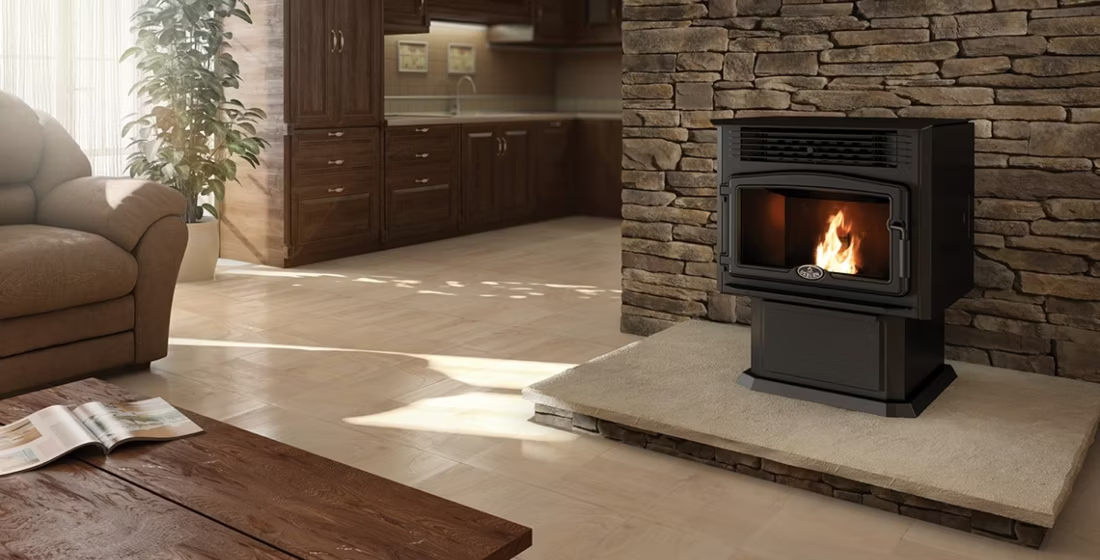
With a long, cold heating season and winter lows averaging 11°F, Bremer County sits deep in cold-climate territory. A pellet stove gives you thermostat-style control without splitting cordwood every weekend. I'll match you with a vetted local dealer who knows how to size and vent one for a Cedar River valley farmhouse or a Waverly in-town remodel.
Every Project Starts From One of These Five Situations
Consistent heat without splitting or stacking cordwood.
Bremer County sits in the Cedar River valley of northeast Iowa, home to about 18,175 people spread across Waverly (the county seat and home of Wartburg College), Tripoli, Denver, Sumner, and Plainfield. Winters here run long—Climate Zone 6A, with a long, cold heating season and winter lows averaging 11°F put the county in a heating season comparable to Fargo, ND. Oak, hickory, maple, and walnut line the river bottoms and have long fueled traditional wood stoves in rural parts of the county, but a growing number of homeowners are switching to pellet appliances for the auto-feed convenience: load the hopper, set the thermostat, and let it run through a stretch of single-digit nights without tending a fire.
Bremer County has no air quality non-attainment designations or winter burn restrictions, so there's no curtailment schedule to work around here—a pellet stove installs and runs on its own merits, not as a compliance workaround. The tradeoff is that pellet stoves need electricity to run the auger and combustion blower, and outlying farms served by a rural electric cooperative can see longer outage restoration after an ice storm than in-town Waverly or Denver customers on a municipal grid. Regional pellet supply from Lignetics and Indeck Energy Services keeps fuel reasonably accessible without relying on cross-country shipping, and a local dealer can tell you which grade burns cleanest in the model you're considering.
Three steps. No salesperson until you're ready.
Tell us about your project
Your zip code, your situation, and the fuel you're leaning toward—or let the answers point you to one.
See what's actually available
The brands dealers within 100 miles genuinely carry—real options, never a catalog mirage.
Get your dealer & Project Guide
A trusted local dealer, plus the free Project Guide & Parts List that names every component of the job.
Frequently Asked Questions
How much does a pellet stove installation cost in Bremer County?
A freestanding pellet stove installation in Bremer County typically runs in the $3,000–$6,000 range, depending on the unit size, hearth pad requirements, and how far the vent run has to travel through an exterior wall. Converting an existing wood-burning fireplace to a pellet insert usually lands in a similar range, sometimes a bit higher if a new liner is needed inside the old masonry flue. Farmhouses outside Waverly or Tripoli with a longer driveway or older electrical panel may see a modest add-on for the dedicated circuit the auger and blower need. A local dealer will give you a firm number after seeing the room.
What size pellet stove do I need for a Bremer County home?
With a long, cold heating season and winter lows averaging 11°F—cold enough to sit alongside Fargo, ND on a heating-season chart—most Bremer County homes need a mid-size pellet stove in the 40,000–50,000 BTU range to comfortably cover a main living area or serve as serious supplemental heat. Older farmhouses around Sumner or Plainfield with open stairwells and higher ceilings often need to size up a step, while a tighter, newer-construction home in Denver may do fine with a smaller unit. A dealer visit beats a generic chart every time, since floor plan and insulation quality swing the right size more than square footage alone.
Do I need a permit to install a pellet stove in Bremer County?
Yes. A new pellet stove installation needs a building permit, whether you're inside Waverly, Tripoli, Denver, or Sumner city limits or out in unincorporated Bremer County—check with the applicable city hall or the county building department depending on your address. The permit covers the hearth pad clearance, the through-wall vent penetration, and the dedicated electrical circuit the stove's auger and blower require. Most full-service local dealers pull this permit as part of the installation and coordinate the final inspection, which saves you from chasing down separate trades.
Where do I buy pellets in Bremer County, and how many tons will I need?
Regional producers Lignetics and Indeck Energy Services supply hardwood pellets to dealers and farm-supply retailers throughout northeast Iowa, and several stores in and around Waverly stock pallets seasonally, especially close to fall. For a home running a pellet stove as supplemental heat through Bremer County's long, cold winter, plan on roughly 2 to 3 tons; households using it as a primary heat source can burn 4 tons or more. Buying early, before the October rush, is the easiest way to avoid a mid-winter supply crunch when demand spikes across the region.
What happens if the power goes out—will my pellet stove still run?
No. Pellet stoves rely on electricity to run the auger that feeds fuel and the blower that pushes heat into the room, so a power outage stops the stove regardless of how much fuel is in the hopper. That matters in rural stretches of Bremer County served by a rural electric cooperative, where restoration after an ice storm or high-wind event can take longer than it does inside Waverly or Denver on municipal power. Some homeowners pair a pellet stove with a small battery backup or portable generator sized to the stove's low draw; others keep a wood-burning option in reserve, which the county's lack of air quality restrictions makes easy to add without any curtailment concerns.
Pellet vs. wood—which makes more sense for my Bremer County home?
Bremer County has no non-attainment status or winter burn bans, so wood stoves burning local oak, hickory, maple, or walnut are fully permitted with zero curtailment days to plan around—a real advantage for households with access to cut wood on a rural acreage. Pellet stoves trade that self-sufficiency for convenience: no splitting, no stacking, and steadier thermostat-style heat output over a long burn cycle, which suits in-town Waverly or Tripoli homeowners without a woodlot or the time to tend a firebox daily. If you already have a hardwood supply on hand, wood often wins on fuel cost; if convenience and consistent output matter more, pellet is usually the better fit.
How often does a pellet stove need cleaning and service?
Expect to empty the ash pan every two to three days during full-time winter burning and scrape the burn pot weekly to keep the air holes clear—a clogged burn pot is the most common reason a pellet stove starts running rough. The glass needs a quick wipe every few days, and the hopper and exhaust fan area benefit from a vacuum-out monthly. Given how long Bremer County's heating season runs, plan a full professional service and vent inspection each September before the first cold snap, rather than waiting until a problem shows up in January.
What kind of venting does a pellet stove need?
Pellet stoves use PL vent pipe and typically run horizontally through an exterior wall rather than up a full masonry chimney, which makes them a practical option for a Bremer County farmhouse or ranch home that never had a chimney to begin with. If you're converting an existing wood fireplace, a pellet insert can instead vent through a liner run up the old flue. Either path is simpler and less expensive than a full masonry chimney build, and a local dealer will confirm the exact clearances your model needs from the exterior wall or roofline.
Are there rebates or tax credits available for a pellet stove in Iowa?
Iowa doesn't currently run a state-level rebate program for biomass heating appliances, but the federal Section 25C tax credit applies nationwide, including in Bremer County: it covers 30% of the cost of a qualifying pellet stove and its installation, provided the unit meets a minimum 75% HHV thermal efficiency rating, up to an annual cap. Your local dealer can confirm which models in stock qualify and provide the documentation you'll need at tax time—keep the manufacturer's certification statement with your paperwork.
What's the difference between an insert and a zero-clearance fireplace?
An insert is a fireplace that slides into a pre-existing wood-burning fireplace—if you don't have one, there's nothing to insert it into. A zero-clearance fireplace is built into a framed wall, which makes it the answer for remodels and new construction. Simple test: existing masonry fireplace means insert; blank or framed wall means zero-clearance.
How often does a pellet stove need cleaning?
A clean pellet stove is a happy pellet stove. Plan on cleaning the burn pot about once a week when you're burning regularly—ash and clinkers gum up the air holes just like a pellet barbecue. Most pellet stove problems trace back to skipped cleaning that nobody explained up front. Some designs make it easy with a trapdoor burn pot: pull a lever and the gunk drops into the ash pan.
How much should I budget for a fireplace?
For an average home—covering the fireplace, the vent pipe, and basic installation—a budget between $3,900 and $5,500 gives you a lot of options across wood, gas, and pellet. By the time you add finish work, gas line, and electrical, the average complete installation lands between $5,000 and $12,000 all-in. In a remodel or new build, a good rule is to put about 2.5% of the total project cost toward the fireplace.
Does a fireplace add value to my home?
On average, a fireplace adds back to the home about the same amount you spent installing it. Add the monthly savings from heating the rooms you actually use instead of the whole house—often hundreds of dollars a year—and the value case is strong before you even count what a fire does for how your family uses the room.
Pellet Brands Stocked Around Bremer County
Manufacturers will point you to the nearest stocking dealer.
Get your free Project Guide & Parts List for a pellet stove in Bremer County.
Tell me about your home and how you plan to use the stove, and I'll match you with a trusted local Bremer County dealer and send over a free Project Guide & Parts List—the exact parts, including the vent kit, for your pellet heat project.
Find Your Fireplace →