
Keep Your Family Warm and Safe—No Matter What
From Columbia City to South Whitley and Churubusco, northeast Indiana winters run cold and long. Find the right wood stove or insert for your home, and connect with a trusted local dealer who can install it correctly.
Every Project Starts From One of These Five Situations
Hardwood country, built for wood heat.
Whitley County sits in Climate Zone 5A with a heating load in the same range as Buffalo, NY, and average winter lows around 16 degrees. The county is flat farmland threaded with woodlots and windbreaks full of oak, hickory, maple, and beech, the exact species that produce the dense, long-burning coals wood stove owners want on a January night. For a lot of families in Columbia City, South Whitley, and the smaller unincorporated communities in between, a woodlot down the road or a neighbor's fencerow is still the firewood supply, not a big-box delivery.
Whitley County has no listed air quality non-attainment issues or winter inversion concerns, which means wood burning here isn't complicated by the curtailment periods or smoke advisories you'd find in parts of the West. That said, a new wood stove or insert still needs a permit through the county building department, EPA-certified equipment, and correctly sized venting—the kind of work best left to an installer who does this regularly rather than a general contractor. A properly matched stove turns rural Indiana's long, gray winters into a source of reliable, radiant heat instead of a monthly propane or electric bill you're just hoping to survive.
Three steps. No salesperson until you're ready.
Tell us about your project
Your zip code, your situation, and the fuel you're leaning toward—or let the answers point you to one.
See what's actually available
The brands dealers within 100 miles genuinely carry—real options, never a catalog mirage.
Get your dealer & Project Guide
A trusted local dealer, plus the free Project Guide & Parts List that names every component of the job.
Frequently Asked Questions
How much does a wood stove installation cost in Whitley County?
Most wood stove installations in this part of Indiana run somewhere between $3,500 and $8,000, with the final number driven by the stove itself, whether an existing masonry chimney can be reused with a liner, and how much new Class A pipe or through-wall venting is needed. Older farmhouses in Whitley County with an existing fireplace often come in on the lower end since the chimney is already there; homes without one—including many newer builds around Columbia City—need full chimney construction, which pushes costs toward the higher end. A local dealer will give you a firm number after seeing the install site in person.
What size wood stove do I need for my Whitley County home?
Whitley County is flat farm country, so elevation isn't the variable it would be out West—sizing here comes down to square footage, insulation, and ceiling height. Small stoves suit a single room or a cabin under about 1,000 square feet; medium stoves in the 1,000 to 2,000 square foot range cover most farmhouses and ranch homes; larger stoves handle bigger, well-insulated homes as a primary heat source. Older, drafty farmhouses common throughout the county often need to size up a notch compared to a newer, tightly built home of the same footprint. A local retailer can do an in-home sizing consultation and account for your specific construction.
Where can I find certified wood stove installers near Whitley County?
Look for NFI (National Fireplace Institute) or CSIA (Chimney Safety Institute of America) certification—both indicate real training in wood-burning venting and clearances, not just general contracting experience. Because Whitley County is a smaller, rural county, some homeowners end up working with certified installers based in the Fort Wayne area who cover the county as part of their service territory. That's normal and doesn't mean lower quality work—it just means booking a little further ahead during peak fall installation season. Avoid handyman installs for wood-burning appliances; improper clearances and venting are the leading cause of chimney fires.
What's the difference between a wood stove and a wood insert?
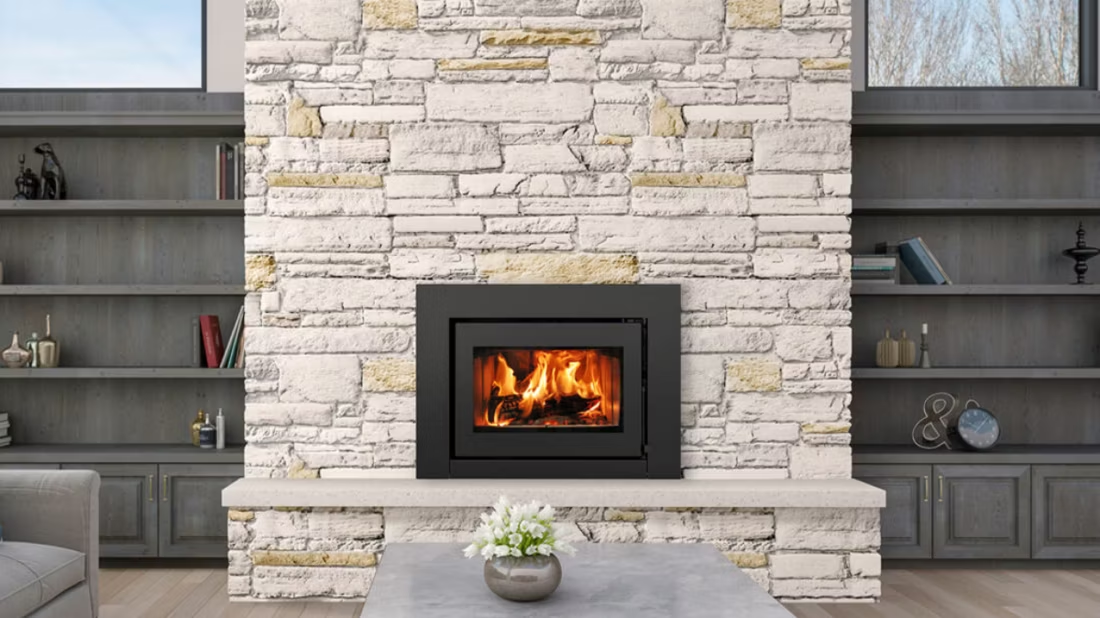
A wood stove is freestanding and sits on a hearth pad—it can go almost anywhere with the right clearances, which makes it a good fit for newer Whitley County homes without an existing fireplace. A wood insert slides into an existing masonry fireplace and uses a stainless liner run up the existing chimney, which is the more common choice in the county's older farmhouses that already have a hearth. An insert turns a drafty, inefficient open fireplace into a genuine heat source; a freestanding stove is the better option when you're starting from scratch.
Do I need a permit to install a wood stove in Whitley County?
Yes—a new wood stove or insert installation requires a building permit through Whitley County, and the unit itself needs to meet current EPA 2020 NSPS emissions standards. Most local installers handle the permit paperwork as part of the job, so it's rarely something you have to manage yourself. Unlike some western states, Whitley County has no listed air quality non-attainment status or winter inversion advisories, so there are no seasonal burn curtailment periods to plan around here—you're free to burn once the stove is installed and inspected.
What's the best wood stove for Whitley County's climate?
With winters as cold and long as Buffalo, NY, and winter lows regularly in the mid-teens, Whitley County homes benefit from a stove built for sustained cold rather than occasional ambiance. Catalytic models from brands like Blaze King or Woodstock Soapstone hold a fire 12 to 20 hours on a load of local oak or hickory, both of which burn dense and hot. Non-catalytic stoves from Pacific Energy or Lopi are a solid, lower-maintenance option for homes using wood as a supplemental heat source rather than the primary system. A local dealer can match stove size and burn technology to your specific square footage and how much of your heating load you want the stove to carry.
How often should my chimney be inspected and cleaned?
The CSIA recommends an annual inspection for any wood-burning appliance, and that holds true in Whitley County whether you're burning as a primary heat source on a rural property or running a stove a few nights a week in town. Late summer, before the first cold snap hits Columbia City and South Whitley, is the typical window local sweeps stay busiest. Homes burning multiple cords a winter as a main heat source may need a mid-season cleaning if creosote builds up faster than expected—your installer can tell you what to watch for based on your specific stove and wood species.
Where can I get firewood in Whitley County?
Unlike counties bordering national forest land, Whitley County's firewood mostly comes from private woodlots, farm fencerows, and local tree services rather than public land cutting permits—there's no Forest Service permit office to route through here. Oak, hickory, maple, and beech are the common local species, and seasoned hardwood typically runs somewhere in the $180 to $260 per cord range from local sellers, with prices climbing for kiln-dried or already-split wood. Many rural residents still cut their own from their own property or a neighbor's woodlot, which keeps the county's wood-heat culture running on something closer to a barter economy than a retail one.
Wood stove vs. pellet stove—which is right for me?
Wood stoves burn cordwood, work with zero electricity—a real advantage during the ice storms that periodically knock out power across rural Whitley County—and pair naturally with the abundant local oak and hickory. Pellet stoves, using bagged pellets from regional suppliers like Lignetics or Somerset Pellet Fuel, are easier to run day-to-day and produce less ash, but the auger and blower need electricity, so they go dark in an outage unless you add a battery backup. For farmhouses and properties further from town where outages last longer, wood tends to be the more resilient choice. For in-town homes prioritizing convenience with reliable power, pellet is a strong option. Local dealers carry both and can walk you through the tradeoff for your specific property.
Why won't my new wood stove get going like my old one?
New wood stoves are 70%+ efficient, so far less heat goes up the flue—which also means less draft to get a fire established. The rule: build a genuinely hot fire for about 45 minutes before you choke it down. Skip that and you get smoke in the room, creosote in the chimney, and a fire that never takes off. Most performance complaints trace straight back to this.
What's the difference between an insert and a zero-clearance fireplace?
An insert is a fireplace that slides into a pre-existing wood-burning fireplace—if you don't have one, there's nothing to insert it into. A zero-clearance fireplace is built into a framed wall, which makes it the answer for remodels and new construction. Simple test: existing masonry fireplace means insert; blank or framed wall means zero-clearance.
Can I install a fireplace myself?
If you're putting a fire in your house on purpose, it's best to work with an expert. Unless you're genuinely experienced in framing, gas line, vent pipe, and the national code on clearances to combustibles, have a professional do it—and ideally the same company that sells you the fireplace, so warranty, service, and liability all live under one roof.
What is an in-home preview and do I need one?
It's a visit where a hearth professional measures your space, confirms the model you picked actually works in your home, and walks the specs—framing, gas line, venting, finish work—before anything is ordered. Some details you just can't know until you see the house. Never make a down payment without one; it's the single most-skipped step that burns buyers.
Find your wood stove in Whitley County.
Tell us a bit about your home and we'll match you with a trusted local dealer and send you a free Project Guide & Parts List—the exact stove, vent kit, and parts recommended for your Whitley County project.
Find Your Fireplace →