
No chimney needed—just plug-in warmth for Whitley County.
From Columbia City to South Whitley to Churubusco, electric fireplaces give Whitley County homeowners a zero-venting way to add heat and ambiance to a single room. Find the right unit, and connect with a trusted local dealer.
Every Project Starts From One of These Five Situations
Supplemental heat that fits nearly every home in Whitley County.
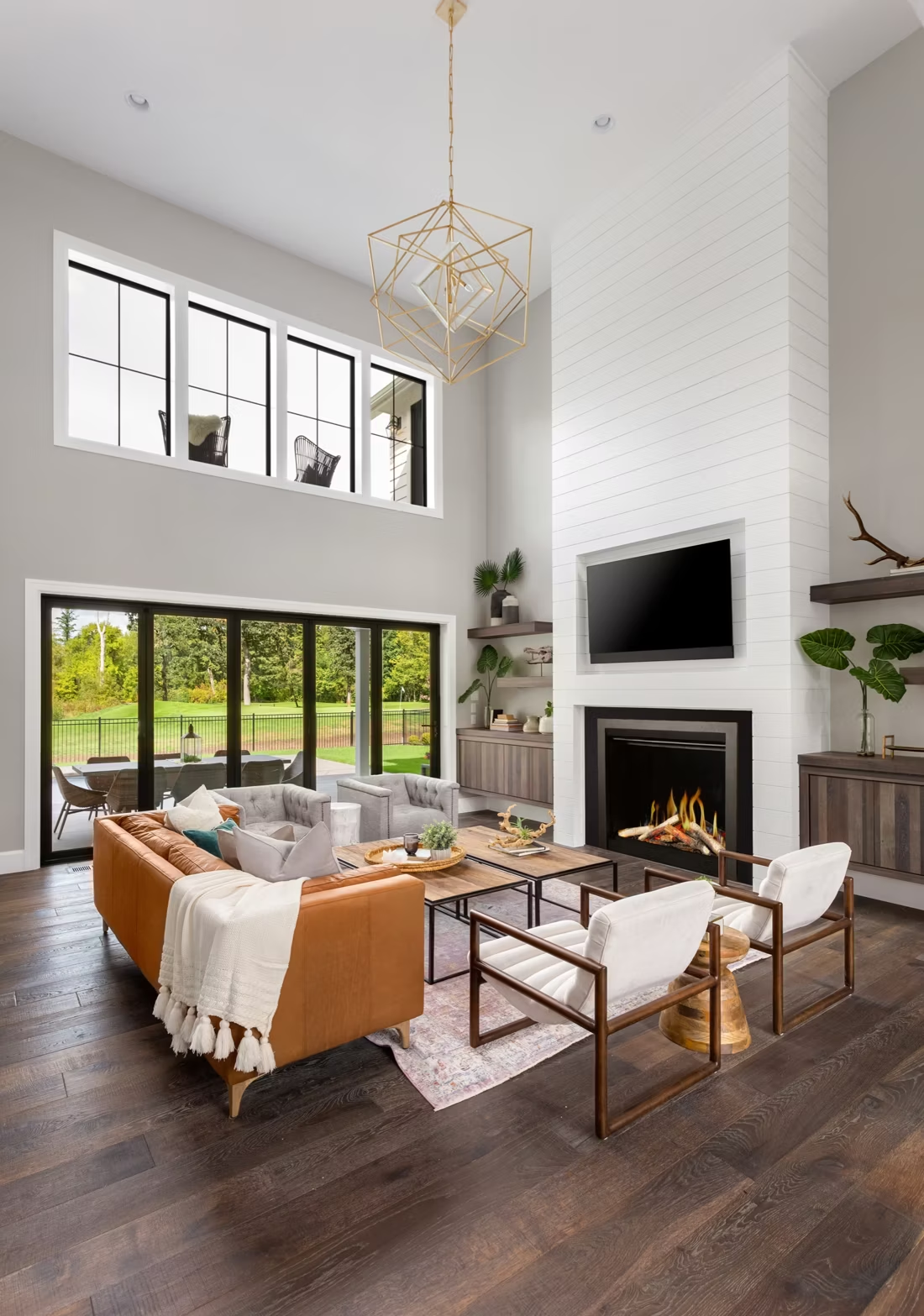
Whitley County sits in northeast Indiana with a winter climate on par with Buffalo, NY—a long, cold heating season and average winter lows around 16 degrees. Whether it's a farmhouse outside South Whitley with an old masonry fireplace, a ranch home in Columbia City, or a newer build near Churubusco, most of these houses already lean on a furnace fueled by propane or natural gas for whole-house heat. An electric fireplace isn't trying to replace that—it's zone heat for a den, a finished basement, or a bonus room, plus the visual of a fire without adding a flue.
Electricity in the county runs through a mix of providers—Indiana Michigan Power (AEP) serves Columbia City and the surrounding grid, while Whitley County REMC covers a lot of the rural township roads. Either way, most electric fireplaces just need a standard outlet. Built-in wall units on a dedicated circuit are the exception, and that's where a licensed electrician and a quick permit conversation with the county come into play. It's also a popular retrofit for older homes with an existing masonry fireplace that no longer gets used for burning oak or hickory—an electric log insert brings the look back without the firewood, the ash, or the chimney maintenance.
Three steps. No salesperson until you're ready.
Tell us about your project
Your zip code, your situation, and the fuel you're leaning toward—or let the answers point you to one.
See what's actually available
The brands dealers within 100 miles genuinely carry—real options, never a catalog mirage.
Get your dealer & Project Guide
A trusted local dealer, plus the free Project Guide & Parts List that names every component of the job.
Frequently Asked Questions
How much does an electric fireplace installation cost in Whitley County?
Plug-in electric fireplaces and freestanding stoves are the cheapest option—the unit itself typically runs $200 to $800, and if there's already an outlet nearby, there's effectively no installation cost. Built-in wall units or electric inserts set into an existing masonry fireplace opening run higher, generally $800 to $2,000 once you factor in the unit, any surround or trim kit, and—if the unit needs a dedicated 20-amp circuit—an electrician's time to run new wiring. Homes in older parts of Columbia City with knob-and-tube or dated panels sometimes need a panel assessment before that circuit work, which can add to the bill.
Do I need a permit to install an electric fireplace in Whitley County?
A plug-in electric fireplace or stove that just plugs into an existing outlet doesn't require a permit—there's no gas line, no venting, and no new wiring involved. If you're installing a built-in unit that requires a dedicated circuit, that electrical work typically does need a permit through the county building department, and it should be pulled by whoever does the wiring. Local dealers who sell and install built-in units are used to coordinating this with a licensed electrician so you're not left tracking it down yourself.
Can an electric fireplace be my primary heat source in Whitley County?
No, and I wouldn't recommend planning around it that way. With a long, cold heating season and lows regularly in the teens, Whitley County homes need a real furnace—propane, natural gas, or occasionally wood—to carry the whole house through winter. An electric fireplace is genuinely useful as supplemental zone heat for one room, especially spaces that are hard to heat evenly with ductwork, like an added bonus room or a finished basement in an older South Whitley farmhouse. Think of it as taking the edge off a specific room, not replacing the furnace.
Should I get an electric insert for my existing fireplace or a built-in unit?
If you've got an existing masonry fireplace—common in the older homes around Columbia City and the county's farmhouses—an electric insert that slides into the firebox opening is usually the simplest and least invasive option. It typically just needs a nearby outlet, keeps the look of your existing surround, and skips any wall framing. A built-in wall unit makes more sense for new construction, a remodel, or a room that never had a fireplace to begin with—it gets recessed into the wall for a cleaner, flush look, but it usually means opening up drywall and running that dedicated circuit.
How much does it cost to run an electric fireplace in Whitley County?
Most electric fireplaces draw around 1,500 watts on the heat setting, which works out to roughly 10 to 15 cents an hour depending on whether you're on Indiana Michigan Power or Whitley County REMC rates. Running one for a few hours a night in a single room during the coldest stretch of winter typically adds somewhere in the $10 to $25 range to a monthly bill—a lot less than trying to heat that same space by cranking the whole-house furnace higher.
What's the difference between an electric fireplace, an electric insert, and an electric stove?
An electric fireplace is usually a built-in or wall-mounted unit designed to look like a framed hearth, often with a mantel or surround. An electric insert is sized and shaped to slide into an existing masonry fireplace opening, replacing an unused wood-burning firebox with a heater and flame effect. An electric stove is a freestanding cabinet-style unit that mimics a traditional wood stove's footprint—a good option if you want the look of a stove in a room that never had one, without any of the venting a real wood stove would require.
Will my electric fireplace work during a power outage?
No—electric fireplaces need power to run, so they go dark along with everything else when the electricity drops. That matters in Whitley County, where rural REMC lines can take longer to restore after an ice storm or a bad winter system than in-town service from Indiana Michigan Power. If backup heat during outages is a real priority for your household, a wood stove or a properly vented propane unit is the better complement—plenty of local homes pair an electric fireplace for everyday ambiance with a wood-burning setup, often fed by the oak, hickory, maple, or beech that's plentiful around the county, for the nights the power actually goes out.
How long does an electric fireplace last, and do they need maintenance?
Most quality electric fireplaces last 10 to 15 years with minimal upkeep—no chimney sweeping, no annual gas line inspection, no creosote to worry about. The main maintenance is occasionally dusting the heater vents and checking the flame-effect bulbs or LEDs, which are typically user-replaceable. Because there's no combustion, there's also nothing to inspect for carbon monoxide risk, which is one reason they're a low-hassle option for a rental property or a second home in the county.
Electric vs. wood—which makes more sense for my Whitley County home?
Wood offers real backup heat during outages, lower ongoing fuel cost if you're already set up to process oak or hickory from your own property, and the kind of radiant heat that a plug-in unit can't fully match. It also means chimney maintenance, ash cleanup, and permitted venting work. Electric skips all of that—no venting, no permit for a plug-in model, and instant on-off control—but it's zone heat and ambiance only, and it's dark right along with the rest of the house in an outage. For a lot of Whitley County homes, the answer ends up being both: wood or a furnace for the heavy lifting through a long Indiana winter, electric for the room you actually spend your evenings in.
Can I put a TV above my fireplace?
Yes—with an asterisk. Fireplaces are hot and TVs don't like heat. Either put a mantel between them to deflect rising warmth, or choose a fireplace with heat-management technology that creates a cool zone on the wall above—the wall stays around 125 degrees, barely warm, while the room still gets full heat. If you like clean lines and don't want a mantel, heat management is the answer.
What fireplace styles should I know before shopping?
Four cover most of the market: screen-front traditional (mesh front, open feel, fits craftsman homes), traditional door set (the classic look you grew up with), modern linear (wide, low, the statement piece for entertaining), and clean face contemporary (no trim—your tile or stone runs right to the fire's edge). Walk in knowing those four terms and you're ahead of most buyers.
How much should I budget for a fireplace?
For an average home—covering the fireplace, the vent pipe, and basic installation—a budget between $3,900 and $5,500 gives you a lot of options across wood, gas, and pellet. By the time you add finish work, gas line, and electrical, the average complete installation lands between $5,000 and $12,000 all-in. In a remodel or new build, a good rule is to put about 2.5% of the total project cost toward the fireplace.
Can a fireplace actually lower my heating bill?
Yes—by creating a comfort zone. A furnace heats every square foot of the house just to warm the one room you're in; a gas fireplace on low burns roughly a sixth of the gas a typical furnace does. Set the furnace around 55–60 degrees as a baseline, then heat the rooms your family actually uses. Families who heat this way commonly save $20–$60 a month.
Find your electric fireplace in Whitley County.
Tell us a bit about your home and we'll put together a free Project Guide & Parts List—the exact unit, any wiring needs, and a trusted local Whitley County dealer to install it.
Find Your Fireplace →