
Steady, thermostat-controlled heat for Wabash Valley winters.
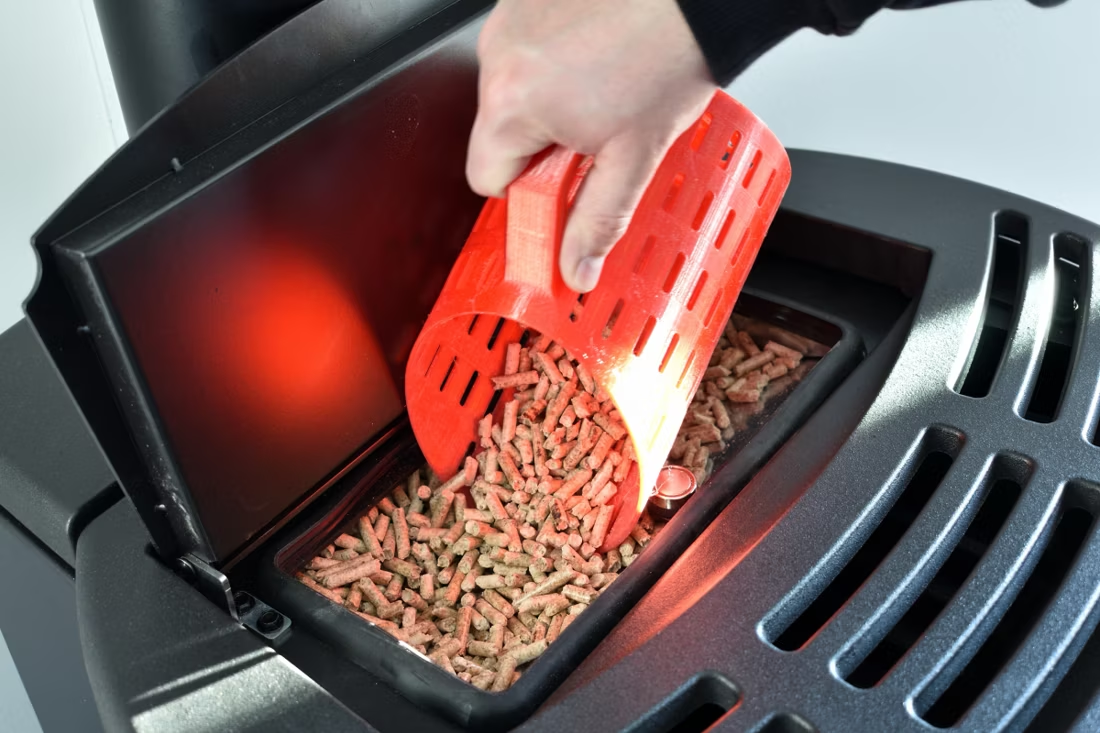
Load the hopper, set the thermostat, and let a pellet stove or insert handle the rest through Terre Haute's cold stretches. We'll match you with the right unit and a trusted local dealer.
Every Project Starts From One of These Five Situations
Consistent heat, without the wood-splitting.
Vigo County sits in west-central Indiana's climate zone 5A, with about 4,892 heating degree days a year and winter lows averaging 19°F—real cold, though not the double-digit-below-zero stretches you'd see up in Duluth or Fargo. That's a comfortable middle ground for pellet heat: cold enough that supplemental heating matters most winters, mild enough that a mid-size pellet stove or insert can carry a whole living area without running around the clock. The hardwood forests around Terre Haute and the Wabash River bottomland—oak, hickory, maple, beech—have long supplied cordwood to the county, but a growing number of homeowners are choosing pellets instead for the convenience: no splitting, no seasoning, no hauling armloads through the snow.
Vigo County has no air quality non-attainment designations or wood-smoke restrictions, so there's nothing standing in the way of a clean-burning pellet appliance here—it's simply a matter of preference and lifestyle fit. Regional pellet supply runs through producers like Indeck Energy Services, Lignetics, and Somerset Pellet Fuel, giving Terre Haute-area homeowners reasonably local sourcing rather than long-haul trucked bags. For homes on smaller in-town lots where stacking a winter's worth of cordwood isn't practical, or for anyone who wants near-furnace convenience with a real flame, a pellet stove or insert is one of the most straightforward heating upgrades available in the county.
Three steps. No salesperson until you're ready.
Tell us about your project
Your zip code, your situation, and the fuel you're leaning toward—or let the answers point you to one.
See what's actually available
The brands dealers within 100 miles genuinely carry—real options, never a catalog mirage.
Get your dealer & Project Guide
A trusted local dealer, plus the free Project Guide & Parts List that names every component of the job.
Frequently Asked Questions
How much does a pellet stove installation cost in Vigo County?
Most pellet stove and insert installations in Vigo County land somewhere between $3,000 and $6,500, depending on the unit, whether you're venting through an existing masonry fireplace or running a new through-wall vent, and whether any hearth pad or clearance work is needed. Inserts going into an existing fireplace with a straightforward vent run tend to sit on the lower end; freestanding stoves in a new location, requiring fresh venting and a floor protector, run higher. A local dealer will give you a firm number after seeing the install location in person.
What size pellet stove do I need for my home?
Sizing depends on square footage, ceiling height, insulation, and whether the stove is your primary heat or a supplement to central HVAC. With Vigo County's 4,892 heating degree days and winter lows around 19°F, a small pellet stove (up to around 1,000 sq ft) suits a single room or a well-insulated addition, a medium unit (1,000–1,800 sq ft) handles most main living areas in older Terre Haute homes, and a larger unit with a bigger hopper is worth considering for open floor plans or homes with higher ceilings. Older housing stock near downtown Terre Haute often has less insulation than newer county subdivisions, which can push sizing up even at the same square footage—a local dealer can walk through your specific layout.
Where can I buy pellet fuel in Vigo County?
Hardwood pellets are widely available in and around Terre Haute through hearth retailers and farm-supply stores, with regional brands like Indeck Energy Services, Lignetics, and Somerset Pellet Fuel commonly stocked or ordered by dealers in the area. Buying by the ton (a pallet of forty 40-lb bags) is usually more economical than buying bags individually through the season, and many local dealers who sell you the stove can also set up seasonal pellet delivery or point you to a nearby supplier.
Pellet stove vs. wood stove—which is right for my Vigo County home?
Wood stoves burn cordwood from the oak, hickory, and maple that's common throughout west-central Indiana, work without electricity, and offer the most authentic fire experience—a real advantage during the occasional Wabash Valley ice storm that knocks out power for a day or more. Pellet stoves are easier to live with day-to-day: load the hopper, set the thermostat, and the auger and blower do the rest, with less ash and no chimney creosote to manage. The tradeoff is that pellet stoves need electricity to run—so if outages are a real concern for your property, either plan on a battery backup or small generator for the stove, or lean toward wood as your primary option. Many Vigo County homeowners choose pellet for daily convenience and keep a backup plan for outages.
Do I need a permit to install a pellet stove in Vigo County?
Yes—new pellet stove and insert installations typically require a building permit through the Vigo County building and code enforcement office, or through the city of Terre Haute if the property is within city limits. The unit and venting also need to meet the manufacturer's listed installation specifications and applicable NFPA 211 clearance requirements. Most local dealers handle the permit application and inspection scheduling as part of the installation, so this generally isn't something you have to manage yourself.
What's the best pellet stove for Vigo County's climate?
For a climate zone 5A home with winter lows around 19°F, look for a pellet stove with a hopper large enough to run 12–24 hours between refills and a heat output rated for your actual square footage rather than the manufacturer's maximum claim, which assumes ideal conditions. Homes used as primary heat in older, less-insulated parts of Terre Haute generally do better with a mid-to-large unit and a programmable thermostat interface, while newer, better-sealed county homes can often get by with a smaller stove used for supplemental zone heating. A local dealer can match hopper size and BTU output to your specific home rather than a generic recommendation.
How often does a pellet stove need to be serviced?
Pellet stoves need more frequent light maintenance than wood stoves but less heavy cleaning overall. Plan on emptying the ash pan every few days during regular use, cleaning the burn pot weekly to keep the fire burning efficiently, and scheduling a full professional inspection and cleaning of the venting, auger, and blower components once a year—typically before the start of the winter heating season. Vigo County dealers who sell pellet appliances generally offer this annual service, and staying current on it keeps the warranty valid and the stove running efficiently through the coldest months.
What happens to my pellet stove during a power outage?
Pellet stoves rely on electricity to run the auger that feeds fuel and the blower that circulates heat, so a standard unit will shut down during a power outage. This matters in Vigo County, where ice storms along the Wabash Valley occasionally take down power for extended stretches in winter. If reliable backup heat during outages is a priority, homeowners typically either pair the pellet stove with a small backup generator or battery power station sized for the stove's draw, or add a wood-burning stove or insert as backup heat elsewhere in the home. Ask your local dealer about the specific wattage draw of any unit you're considering so you can size a generator correctly if you go that route.
Pellet insert vs. freestanding pellet stove—which should I choose?
A pellet insert is built to slide into an existing masonry fireplace opening, using your current chimney chase (with a new liner) for venting—a natural fit for older Terre Haute homes with an existing but underused fireplace. A freestanding pellet stove sits on its own hearth pad and can go almost anywhere in a room with proper clearances and a through-wall vent, which makes it a better option for newer homes without an existing fireplace or for adding heat to a room that doesn't have one. If you already have a fireplace you rarely use, an insert is usually the more cost-effective upgrade; if you're starting from scratch, a freestanding stove gives you more flexibility on placement.
Why is a fireplace insert so efficient?
An insert does two things: it seals the chimney completely, so you stop losing air you already paid to heat, and it radiates warmth into the room through the firebox and glass. Most add a heat-exchange fan that pulls cool room air underneath, wraps it around the hot firebox, and pushes it back out warm. Your home is more efficient before you've even lit the first fire.
What's the difference between an insert and a zero-clearance fireplace?
An insert is a fireplace that slides into a pre-existing wood-burning fireplace—if you don't have one, there's nothing to insert it into. A zero-clearance fireplace is built into a framed wall, which makes it the answer for remodels and new construction. Simple test: existing masonry fireplace means insert; blank or framed wall means zero-clearance.
Can I install a fireplace myself?
If you're putting a fire in your house on purpose, it's best to work with an expert. Unless you're genuinely experienced in framing, gas line, vent pipe, and the national code on clearances to combustibles, have a professional do it—and ideally the same company that sells you the fireplace, so warranty, service, and liability all live under one roof.
What is an in-home preview and do I need one?
It's a visit where a hearth professional measures your space, confirms the model you picked actually works in your home, and walks the specs—framing, gas line, venting, finish work—before anything is ordered. Some details you just can't know until you see the house. Never make a down payment without one; it's the single most-skipped step that burns buyers.
Stove and Fireplace Dealers in Vigo County
Pellet Brands Stocked Around Vigo County
Manufacturers will point you to the nearest stocking dealer.
Find your pellet stove in Vigo County.
Tell us about your Vigo County home and we'll match you with a trusted local dealer and send a free Project Guide & Parts List—the exact stove or insert, venting, and installation plan for your pellet project.
Find Your Fireplace →