
Pellet heat is a quiet niche in Terre Haute.
Most Vigo County homes heat with natural gas, so pellet stoves aren't the default here. For the homeowners who want one anyway—a workshop, a basement, a home off the gas line—I'll match you with a trusted local dealer who actually stocks and installs them.
Every Project Starts From One of These Five Situations
Pellet stoves fill a specific niche here, not the default.
Terre Haute sits along the Wabash River in Vigo County at about 505 feet elevation, in Climate Zone 5A, with average winter lows around 19°F and roughly 4,892 heating degree days a year. That's a real heating season, but nowhere near the load-bearing cold of places like Duluth, MN or Fargo, ND, where wood and pellet heat carry whole neighborhoods through winter. Terre Haute homes are overwhelmingly tied into natural gas service, and gas furnaces and fireplaces are the standard heating equipment across the city and county. That's why our data flags pellet fuel here as a niche fit rather than a mainstream one—pellet stoves work fine mechanically, almost nobody needs one as primary heat when gas is already piped to the house.
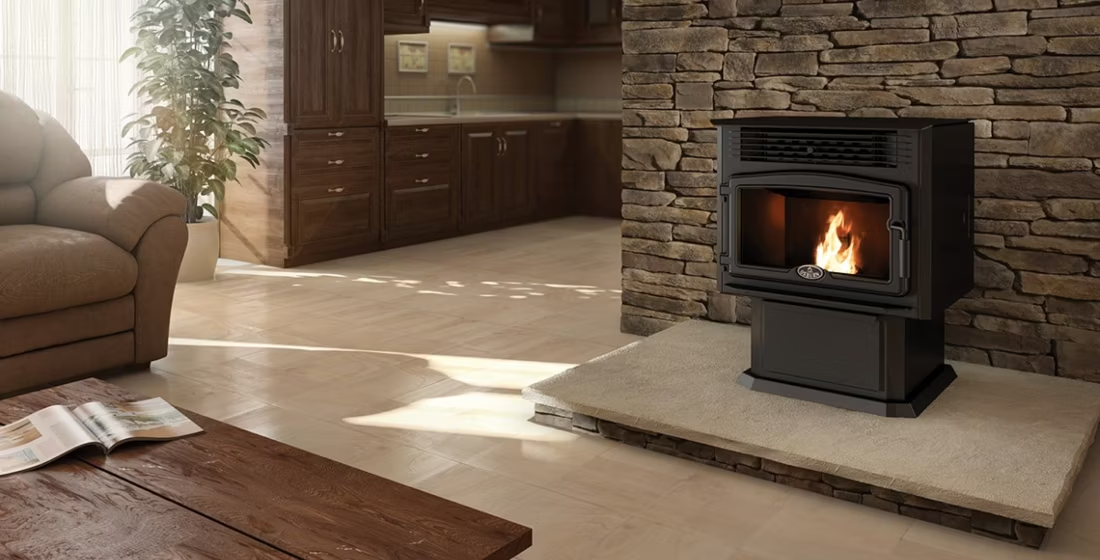
The people who do install a pellet stove in Terre Haute usually have a specific reason: a finished basement or garage workshop that needs zone heat without running a new gas line, a rural property in unincorporated Vigo County without gas access, or a homeowner who likes hopper-fed convenience over splitting and stacking oak, hickory, maple, or beech—the hardwoods that dominate local woodlots—for a wood stove. Regional pellet brands like Indeck Energy Services, Lignetics, and Somerset Pellet Fuel keep bags moving through area farm and hardware stores, so fuel supply isn't the issue. The tradeoff worth knowing: pellet stoves need electricity to run the auger and blower, and Duke Energy Indiana serves this area at roughly $0.1275 per kWh, so unlike a wood stove, a pellet unit goes dark in an outage unless it's paired with a battery backup or small generator.
Three steps. No salesperson until you're ready.
Tell us about your project
Your zip code, your situation, and the fuel you're leaning toward—or let the answers point you to one.
See what's actually available
The brands dealers within 100 miles genuinely carry—real options, never a catalog mirage.
Get your dealer & Project Guide
A trusted local dealer, plus the free Project Guide & Parts List that names every component of the job.
Frequently Asked Questions
Is a pellet stove actually a good fit for a Terre Haute home?
It can be, but it's worth being honest about the fit: most Vigo County homes already have natural gas heat, so a pellet stove here is almost always a supplemental or situational choice rather than a primary heating decision. It makes the most sense for finished basements, garages, workshops, or rural properties without gas service. If you fall into one of those categories, a pellet stove gives you real, thermostatically-controlled heat with far less mess than cordwood—just go in knowing it's a deliberate niche choice, not the local default the way it might be in a wood-heavy region of northern Wisconsin or Montana.
How much does a pellet stove installation cost in Terre Haute?
Because pellet stoves are installed far less often here than gas fireplaces, there isn't a deep local pricing history to point to—but typical freestanding pellet stove installations nationally run $2,500 to $6,000, with the low end covering a simple through-wall vent kit and the high end covering hearth pad work, longer vent runs, or a chimney liner conversion in an existing masonry fireplace. A local dealer will walk your specific space and give you a firm number rather than a range.
Why is pellet fuel rated as uncommon for a city as cold as Terre Haute?
It comes down to infrastructure, not temperature. Terre Haute's winter lows (averaging around 19°F) and 4,892 heating degree days are genuinely cold, but the city and most of Vigo County are already served by natural gas, and gas furnaces and fireplaces are the standard heating equipment in nearly every subdivision. Pellet stoves are common in regions where gas service is patchy or where wood-pellet culture runs deep—that's simply not the case in this part of Indiana, so demand (and the dealer network built around it) stays thin.
Where can I buy pellet fuel near Terre Haute?
Regional brands including Indeck Energy Services, Lignetics, and Somerset Pellet Fuel supply bagged pellets to farm supply and hardware stores throughout west-central Indiana. Because pellet stoves are less common here than in wood-and-pellet-heavy states, stock can run thinner mid-winter than you'd expect—a primary-heat household typically burns through 100 to 150 forty-pound bags a season, so it's worth buying early rather than restocking bag by bag in January.
Will my pellet stove still work if the power goes out?
No, not on its own. Pellet stoves rely on an electric auger to feed fuel and a blower to distribute heat, so a power outage stops the stove even with a full hopper. Duke Energy Indiana serves the Terre Haute area, and while outages here aren't frequent, winter ice storms do happen. If backup heat during an outage matters to you, ask a local dealer about battery-backup units or plan for a small generator—this is one of the clearest differences between a pellet stove and a wood stove, which burns with zero electrical dependence.
Do I need a permit to install a pellet stove in Terre Haute?
Generally yes—venting a new fuel-burning appliance through an exterior wall or existing chimney typically requires a building permit through the Vigo County Building Department (or the City of Terre Haute if you're within city limits), along with inspection of clearances and the hearth pad. Most established hearth dealers who install pellet stoves handle this paperwork as part of the job, which is one more reason to route the project through a dealer rather than a DIY install.
What size pellet stove do I actually need?
Given Terre Haute's moderate winter lows (around 19°F) and gas-heated housing stock, most local pellet stove buyers are sizing for supplemental heat in a single room, basement, or workshop rather than whole-home output. A small unit (under 1,000 sq ft) usually covers a finished basement or garage; a medium unit (1,000-1,800 sq ft) can handle a main living area as backup to central gas heat. If you're off the gas grid and heating a whole house, a local dealer should size the stove against your square footage and insulation in person rather than by a rule of thumb.
Pellet stove vs. wood stove—which makes more sense here?
Both are niche choices in a gas-dominant market like Terre Haute, so the decision usually comes down to convenience versus fuel cost. A wood stove burns oak, hickory, maple, or beech—all common in Vigo County woodlots—often at a lower fuel cost if you're cutting or buying local cordwood, and it needs no electricity to run. A pellet stove trades that self-sufficiency for convenience: load a hopper, set a thermostat, skip the splitting and stacking, and get more consistent heat with less ash. If you want backup heat that survives a power outage, wood wins; if you want low-maintenance supplemental heat and don't mind the electrical dependence, pellet wins.
Pellet stove vs. electric fireplace—what's the real difference for my home?
An electric fireplace or stove plugs into a standard outlet, needs no venting or permit in most cases, and is the simplest option to install—but it produces resistance heat, which is real warmth, not just ambiance, though at Duke Energy Indiana's residential rate of about $0.1275 per kWh, running one as a primary heat source gets expensive fast. A pellet stove costs more upfront and needs venting, but produces higher BTU output per dollar of fuel and can meaningfully offset a gas furnace in a finished basement or workshop. If the room already has electric baseboard or you just want supplemental warmth for occasional use, electric is the lower-hassle choice; if you want real, sustained heat output, pellet is the better tool.
What's the difference between an insert and a zero-clearance fireplace?
An insert is a fireplace that slides into a pre-existing wood-burning fireplace—if you don't have one, there's nothing to insert it into. A zero-clearance fireplace is built into a framed wall, which makes it the answer for remodels and new construction. Simple test: existing masonry fireplace means insert; blank or framed wall means zero-clearance.
Why is a fireplace insert so efficient?
An insert does two things: it seals the chimney completely, so you stop losing air you already paid to heat, and it radiates warmth into the room through the firebox and glass. Most add a heat-exchange fan that pulls cool room air underneath, wraps it around the hot firebox, and pushes it back out warm. Your home is more efficient before you've even lit the first fire.
What is an in-home preview and do I need one?
It's a visit where a hearth professional measures your space, confirms the model you picked actually works in your home, and walks the specs—framing, gas line, venting, finish work—before anything is ordered. Some details you just can't know until you see the house. Never make a down payment without one; it's the single most-skipped step that burns buyers.
How much should I budget for a fireplace?
For an average home—covering the fireplace, the vent pipe, and basic installation—a budget between $3,900 and $5,500 gives you a lot of options across wood, gas, and pellet. By the time you add finish work, gas line, and electrical, the average complete installation lands between $5,000 and $12,000 all-in. In a remodel or new build, a good rule is to put about 2.5% of the total project cost toward the fireplace.
Nearby Dealers
Hearth shops serving Terre Haute and the surrounding area.
Pellet Brands Stocked Around Terre Haute
Manufacturers will point you to the nearest stocking dealer.
Find your pellet stove in Terre Haute.
Tell us a bit about your space—basement, workshop, or main living area—and I'll match you with a trusted local dealer and send over a free Project Guide & Parts List: the exact parts, vent kit included, and the dealer best equipped to install a pellet stove in this market.
Find Your Fireplace →