
Steady, low-maintenance heat for Vermillion County's Wabash Valley winters.
From Clinton to Newport to the farm country along the Wabash River, pellet stoves give Vermillion County homes a clean, thermostat-controlled alternative to cordwood. Find the right unit and connect with a trusted local dealer.
Every Project Starts From One of These Five Situations
Convenient heat for a rural county that still values self-sufficiency.
Vermillion County sits along the Wabash River in west-central Indiana, a stretch of farmland and small towns—Clinton, Newport, Cayuga, Dana—with a population under 11,000. In climate zone 5A, the county sees around 5,635 heating degree days a year and average winter lows near 17°F, a heating load noticeably lighter than places like Duluth or International Falls but real enough that most homes here run a primary heat source for five or six months. It's a county with a coal mining past and a farming present, and the same practical, do-it-yourself mindset that ran the mines now shows up in how people heat their homes.
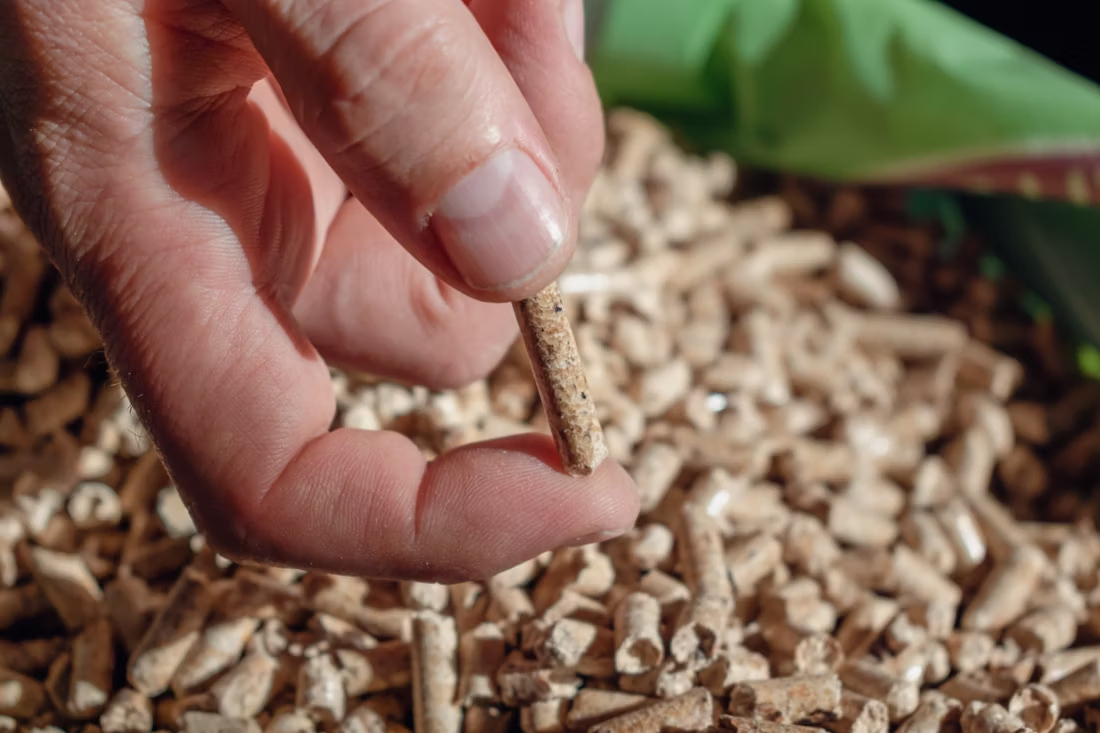
Pellet stoves fit that mindset well. Regional suppliers including Indeck Energy Services, Lignetics, and Somerset Pellet Fuel keep bagged pellets reasonably accessible through farm supply stores and hearth dealers in the area, so homeowners aren't dependent on a single retailer or a long drive across the Illinois line. For rural properties without easy access to natural gas, a pellet stove offers steady, adjustable heat without the daily bucking and splitting that wood demands—a real consideration for households with a woodlot of oak, hickory, maple, or beech but not always the time to process it.
Three steps. No salesperson until you're ready.
Tell us about your project
Your zip code, your situation, and the fuel you're leaning toward—or let the answers point you to one.
See what's actually available
The brands dealers within 100 miles genuinely carry—real options, never a catalog mirage.
Get your dealer & Project Guide
A trusted local dealer, plus the free Project Guide & Parts List that names every component of the job.
Frequently Asked Questions
How much does a pellet stove installation cost in Vermillion County?
Pellet stove installations typically run $3,000 to $6,500 in a county like Vermillion, depending on the stove size, whether you're venting through an exterior wall or an existing chimney, and whether any electrical work is needed for the hopper and blower. A freestanding pellet stove vented through a sidewall of a farmhouse or ranch-style home tends to land on the lower end. Converting an existing masonry fireplace with a pellet insert, which requires a liner run up the flue, typically costs more. Get a firm quote from a local dealer after they've seen your home—venting path matters more to the final price than the stove itself.
What size pellet stove do I need for a Vermillion County home?
With winter lows averaging around 17°F and roughly 5,635 heating degree days a year, most homes here don't need the largest hopper capacity models built for the upper Midwest, but sizing still depends heavily on square footage and insulation. Small stoves suit a single room or a mobile home; mid-size units (rated for 1,000–2,000 sq ft) cover most farmhouses and ranch homes in the county; larger units make sense for drafty older two-story homes near Newport or Clinton with less insulation than newer construction. A local dealer will size the stove to your actual floor plan rather than square footage alone—older homes with high ceilings and single-pane windows often need to size up.
Where can I buy pellet fuel in Vermillion County?
Bagged pellets from regional producers like Indeck Energy Services, Lignetics, and Somerset Pellet Fuel are the most common brands available through hearth dealers and farm supply stores serving the county. Prices generally run in the $220–$300 per ton range across the Midwest, though it pays to buy early in the fall—pellet supply can tighten during cold stretches when demand spikes across Indiana and Illinois. Buying a full season's supply (typically 2–3 tons for an average home) in September or October, rather than restocking mid-winter, is the standard advice from local dealers.
Do I need a permit to install a pellet stove in Vermillion County?
Yes—a building permit is required for a new pellet stove installation through the Vermillion County Building & Planning Department, and the stove needs to meet current EPA emissions standards. Most local hearth dealers handle the permit application as part of the installation, so you typically don't have to file anything yourself. Unlike some western states with winter air quality curtailments, Vermillion County has no listed air quality restrictions on wood or pellet burning, so there's no burn-ban season to plan around here.
Pellet stove vs. wood stove—which makes more sense for my property?
Wood stoves burn cordwood—and with oak, hickory, maple, and beech common in local woodlots along the Wabash, self-cut firewood is a real option for properties with acreage. Wood stoves also keep working during a power outage, which matters on rural lines that can stay down for a while after an ice storm. Pellet stoves trade that off for convenience: load the hopper, set the thermostat, and let the auger do the work, with less ash and a cleaner burn. For town properties in Clinton or Newport without a woodlot, or for households who want thermostat control without splitting and stacking wood, pellet is usually the better fit. Properties with existing timber and a need for outage-proof heat often lean wood instead, or run both.
Will my pellet stove work if the power goes out?
No—pellet stoves depend on electricity to run the auger that feeds pellets and the blower that distributes heat, so a power outage stops the stove. This is worth planning around in a rural county like Vermillion, where storm-related outages on county lines can run longer than in town. A small battery backup (uninterruptible power supply) can keep a pellet stove running for a few hours during a short outage, and a generator is the more reliable option for extended outages. If backup heat during outages is a priority, a wood stove or a propane heater is a better standalone option than pellet alone.
How should I store pellet fuel at home?
Pellets need to stay bone dry—even minor moisture exposure causes them to swell and crumble, which ruins the auger feed. Store bags on pallets or shelving off a concrete floor, in a garage, barn, or dry outbuilding common on Vermillion County properties, rather than stacked directly against a damp foundation wall. A typical household burns 2 to 3 tons per season, so plan storage space accordingly—that's 80 to 120 forty-pound bags if you're buying by the bag rather than by the ton with a bulk delivery.
How often does a pellet stove vent need to be cleaned?
Pellet stove venting should be inspected and cleaned at least once a year, ideally before the start of the heating season in early fall. Because pellet stoves burn cleaner than cordwood, the buildup is lighter than a wood-burning chimney, but the horizontal vent runs common on sidewall installations can still accumulate ash and fly ash that restricts airflow if ignored. Most local dealers who sell pellet stoves also offer annual cleaning service, and it's a good idea to have them check the hopper, auger, and gaskets at the same time.
Which pellet stove brands work well for Vermillion County's climate?
Given the county's moderate cold—winter lows averaging 17°F and just over 5,600 heating degree days—most mid-size pellet stoves from national brands handle the load comfortably without needing the largest hopper capacities built for harsher northern climates. What matters more locally is fuel supply: stoves that run well on pellets from Indeck Energy Services, Lignetics, or Somerset Pellet Fuel—the brands actually stocked by dealers in this part of Indiana—are the more practical choice than a stove that requires a specific premium pellet you'd have to order and ship in. Ask your local dealer which stoves run cleanest on the pellet brands they actually carry.
Why is a fireplace insert so efficient?
An insert does two things: it seals the chimney completely, so you stop losing air you already paid to heat, and it radiates warmth into the room through the firebox and glass. Most add a heat-exchange fan that pulls cool room air underneath, wraps it around the hot firebox, and pushes it back out warm. Your home is more efficient before you've even lit the first fire.
Why is my open fireplace making my house colder?
Open fireplaces suck—literally. As the fire burns, it consumes air your furnace already paid to heat and pulls it out through the chimney, so the house is actually colder after the fire goes out than before you lit it. An insert fixes this: it seals the chimney, puts fixed glass across the front, and turns that hole in your house into a real heat source.
How much should I budget for a fireplace?
For an average home—covering the fireplace, the vent pipe, and basic installation—a budget between $3,900 and $5,500 gives you a lot of options across wood, gas, and pellet. By the time you add finish work, gas line, and electrical, the average complete installation lands between $5,000 and $12,000 all-in. In a remodel or new build, a good rule is to put about 2.5% of the total project cost toward the fireplace.
Can I install a fireplace myself?
If you're putting a fire in your house on purpose, it's best to work with an expert. Unless you're genuinely experienced in framing, gas line, vent pipe, and the national code on clearances to combustibles, have a professional do it—and ideally the same company that sells you the fireplace, so warranty, service, and liability all live under one roof.
Pellet Brands Stocked Around Vermillion County
Manufacturers will point you to the nearest stocking dealer.
Find your pellet stove in Vermillion County.
Tell us a bit about your home and we'll match you with the right pellet stove or insert, plus a free Project Guide & Parts List—including the vent kit and your recommended local Vermillion County dealer.h
Find Your Fireplace →