
Real Heat for Every Home in Vermillion County.
Wood, gas, pellet, and electric fireplace resources for every town along the Wabash—from Clinton and Newport to Cayuga, Dana, and Perrysville. Find the right unit and connect with a trusted local hearth dealer.
Every Project Starts From One of These Five Situations
Hardwood country heating in Vermillion County, Indiana.
Vermillion County sits along the Wabash River in west-central Indiana, pressed right up against the Illinois line. It's one of Indiana's smallest counties by population—just over 10,000 people spread between the old coal town of Clinton, home to the annual Little Italy Festival honoring the Italian immigrant miners who once worked the local coal seams, and the small county seat of Newport. Winters here run cold enough to matter: average lows near 17°F and roughly 5,635 heating degree days a season add up to six-plus months of real heating demand. It's nowhere near the deep cold of International Falls, Minnesota, but it's a genuine, sustained Midwest winter, not a mild one. The oak, hickory, maple, and beech that grow in the county's river-bottom woodlots and fencerows are some of the densest, longest-burning firewood species around—hickory in particular rivals coal for BTU output per cord, and self-cut wood off the family farm remains a normal, practical way to heat a Vermillion County home.
What you'll find on this hub: hearth retailers, service technicians, and fuel suppliers covering every community in the county—Clinton, Newport, Cayuga, Dana, St. Bernice, Universal, Hillsdale, and Perrysville. Because Vermillion County is small, a good share of dealers and installers are based just south in Terre Haute and travel in for consultations and installs; we've noted service radius where it matters. Pick your fuel below to see local dealers, typical installation costs, and the resources that fit your project—whether you're heating a farmhouse outside Dana or a home a few blocks from the Wabash in Clinton.
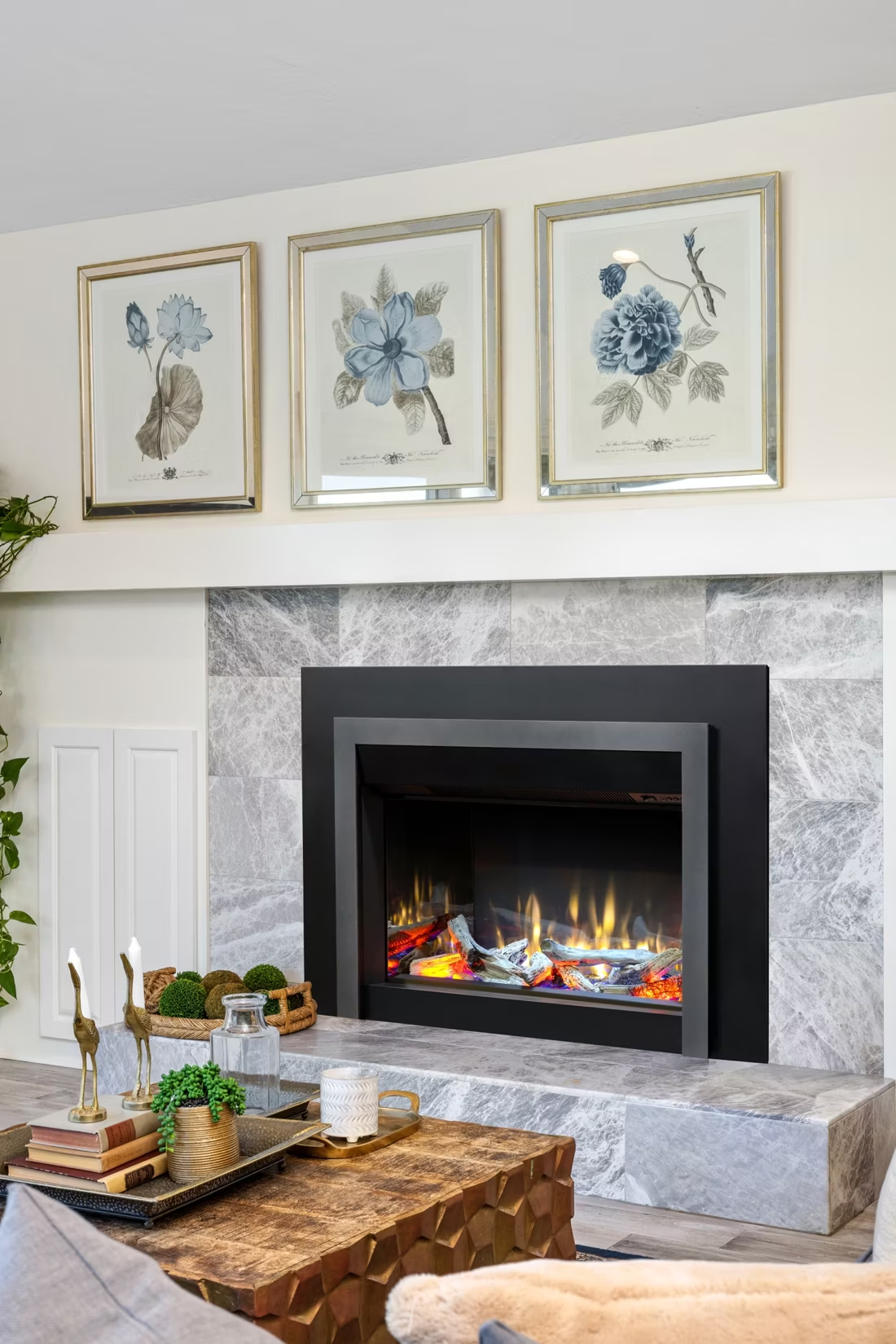
Four fuels. One honest answer for Vermillion County.
Three steps. No salesperson until you're ready.
Tell us about your project
Your zip code, your situation, and the fuel you're leaning toward—or let the answers point you to one.
See what's actually available
The brands dealers within 100 miles genuinely carry—real options, never a catalog mirage.
Get your dealer & Project Guide
A trusted local dealer, plus the free Project Guide & Parts List that names every component of the job.
Frequently Asked Questions
Which fuel works best in Vermillion County?
It depends on the home and how hands-on you want to be with fuel. Wood is a strong fit here—oak, hickory, maple, and beech from local woodlots burn hot and long, and plenty of Vermillion County homes still rely on self-cut or locally sold firewood as a primary or backup heat source. Gas works well where a home already has service or is close to a propane tank refill route, which describes most of the county outside Clinton's more built-up blocks—instant heat with none of the wood-splitting labor. Pellet is a solid middle path: bagged fuel from brands like Lignetics, Indeck Energy Services, and Somerset Pellet Fuel is sold through regional farm and hardware suppliers, giving you wood-like ambiance without stacking cordwood. Electric is best treated as supplemental—good for a bedroom or a finished basement, not a stand-alone answer to a 5,600-HDD winter. Many households here end up pairing a wood or pellet stove as the workhorse with propane or electric backup in secondary rooms.
Do I need a permit to install a fireplace in Vermillion County?
In most cases, yes. New wood stoves, wood inserts, gas fireplaces, gas inserts, gas stoves, and pellet stoves typically require a building permit through the Vermillion County Building Department, and Indiana's adopted residential and mechanical codes set requirements for clearances to combustibles, chimney or vent sizing, and hearth pad dimensions. Gas installations also need a separate gas-line permit, and any propane tank set or line run should be handled by a licensed installer. Electric fireplaces usually skip the permit process unless you're doing a built-in unit that requires a new dedicated circuit. Because the county is small, most local retailers are used to pulling these permits as part of the installation quote rather than leaving it to the homeowner.
Are there any air quality restrictions on wood burning in Vermillion County?
No. Vermillion County has no air-quality non-attainment designation and no seasonal burn curtailment ordinance, so there are no yellow- or red-advisory burn days to plan around the way homeowners in some Western states do. That said, an EPA 2020 NSPS-certified wood stove or insert is still worth choosing over an older uncertified unit—it burns roughly a third less wood for the same heat output, which matters when you're feeding a stove through a full Indiana winter, and it produces far less creosote buildup in the chimney.
Can one local hearth retailer handle all four fuel types?
Some can, but with a county population just over 10,000, coverage is thinner here than in a larger metro area. A number of retailers serving Vermillion County are based across the Wabash in Terre Haute and carry the full range—wood, gas, pellet, and electric—which makes them a reasonable stop if you're still comparing fuels. Smaller local shops and hardware stores closer to Clinton or Newport are more likely to focus on one or two fuels, often wood and pellet, with propane appliances handled through a separate propane dealer. If you want to see working displays side by side, the multi-fuel Terre Haute-area dealers are usually the ones set up for that.
How does installation and service work in the smaller towns around the county?
Most technicians who service Vermillion County are based in or near Terre Haute and drive out to Clinton, Newport, Cayuga, Dana, and the more rural stretches near Universal and Hillsdale. Expect a modest trip charge for the farther towns, and expect fall (September–October) to be the easiest window to book an annual chimney sweep or gas inspection before the first cold snap. If you're well outside Clinton or Newport, it's worth scheduling service early and keeping a backup heat source—wood as backup to pellet, or a portable electric heater as backup to gas—in case a winter storm delays a service call.
What's the typical installation cost range across fuel types in Vermillion County?
Costs track fairly close to regional Midwest averages. Wood stove or insert installation runs roughly $3,800–$8,000 for a typical job, more if new masonry chimney work is needed. Gas fireplace, insert, or stove installation runs about $4,000–$10,000, with the low end covering a straightforward insert conversion where gas or propane service already reaches the house. Pellet stove or insert installs typically land around $4,000–$7,000. Electric fireplaces are the least expensive option—often $200–$2,500 for the unit itself, plus $300–$1,000 in labor for anything beyond a simple plug-in placement. Exact pricing depends on chimney condition, venting distance, and whether new gas or electrical lines are needed—a local retailer can walk through the specifics for your home.
Does a fireplace add value to my home?
On average, a fireplace adds back to the home about the same amount you spent installing it. Add the monthly savings from heating the rooms you actually use instead of the whole house—often hundreds of dollars a year—and the value case is strong before you even count what a fire does for how your family uses the room.
How much should I budget for a fireplace?
For an average home—covering the fireplace, the vent pipe, and basic installation—a budget between $3,900 and $5,500 gives you a lot of options across wood, gas, and pellet. By the time you add finish work, gas line, and electrical, the average complete installation lands between $5,000 and $12,000 all-in. In a remodel or new build, a good rule is to put about 2.5% of the total project cost toward the fireplace.
Wood, gas, pellet, or electric—how do I choose?
Match the fuel to your life, not the other way around. Wood: lowest fuel cost and total power-outage independence, but you're hauling and stacking. Gas: press a button, set a thermostat, no maintenance to speak of. Pellet: wood economics with automatic feeding, in exchange for weekly cleaning and a need for electricity. Electric: plugs in anywhere with honest supplemental heat. Nobody regrets the fuel that fits how they actually live.
Can a fireplace actually lower my heating bill?
Yes—by creating a comfort zone. A furnace heats every square foot of the house just to warm the one room you're in; a gas fireplace on low burns roughly a sixth of the gas a typical furnace does. Set the furnace around 55–60 degrees as a baseline, then heat the rooms your family actually uses. Families who heat this way commonly save $20–$60 a month.
Stove and Fireplace Dealers in Vermillion County
Listings include WhyFire partner dealers, dealers we have verified as authorized for the brands we recommend, and established local businesses that carry hearth products. Every listing shows which one it is. The ones marked Preferred run on WhyFire's software, so they can show you real pricing and book your appointment right here. No manufacturer pays for placement. How we verify dealers →
Aqua Liberty Pool, Spa And Health
Certified Chimney Care
Find your fireplace in Vermillion County.
Pick your fuel below and we'll match you with a trusted local dealer, plus send a free Project Guide & Parts List—the exact parts, including the vent kit, and the dealer we recommend for your Vermillion County project.
Find Your Fireplace →