
Steady, Automated Heat for Union County's Long Winters.
From Liberty to the farmland along the Whitewater River, Union County homes see a long, cold heating season most of the year. A pellet stove delivers thermostat-like, hands-off heat without the wood-splitting—find the right unit and a trusted local dealer to install it.
Every Project Starts From One of These Five Situations
Indiana's smallest county, with winters that still demand real heat.
Union County is Indiana's least populous county—just 2,737 residents spread across rolling farmland and small towns like Liberty and College Corner near the Ohio state line. It sits in climate zone 5A, with winter lows averaging 20°F and a long, cold heating season—not the deep cold of a place like Buffalo, NY, but enough sustained cold that a supplemental or primary heat source matters for four to five months of the year. The county's hardwood forests—oak, hickory, maple, and beech—have supported wood heat here for generations, but pellet stoves have become a popular alternative for homeowners who want that same radiant warmth without cutting, splitting, and stacking cordwood every fall.
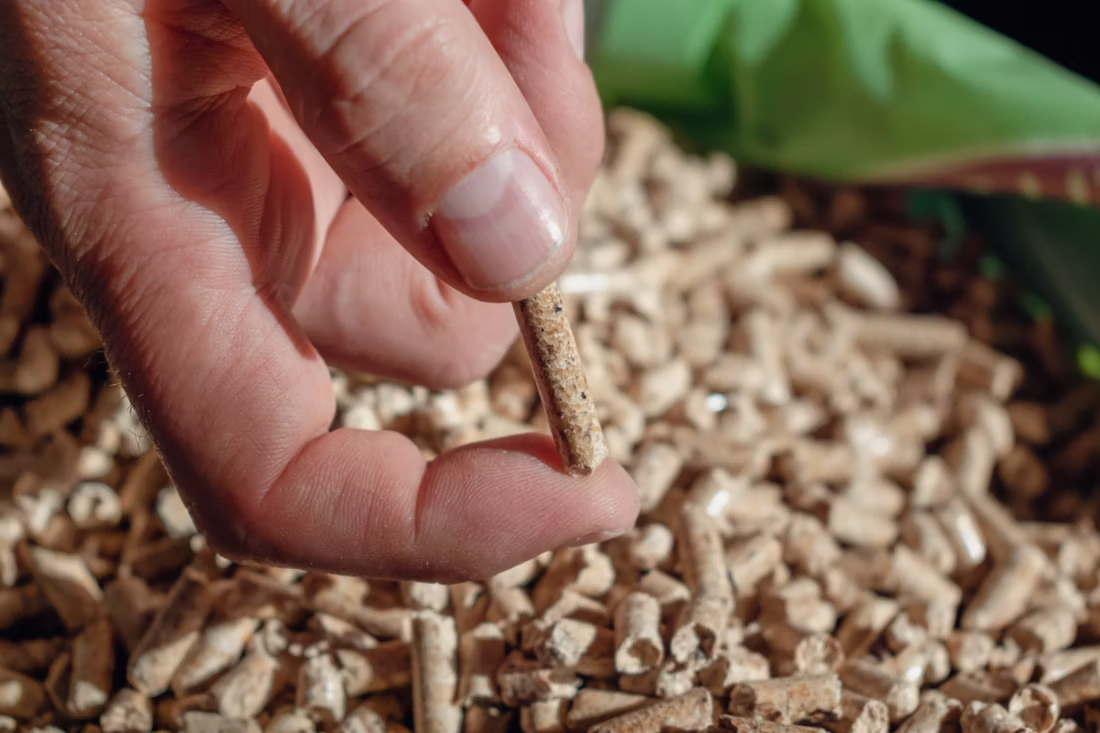
Union County has no air quality non-attainment concerns or wood-burning curtailment periods, so pellet appliances here aren't competing with the smoke-management restrictions you'd find in western non-attainment counties—it's simply a matter of preference and convenience. Regional pellet supply runs through brands like Indeck Energy Services, Lignetics, and Somerset Pellet Fuel, typically available through farm supply and hearth retailers in and around Liberty, Connersville, and Richmond. A pellet stove's automated auger feed, programmable thermostat, and multi-day hopper capacity make it a practical fit for rural Union County properties, especially where a homeowner wants dependable heat without daily fire-tending.
Three steps. No salesperson until you're ready.
Tell us about your project
Your zip code, your situation, and the fuel you're leaning toward—or let the answers point you to one.
See what's actually available
The brands dealers within 100 miles genuinely carry—real options, never a catalog mirage.
Get your dealer & Project Guide
A trusted local dealer, plus the free Project Guide & Parts List that names every component of the job.
Frequently Asked Questions
How much does a pellet stove installation cost in Union County?
Most pellet stove and insert installations in Union County run in the $3,000 to $6,500 range, depending on the unit's hopper size and BTU output, whether it vents through an existing chimney or needs new through-wall PL venting, and any hearth pad work required for clearance to combustibles. Rural properties outside Liberty or College Corner sometimes see a modest travel charge added by installers based in Connersville or Richmond. Because pellet stoves need a dedicated electrical outlet for the auger and blower, homes without one nearby may also need minor electrical work factored into the estimate.
What size pellet stove do I need for my Union County home?
With winter lows averaging 20°F and a long, cold heating season, Union County sits solidly in a climate where a mid-size pellet stove (rated for 1,200–2,000 square feet) handles most farmhouse and ranch-style homes as either primary or serious supplemental heat. Larger, older farmhouses with less insulation—common throughout the county's rural stretches—often do better with a stove sized toward the upper end of that range or a second zone heater for detached spaces. A local dealer can size the unit correctly based on your home's insulation and layout rather than square footage alone.
Where can I buy pellets in or near Union County?
Regional brands including Indeck Energy Services, Lignetics, and Somerset Pellet Fuel supply much of east-central Indiana, and bags are typically stocked at farm supply stores and hearth dealers in Connersville, Richmond, and the greater Cincinnati/Dayton corridor that Union County sits between. Because Union County itself is small and rural, most homeowners plan on picking up pellets by the pallet (roughly 50 forty-pound bags) once or twice a season rather than relying on single-bag runs, and it's worth reserving hardwood pellets early in fall before cold snaps drive demand up.
What's the difference between a pellet stove and a pellet insert?
A pellet stove is a freestanding unit that vents through an exterior wall or existing chimney and can go almost anywhere in the home with proper clearances—a common choice for Union County homes without an existing fireplace. A pellet insert fits into an existing masonry fireplace opening, using the chimney as part of the venting path while sealing off the old open hearth. For the county's older farmhouses that already have a wood-burning fireplace, an insert is often the simpler retrofit; homes without one typically go with a freestanding stove instead.
Do I need a permit to install a pellet stove in Union County?
Yes—a building permit is generally required for a new pellet stove or insert installation through the Union County building and code office, and the appliance needs to meet current safety clearances even though pellet stoves aren't subject to the EPA wood-stove emissions curtailments that apply in some other states. Most hearth dealers serving the county handle the permit paperwork as part of the installation, so it's worth confirming that's included in your quote before work begins.
What's the best pellet stove for Union County's winters?
For a climate with a long, cold heating season and regular stretches in the teens and 20s, look for a pellet stove with at least a 40-pound hopper and a burn time of 24+ hours on a low setting—that matters on the coldest nights when you don't want to be refilling the hopper at 2 a.m. Larger, older farmhouses common throughout Union County often benefit from a stove on the higher end of the BTU range with a convection blower to push heat into adjoining rooms. A local dealer can match hopper size and BTU output to your specific home rather than a one-size-fits-all recommendation.
How often does a pellet stove need cleaning and maintenance?
Pellet stoves need more frequent attention than a furnace but far less than a wood stove's annual chimney sweep. Plan on emptying and cleaning the ash pot every few days of regular use, cleaning the burn pot weekly during heavy winter burning, and scheduling a full professional cleaning and inspection—including the exhaust venting and combustion blower—once a year, ideally before Union County's heating season ramps up in October. Skipping the annual service is the most common cause of feed jams and reduced efficiency.
Pellet stove vs. wood stove—which makes more sense in Union County?
Union County's hardwood forests—oak, hickory, maple, and beech—have supported wood heat here for generations, and wood stoves remain a strong option if you have access to a woodlot or don't mind splitting and stacking cordwood. Pellet stoves trade that self-sufficiency for convenience: automated feed, a programmable thermostat, and a cleaner burn with far less ash, at the cost of needing a nearby electrical outlet and a reliable pellet supply. For rural Union County homes with an existing woodlot and someone willing to do the cutting, wood often wins on fuel cost; for homeowners who want dependable, low-maintenance heat without the labor, pellet is usually the better fit.
Will my pellet stove work during a power outage?
Not without a backup power source. Pellet stoves rely on electricity to run the auger that feeds fuel and the blower that distributes heat, so a power outage shuts the unit down even with a full hopper. This matters in rural Union County, where homes served by local electric cooperatives can see longer outage restoration times than in-town service during ice storms or severe weather. Homeowners who want heat that survives an outage often pair a pellet stove with a small backup generator sized to run the stove's electrical draw, or choose a wood-burning unit for at least one room as a power-independent backup.
Why is a fireplace insert so efficient?
An insert does two things: it seals the chimney completely, so you stop losing air you already paid to heat, and it radiates warmth into the room through the firebox and glass. Most add a heat-exchange fan that pulls cool room air underneath, wraps it around the hot firebox, and pushes it back out warm. Your home is more efficient before you've even lit the first fire.
Why is my open fireplace making my house colder?
Open fireplaces suck—literally. As the fire burns, it consumes air your furnace already paid to heat and pulls it out through the chimney, so the house is actually colder after the fire goes out than before you lit it. An insert fixes this: it seals the chimney, puts fixed glass across the front, and turns that hole in your house into a real heat source.
Does a fireplace add value to my home?
On average, a fireplace adds back to the home about the same amount you spent installing it. Add the monthly savings from heating the rooms you actually use instead of the whole house—often hundreds of dollars a year—and the value case is strong before you even count what a fire does for how your family uses the room.
Can a fireplace actually lower my heating bill?
Yes—by creating a comfort zone. A furnace heats every square foot of the house just to warm the one room you're in; a gas fireplace on low burns roughly a sixth of the gas a typical furnace does. Set the furnace around 55–60 degrees as a baseline, then heat the rooms your family actually uses. Families who heat this way commonly save $20–$60 a month.
Pellet Brands Stocked Around Union County
Manufacturers will point you to the nearest stocking dealer.
Find your pellet stove in Union County.
Tell us about your home and heating goals, and we'll match you with a trusted local dealer and send over a free Project Guide & Parts List—the exact parts, venting, and dealer recommendation for your Union County pellet project.
Find Your Fireplace →