
Find the right electric fireplace for your Union County home.
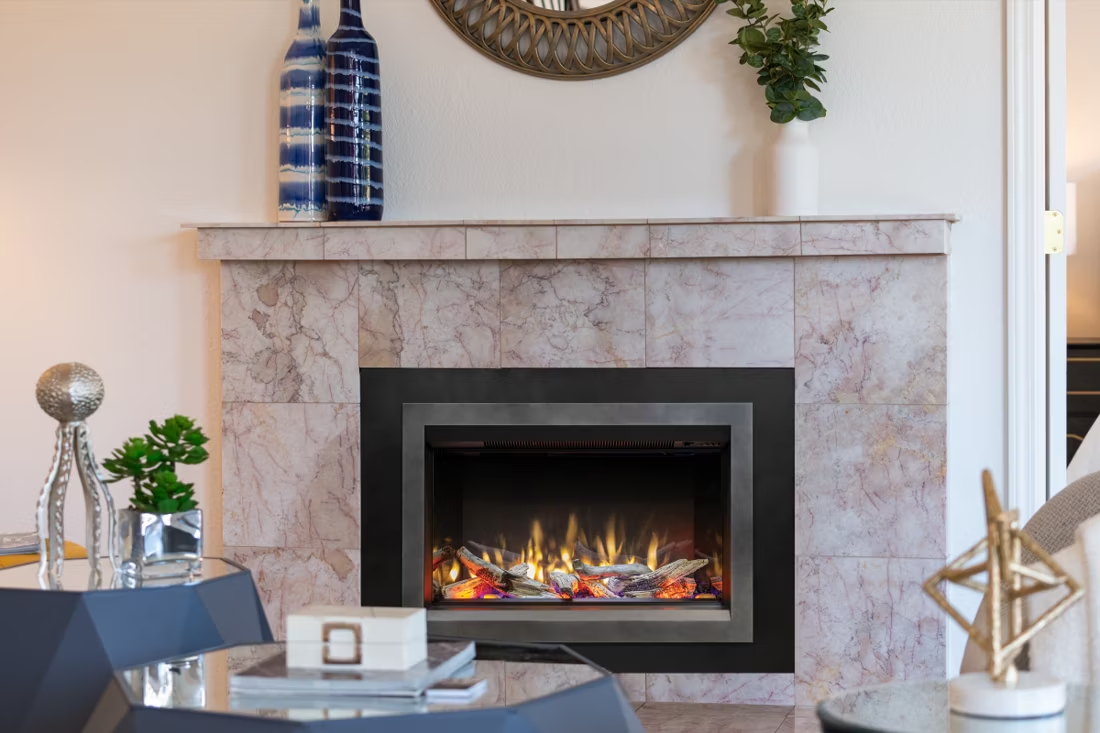
No gas line, no chimney, no cutting and stacking oak and hickory—just plug-in or hardwired heat and ambiance for homes across Liberty and the rest of Union County. We'll match you with a local dealer who can size and install it right.
Every Project Starts From One of These Five Situations
Simple, flexible heat for a small county with real winters.
Union County is Indiana's smallest county by population—just under 2,800 residents spread across Liberty and the surrounding farmland—but its winters are not small. With a long, cold heating season and average lows around 20°F, this is a genuine 5A climate, closer in feel to Madison, WI than to the Ohio River valley towns two hours south. Most homes here already lean on a furnace or heat pump as primary heat, which is exactly the situation where an electric fireplace earns its keep: zone heat for the room you're actually in, without opening up a wall for gas line or masonry work.
With no air quality restrictions in the county and no burn bans to track, electric is also the fuel with the fewest strings attached—no cutting permits, no chimney sweeps, no EPA certification to check. That simplicity matters in a rural county where a licensed gas-fitter or masonry crew may mean a longer wait or a drive from Richmond or Cincinnati. An electric insert or built-in gives Liberty homeowners a straightforward upgrade: install in an afternoon, run it off an existing circuit or a simple 120V outlet, and get real supplemental warmth in the rooms where the furnace can't quite keep up on the coldest January nights.
Three steps. No salesperson until you're ready.
Tell us about your project
Your zip code, your situation, and the fuel you're leaning toward—or let the answers point you to one.
See what's actually available
The brands dealers within 100 miles genuinely carry—real options, never a catalog mirage.
Get your dealer & Project Guide
A trusted local dealer, plus the free Project Guide & Parts List that names every component of the job.
Frequently Asked Questions
How much does an electric fireplace installation cost in Union County?
Most electric fireplace installations in Union County run $400 to $1,200. A plug-in insert or freestanding unit at the low end needs nothing more than an existing outlet. A built-in or wall-mounted unit that requires a dedicated 120V or 240V circuit run by an electrician, or a mantel surround, sits at the higher end. Because there's no venting, gas line, or masonry work involved, electric is consistently the least expensive fireplace option available to Union County homeowners—and one of the few projects that can realistically be finished in a single day.
Do I need a permit to install an electric fireplace in Union County?
In most cases, no permit is required for a plug-in electric insert or freestanding unit—it's treated like any other appliance. If your installation requires new electrical wiring, such as a dedicated circuit for a built-in unit, an electrical permit is typically needed and your electrician will pull it. There's no building department review for the fireplace itself the way there is for wood or gas units, since there's no combustion, no venting, and no chimney to inspect.
Will an electric fireplace actually heat a room in a Union County winter?
Most electric fireplaces are rated for 400-1,500 sq ft of supplemental heat, which is enough to noticeably warm a living room or bedroom in a Union County home—but they're not designed to replace your furnace on a 20°F night. Think of it as zone heat: it takes the edge off in the room you're actually using and lets you turn the thermostat down elsewhere in the house. In a county with such a long, cold heating season, that's a genuine reduction on your winter heating bill, not just ambiance.
What's the difference between an electric insert and a built-in electric fireplace?
An electric insert is designed to slide into an existing fireplace opening—including an old wood-burning masonry fireplace that's no longer used—and typically plugs into a standard outlet. A built-in electric fireplace is designed to be framed into a wall like a gas unit, often wired to a dedicated circuit, and gives you more flexibility on placement since it doesn't require an existing hearth. For Liberty homes with an unused masonry fireplace, an insert is usually the simpler and less expensive route. For new construction or a room without an existing fireplace, a built-in gives you more design flexibility.
Can an electric fireplace run during a power outage?
No—electric fireplaces require power to operate, so they won't provide heat during an outage. This matters in rural Union County, where ice storms and downed lines can knock out power for a day or more. If backup heat during outages is a priority, a wood stove is worth considering alongside an electric unit—many Union County homes actually pair the two: electric for everyday convenience and zone heat, wood as a genuine off-grid backup that also burns the oak and hickory common on local properties.
Are electric fireplaces expensive to run?
Running costs depend on your electric rate and how many hours you use the unit, but a typical 1,500-watt electric fireplace costs somewhere in the range of 15 to 25 cents per hour to run at full heat output—noticeably less than most people expect. Because it's zone heat, many Union County homeowners use it to warm the room they're in and turn the furnace thermostat down a few degrees elsewhere, which can offset some of that cost. Ask your local dealer about the specific wattage and estimated hourly cost for any model you're considering.
Do electric fireplaces need any maintenance?
Very little. There's no chimney to sweep, no gas line to inspect, and no combustion byproducts to worry about. Most maintenance is limited to occasionally dusting the unit, checking the LED or flame-effect bulbs if the model uses replaceable ones, and vacuuming the heater vents to keep airflow clear. This is one of the clearest advantages of electric for Union County homeowners who want fireplace ambiance without an annual service call.
Electric vs. gas—which is right for my Union County home?
Gas offers higher heat output, a more realistic flame, and the ability to run without electricity if you choose an intermittent-pilot model—but it requires either a natural gas line or a propane tank, plus venting and installation work that typically runs $4,000 or more. Electric offers a much lower installed cost, no fuel supply to arrange, and works in any room with an outlet or simple wiring—but it can't match gas for whole-room heat output and needs power to run at all. For a supplemental fireplace in a bedroom, basement, or den, electric is usually the practical choice in Union County. For a primary living space where you want stronger heat output, it's worth talking to a local dealer about gas as well.
Electric vs. wood—which makes more sense for my home?
Wood, burning local oak, hickory, maple, or beech, delivers real heat output and works without electricity—a genuine advantage during outages in rural Union County. It also involves more upkeep: seasoning wood, cleaning ash, and an annual chimney inspection. Electric requires none of that upkeep and costs far less to install, but it's dependent on grid power and better suited to supplemental zone heat than as a primary heat source. Many Union County homeowners land on both: an electric unit for daily convenience in a living room or bedroom, and a wood stove for backup heat and the cabin-like warmth a lot of people in this county grew up with.
Can I put a TV above my fireplace?
Yes—with an asterisk. Fireplaces are hot and TVs don't like heat. Either put a mantel between them to deflect rising warmth, or choose a fireplace with heat-management technology that creates a cool zone on the wall above—the wall stays around 125 degrees, barely warm, while the room still gets full heat. If you like clean lines and don't want a mantel, heat management is the answer.
Do electric fireplaces actually produce heat?
Yes—most put out around 4,800–5,000 BTUs from a standard outlet, which comfortably warms a bedroom, office, or den as a comfort-zone heater. What they won't do is carry a whole house the way wood, gas, or pellet can. Think of electric as ambiance-first with honest supplemental heat: flames on with no heat in July, flames plus warmth in January.
Does a fireplace add value to my home?
On average, a fireplace adds back to the home about the same amount you spent installing it. Add the monthly savings from heating the rooms you actually use instead of the whole house—often hundreds of dollars a year—and the value case is strong before you even count what a fire does for how your family uses the room.
Can I install a fireplace myself?
If you're putting a fire in your house on purpose, it's best to work with an expert. Unless you're genuinely experienced in framing, gas line, vent pipe, and the national code on clearances to combustibles, have a professional do it—and ideally the same company that sells you the fireplace, so warranty, service, and liability all live under one roof.
Get your Union County electric fireplace project mapped out.
Tell us about your home and we'll put together a free Project Guide & Parts List—the right unit, the exact parts, and a recommended local Union County dealer to install it.
Find Your Fireplace →