
Consistent heat for Shelby County winters, without the woodpile.
With a solid, sustained heating season and winter lows near 20°F, Shelby County homes stay comfortable on thermostat-controlled pellet heat. Find the right stove or insert and connect with a trusted local dealer.
Every Project Starts From One of These Five Situations
A practical alternative to hauling and splitting cordwood.
Shelby County sits in climate zone 5A, with winter lows averaging around 20°F and a solid, sustained heating season rather than an extreme one. That's enough cold to justify a serious secondary heat source, but not so severe that families need to size for sub-zero, multi-day cold snaps the way they might in Fargo or Bismarck. For a lot of homeowners in Shelbyville, Fairland, and Morristown, that math points toward pellet: real flame and real heat output without the felling, splitting, and stacking that wood heat demands.
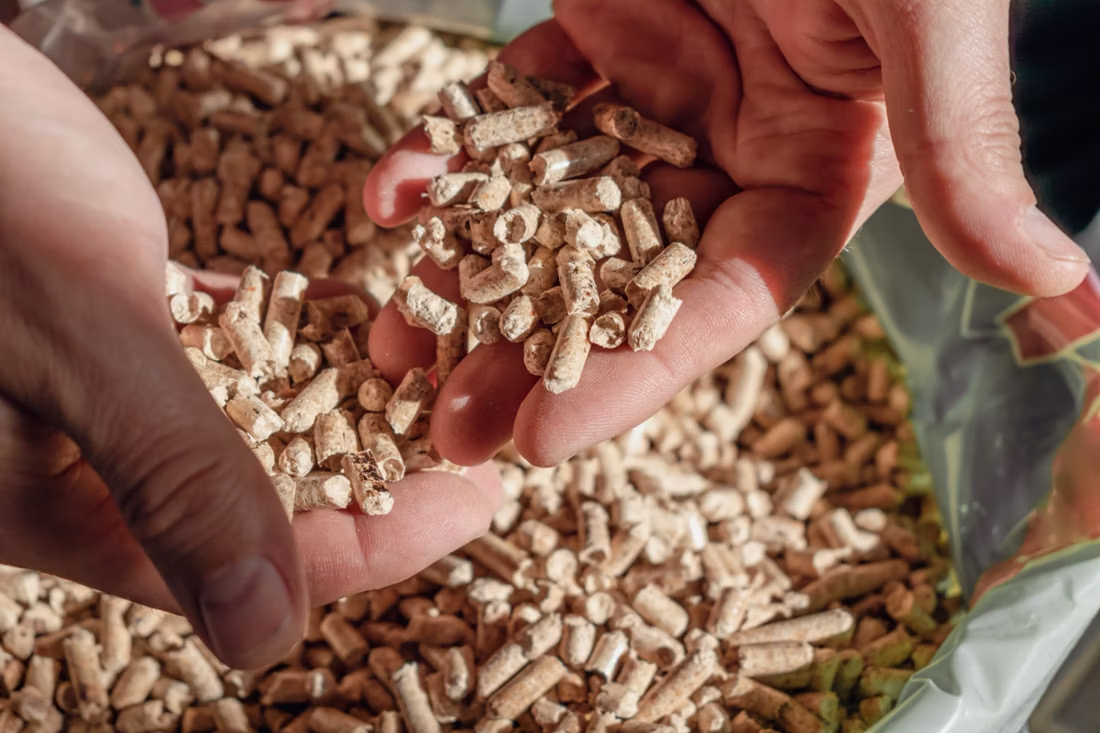
Regional pellet supply is solid here—brands like Indeck Energy Services, Lignetics, and Somerset Pellet Fuel are commonly stocked by dealers serving central Indiana, so you're not relying on a single supplier or long shipping lanes. With no air quality non-attainment issues in the county, there's no curtailment period to work around either, which is one less thing to plan a burn schedule around. A pellet stove or insert gives you consistent, thermostat-regulated heat for the main living areas of the house—useful whether you're supplementing a furnace on the coldest nights or looking to cut propane or electric heating costs across a long Indiana winter.
Three steps. No salesperson until you're ready.
Tell us about your project
Your zip code, your situation, and the fuel you're leaning toward—or let the answers point you to one.
See what's actually available
The brands dealers within 100 miles genuinely carry—real options, never a catalog mirage.
Get your dealer & Project Guide
A trusted local dealer, plus the free Project Guide & Parts List that names every component of the job.
Frequently Asked Questions
How much does a pellet stove installation cost in Shelby County?
A typical pellet stove or insert installation in Shelby County runs in the $4,500-$7,500 range for most homes, depending on whether the unit is a freestanding stove venting through a wall or an insert going into an existing masonry fireplace. Inserts into an existing fireplace tend to land on the lower end since much of the structure—the firebox, the chimney chase—is already in place. New freestanding installations in homes without an existing hearth run higher once wall penetration, venting, and a hearth pad are factored in. A local dealer will give you a firm number after seeing your home.
What size pellet stove do I need for my Shelby County home?
Sizing depends on square footage, ceiling height, insulation quality, and whether the unit is your primary or supplemental heat. Given Shelby County's solid, sustained heating season, most single-family homes in Shelbyville or the surrounding townships do well with a mid-size unit rated for 1,200-2,000 square feet if it's supplementing a furnace, or a larger unit if it's carrying more of the heating load in a well-insulated home. Older farmhouses with lower insulation values common in rural Shelby County may need to size up. A local dealer will walk your home and size it properly—an oversized unit cycles on and off inefficiently, while an undersized one runs constantly and still can't keep up on the coldest nights.
Where can I buy pellet fuel in Shelby County, and what does it cost?
Pellet fuel is widely available through hearth retailers and farm supply stores serving Shelby County, with regional brands like Indeck Energy Services, Lignetics, and Somerset Pellet Fuel commonly stocked. Pricing typically runs in the same general range you'll see across central Indiana, and buying by the ton (usually 50 forty-pound bags) ahead of the winter season is the most cost-effective approach. Softwood pellets burn hotter with more ash; hardwood pellets burn a bit cooler and cleaner—either works well in a modern pellet appliance, and your dealer can point you toward what's stocked locally each season.
What's the difference between a pellet stove and a pellet insert?
A pellet stove is a freestanding unit that sits on a hearth pad and vents through an exterior wall—it can go almost anywhere in a room with the right clearances. A pellet insert is built to slide into an existing masonry fireplace opening, converting an old wood-burning fireplace into an efficient, thermostat-controlled heat source using the existing chimney as a chase for the venting. For Shelby County homes with an existing fireplace—common in the older housing stock around Shelbyville—an insert is usually the more cost-effective route since it reuses structure that's already there. Homes without an existing fireplace typically go with a freestanding stove instead.
Do I need a permit to install a pellet stove in Shelby County?
Most new pellet stove and insert installations require a building permit, issued locally through the applicable city or county building department depending on whether you're inside Shelbyville city limits or in unincorporated Shelby County. Most local dealers handle the permitting as part of the installation package, so it's rarely something you have to manage yourself. Since Shelby County has no listed air quality non-attainment concerns, there's no seasonal curtailment period to plan burns around—a pellet stove here can run on your schedule, not the county's.
Will my pellet stove work during a power outage?
This is the one real tradeoff with pellet heat: pellet stoves and inserts need electricity to run the auger that feeds fuel and the blower that circulates heat, so a standard unit won't function during a power outage. Some homeowners pair a pellet stove with a battery backup system or small generator specifically to keep it running through outages, which is worth discussing with your dealer if reliable backup heat matters to you. If outage-proof heat is the top priority for your household, a wood stove—which needs no electricity to operate—is worth comparing against pellet before you decide.
How often does a pellet stove need to be cleaned and serviced?
Pellet stoves need more frequent light maintenance than wood stoves but far less heavy cleaning. Plan on emptying the ash pan every few days during regular use, a deeper clean of the burn pot and heat exchanger tubes every one to two weeks, and a full professional service and venting inspection once a year—typically before the heating season starts in fall. Regular cleaning keeps the auger feeding properly and prevents the clinker buildup that can choke a burn pot mid-season. The dealers who sell pellet appliances in Shelby County generally offer this annual service directly.
What's the best pellet stove for Shelby County's climate?
For Shelby County's moderate-cold winters—averaging around 20°F lows rather than the deep sub-zero stretches seen further north—most homeowners don't need to chase the largest, highest-BTU unit on the market. A mid-size pellet stove or insert with a good hopper capacity (so it can run overnight without refilling) covers the majority of homes well. If the unit is meant to carry primary heating duty in a larger or older home, size up and look for models with a larger hopper and higher maximum BTU output. A local dealer can match hopper size and BTU rating to your actual square footage and insulation level rather than guessing from a chart.
Pellet vs. wood stove—which is right for my Shelby County home?
Wood stoves burn cordwood—plentiful in Shelby County given the local oak, hickory, maple, and beech supply—and keep working with zero electricity, which matters if outages are a real concern on your property. They also demand more physical work: splitting, stacking, hauling, and tending the fire by hand. Pellet stoves trade that labor for convenience—load the hopper, set the thermostat, and let the auger do the rest—with cleaner burning and easier ash handling, but they stop working the moment the power goes out unless you've set up a backup power source. For most in-town Shelbyville homes with reliable electric service, pellet's convenience tends to win out. For rural properties where outages run longer and firewood is already on hand, wood remains the more resilient choice.
How often does a pellet stove need cleaning?
A clean pellet stove is a happy pellet stove. Plan on cleaning the burn pot about once a week when you're burning regularly—ash and clinkers gum up the air holes just like a pellet barbecue. Most pellet stove problems trace back to skipped cleaning that nobody explained up front. Some designs make it easy with a trapdoor burn pot: pull a lever and the gunk drops into the ash pan.
Why is a fireplace insert so efficient?
An insert does two things: it seals the chimney completely, so you stop losing air you already paid to heat, and it radiates warmth into the room through the firebox and glass. Most add a heat-exchange fan that pulls cool room air underneath, wraps it around the hot firebox, and pushes it back out warm. Your home is more efficient before you've even lit the first fire.
Can I install a fireplace myself?
If you're putting a fire in your house on purpose, it's best to work with an expert. Unless you're genuinely experienced in framing, gas line, vent pipe, and the national code on clearances to combustibles, have a professional do it—and ideally the same company that sells you the fireplace, so warranty, service, and liability all live under one roof.
Can a fireplace actually lower my heating bill?
Yes—by creating a comfort zone. A furnace heats every square foot of the house just to warm the one room you're in; a gas fireplace on low burns roughly a sixth of the gas a typical furnace does. Set the furnace around 55–60 degrees as a baseline, then heat the rooms your family actually uses. Families who heat this way commonly save $20–$60 a month.
Pellet Brands Stocked Around Shelby County
Manufacturers will point you to the nearest stocking dealer.
Get your Shelby County pellet stove Project Guide & Parts List.
Tell us about your home and heating goals, and we'll match you with a trusted local Shelby County dealer plus a free Project Guide & Parts List—the exact parts, including your vent kit, for your pellet stove or insert project.
Find Your Fireplace →