
Add warmth to any room in Shelby County without a chimney.
Zone heat for Shelbyville homes, Blue River farmhouses, and everything in between—no gas line, no venting, no masonry work. Find the right unit and get matched with a trusted local dealer.
Every Project Starts From One of These Five Situations
Zone heat that plugs in and works anywhere.
Shelby County sees around 5,436 heating degree days a year and average winter lows near 20°F—meaningful cold, though nowhere near what a place like Fargo, ND racks up over a winter. That means most Shelby County homes, from downtown Shelbyville's older housing stock to newer builds out toward Fairland, Morristown, Waldron, and St. Paul, need real heat for a solid four to five months but aren't fighting the kind of sustained sub-zero stretches that force homeowners into whole-house wood or pellet systems as a survival measure.
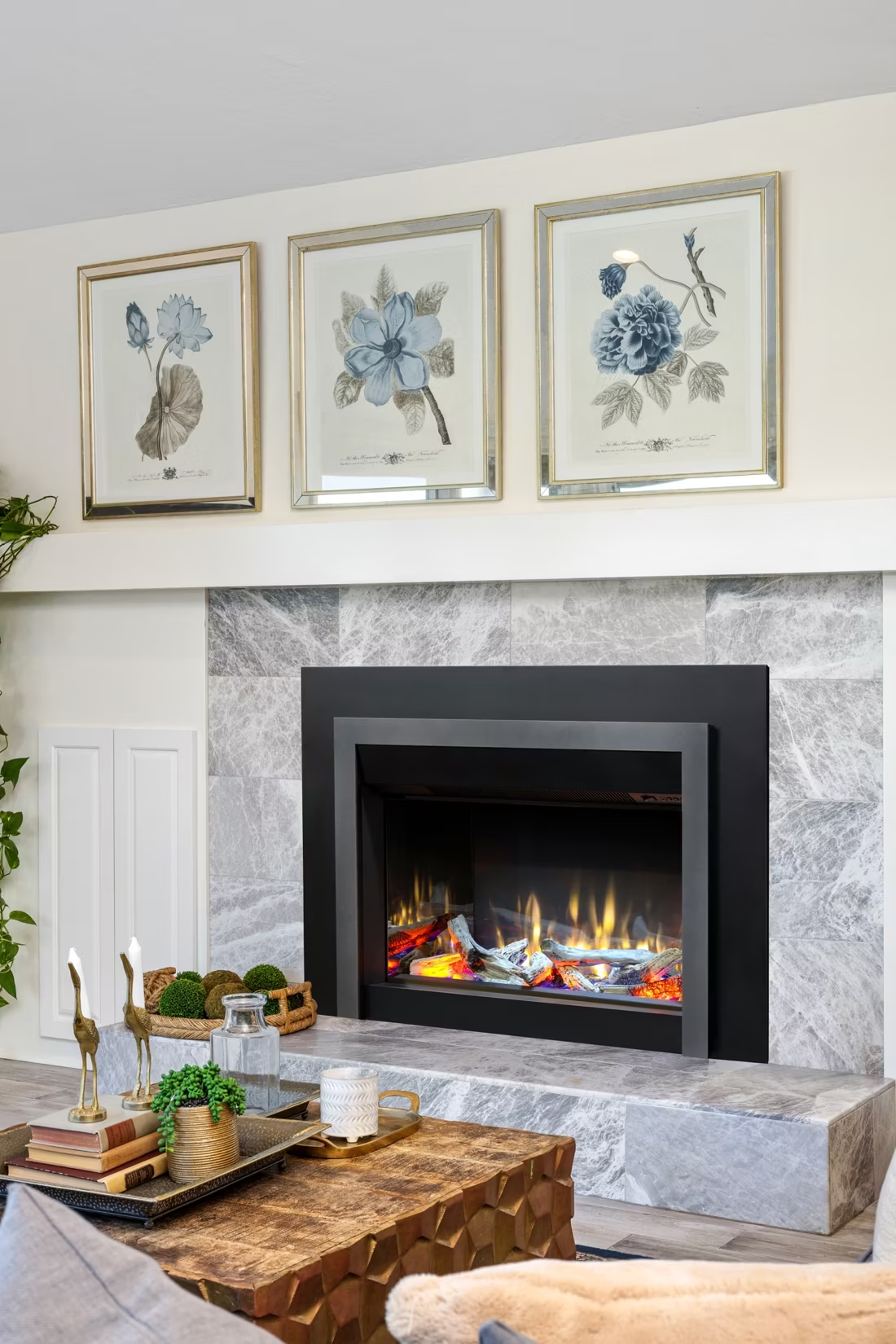
That's exactly the situation where an electric fireplace earns its keep. No chimney, no gas line, no venting through a wall or roof—just a unit that plugs in or wires into a dedicated circuit and adds real, adjustable zone heat to a finished basement, a sunroom addition, a bedroom, or a living room that's colder than the rest of the house. For rural Shelby County homes served by Shelby County REMC, or households without natural gas access, electric skips the cost and hassle of running new gas lines entirely. It's also the fastest-installing option of any fuel type—most plug-in units need no permit at all, while built-in models require only a straightforward electrical permit through the Shelby County Building Department.
Three steps. No salesperson until you're ready.
Tell us about your project
Your zip code, your situation, and the fuel you're leaning toward—or let the answers point you to one.
See what's actually available
The brands dealers within 100 miles genuinely carry—real options, never a catalog mirage.
Get your dealer & Project Guide
A trusted local dealer, plus the free Project Guide & Parts List that names every component of the job.
Frequently Asked Questions
How much does an electric fireplace installation cost in Shelby County?
A plug-in electric fireplace insert or mantel unit typically runs $300 to $1,200 installed, since most just need an existing outlet and a bit of trim work. A built-in, wall-recessed electric fireplace with a dedicated circuit run by a licensed electrician generally costs $1,200 to $2,500, depending on the unit's size, whether new drywall or framing is involved, and how far the electrical panel is from the install location. Older homes in downtown Shelbyville sometimes need panel or wiring upgrades first, which adds to the total—your local dealer will flag that during an in-home assessment.
What's the difference between a plug-in and a built-in electric fireplace?
A plug-in electric fireplace is a self-contained unit—a mantel package, a wall-mount, or a freestanding stove-style cabinet—that runs off a standard 120V outlet with no electrician required. A built-in electric fireplace is recessed into a wall or cabinetry and typically wired to its own dedicated circuit for higher heat output and a cleaner, flush look. For renters or homeowners in Shelby County who want heat without any construction, plug-in is the simple answer. For a permanent living-room focal point in a home you own, built-in usually looks and performs better.
Will an electric fireplace actually heat my room in a cold Indiana winter?
Most electric fireplaces put out around 5,000 BTU (roughly 1,500 watts), which is enough to comfortably heat a single room of 300 to 400 square feet—think a finished basement rec room, a bedroom, or an addition—as supplemental heat. They're not designed to replace your furnace or heat pump on a 20-degree Shelby County night across the whole house, but they're very effective at taking the load off central heat in one specific space, which is usually where homeowners actually feel cold air anyway.
Do I need a permit to install an electric fireplace in Shelby County?
Plug-in units need no permit at all—treat them like any other appliance. Built-in electric fireplaces that require a new dedicated circuit do need an electrical permit through the Shelby County Building Department, and the wiring work should be done by a licensed electrician regardless of whether you pull a permit. Most local dealers either employ a licensed electrician or coordinate directly with one, so the permitting is handled as part of the install rather than left to you.
What's the best electric fireplace for a Shelby County home?
For a finished basement or an addition that runs cold in winter, look for a built-in unit with a true heater rating for 400+ square feet and a thermostat you can set and forget—brands like Dimplex and Napoleon build models specifically for that kind of zone heating. For a quick upgrade to a living room without construction, a plug-in mantel unit with a realistic flame effect covers most needs. Since Shelby County's winters run cold enough to matter but not extreme, most homeowners here are pairing electric with an existing furnace or heat pump rather than relying on it as sole heat—so prioritize the space you're actually trying to warm, not raw output.
Electric vs. gas fireplace—which makes more sense for my home?
Gas fireplaces produce more heat per hour and cost less to run over a full winter if you already have natural gas or propane service, but they require venting and, if you don't have a gas line nearby, the cost of running one. Electric fireplaces skip all of that—no venting, no gas line, and a much lower installed cost—but they cost more per BTU to run and put out less total heat. For rural Shelby County homes without a nearby gas line, or for a secondary room where you don't want to justify a gas line extension, electric is usually the more practical call. For a primary living space where you'll run the fireplace daily all winter, gas often pays for itself over time.
How much does it cost to run an electric fireplace in Shelby County?
A typical 1,500-watt electric fireplace costs a few cents to run per hour on the heater setting—the exact figure depends on your rate from Shelby County REMC or your local provider, but Indiana electric rates are generally below the national average, which keeps this an affordable supplemental heat option. Running it as ambiance only, with the heater off, costs next to nothing since the flame effect itself uses minimal power.
Can I install an electric fireplace in an older Shelbyville home?
Yes, though older homes around downtown Shelbyville and other established neighborhoods sometimes have knob-and-tube or undersized panel capacity that wasn't built for a modern built-in electric fireplace's dedicated circuit. A licensed electrician can confirm your panel has room for a new 15- or 20-amp circuit before installation. Plug-in units avoid this issue entirely since they run off an existing outlet, which makes them the easier path in a historic home where you don't want to open up walls.
Electric vs. pellet stove—which is right for my Shelby County home?
Pellet stoves, using bagged fuel from regional suppliers like Indeck Energy Services, Lignetics, or Somerset Pellet Fuel, put out serious heat—enough to serve as primary heat for a home—but they require venting, a hopper you refill regularly, and electricity to run the auger and blower, so they go dark in a power outage just like an electric unit would. Electric fireplaces install faster, need no venting at all, and work well as zone heat in a specific room, but they can't match a pellet stove's whole-house output. If you're trying to meaningfully cut a propane or electric heating bill in a larger home, pellet is worth a look. If you just want warmth and ambiance in one room without any venting work, electric is the simpler answer.
Do electric fireplaces actually produce heat?
Yes—most put out around 4,800–5,000 BTUs from a standard outlet, which comfortably warms a bedroom, office, or den as a comfort-zone heater. What they won't do is carry a whole house the way wood, gas, or pellet can. Think of electric as ambiance-first with honest supplemental heat: flames on with no heat in July, flames plus warmth in January.
Can I put a TV above my fireplace?
Yes—with an asterisk. Fireplaces are hot and TVs don't like heat. Either put a mantel between them to deflect rising warmth, or choose a fireplace with heat-management technology that creates a cool zone on the wall above—the wall stays around 125 degrees, barely warm, while the room still gets full heat. If you like clean lines and don't want a mantel, heat management is the answer.
Can I install a fireplace myself?
If you're putting a fire in your house on purpose, it's best to work with an expert. Unless you're genuinely experienced in framing, gas line, vent pipe, and the national code on clearances to combustibles, have a professional do it—and ideally the same company that sells you the fireplace, so warranty, service, and liability all live under one roof.
Does a fireplace add value to my home?
On average, a fireplace adds back to the home about the same amount you spent installing it. Add the monthly savings from heating the rooms you actually use instead of the whole house—often hundreds of dollars a year—and the value case is strong before you even count what a fire does for how your family uses the room.
Find your electric fireplace in Shelby County.
Tell us about the room you're trying to heat and we'll put together a free Project Guide & Parts List—the right electric fireplace or insert for your Shelby County home, plus a trusted local dealer to install it.
Find Your Fireplace →