
Find your pellet stove in Putnam County.
Steady, thermostat-controlled heat for the roughly 5,973 heating degree days Putnam County sees each winter—from Greencastle to Cloverdale, Bainbridge, and the farms in between. Find the right unit and connect with a trusted local dealer.
Every Project Starts From One of These Five Situations
Steady heat without the wood-splitting, built for west-central Indiana winters.
Putnam County sits in Climate Zone 5A, with average winter lows around 17°F and nearly 6,000 heating degree days a year—enough sustained cold to make heating cost a real household line item, but nowhere near the extremes of places like Fargo or Duluth. The county's mix of farmland, small towns (Cloverdale, Bainbridge, Roachdale, Russellville, Fillmore) and the Greencastle area around DePauw University means a wide range of housing stock, from older farmhouses that have burned oak and hickory for generations to newer subdivisions built without a masonry chimney at all.
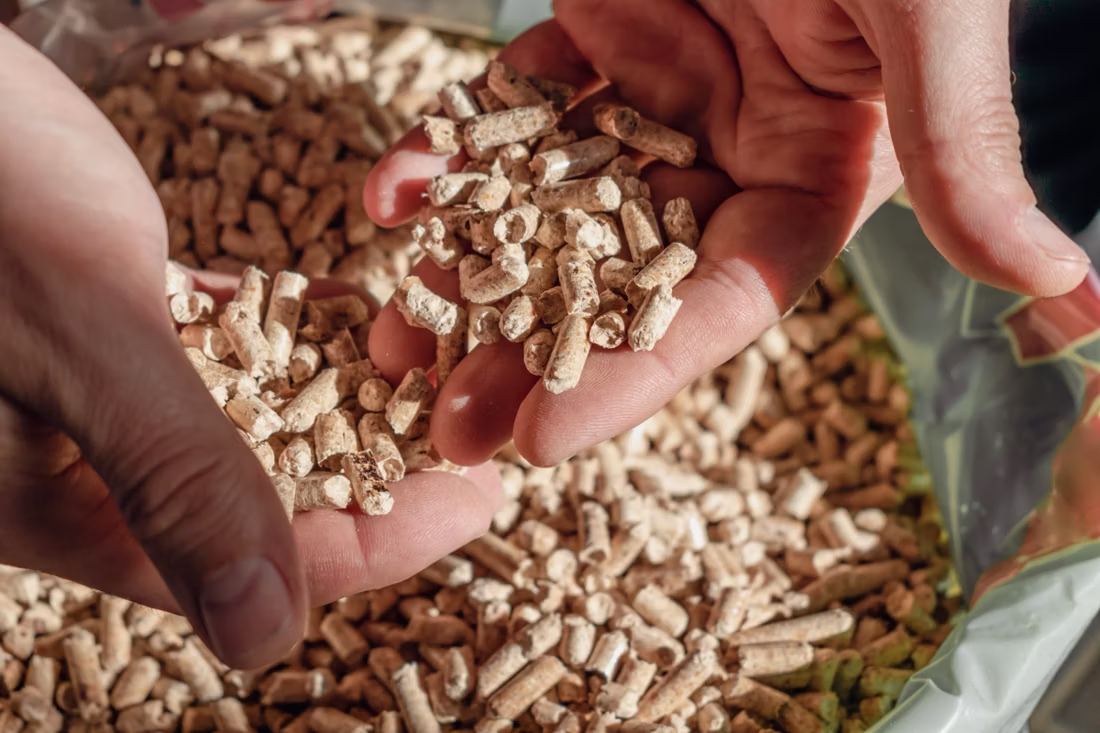
That housing mix is exactly where pellet heat earns its place. A pellet stove vents through a simple wall pass-through rather than a full chimney, so it fits newer construction just as well as it retrofits into an old fireplace opening. Regional suppliers including Indeck Energy Services, Lignetics, and Somerset Pellet Fuel keep hardwood pellet stock reasonably accessible in this part of Indiana—useful in a county with no air-quality non-attainment restrictions or burn curtailment periods to work around. The tradeoff is that a pellet stove runs on electricity for its auger and blower, so it's worth thinking through backup power if you're out in the more rural stretches of the county where outages tend to run longer.
Three steps. No salesperson until you're ready.
Tell us about your project
Your zip code, your situation, and the fuel you're leaning toward—or let the answers point you to one.
See what's actually available
The brands dealers within 100 miles genuinely carry—real options, never a catalog mirage.
Get your dealer & Project Guide
A trusted local dealer, plus the free Project Guide & Parts List that names every component of the job.
Frequently Asked Questions
How much does a pellet stove installation cost in Putnam County?
Most freestanding pellet stove installations run in the neighborhood of $3,000 to $6,000, with the spread driven by the venting path (a simple through-wall vent kit vs. running vent through an existing masonry chase), whether you need electrical work for a dedicated outlet, and the stove model itself. A pellet insert going into an existing fireplace opening in a Greencastle-area home is often on the lower end since the masonry opening is already there; a stand-alone stove in a newer home near Cloverdale or Bainbridge without any existing fireplace may need a bit more wall and venting work. A local dealer can give you a firm number after seeing your specific setup.
What size pellet stove do I need for my home?
Sizing depends on square footage, ceiling height, and how the home is insulated—and Putnam County's housing stock varies a lot on that last point. Older farmhouses around Russellville or Roachdale tend to be draftier and lose heat faster, so they often need a stove sized up from what the square footage alone would suggest. Newer, tighter-built homes near Greencastle or DePauw can often get by with a smaller unit for the same floor area. As a rough starting point: small pellet stoves handle a single room or up to about 1,000 square feet, mid-size units cover 1,000–1,800 square feet, and larger stoves can serve as primary heat for bigger, better-insulated homes. A local dealer will size this correctly during an in-home visit rather than by square footage alone.
Pellet stove vs. wood stove—which fits Putnam County better?
Wood is deeply available here—oak, hickory, maple, and beech are the common local species, and plenty of Putnam County households still cut and split their own. A wood stove burns that supply directly and keeps working with no electricity, which matters during ice-storm outages. A pellet stove trades some of that self-sufficiency for convenience: load the hopper, set the thermostat, and the stove modulates itself with far less ash and no chimney creosote buildup to manage. Since Putnam County has no air-quality non-attainment restrictions, neither fuel faces the curtailment rules you'd see in some western counties—the choice here comes down to whether you want the hands-on ritual of wood or the set-it-and-forget-it convenience of pellet.
Where do I buy pellets in Putnam County, and what do they cost?
Hardwood pellets from regional producers like Lignetics and Somerset Pellet Fuel are the most commonly available options in this part of Indiana, with Indeck Energy Services also supplying the broader region. Bagged pellets typically run in the $200–$300 per ton range in west-central Indiana, and most households burn 1 to 3 tons per heating season depending on how much of the home's heat load the stove is carrying. Buying by the pallet (roughly a ton) ahead of the November-through-March heating season usually beats picking up bags one at a time as the weather turns.
Do I need a permit to install a pellet stove in Putnam County?
Most jurisdictions in Indiana require a building permit for a new pellet stove installation, particularly when it involves cutting a new vent penetration through an exterior wall. In Putnam County that typically means a permit through the county building department for installations outside Greencastle, or the relevant town office for in-town addresses. Most established local dealers handle this paperwork as part of the installation, which is one good reason to avoid a big-box self-install—getting the vent termination clearances wrong is the most common code issue inspectors flag.
Does a pellet stove need a chimney?
No—this is one of pellet's biggest advantages for Putnam County's newer housing. A pellet stove vents through a small-diameter pipe that can run horizontally out an exterior wall, so homes near Greencastle or Cloverdale built without a masonry fireplace can still add one without any chimney construction. Homes that do have an existing fireplace opening can use a pellet insert, which uses that opening but still vents through its own small pipe rather than relying on the full flue the way a wood-burning insert would.
Will my pellet stove work during a power outage?
Not without a backup power source. A pellet stove's auger, ignition, and blower all run on household electricity, so a power outage stops the stove along with everything else in the house. This is worth thinking through in Putnam County's more rural stretches—around Fillmore, Russellville, or the county roads outside Bainbridge—where outages from ice storms or summer thunderstorms can run longer than they do closer to Greencastle. Some homeowners pair a pellet stove with a small backup generator or battery system for exactly this reason; a wood stove is the more common fallback for households that want heat with zero dependence on the grid.
How often does a pellet stove need to be serviced?
Plan on a professional inspection and deep clean once a year, ideally before the heating season starts in the fall. Beyond that, most pellet stoves need the ash pot emptied every few days of regular use and the burn pot and glass cleaned weekly—lighter maintenance than a wood stove's chimney sweeping, but more frequent and hands-on than a gas unit. A local dealer or hearth technician can also check the auger motor, exhaust blower, and gaskets annually, which is the main thing that keeps a pellet stove running efficiently through a full Putnam County winter.
Pellet vs. gas—which is right for my home?
Gas fireplaces offer instant on-off operation with no fuel to load or ash to empty, and select models keep working during a power outage thanks to battery-backed ignition. Pellet stoves need electricity to run but burn a renewable, often locally sourced fuel and tend to produce more usable radiant heat per dollar than a gas unit, which matters over a nearly 6,000-degree-day heating season. If your Putnam County home already has natural gas or propane service and you want zero-maintenance convenience, gas is the easier path. If you're comfortable with weekly hopper loading and want lower fuel costs over the season, pellet is usually the better value. Either way, a local dealer can walk you through both options side by side.
Why is my open fireplace making my house colder?
Open fireplaces suck—literally. As the fire burns, it consumes air your furnace already paid to heat and pulls it out through the chimney, so the house is actually colder after the fire goes out than before you lit it. An insert fixes this: it seals the chimney, puts fixed glass across the front, and turns that hole in your house into a real heat source.
How often does a pellet stove need cleaning?
A clean pellet stove is a happy pellet stove. Plan on cleaning the burn pot about once a week when you're burning regularly—ash and clinkers gum up the air holes just like a pellet barbecue. Most pellet stove problems trace back to skipped cleaning that nobody explained up front. Some designs make it easy with a trapdoor burn pot: pull a lever and the gunk drops into the ash pan.
Can I install a fireplace myself?
If you're putting a fire in your house on purpose, it's best to work with an expert. Unless you're genuinely experienced in framing, gas line, vent pipe, and the national code on clearances to combustibles, have a professional do it—and ideally the same company that sells you the fireplace, so warranty, service, and liability all live under one roof.
Does a fireplace add value to my home?
On average, a fireplace adds back to the home about the same amount you spent installing it. Add the monthly savings from heating the rooms you actually use instead of the whole house—often hundreds of dollars a year—and the value case is strong before you even count what a fire does for how your family uses the room.
Stove and Fireplace Dealers in Putnam County
Pellet Brands Stocked Around Putnam County
Manufacturers will point you to the nearest stocking dealer.
Find your pellet stove in Putnam County.
Tell us a bit about your home and we'll match you with a trusted local dealer and a free Project Guide & Parts List—a plan for your pellet project in Putnam County with the exact parts, including the vent kit, and a recommended installer.
Find Your Fireplace →