
Find the right electric fireplace for your Putnam County home.
No venting, no gas line, no chimney—just plug-in warmth for Greencastle, Cloverdale, Bainbridge, and every corner of Putnam County. Get matched with a trusted local dealer who installs it right.
Every Project Starts From One of These Five Situations
Simple heat for a county with real winters.
Putnam County sits in climate zone 5A, with a winter heating season on par with Madison, WI, and average winter lows near 17°F—cold, though not as brutal as International Falls. That's cold enough that supplemental heat matters in a lot of homes, but it's also a county with plenty of ranch houses, additions, and finished basements where running a gas line or building a masonry chimney isn't practical. Electric fireplaces fill that gap without any venting or combustion concerns at all.
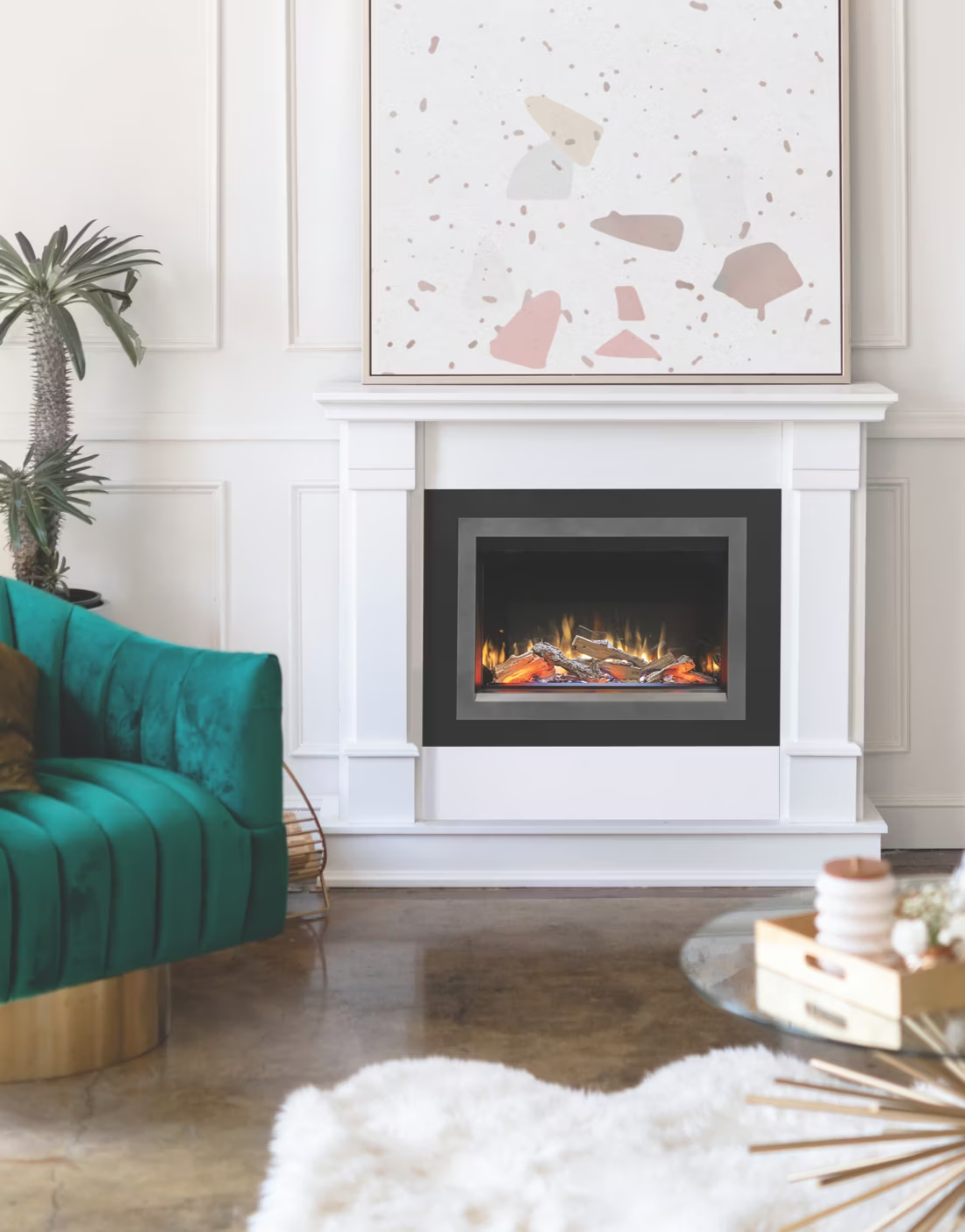
For a rental property near DePauw University in Greencastle, a finished basement in Cloverdale, or a bedroom addition out toward Bainbridge or Roachdale, an electric unit installs in an afternoon: mount it, plug it in, done. There's no cutting permit paperwork like the county's abundant oak and hickory woodlots require for wood burners, and no gas utility coordination. It's the fastest path to supplemental warmth and ambiance in Putnam County, and a smart complementary heat source alongside a wood stove or gas insert in the main living area.
Three steps. No salesperson until you're ready.
Tell us about your project
Your zip code, your situation, and the fuel you're leaning toward—or let the answers point you to one.
See what's actually available
The brands dealers within 100 miles genuinely carry—real options, never a catalog mirage.
Get your dealer & Project Guide
A trusted local dealer, plus the free Project Guide & Parts List that names every component of the job.
Frequently Asked Questions
How much does an electric fireplace installation cost in Putnam County?
Most electric fireplace installs in Putnam County run $400 to $1,200 total. A plug-in insert or wall-mount unit that uses an existing outlet is on the low end—often just the cost of the unit plus mounting hardware. Recessed or built-in electric fireplaces that require a dedicated 120V or 240V circuit run higher, since an electrician needs to add a line, especially common in older Greencastle homes with older panel capacity. There's no chimney, no venting, and no gas line to factor in, which keeps electric installs well below wood, gas, or pellet install costs across the county.
Do I need a permit to install an electric fireplace in Putnam County?
In most cases, no separate fireplace permit is needed for a plug-in or wall-mount electric unit—it's treated like any other appliance. If your installer needs to add a new dedicated circuit, that electrical work typically requires a permit through the county or city building department depending on whether you're inside Greencastle city limits or in unincorporated Putnam County. A licensed electrician handling the circuit work will usually pull that permit as part of the job, so it's rarely something a homeowner has to manage directly.
Will an electric fireplace actually heat my room in a Putnam County winter?
It depends on the room and your expectations. Most electric fireplaces are rated for 400-1,500 square feet and put out around 5,000 BTU of supplemental heat—enough to comfortably warm a bedroom, den, or finished basement room, but not enough to replace a furnace on a January night when temps drop into the teens. With Putnam County having winters comparable to Madison, WI, electric units here are best framed as zone heat for a specific room, not a whole-home solution. For homes wanting genuine backup heat during a furnace outage or ice storm, a wood stove or gas unit is a better primary choice, with electric as a nice-to-have supplement elsewhere in the house.
What's the difference between an electric insert and a freestanding electric fireplace?
An electric insert is built to slide into an existing masonry fireplace opening or a mantel surround, giving an old wood-burning fireplace a clean, no-maintenance makeover—popular in older farmhouses around Bainbridge and Roachdale that have a fireplace nobody uses anymore. A freestanding or wall-mount electric fireplace doesn't need any existing opening at all; it can go on any wall with an outlet nearby, which makes it a common choice for basement finishes and additions where there's no chimney to work with. Both plug into a standard outlet unless you're going with a larger built-in model that needs a dedicated circuit.
How does an electric fireplace compare to a gas fireplace for Putnam County homes?
Gas fireplaces put out real heat—often 20,000+ BTU—and can genuinely offset furnace use in a Putnam County winter, but they need either a natural gas line or a propane tank, plus venting work, pushing install costs to $4,500-$11,000. Electric units skip all of that: no gas line, no venting, and a fraction of the install cost, but they cap out around 5,000 BTU of supplemental warmth. For a primary heat source or serious backup heat during a power-and-gas-are-both-fine outage, gas wins. For a quick ambiance upgrade in a bedroom, rental unit, or basement room where running gas isn't worth the cost, electric is the practical choice for a lot of Putnam County homeowners.
Can an electric fireplace run during a power outage?
No—electric fireplaces need household power to run, so they go dark the moment the power does, which matters in a county that sees its share of winter ice storms. If backup heat during outages is a priority for your Putnam County home, a wood stove burning local oak or hickory, or a gas unit with battery-backup ignition, is a better fit for that specific need. Plenty of homeowners here pair an electric fireplace for everyday ambiance in one room with a wood or gas unit elsewhere in the house as the actual outage backup.
Are electric fireplaces safe for older Putnam County homes?
Yes—electric fireplaces are one of the safer retrofit options for the county's older housing stock, including farmhouses and older homes around downtown Greencastle. There's no open flame, no combustion byproducts, and no chimney or masonry work to inspect or repair. The main consideration in an older home is electrical capacity: if you're adding a built-in unit that needs a dedicated circuit, have an electrician check your panel first, since some older homes in the county still have limited amp service that may need an upgrade before adding new circuits.
What size electric fireplace do I need?
Sizing is mostly about the wall and room, not the climate. A 30-40 inch unit suits a bedroom or small den, a 50-60 inch unit works well as a focal point in a living room or finished basement, and larger linear units are popular in open-concept spaces. Because electric units are supplemental rather than primary heat, you don't need to size for Putnam County's winters, which run on par with Madison, WI, the way you would a wood stove or gas fireplace—pick the size that fits the wall and the look you want, then let a local dealer confirm outlet or circuit requirements.
Electric vs. pellet stove—which makes more sense for my Putnam County home?
Pellet stoves, fed by regional suppliers like Indeck Energy Services and Lignetics, burn hot enough to serve as genuine supplemental or even primary heat, but they need a vent, a hopper to fill, and periodic ash cleanup. Electric fireplaces need none of that—just an outlet—but they only deliver ambiance-level heat. If you want a room that visually reads as a fireplace with minimal upkeep, electric is the easier path. If you want a unit that can meaningfully cut your propane or electric heating bill during a Putnam County winter, pellet is the better investment. Some homeowners here use electric in living areas and reserve pellet for a garage, workshop, or finished basement.
Can I put a TV above my fireplace?
Yes—with an asterisk. Fireplaces are hot and TVs don't like heat. Either put a mantel between them to deflect rising warmth, or choose a fireplace with heat-management technology that creates a cool zone on the wall above—the wall stays around 125 degrees, barely warm, while the room still gets full heat. If you like clean lines and don't want a mantel, heat management is the answer.
Do electric fireplaces actually produce heat?
Yes—most put out around 4,800–5,000 BTUs from a standard outlet, which comfortably warms a bedroom, office, or den as a comfort-zone heater. What they won't do is carry a whole house the way wood, gas, or pellet can. Think of electric as ambiance-first with honest supplemental heat: flames on with no heat in July, flames plus warmth in January.
Does a fireplace add value to my home?
On average, a fireplace adds back to the home about the same amount you spent installing it. Add the monthly savings from heating the rooms you actually use instead of the whole house—often hundreds of dollars a year—and the value case is strong before you even count what a fire does for how your family uses the room.
Can a fireplace actually lower my heating bill?
Yes—by creating a comfort zone. A furnace heats every square foot of the house just to warm the one room you're in; a gas fireplace on low burns roughly a sixth of the gas a typical furnace does. Set the furnace around 55–60 degrees as a baseline, then heat the rooms your family actually uses. Families who heat this way commonly save $20–$60 a month.
Stove and Fireplace Dealers in Putnam County
Get your free Project Guide & Parts List for Putnam County.
Tell us about your room and we'll match you with a trusted local Putnam County dealer, plus a free Project Guide & Parts List detailing the right electric fireplace and everything needed to install it.
Find Your Fireplace →