
Find the right pellet stove for your Posey County home.
Consistent, low-maintenance heat for the Ohio and Wabash River bottoms—from Mount Vernon to New Harmony to Poseyville. We'll match you with a trusted local dealer who can size, permit, and install it right.
Every Project Starts From One of These Five Situations
Steady heat for a moderate winter, without the wood-splitting.
Posey County sits at the far southwestern tip of Indiana, where the Wabash meets the Ohio River, and winters here are a good deal milder than northern Indiana's—a moderate heating season and average lows in the low 20s. That's roughly a third of what a place like Duluth or International Falls sees, which means homeowners here don't need the extreme overnight burn times of a high-country wood stove. A pellet stove fits this climate well: it holds a steady temperature through a cold snap, doesn't require splitting or stacking cordwood from the county's abundant oak, hickory, and maple stands, and shuts off cleanly once the weather breaks in March.
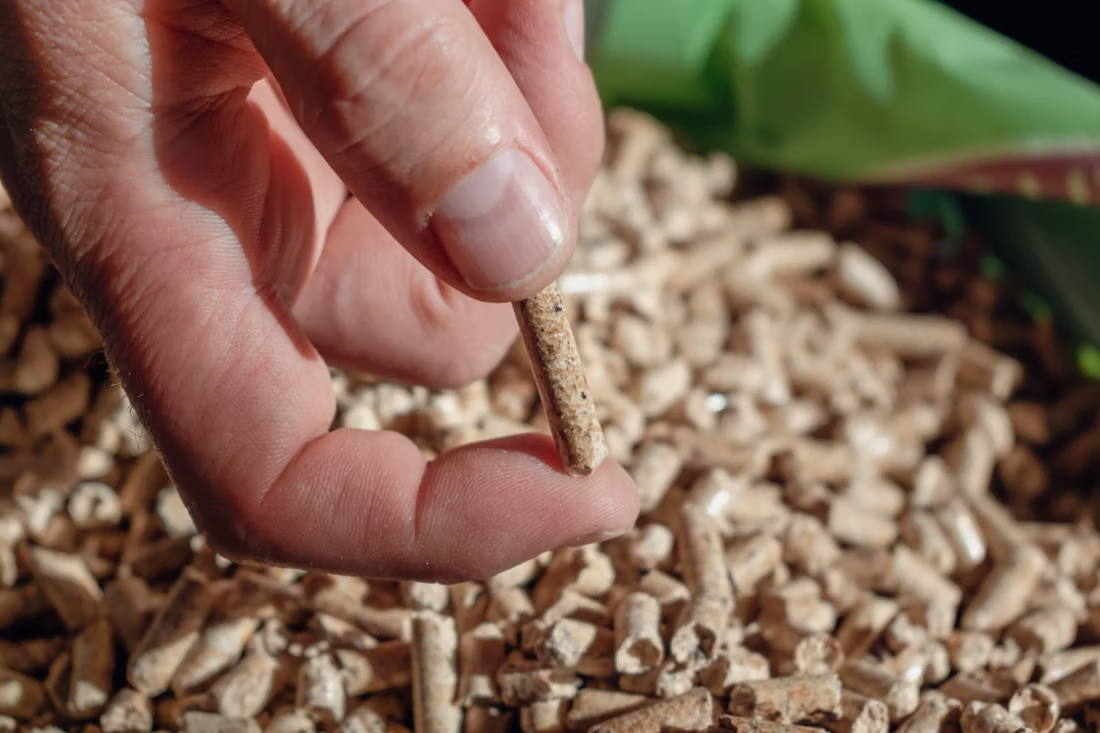
Pellet fuel is easy to source locally, with regional producers like Indeck Energy Services, Lignetics, and Somerset Pellet Fuel supplying the Midwest market and keeping delivery distances short. For homes in Mount Vernon, New Harmony, Poseyville, and the county's rural stretches along Highway 66 and Highway 69, a pellet stove offers thermostat-like control that a wood stove can't match—set it, load the hopper every day or two, and let it run. It's a strong fit for a moderate climate where you want reliable heat without committing to a full wood-burning routine.
Three steps. No salesperson until you're ready.
Tell us about your project
Your zip code, your situation, and the fuel you're leaning toward—or let the answers point you to one.
See what's actually available
The brands dealers within 100 miles genuinely carry—real options, never a catalog mirage.
Get your dealer & Project Guide
A trusted local dealer, plus the free Project Guide & Parts List that names every component of the job.
Frequently Asked Questions
How much does a pellet stove installation cost in Posey County?
A typical pellet stove installation in Posey County runs in line with regional Midwest pricing, generally landing between $3,500 and $6,500 depending on the unit, whether you need a new hearth pad, and the length of the vent run through an exterior wall. Because pellet stoves vent through a simple horizontal PVC or stainless pipe rather than a full masonry chimney, installs are usually less involved and less expensive than wood stove installs. Homes in Mount Vernon and Poseyville with easy exterior wall access tend to fall on the lower end; rural properties needing longer vent runs or electrical work for the auger and blower circuit can run higher.
What size pellet stove do I need for my home?
With Posey County's moderate climate—winter lows averaging in the low 20s and a modest overall heating season—most homes don't need the largest units on the market. A small to mid-size pellet stove (rated for 1,000 to 1,800 square feet) handles a typical Mount Vernon or New Harmony home comfortably as supplemental or zone heat. Larger farmhouses or well-insulated homes looking to use pellet heat as a primary source in the county's rural areas may want a unit rated for 2,000+ square feet. A local dealer will factor in your ceiling height, insulation, and floor plan during an in-home visit rather than sizing off square footage alone.
Where can I find pellet stove dealers near me in Posey County?
Look for hearth dealers who carry pellet-specific brands and can speak to auger maintenance and hopper capacity, not just general appliance retailers. A qualified installer in or near Mount Vernon will handle the vent-through-wall installation, the dedicated electrical circuit the stove's auger and blower require, and any hearth pad clearance work. Working with the same shop that sells you the unit simplifies warranty service down the road, since pellet stoves have more moving mechanical parts than a wood stove and occasionally need auger motor or igniter service.
What's the difference between a pellet stove and a pellet insert?
A pellet stove is a freestanding unit that sits on a hearth pad and vents through a short run of PVC or stainless pipe to an exterior wall—it doesn't need an existing chimney. A pellet insert is built to slide into an existing masonry fireplace opening, using a stainless liner run up the existing chimney for venting. For Posey County homes with an older fireplace, especially in Mount Vernon's and New Harmony's historic housing stock, an insert is often the better fit since it reuses the chimney you already have. Homes without an existing fireplace, or newer construction, are usually better suited to a freestanding stove.
Do I need a permit to install a pellet stove in Posey County?
Most pellet stove installations in Posey County require a building permit, and because the stove needs a dedicated electrical circuit for the auger and combustion blower, an electrical permit is often needed as well. Local dealers who install what they sell typically handle both as part of the job, so you're not left coordinating separate trades. There are no air quality non-attainment restrictions in Posey County affecting pellet stove operation, so once it's installed and permitted, you're free to run it as needed through the heating season.
What's the best pellet stove for Posey County's climate?
Given the county's moderate winters, homeowners here generally don't need the extreme-cold engineering that a Blaze King catalytic wood stove offers for places with sub-zero overnight lows. A mid-tier pellet stove from a mainstream brand with a reliable auger feed system and a decent hopper capacity (40-60 lbs, good for roughly 24-30 hours of burn on a low-to-medium setting) covers most Posey County homes well. Since pellet fuel is available locally through regional suppliers like Indeck Energy Services, Lignetics, and Somerset Pellet Fuel, fuel availability isn't a limiting factor—the decision comes down more to hopper size, ash pan capacity, and how much daily tending you want to do.
How often does a pellet stove need to be cleaned and serviced?
Pellet stoves need more frequent light maintenance than wood stoves but less heavy chimney work. Plan on emptying the ash pan every few days during regular use, cleaning the burn pot weekly to keep the auger feeding cleanly, and scheduling a full professional service and venting inspection once a year—typically before the heating season starts in the fall. Posey County's moderate winters mean most homes here run the stove less continuously than a colder-climate household would, which reduces overall wear, but annual service is still worth keeping on the calendar to catch auger motor or igniter issues before they leave you without heat on a cold night.
Where can I get pellet fuel in Posey County?
Pellet fuel is generally easy to find in this part of Indiana, with regional producers including Indeck Energy Services, Lignetics, and Somerset Pellet Fuel supplying the broader Midwest market. Local hardware stores and farm supply retailers in Mount Vernon and the surrounding area commonly stock bagged pellets in season, and many pellet stove dealers sell fuel directly or can point you to the closest stocked supplier. Buying a full winter's supply (roughly 2-3 tons for an average Posey County home used as supplemental heat) in the fall, before demand picks up, is the usual strategy for avoiding shortages during a cold stretch.
Pellet stove vs. wood stove—which is right for my home?
Wood stoves burn cordwood cut from Posey County's own oak, hickory, maple, and beech stands, work without electricity—a real advantage during a winter storm power outage—and offer the ambiance of an open, visible fire. Pellet stoves trade that off for convenience: load the hopper, set the thermostat-style control, and let it run with far less daily tending and no splitting or stacking. The tradeoff is that pellet stoves need electricity to run the auger and blower, so they go dark in an outage unless paired with a battery backup. For a moderate climate like Posey County's, where extreme sustained cold snaps are less common than in northern Indiana, that tradeoff often favors pellet for homeowners who want reliable, hands-off heat. Homeowners with easy access to their own firewood or who want backup heat during outages often lean wood instead. A local dealer can walk through both options for your specific situation.
Are pellet stoves loud?
They make some noise—there are two fans running plus an auger motor that turns as it feeds pellets. But there's a real range: premium models are engineered quiet, and the best offer a whisper-quiet mode you can comfortably watch TV next to. If noise matters in your room, ask to hear a stove running before you buy—it's a five-minute test that saves years of annoyance.
Why is my open fireplace making my house colder?
Open fireplaces suck—literally. As the fire burns, it consumes air your furnace already paid to heat and pulls it out through the chimney, so the house is actually colder after the fire goes out than before you lit it. An insert fixes this: it seals the chimney, puts fixed glass across the front, and turns that hole in your house into a real heat source.
Can I install a fireplace myself?
If you're putting a fire in your house on purpose, it's best to work with an expert. Unless you're genuinely experienced in framing, gas line, vent pipe, and the national code on clearances to combustibles, have a professional do it—and ideally the same company that sells you the fireplace, so warranty, service, and liability all live under one roof.
How much should I budget for a fireplace?
For an average home—covering the fireplace, the vent pipe, and basic installation—a budget between $3,900 and $5,500 gives you a lot of options across wood, gas, and pellet. By the time you add finish work, gas line, and electrical, the average complete installation lands between $5,000 and $12,000 all-in. In a remodel or new build, a good rule is to put about 2.5% of the total project cost toward the fireplace.
Pellet Brands Stocked Around Posey County
Manufacturers will point you to the nearest stocking dealer.
Find your pellet stove in Posey County.
Tell us a bit about your home and we'll match you with the right pellet stove or insert, plus a free Project Guide & Parts List—and connect you with a trusted local dealer who can install it correctly.
Find Your Fireplace →