
Instant warmth for every corner of Posey County.
No chimney, no gas line, no masonry work—just a real-looking flame and supplemental heat that plugs in or wires into your existing wall, from historic New Harmony to Mount Vernon and Poseyville. Find the right unit and connect with a trusted local dealer.
Every Project Starts From One of These Five Situations
The easiest heat upgrade in southwestern Indiana.
Posey County sits at the southwestern tip of Indiana, wedged between the Wabash and Ohio rivers, with roughly 11,500 residents spread across Mount Vernon, Poseyville, and the historic utopian town of New Harmony. Climate zone 4A here means real winter—average lows around 23°F and a solidly long heating season lasting into spring—but not the kind of sustained deep cold that demands a whole-house wood-burning setup in every room. Oak, hickory, maple, and beech are the traditional cordwood species for county homes that do burn wood, but a lot of Posey County heating needs are smaller and more targeted than that: a chilly sunroom addition, a rental unit in Mount Vernon, or a historic New Harmony house where the last thing you want to do is touch the original masonry or roofline.
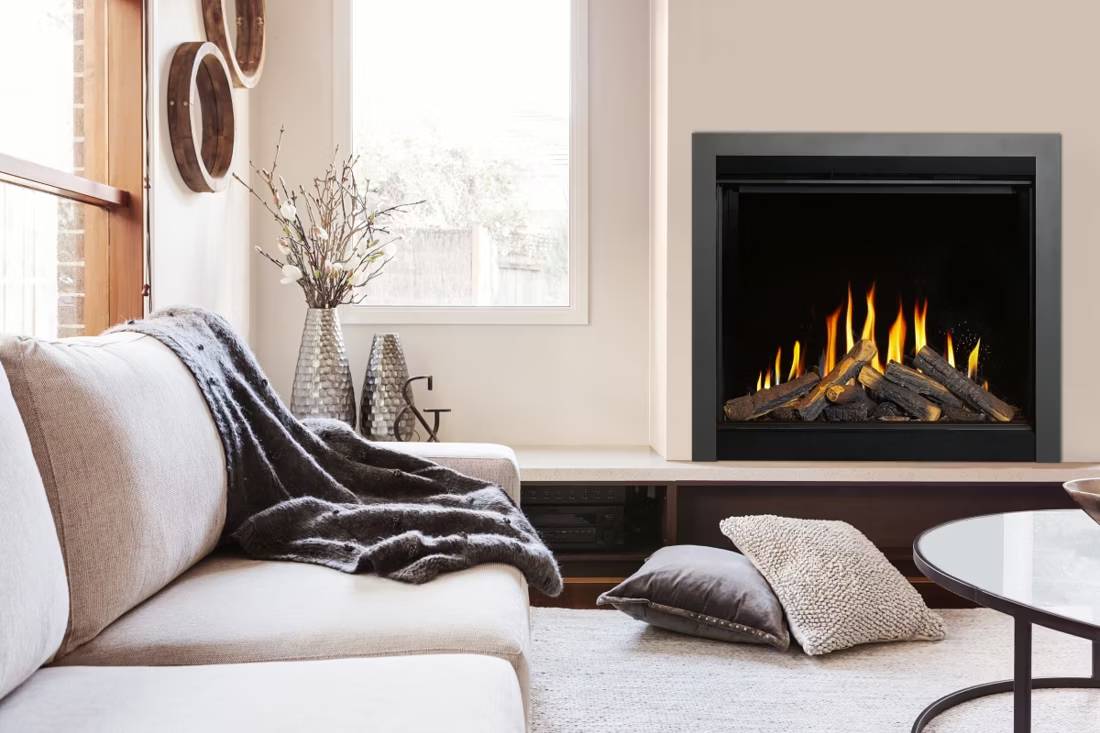
That's exactly where electric fireplaces earn their place. There's no venting to run, no gas line to plumb, and no chimney inspection to schedule—a plug-in unit runs on a standard 120-volt outlet, while a built-in wall unit typically just needs a dedicated 20-amp circuit from a licensed electrician. Electric service in the county comes through Southern Indiana Power, the co-op headquartered right in Poseyville, or CenterPoint Energy (formerly Vectren/SIGECO) closer to Mount Vernon—either way, operating an electric fireplace is a matter of checking your rate, not scheduling a burn permit. For New Harmony's historic district especially, where preservation rules limit exterior changes, electric inserts and mantels are often the only realistic fireplace upgrade on the table.
Three steps. No salesperson until you're ready.
Tell us about your project
Your zip code, your situation, and the fuel you're leaning toward—or let the answers point you to one.
See what's actually available
The brands dealers within 100 miles genuinely carry—real options, never a catalog mirage.
Get your dealer & Project Guide
A trusted local dealer, plus the free Project Guide & Parts List that names every component of the job.
Frequently Asked Questions
How much does an electric fireplace installation cost in Posey County?
A freestanding or plug-in electric fireplace runs $300 to $800 for the unit itself, with no additional installation cost since it plugs into an existing outlet—this is the most common option for renters and homeowners in Mount Vernon or Poseyville who want a low-commitment upgrade. A built-in wall unit or an electric insert set into an existing masonry firebox typically runs $1,500 to $4,000 once you factor in the unit, mantel or surround work, and an electrician running a dedicated circuit if the room doesn't already have one. New Harmony homeowners retrofitting an old fireplace with an electric insert usually land in the same range, since the appeal is skipping venting work entirely.
Do electric fireplaces actually put out real heat, or is it just for looks?
Most electric fireplaces include a built-in heater—typically a 1,500-watt unit rated around 5,000 BTU—that's enough to noticeably warm a single room, which fits how a lot of Posey County homes actually use them: as supplemental heat for a sunroom, bonus room, or addition rather than the sole heat source for the house. With average winter lows around 23°F and a solidly long heating season lasting into spring, that's a real assist on cold days without asking the unit to do the job of a furnace. Nearly all models let you run the flame effect with the heater off for warmer months, which is popular in a climate like Posey County's where you want ambiance well past the coldest stretch of winter.
Can I install an electric fireplace in a historic New Harmony home?
Yes, and it's often the most practical option available. New Harmony's historic district limits changes to exterior walls, rooflines, and chimneys, which rules out or heavily complicates wood and gas installations that require new venting. An electric insert set into an existing (possibly unused) masonry firebox, or a mantel-style unit against an interior wall, requires no exterior work at all—just an outlet or a short electrical run. That's why electric has become a common retrofit choice for homeowners restoring older New Harmony properties who still want a working fireplace without touching the historic fabric of the house.
Do I need a permit to install an electric fireplace in Posey County?
A plug-in electric fireplace generally doesn't require a permit since there's no new wiring or structural change involved. If you're installing a built-in unit that requires a new dedicated circuit, that electrical work typically needs a permit through the Posey County Building Department, and it should be pulled by a licensed electrician rather than done as a DIY job. Because there's no venting, gas line, or chimney work involved, electric installations move through permitting faster than wood or gas projects in the county.
Will my electric fireplace still work if the power goes out?
No—electric fireplaces stop working the moment the power does, which is worth planning around in a county where ice storms and summer line damage can knock out power for hours at a time, whether you're on Southern Indiana Power's co-op grid or CenterPoint Energy's system closer to Mount Vernon. If backup heat during outages matters to your household, a wood-burning stove or insert using local oak or hickory is the better complement—some Posey County homes run electric for daily convenience in the main living space and keep a wood-burning unit elsewhere specifically for storm season.
What's the difference between an electric fireplace and a space heater?
A space heater is a portable appliance you plug in and move room to room, with no real design intent. An electric fireplace is a permanent or semi-permanent fixture—built into a wall, set into an existing firebox, or housed in a mantel surround—that combines a realistic flame display with a similar wattage heater, usually with a thermostat and timer. For Posey County homeowners weighing the two, the electric fireplace costs more upfront but adds real value to a room and doesn't look like an appliance parked in the corner. Both draw comparable power for the heating element itself; the difference is presentation and permanence.
What's the best electric fireplace for supplemental heat in a Posey County home?
Look for a unit with a true 1,500-watt heater and a built-in thermostat rather than a fixed-output flame-only model—brands like Dimplex and Napoleon are widely available through hearth retailers and size their heaters appropriately for room coverage. For an existing masonry fireplace that's no longer used for wood burning, an electric insert sized to the firebox opening is usually the cleanest retrofit, since it fills the existing hole rather than requiring new framing. For additions or rooms without a fireplace at all, a wall-mount or built-in linear unit gives you more placement flexibility. A local dealer will size the heater output to your specific room rather than guessing off a box label.
Can I put an electric insert into my old wood-burning fireplace?
Yes, and it's one of the most common electric projects in the county's older housing stock—plenty of homes in Mount Vernon and Poseyville have a masonry fireplace that hasn't seen a real fire in years. An electric insert slides into the existing firebox opening, displays a realistic log or flame effect, and runs the heater off a standard outlet or a short dedicated circuit, all without touching the chimney or flue. It's a straightforward way to bring a dead fireplace back into daily use without any of the maintenance that comes with wood or gas.
Electric vs. wood—which makes more sense for my Posey County home?
Wood—burned as local oak, hickory, maple, or beech—puts out more heat, works with no electricity during outages, and is the traditional choice for primary heating in the county's older farmhouses. Electric is easier to live with day to day: no ash, no chimney sweep, no wood to split and stack, and it's the only realistic option in settings like New Harmony's historic district where venting changes aren't an option. Many Posey County households end up with both—wood for backup heat and cold-weather workhorse duty, electric for the room where convenience and clean looks matter more than raw output.
Can I put a TV above my fireplace?
Yes—with an asterisk. Fireplaces are hot and TVs don't like heat. Either put a mantel between them to deflect rising warmth, or choose a fireplace with heat-management technology that creates a cool zone on the wall above—the wall stays around 125 degrees, barely warm, while the room still gets full heat. If you like clean lines and don't want a mantel, heat management is the answer.
Do electric fireplaces actually produce heat?
Yes—most put out around 4,800–5,000 BTUs from a standard outlet, which comfortably warms a bedroom, office, or den as a comfort-zone heater. What they won't do is carry a whole house the way wood, gas, or pellet can. Think of electric as ambiance-first with honest supplemental heat: flames on with no heat in July, flames plus warmth in January.
Can I install a fireplace myself?
If you're putting a fire in your house on purpose, it's best to work with an expert. Unless you're genuinely experienced in framing, gas line, vent pipe, and the national code on clearances to combustibles, have a professional do it—and ideally the same company that sells you the fireplace, so warranty, service, and liability all live under one roof.
How much should I budget for a fireplace?
For an average home—covering the fireplace, the vent pipe, and basic installation—a budget between $3,900 and $5,500 gives you a lot of options across wood, gas, and pellet. By the time you add finish work, gas line, and electrical, the average complete installation lands between $5,000 and $12,000 all-in. In a remodel or new build, a good rule is to put about 2.5% of the total project cost toward the fireplace.
Find your electric fireplace in Posey County.
Tell us a bit about your home—whether it's a New Harmony historic property, a Mount Vernon rental, or a Poseyville addition—and we'll match you with a trusted local dealer and send over your free Project Guide & Parts List, with the exact unit and parts recommended for your space.
Find Your Fireplace →