
See if a pellet stove makes sense in Portage.
Pellet heat is a niche choice here—most Porter County homes run on NIPSCO natural gas. If a pellet stove still fits your situation, we'll connect you with a local dealer who can tell you straight.
Every Project Starts From One of These Five Situations
Natural gas, not pellets, powers most Portage homes.
Portage sits in Porter County along the southern shore of Lake Michigan, in the industrial corridor between Gary and Michigan City. Winters here are genuinely cold—a heavy winter heating load and average lows around 18°F, comparable to what Buffalo, NY sees most winters—but the housing stock and utility infrastructure in this part of Indiana developed around natural gas, not solid fuel. Northern Indiana Public Service Co. (NIPSCO) runs gas lines through most of the city's 46403 and 46368 neighborhoods, and that's where the vast majority of local heating dollars go.
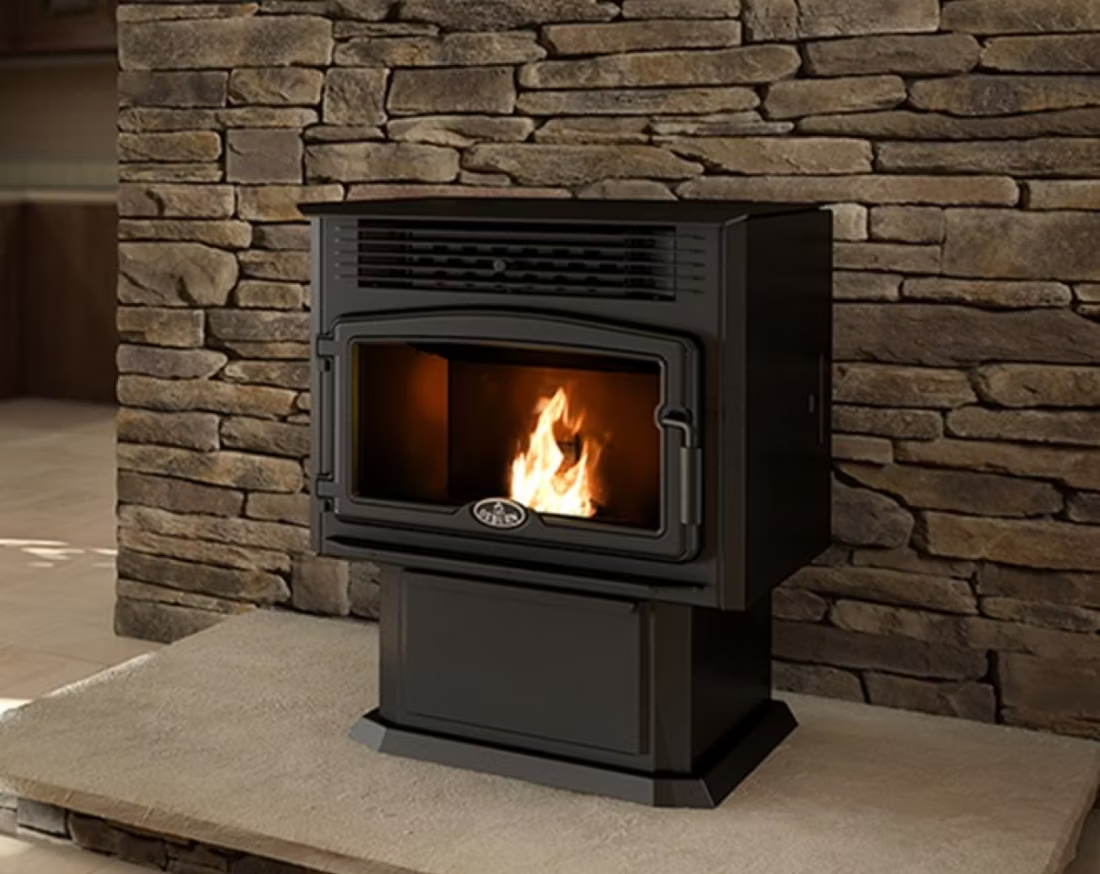
That's why pellet stoves aren't a standard fixture in Portage the way they are in parts of the Pacific Northwest or New England—and why wood stoves are similarly uncommon here despite the oak, hickory, maple, and beech that grow throughout Porter County's remaining woodlots. A pellet stove can still make sense for a garage, a workshop, a finished basement, or a household that wants supplemental heat independent of the furnace. Regional pellet producers like Indeck Energy Services, Lignetics, and Somerset Pellet Fuel do serve the broader Great Lakes market, so bagged fuel is available—it's just sourced through farm supply and hardware retailers rather than a dense local pellet-stove culture, so expect to plan fuel purchases a bit further ahead than you would in a market where every hardware store stocks it by the pallet.
Three steps. No salesperson until you're ready.
Tell us about your project
Your zip code, your situation, and the fuel you're leaning toward—or let the answers point you to one.
See what's actually available
The brands dealers within 100 miles genuinely carry—real options, never a catalog mirage.
Get your dealer & Project Guide
A trusted local dealer, plus the free Project Guide & Parts List that names every component of the job.
Frequently Asked Questions
Are pellet stoves common in Portage, IN?
Not really. Pellet stoves are classified as a niche option in this market—most Portage homes already have natural gas service through NIPSCO, and there isn't the established wood-and-pellet heating culture you'd find in more rural, forested parts of the Midwest or in colder pellet-heavy regions of New England. That doesn't make a pellet stove a bad idea for the right household—supplemental heat, a detached workshop, or backup warmth are all reasonable uses—but expect fewer local dealers to specialize in pellet equipment compared to gas fireplace and furnace specialists.
How much does a pellet stove installation cost in Portage?
Nationally, a freestanding pellet stove installation typically runs $3,000 to $6,500 depending on the unit, venting run, and hearth pad requirements—pellet stoves vent through a smaller-diameter pipe than wood stoves, which usually keeps labor costs down. Because pellet installs are less common in Portage than gas fireplace or furnace work, pricing can vary more between dealers than in markets where pellet is the norm. Get a firm, in-home quote from a local hearth dealer rather than relying on a national average.
Where can I buy pellet fuel in Portage?
Bagged hardwood pellets from producers like Lignetics and Somerset Pellet Fuel are typically available through farm supply and hardware retailers in the broader Porter County and Northwest Indiana market, though you likely won't find the pallet-stacked stock you'd see in a state where pellet heat is the primary fuel. Indeck Energy Services operates more on the industrial biomass side of the Great Lakes market, which is a good sign that regional pellet supply chains exist—but plan to buy a season's worth in one or two trips rather than picking up bags as needed.
Do pellet stoves work during a power outage?
No, not without a backup power source. Pellet stoves rely on an electric auger to feed fuel and an electric blower to circulate heat, so a NIPSCO outage shuts the unit down along with everything else in the house. If backup heat during outages is a priority in Portage—where lake-effect ice storms occasionally knock out power for a day or two—a battery backup or small generator sized for the stove's draw is worth discussing with your installer, or consider whether a gas fireplace with battery-backed ignition better fits that need.
Pellet vs. gas fireplace—which is right for my Portage home?
For most Portage households, gas is the more practical choice: NIPSCO's gas infrastructure already reaches most neighborhoods, installation is well-supported by local dealers, and a direct-vent gas fireplace or insert runs on demand with no fuel storage required. Pellet makes more sense in specific situations—a detached space without a gas line, a preference for a visible flame and radiant heat, or a household that wants a heat source that doesn't run on the same gas meter as everything else. If you're simply looking for the most common, best-supported option in this market, start the conversation with a gas dealer; if you have a specific reason pellet fits your space, a local dealer can tell you honestly whether it's worth pursuing here.
Do I need a permit for a pellet stove in Portage?
Most likely yes—new solid-fuel and pellet-burning appliance installations generally require a building permit through the City of Portage Building Department or, for unincorporated areas, the Porter County Building Department, along with inspection of the venting and hearth clearances. Because pellet installations are infrequent locally, it's worth confirming current requirements directly with the jurisdiction before work begins rather than assuming your installer has handled the exact permit type recently.
What size pellet stove do I need for my home?
With a heavy winter heating load and average winter lows near 18°F, Portage's climate calls for real heating capacity if you intend the stove as anything more than ambiance—this isn't a marginal-climate market. A small pellet stove (rated for roughly 1,000 sq ft) suits a single room, garage, or finished basement; a medium unit (1,500-2,000 sq ft) can supplement a main living area on the coldest days. Given how few Portage homes use pellet as primary heat, most local buyers are sizing for supplemental use rather than whole-house heating—a local dealer can size it correctly once they see your space.
How often does a pellet stove need maintenance?
Plan on emptying the ash pan every few days of regular use, a deeper cleaning of the burn pot and glass weekly, and an annual professional service that includes cleaning the exhaust fan, hopper, and venting. Pellet appliances produce far less creosote than wood stoves, so there's no chimney-sweep equivalent to schedule—but the mechanical components (auger motor, igniter, blower) do need occasional service, and since pellet-certified technicians are less common in the Portage market than gas service techs, it's worth asking your dealer about service turnaround before you buy.
Wood vs. pellet—is either a good fit for a Portage home?
Both are secondary options in this market rather than the default. Wood is available locally—oak, hickory, maple, and beech all grow in Porter County woodlots—but Portage's suburban, industrial-corridor layout along Lake Michigan never built up the wood-heating infrastructure you'd find in more rural or forested regions, and there's no local cutting-permit or firewood-supplier network of note. Pellet solves the fuel-handling and creosote issues of wood but needs electricity to run. For most Portage homeowners, natural gas through NIPSCO remains the practical default; wood or pellet are worth pursuing mainly if you have a specific reason—a cabin, a workshop, or a strong personal preference—rather than as your primary heat source.
What do I measure to size a fireplace insert?
Four numbers tell you what fits: the front width, the front height, the back width, and the overall depth of your existing fireplace opening. Grab a tape measure, jot those down, and snap a photo of the wall—those two things do more to move your project forward than anything else you can do today.
Why is my open fireplace making my house colder?
Open fireplaces suck—literally. As the fire burns, it consumes air your furnace already paid to heat and pulls it out through the chimney, so the house is actually colder after the fire goes out than before you lit it. An insert fixes this: it seals the chimney, puts fixed glass across the front, and turns that hole in your house into a real heat source.
What is an in-home preview and do I need one?
It's a visit where a hearth professional measures your space, confirms the model you picked actually works in your home, and walks the specs—framing, gas line, venting, finish work—before anything is ordered. Some details you just can't know until you see the house. Never make a down payment without one; it's the single most-skipped step that burns buyers.
Can I install a fireplace myself?
If you're putting a fire in your house on purpose, it's best to work with an expert. Unless you're genuinely experienced in framing, gas line, vent pipe, and the national code on clearances to combustibles, have a professional do it—and ideally the same company that sells you the fireplace, so warranty, service, and liability all live under one roof.
Nearby Dealers
Hearth shops serving Portage and the surrounding area.
Pellet Brands Stocked Around Portage
Manufacturers will point you to the nearest stocking dealer.
See if pellet heat fits your Portage home.
Tell us about your space and we'll give you an honest read on whether pellet makes sense here, then match you with a trusted local dealer and a free Project Guide & Parts List—the exact equipment, venting, and dealer recommendation for your Portage project.
Find Your Fireplace →