
Add real warmth to any room in Portage—no chimney required.
Zone heat for Porter County winters, without a flue, a gas line, or a masonry chimney. Find the right unit and get matched with a trusted local dealer.
Every Project Starts From One of These Five Situations
Warmth without a chimney, gas line, or venting.
Portage sits along the southern shore of Lake Michigan in Porter County, where lake-effect snow and winter lows averaging 18°F push the area to a heating season with a similar bite to Madison, Wisconsin. Between the older ranch homes near the lakefront, the newer subdivisions south of US-20, and the condos and apartments that make up a good share of Portage's housing stock, a lot of local homes simply weren't built with a masonry chimney or the clearances a wood-burning appliance needs.
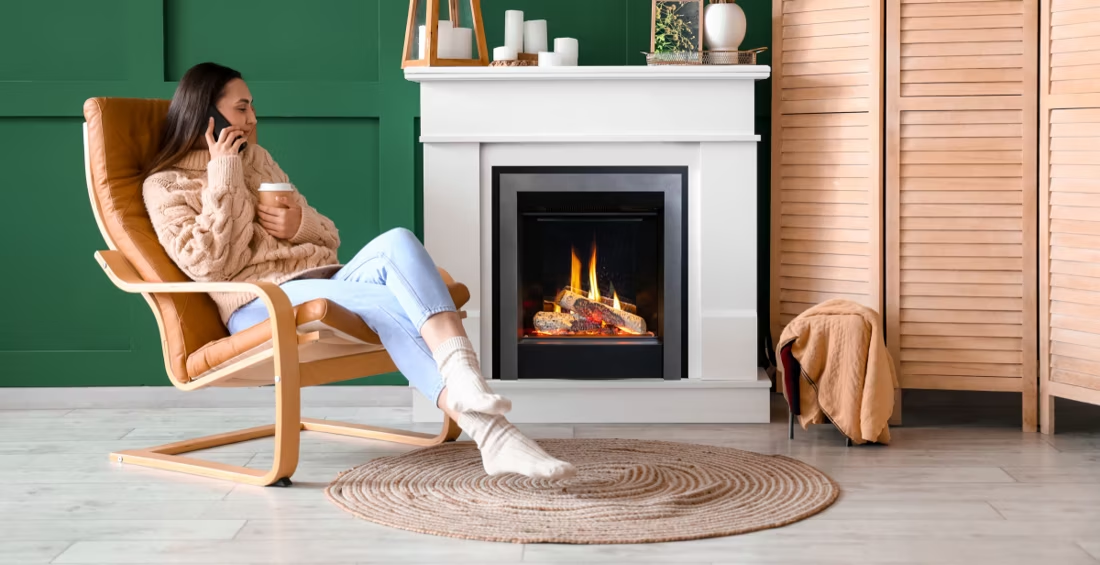
That's where electric fireplaces earn their keep. There's no venting to run, no gas line to trench, and no combustion byproducts to worry about—which makes them a realistic option in a condo near the Dunes, a finished basement, or a bedroom where a vented appliance isn't practical. Northern Indiana Public Service Co. (NIPSCO) serves electric here at a residential rate around $0.19 per kWh, so running a 1,500-watt unit costs roughly 29 cents an hour—inexpensive zone heat for the rooms you actually spend time in, on top of whatever your furnace is already doing.
Three steps. No salesperson until you're ready.
Tell us about your project
Your zip code, your situation, and the fuel you're leaning toward—or let the answers point you to one.
See what's actually available
The brands dealers within 100 miles genuinely carry—real options, never a catalog mirage.
Get your dealer & Project Guide
A trusted local dealer, plus the free Project Guide & Parts List that names every component of the job.
Frequently Asked Questions
How much does an electric fireplace cost to install in Portage?
A freestanding or wall-mount plug-in electric fireplace typically runs $200 to $800 for the unit itself and plugs into a standard outlet, so there's effectively no installation cost. A built-in electric insert or a wall unit that needs a dedicated 20-amp circuit run by an electrician usually lands between $600 and $2,500 in Porter County, depending on how far the new circuit has to travel and whether you're building out a surround or mantel. Because there's no chimney, flue, or gas line involved, electric is consistently the lowest-cost fireplace option to install in Portage.
Will an electric fireplace actually heat a room in a Portage winter?
Most residential electric fireplaces top out around 5,000 BTU (roughly 1,500 watts), which is enough to comfortably heat a single room—a bedroom, den, or finished basement—but not a whole house on an 18°F January night off Lake Michigan. Think of it as zone heat: it lets you turn down the thermostat on your furnace and warm the room you're actually in, rather than replacing central heat. For homes near the lakefront with drafty older construction, pairing an electric insert with existing forced-air heat is the more realistic expectation than relying on it as a sole heat source.
What's the difference between an electric fireplace and a space heater?
A basic space heater and an electric fireplace insert produce similar heat output using the same underlying technology, but the fireplace adds a realistic flame display, a finished surround or mantel, and typically better build quality for daily use. Many electric fireplaces also let you run the flame effect with the heater off—useful in a Portage living room in April or October when you want ambiance without added heat. If heat output alone is your goal, a space heater is cheaper; if you want it to look and function like a real fireplace, an electric insert or wall unit is the better fit.
Do I need a permit or an electrician to install an electric fireplace in Portage?
Plug-in, freestanding electric fireplaces don't require any permit or electrical work—they run on a standard 120-volt outlet like any other appliance. Built-in units or wall-mounted models that need a new dedicated circuit typically require a licensed electrician, and depending on the scope of the work, an electrical permit through the City of Portage may be required. Local hearth dealers who install built-in electric units usually coordinate the electrician and any permitting as part of the job, so it's one call rather than several.
How much does it cost to run an electric fireplace with NIPSCO rates?
At Portage's residential rate of about $0.19 per kWh through Northern Indiana Public Service Co., a typical 1,500-watt electric fireplace running on high costs roughly 29 cents an hour, or about $7 for a full 24 hours of continuous use. Most households run the heat function a few hours a day during cold snaps rather than around the clock, which keeps the added cost modest compared to running a furnace harder to heat the whole house.
Can I put an electric insert into my existing wood or gas fireplace?
Yes—electric inserts are one of the most common upgrades for homeowners in Portage with an old, rarely-used wood-burning fireplace or a fireplace they'd rather not maintain. The insert slides into the existing firebox opening, plugs into a nearby outlet (or a new circuit if the unit calls for it), and gives you flame effect and supplemental heat without dealing with wood, ash, or gas lines. It's a straightforward weekend-scale project for most local dealers and doesn't touch the existing chimney or masonry.
Electric vs. gas fireplace—which makes more sense for my Portage home?
Gas is available through the local utility infrastructure that also serves electric here, and a gas fireplace or insert puts out real, whole-room heat—often 20,000 to 30,000 BTU—which matters more on the coldest lake-effect nights. Electric costs less to install, has no venting or gas line requirements, and lets you run the flame effect without heat, but its output tops out around 5,000 BTU per unit. For a primary living space where you want serious supplemental heat, gas is usually the stronger performer. For a bedroom, basement, condo, or rental where installation simplicity and low upfront cost matter more, electric is the practical choice.
Why don't more homes in Portage use wood or pellet stoves?
Wood heat has deep roots elsewhere in the Midwest, and oak, hickory, maple, and beech are all common regional species, but wood-burning appliances are uncommon in Portage itself. A large share of the local housing stock—condos, apartments, and newer construction near the Dunes and along the lakefront—wasn't built with the masonry chimney or clearances a wood stove needs, and retrofitting one is a bigger project than most homeowners here take on. Pellet stoves face a similar hurdle: they still need venting and a dedicated appliance footprint that many local homes don't have room for. Electric and gas fireplaces fit the area's housing stock far more easily, which is why they're the fuels most local dealers actually stock and install.
What should I look for in an electric fireplace for a Portage home?
Look for a unit with a true 1,500-watt heater rating if you want meaningful supplemental heat rather than just a flame effect, and check whether it needs a dedicated circuit—many higher-output built-ins do. For a condo or rental near the lakefront, a plug-in freestanding or wall-mount unit avoids any electrical work entirely. For a finished basement or a room you use often through the winter, a built-in insert with a thermostat and a realistic LED flame tends to hold up better to daily use than an entry-level model. A local dealer can walk through your room's size and your electrical panel before you buy, which is the step that prevents an undersized or improperly wired install.
Can I put a TV above my fireplace?
Yes—with an asterisk. Fireplaces are hot and TVs don't like heat. Either put a mantel between them to deflect rising warmth, or choose a fireplace with heat-management technology that creates a cool zone on the wall above—the wall stays around 125 degrees, barely warm, while the room still gets full heat. If you like clean lines and don't want a mantel, heat management is the answer.
Do electric fireplaces actually produce heat?
Yes—most put out around 4,800–5,000 BTUs from a standard outlet, which comfortably warms a bedroom, office, or den as a comfort-zone heater. What they won't do is carry a whole house the way wood, gas, or pellet can. Think of electric as ambiance-first with honest supplemental heat: flames on with no heat in July, flames plus warmth in January.
Can I install a fireplace myself?
If you're putting a fire in your house on purpose, it's best to work with an expert. Unless you're genuinely experienced in framing, gas line, vent pipe, and the national code on clearances to combustibles, have a professional do it—and ideally the same company that sells you the fireplace, so warranty, service, and liability all live under one roof.
Does a fireplace add value to my home?
On average, a fireplace adds back to the home about the same amount you spent installing it. Add the monthly savings from heating the rooms you actually use instead of the whole house—often hundreds of dollars a year—and the value case is strong before you even count what a fire does for how your family uses the room.
Nearby Dealers
Hearth shops serving Portage and the surrounding area.
Electric Service in Portage
An electric fireplace's heater draws about 1,500 watts—pennies per hour at local rates.
Northern Indiana Pub Serv Co
Find your electric fireplace in Portage.
Tell us about your room and your home's electrical setup, and we'll match you with a trusted local dealer plus a free Project Guide & Parts List for your Portage electric fireplace project.
Find Your Fireplace →