
Steady heat, without the wood pile.
Automated, thermostat-controlled heat for Pike County's farmhouses and rural properties—from Petersburg to Winslow, Otwell, and Spurgeon. Find the right pellet stove or insert, and connect with a trusted local dealer.
Every Project Starts From One of These Five Situations
A hands-off way to heat a hardwood county.
Pike County sits in the hardwood-timber belt of southwestern Indiana, a Climate Zone 4A county where winter lows average around 22°F and the season delivers a solid winter heating workload—real cold, but well short of the extremes in places like Minneapolis or Duluth, where the winter heating load runs 40 to 50 percent higher. That milder profile matters for pellet heat: a mid-size hopper and a steady supply of bagged fuel is usually enough to carry a Pike County farmhouse through the coldest stretch of January without the constant tending a full wood-burning setup demands.
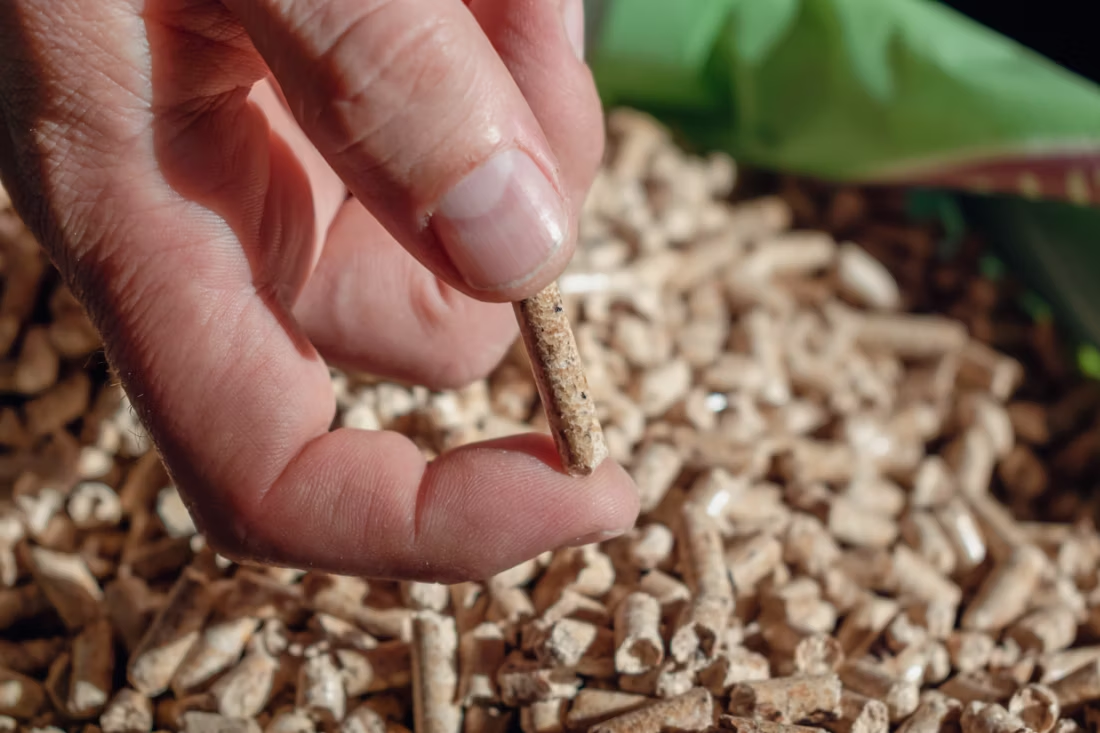
The county's woodlots are heavy with oak, hickory, maple, and beech, and plenty of households here still burn cordwood—but pellet stoves have found a real foothold too, especially on properties where splitting and stacking wood isn't practical or where a homeowner just wants set-it-and-forget-it heat. Bagged pellets from Lignetics, Indeck Energy Services, and Somerset Pellet Fuel show up at farm-supply and hardware stores in and around Petersburg, and with no local air-quality non-attainment issues or winter burn curtailments to navigate, a pellet stove here runs whenever you want it—no yellow-day restrictions to check first.
Three steps. No salesperson until you're ready.
Tell us about your project
Your zip code, your situation, and the fuel you're leaning toward—or let the answers point you to one.
See what's actually available
The brands dealers within 100 miles genuinely carry—real options, never a catalog mirage.
Get your dealer & Project Guide
A trusted local dealer, plus the free Project Guide & Parts List that names every component of the job.
Frequently Asked Questions
How much does a pellet stove installation cost in Pike County?
Installation costs vary with the unit itself, the length and path of the vent run, and whether a dedicated circuit for the auger and blower motor already exists or needs to be added. Most pellet stove and insert installations land somewhere between $2,500 and $6,000, and Pike County's housing stock—a lot of older farmhouses without existing gas lines or masonry liners in good shape—tends to fall in that same range. A pellet insert going into an existing masonry fireplace is usually on the lower end since it reuses the flue with a liner; a freestanding stove in a new location, with fresh venting and a dedicated outlet, runs higher. A local dealer will give you a firm number after seeing the install location.
What size pellet stove do I need for my home?
Sizing depends on square footage, ceiling height, and how drafty the house is—a real consideration in a county with a lot of older farmhouse construction. As a rough guide: stoves rated for up to 1,000–1,300 sq ft suit a single large room or a small, well-sealed home; mid-size units (1,300–2,000 sq ft) cover most Pike County living areas; and larger units handle open-concept homes or whole-house heating in better-insulated construction. Hopper size matters too—a 40 to 60 lb hopper typically runs 24 to 48 hours between refills depending on burn rate and outdoor temperature. A local dealer can size the unit properly during an in-home visit.
Where can I find a certified pellet stove installer near me?
Look for NFI (National Fireplace Institute)-certified installers, which most established hearth dealers carry. Pike County itself is small—population under 4,200—so many homeowners end up working with dealers based in nearby Jasper or Evansville who service the county as part of their regular route. That's normal for a rural county this size, and it doesn't mean lower-quality service; it just means booking a bit further ahead and expecting a modest trip charge for installation. Avoid installing a pellet stove yourself or through a general handyman—the electrical hookup, venting, and hearth clearance all have code requirements a certified installer will get right the first time.
What's the difference between a pellet stove and a pellet insert?
A pellet stove is a freestanding unit that can go almost anywhere in a room with the right clearances and a through-wall or through-roof vent—a good fit for homes without an existing fireplace. A pellet insert is built to slide into an existing masonry fireplace opening, using a stainless liner run up the existing chimney for venting. For Pike County homes with an old wood fireplace that's rarely used, an insert is often the simpler upgrade—it keeps the existing hearth and chimney structure and converts a low-efficiency fireplace into a controlled, thermostat-driven heat source.
Do I need a permit to install a pellet stove in Pike County?
Most new pellet stove and insert installations require a building permit, typically through the Pike County Building Department for homes outside Petersburg's town limits, or the local town office within Petersburg itself. Your installer will usually pull this as part of the job. One thing worth planning for: pellet stoves need a dedicated electrical outlet to run the auger and blower, unlike a wood stove that burns without power. In a rural county where outages happen during winter storms, some homeowners pair their pellet stove with a small backup battery or generator so it keeps running when the grid doesn't.
What's the best pellet stove for Pike County's climate?
Because Pike County's winters, while genuinely cold, run milder than the upper Midwest—average lows around 22°F rather than the sub-zero stretches common in places like Madison or Fargo—a mid-size pellet stove with a standard hopper is usually plenty, even as a primary heat source in a well-insulated home. Look for a unit with a hopper large enough to get through an overnight burn without a refill, and check what pellets are locally available: Lignetics, Indeck Energy Services, and Somerset Pellet Fuel bags are the ones most commonly stocked at farm and hardware stores in the area, so a stove that burns those brands cleanly without frequent auger jams is worth prioritizing. A local dealer can match a specific model to your square footage and fuel access.
How often does a pellet stove need cleaning and service?
Pellet stoves need less maintenance than a wood-burning chimney, but they're not maintenance-free. Plan on cleaning the burn pot and ash pan weekly during heavy use, a deeper cleaning of the exhaust venting and hopper feed system once a season, and an annual professional inspection to check the auger motor, blower, and gaskets. Because the vent run on a pellet appliance is smaller-diameter than a wood chimney, buildup can restrict airflow faster than people expect—skipping the seasonal cleaning is the most common cause of pellet stoves running poorly or shutting down mid-winter.
Where can I buy pellet fuel in Pike County?
Bagged pellets are typically available at farm-supply stores and hardware retailers in and around Petersburg, with additional stock in nearby Jasper and Evansville during peak heating season. Lignetics, Indeck Energy Services, and Somerset Pellet Fuel are the brands most commonly carried in this part of southwestern Indiana. Pricing generally runs in the $230 to $280 per ton range regionally, though it's worth buying early in the fall—rural stores in a county this size sometimes sell through their pellet stock during a hard cold stretch and have to wait on a restock.
Pellet stove vs. wood stove—which is right for my home?
Wood stoves burn cordwood—plentiful in a county thick with oak, hickory, maple, and beech—and keep working during a power outage, which matters when winter storms take down rural lines. Pellet stoves trade that off for real convenience: load the hopper, set the thermostat, and get consistent heat with far less ash and none of the splitting, stacking, or hauling that cordwood requires. The catch is that pellet stoves need electricity to run the auger and blower, so without a generator or battery backup, they go cold when the power does. For Pike County homeowners who want low-effort daily heat and reliable power, pellet is usually the better fit; for those who want backup heat that works no matter what the grid is doing, wood is worth keeping in the mix.
Can a pellet stove heat a whole house?
It genuinely can. I burned a pellet stove as my only heat source for years after a furnace died, and it kept the entire house warm. Pellets feed automatically from a hopper, so you get wood-heat economics with thermostat-style control. Two honest caveats: it needs weekly cleaning during the season, and most models need electricity to run—ask about battery backup if outages are a concern.
Why is my open fireplace making my house colder?
Open fireplaces suck—literally. As the fire burns, it consumes air your furnace already paid to heat and pulls it out through the chimney, so the house is actually colder after the fire goes out than before you lit it. An insert fixes this: it seals the chimney, puts fixed glass across the front, and turns that hole in your house into a real heat source.
What is an in-home preview and do I need one?
It's a visit where a hearth professional measures your space, confirms the model you picked actually works in your home, and walks the specs—framing, gas line, venting, finish work—before anything is ordered. Some details you just can't know until you see the house. Never make a down payment without one; it's the single most-skipped step that burns buyers.
Does a fireplace add value to my home?
On average, a fireplace adds back to the home about the same amount you spent installing it. Add the monthly savings from heating the rooms you actually use instead of the whole house—often hundreds of dollars a year—and the value case is strong before you even count what a fire does for how your family uses the room.
Pellet Brands Stocked Around Pike County
Manufacturers will point you to the nearest stocking dealer.
Find your pellet stove in Pike County.
Tell us about your home and heating goals, and we'll match you with a trusted local dealer serving Pike County—plus a free Project Guide & Parts List with the exact parts, including the vent kit, for your pellet project.
Find Your Fireplace →