
Steady heat for Ohio County's river bluffs and farm country.
Clean-burning, thermostat-controlled heat for one of Indiana's smallest and most rural counties. Find the right pellet stove or insert, then connect with a trusted local dealer who can actually install it.
Every Project Starts From One of These Five Situations
Consistent warmth without tending a wood pile.
Ohio County is the smallest county in Indiana by land area, and with a population around 2,420 it's about as rural as the state gets—hilly, wooded terrain rising off the Ohio River around Rising Sun, with farms and timber stands filling most of the acreage in between. Winters here sit in Climate Zone 4A, averaging around 23°F on the coldest nights with a long, solidly cold heating season—a solidly cold Midwestern winter, colder than Louisville just downriver but nowhere near what Madison, WI or Fargo, ND deal with. It's enough cold, spread across enough months, that a lot of households want a heat source that doesn't depend on splitting and stacking cordwood every fall.
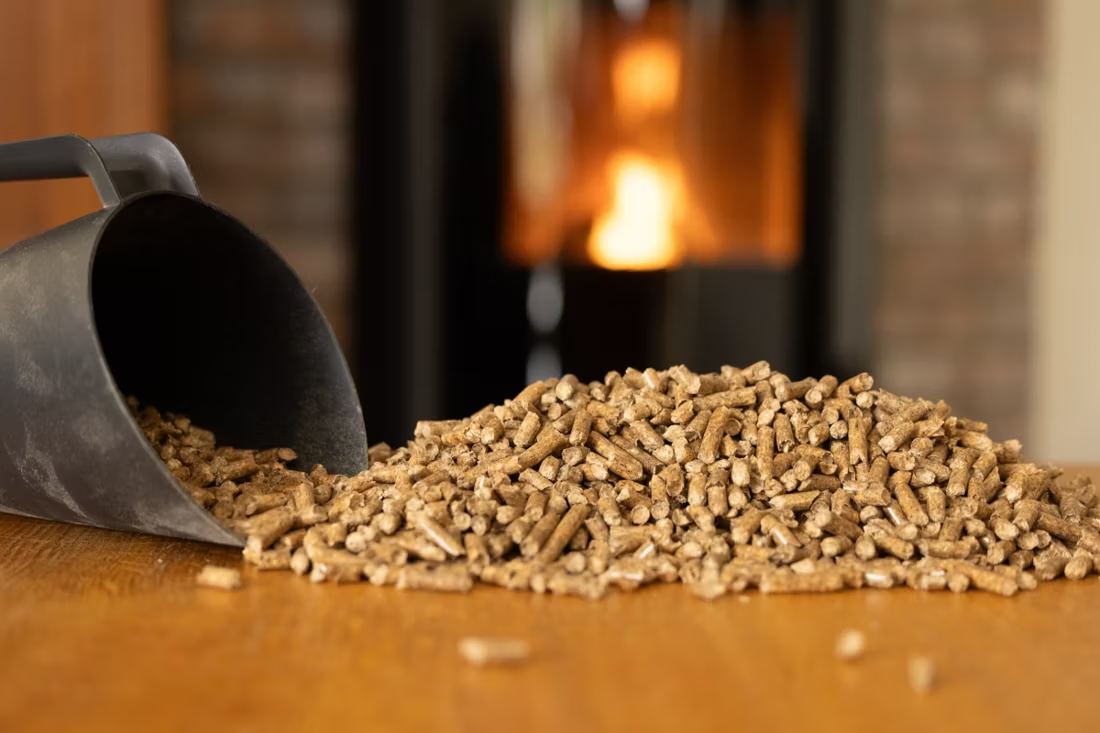
That's where pellet stoves fit in. The county's oak, hickory, maple, and beech forests feed the same regional hardwood supply chain that produces pellets—brands like Indeck Energy Services, Lignetics, and Somerset Pellet Fuel are all common on shelves in this part of the Ohio Valley. With no air quality restrictions or non-attainment concerns on the books here, the appeal of pellet heat in Ohio County isn't regulatory—it's practical: load a hopper instead of a firebox, dial in a thermostat, and get even heat for 24 to 50 hours per fill depending on the stove and hopper size, without the daily wood-hauling that a lot of rural properties here still do for their main wood stove.
Three steps. No salesperson until you're ready.
Tell us about your project
Your zip code, your situation, and the fuel you're leaning toward—or let the answers point you to one.
See what's actually available
The brands dealers within 100 miles genuinely carry—real options, never a catalog mirage.
Get your dealer & Project Guide
A trusted local dealer, plus the free Project Guide & Parts List that names every component of the job.
Frequently Asked Questions
How much does a pellet stove installation cost in Ohio County?
Most pellet stove installs in this part of Indiana run somewhere in the $3,500 to $6,500 range, with the spread driven by whether you're installing a freestanding stove versus a fireplace insert, how far the vent run has to travel through an exterior wall, and whether a dedicated electrical outlet needs to be added near the install location—pellet stoves run an auger and combustion blower, so unlike a wood stove they have to be wired in. Older farmhouses around Rising Sun and the county's rural routes sometimes need extra work getting power to the hearth location, which can push costs toward the higher end. A local dealer can give you a firm number after seeing the space.
What size pellet stove do I need for my home?
With a long, solidly cold heating season and winter lows averaging in the low 20s, most Ohio County homes fall into the mid-size pellet stove category—units rated for 1,200 to 2,000 square feet cover a typical farmhouse living area or a ranch-style home along the river bluffs. Older, less-insulated homes common in the county's smaller towns may need to size up even if the square footage is modest, since pellet stoves heat by convection and struggle to compensate for drafty construction the way a big cast-iron wood stove can. A dealer sizing your space will also ask about hopper capacity—a larger hopper means fewer refills during the coldest stretches of a Midwestern winter.
Where can I find certified pellet stove installers near me?
Given Ohio County's small population, most homeowners here end up working with dealers based in nearby Lawrenceburg or Aurora, or occasionally installers who cross the river from the Kentucky side near Warsaw. Look for NFI (National Fireplace Institute) certification specifically in pellet appliances—venting and electrical requirements for pellet units differ enough from wood stoves that general hearth experience isn't quite the same qualification. Because service territory is spread thin in a county this size, expect a modest travel charge on top of the install quote for more remote farm addresses.
What's the difference between a pellet stove and a pellet insert?
A pellet stove is a freestanding unit on its own hearth pad, vented through a wall or existing chimney chase—it can go almost anywhere in a room with proper clearances. A pellet insert is built to slide into an existing masonry fireplace opening, which is common in Ohio County's older river-town homes that still have a traditional open fireplace. If you've got an existing masonry fireplace you don't use much, an insert is usually the more cost-effective route since it reuses the chimney chase. If you're heating a room with no existing fireplace, a freestanding stove is the more flexible option.
Do I need a permit to install a pellet stove in Ohio County?
Yes—a building permit is standard for a new pellet stove or insert installation anywhere in the county, and most local dealers handle the permitting paperwork as part of the install so you're not tracking it down yourself. The electrical work to bring power to the unit may also require a separate electrical permit depending on the scope. Because pellet stoves need a functioning outlet, it's worth confirming with your installer early whether your home's existing wiring can support the new circuit or whether an electrician needs to be brought in first.
What's the best pellet stove for Ohio County's climate?
For a winter that regularly dips into the low 20s but doesn't hit the extended sub-zero stretches you'd see farther north, a mid-size pellet stove with a hopper in the 40 to 60 pound range is usually plenty—it'll run a full day or more on a single fill during the coldest weeks. Look for a model with a thermostat mode rather than just manual heat settings, since it'll modulate output automatically as temperatures swing through a typical Ohio Valley cold front. Given the county's proximity to regional pellet suppliers like Indeck Energy Services and Lignetics, availability of quality hardwood pellets isn't a concern—ask your dealer which stove brands are calibrated well for the pellet density those suppliers produce, since burn quality varies by pellet hardness and moisture content.
Where can I buy pellets locally in Ohio County?
Regional hardwood pellet brands including Indeck Energy Services, Lignetics, and Somerset Pellet Fuel are the ones most commonly stocked by hearth dealers and farm supply stores serving this part of the Ohio Valley—all three source from the same oak, hickory, maple, and beech sawmill byproduct that's abundant in this region's forests. Buying by the ton in fall, before the coldest months hit, is the standard approach for rural households that don't want to make repeated bag runs mid-winter. Your dealer can usually tell you which brand burns cleanest in the specific stove model you buy.
What happens to my pellet stove during a power outage?
Because pellet stoves rely on an electric auger to feed fuel and a blower to distribute heat, they stop running the moment the power goes out—this is the single biggest tradeoff compared to a wood stove for a rural county where storm-related outages along the river bluffs aren't uncommon. Some homeowners here pair a pellet stove with a small battery backup or generator specifically to keep it running through a multi-hour outage; others keep a wood-burning unit as backup heat for exactly this reason. If uninterrupted heat during outages matters more than convenience for your household, it's worth discussing that tradeoff with a local dealer before you commit to pellet as your only heat source.
Pellet stove vs. wood stove—which makes more sense in Ohio County?
With oak, hickory, maple, and beech all common in the county's woodlots, self-cut or locally purchased firewood is genuinely cheap and plentiful here, which is the strongest argument for wood. Wood stoves also keep running without electricity, a real advantage for storm-prone rural properties. Pellet stoves trade that self-sufficiency for convenience—no splitting, stacking, or hauling, more even heat output, and a thermostat instead of constant fire-tending—but they need power and a steady supply of bagged fuel from suppliers like Lignetics or Somerset Pellet Fuel rather than your own woodlot. Plenty of households in the county end up running both: wood as the primary or backup heat source, pellet in a secondary living space where daily convenience matters more.
What's the difference between an insert and a zero-clearance fireplace?
An insert is a fireplace that slides into a pre-existing wood-burning fireplace—if you don't have one, there's nothing to insert it into. A zero-clearance fireplace is built into a framed wall, which makes it the answer for remodels and new construction. Simple test: existing masonry fireplace means insert; blank or framed wall means zero-clearance.
Why is my open fireplace making my house colder?
Open fireplaces suck—literally. As the fire burns, it consumes air your furnace already paid to heat and pulls it out through the chimney, so the house is actually colder after the fire goes out than before you lit it. An insert fixes this: it seals the chimney, puts fixed glass across the front, and turns that hole in your house into a real heat source.
What is an in-home preview and do I need one?
It's a visit where a hearth professional measures your space, confirms the model you picked actually works in your home, and walks the specs—framing, gas line, venting, finish work—before anything is ordered. Some details you just can't know until you see the house. Never make a down payment without one; it's the single most-skipped step that burns buyers.
Can I install a fireplace myself?
If you're putting a fire in your house on purpose, it's best to work with an expert. Unless you're genuinely experienced in framing, gas line, vent pipe, and the national code on clearances to combustibles, have a professional do it—and ideally the same company that sells you the fireplace, so warranty, service, and liability all live under one roof.
Pellet Brands Stocked Around Ohio County
Manufacturers will point you to the nearest stocking dealer.
Find your pellet stove in Ohio County.
Tell us about your home and we'll match you with a trusted local dealer and send over your free Project Guide & Parts List—a plan for your pellet project in Ohio County with the exact parts, including the vent kit, you'll need.
Find Your Fireplace →