
Add real warmth to your Ohio County home—without the vent work.
From the riverfront homes of Rising Sun to the farmhouses scattered across Indiana's smallest county, electric fireplaces bring supplemental heat and real ambiance to rooms without a chimney or gas line. Find the right unit and connect with a trusted local dealer.
Every Project Starts From One of These Five Situations
Zone heat that fits any room in the county.
Ohio County sits along the Ohio River in southeastern Indiana and, with a population of just 2,420, is one of the smallest counties in the state—a mix of historic river-town homes in Rising Sun and older farmhouses spread across the surrounding countryside. At climate zone 4A with 4,892 heating degree days and winter lows averaging 23°F, the county sees a real winter, though nothing close to the depths of a Burlington VT or Duluth MN. That's exactly the range where an electric fireplace earns its keep—not as the home's primary heat source, but as a reliable, no-hassle way to take the edge off a cold room.
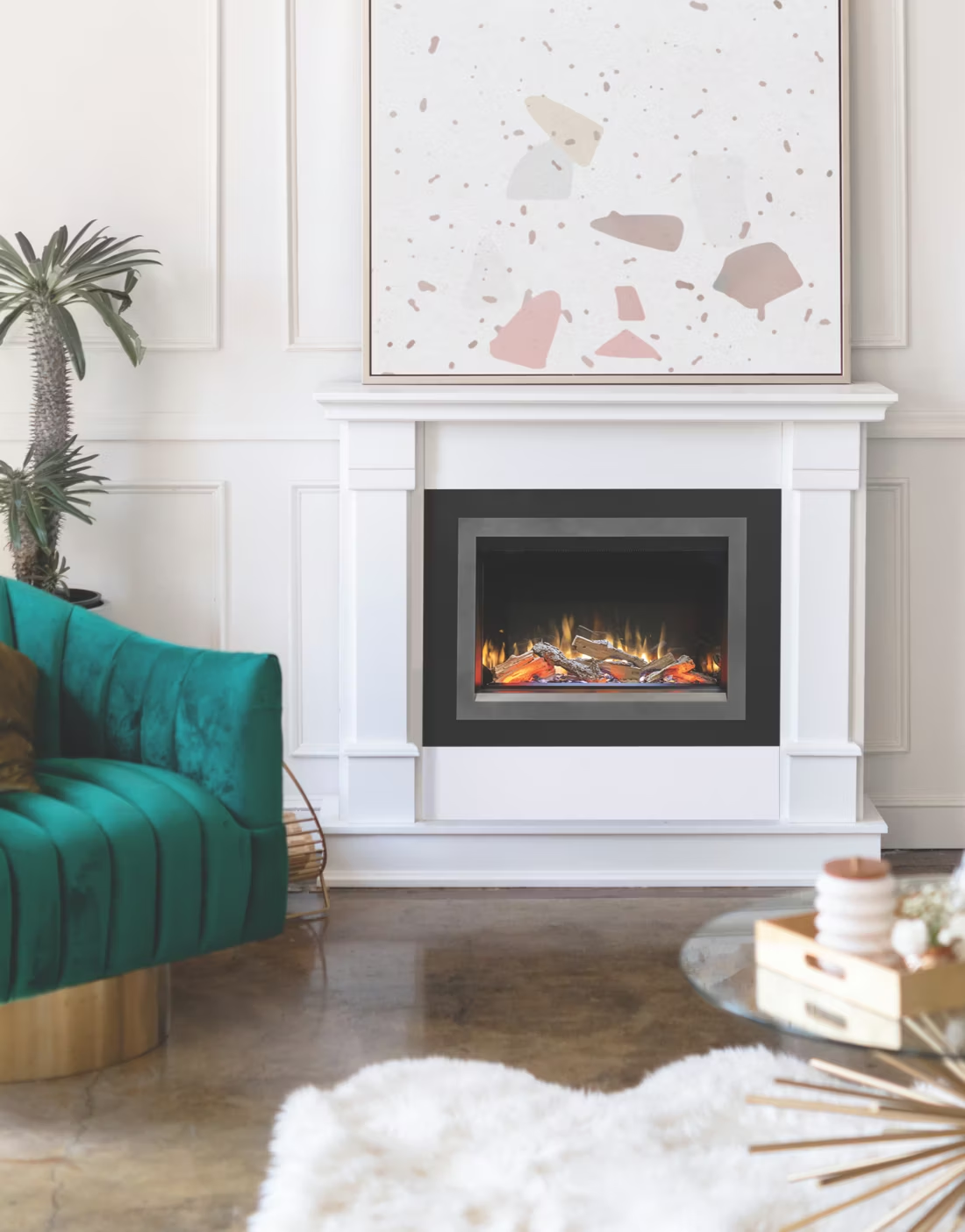
A lot of the housing stock here—century-old buildings along Rising Sun's Main Street, split-level ranches out in the county, riverside cottages without existing chimneys—isn't set up for a wood or gas retrofit without real construction. Electric fireplaces sidestep that entirely: no venting, no gas line, no masonry work. Plug-in units go anywhere with an outlet; built-in and wall-mounted models need only a dedicated circuit. For homeowners who want the look and glow of a fireplace, or who need to warm one drafty room without running the furnace harder, electric is often the simplest path—and it's why demand for electric units has grown steadily even in a county where wood heat still runs deep.
Three steps. No salesperson until you're ready.
Tell us about your project
Your zip code, your situation, and the fuel you're leaning toward—or let the answers point you to one.
See what's actually available
The brands dealers within 100 miles genuinely carry—real options, never a catalog mirage.
Get your dealer & Project Guide
A trusted local dealer, plus the free Project Guide & Parts List that names every component of the job.
Frequently Asked Questions
How much does an electric fireplace installation cost in Ohio County?
Costs in Ohio County typically run $300 to $2,500. A plug-in electric insert or freestanding stove that drops into an existing fireplace opening sits at the low end and needs nothing more than a standard outlet. A built-in wall unit or a mantel-surround package with a dedicated 20-amp circuit and custom trim work runs toward the higher end, especially if an electrician needs to run new wiring in an older Rising Sun home with dated panel capacity. Local dealers can size the job accurately after seeing the room and the existing electrical setup.
What size electric fireplace do I need for my room?
Most electric fireplaces are rated to comfortably supplement heat in 400 to 1,500 square feet, which covers a single living room, den, or bedroom in most Ohio County homes. They're built as zone heaters, not whole-home furnaces, so sizing is really about matching the unit to the specific room you want warmer—a farmhouse living room with 9-foot ceilings will need more wattage than a small den. A local dealer can walk through your room's layout and insulation and recommend the right heater wattage and flame-box size.
Will my electric fireplace still work during a power outage?
No—and this is worth knowing up front. Unlike a wood stove or a battery-backed gas unit, an electric fireplace stops working the moment the power goes out, both the flame effect and the heater. For a rural county along the Ohio River where winter storms can knock out power for hours, that means electric shouldn't be your only heat plan if you're worried about outages. Many Ohio County homeowners pair an electric fireplace for everyday convenience with a wood stove or furnace as backup, rather than relying on electric alone for emergency heat.
Do I need a permit to install an electric fireplace in Ohio County?
It depends on the unit. A plug-in electric insert or freestanding stove that runs off an existing outlet generally doesn't require a permit. A built-in or wall-mounted unit that needs a new dedicated circuit typically does require an electrical permit through the Ohio County Building Department, and the circuit work should be done by a licensed electrician regardless of permit requirements. Most local dealers who sell built-in electric fireplaces coordinate the electrical work and permitting as part of the installation.
What's the difference between an electric fireplace, insert, and stove?
An electric fireplace is typically a built-in unit set into a wall or mantel surround, often with a realistic flame display and a heater rated for the room. An electric insert is sized to slide into an existing masonry or wood fireplace opening, giving an old hearth a clean, no-maintenance upgrade without touching the chimney. An electric stove is a freestanding unit styled like a traditional wood stove but plugs into a standard outlet—a popular choice for homes without any existing fireplace opening at all. For Rising Sun homes with an old masonry fireplace no longer in regular use, an insert is often the easiest upgrade.
What's the best electric fireplace for a cold Indiana winter?
For Ohio County's climate, look for units with a true 1,500-watt heater output rather than a decorative-only flame unit—that's enough to meaningfully warm a single room on a 23°F night. Brands like Dimplex, SimpliFire, and Napoleon build electric fireplaces with thermostat control and multi-speed fans that hold a steadier room temperature than basic space heaters. If you want the fireplace running mostly for ambiance with heat as a bonus, a lower-wattage model with a strong flame display is fine; if you actually want to feel it working on cold nights, prioritize the heater rating over the visual effects.
How much does it cost to run an electric fireplace?
A typical 1,500-watt electric fireplace costs roughly $0.15 to $0.25 per hour to run on most Indiana residential electric rates, or about $1.50 to $2.50 for a full evening of use. Run as supplemental zone heat in one room—rather than heating the whole house—it can actually lower your overall bill by letting you turn the furnace thermostat down a few degrees in the rest of the home. Actual cost depends on your specific electric utility's rate structure, which a local dealer or your utility provider can help you estimate.
Electric vs. wood—which is right for my Ohio County home?
Wood offers real radiant heat, works without electricity during an outage, and pairs well with the oak, hickory, maple, and beech common in this part of the Ohio River valley—a real advantage for homeowners who already have access to cut or split firewood. Electric offers instant on-off convenience, zero ash or creosote, no chimney to maintain, and installation flexibility in homes without an existing fireplace or flue. For a primary heat source or storm backup, wood generally wins in this county. For a low-maintenance ambiance upgrade in a living room or bedroom, electric is usually the simpler, less expensive choice.
Electric vs. gas fireplace—which should I choose?
Gas fireplaces produce more real heat output and a more authentic flame, but they require either a gas line or a propane tank and, for most models, a venting path—work that can be involved in an older Rising Sun building or a home without existing gas service. Electric fireplaces need only power, so they install almost anywhere, including apartments, historic storefronts, and rooms where running gas line isn't practical. If your Ohio County home is already set up for propane or natural gas and you want stronger heat output, gas is worth considering. If you want the simplest possible install with no venting or fuel line, electric is the easier path.
Can I put a TV above my fireplace?
Yes—with an asterisk. Fireplaces are hot and TVs don't like heat. Either put a mantel between them to deflect rising warmth, or choose a fireplace with heat-management technology that creates a cool zone on the wall above—the wall stays around 125 degrees, barely warm, while the room still gets full heat. If you like clean lines and don't want a mantel, heat management is the answer.
Do electric fireplaces actually produce heat?
Yes—most put out around 4,800–5,000 BTUs from a standard outlet, which comfortably warms a bedroom, office, or den as a comfort-zone heater. What they won't do is carry a whole house the way wood, gas, or pellet can. Think of electric as ambiance-first with honest supplemental heat: flames on with no heat in July, flames plus warmth in January.
What is an in-home preview and do I need one?
It's a visit where a hearth professional measures your space, confirms the model you picked actually works in your home, and walks the specs—framing, gas line, venting, finish work—before anything is ordered. Some details you just can't know until you see the house. Never make a down payment without one; it's the single most-skipped step that burns buyers.
How much should I budget for a fireplace?
For an average home—covering the fireplace, the vent pipe, and basic installation—a budget between $3,900 and $5,500 gives you a lot of options across wood, gas, and pellet. By the time you add finish work, gas line, and electrical, the average complete installation lands between $5,000 and $12,000 all-in. In a remodel or new build, a good rule is to put about 2.5% of the total project cost toward the fireplace.
Find your electric fireplace in Ohio County.
Tell us a bit about your home and we'll put together a free Project Guide & Parts List—a plan for your electric fireplace project in Ohio County with the exact parts, the right circuit requirements, and a recommended local dealer to handle the install.
Find Your Fireplace →