
Find your pellet stove in Knox County.
Consistent, thermostat-controlled heat for Knox County winters—from Vincennes to Bicknell to Wheatland. Get matched with a local dealer who can size and install it right.
Every Project Starts From One of These Five Situations
Set-it-and-forget-it heat for the Wabash lowlands.
Knox County sits along the Wabash River in southwestern Indiana, with a winter heating load comparable to many Midwestern counties and winter lows that settle around 21°F—nowhere near the extremes of Bismarck or Duluth, but enough sustained cold from December through February that a supplemental heat source earns its keep. Vincennes, the county seat, and smaller communities like Bicknell, Wheatland, and Bruceville all see the same pattern: cold mornings, a heating season that runs five to six months, and a lot of older farmhouses and ranch homes where central heat alone runs up the propane or electric bill fast.
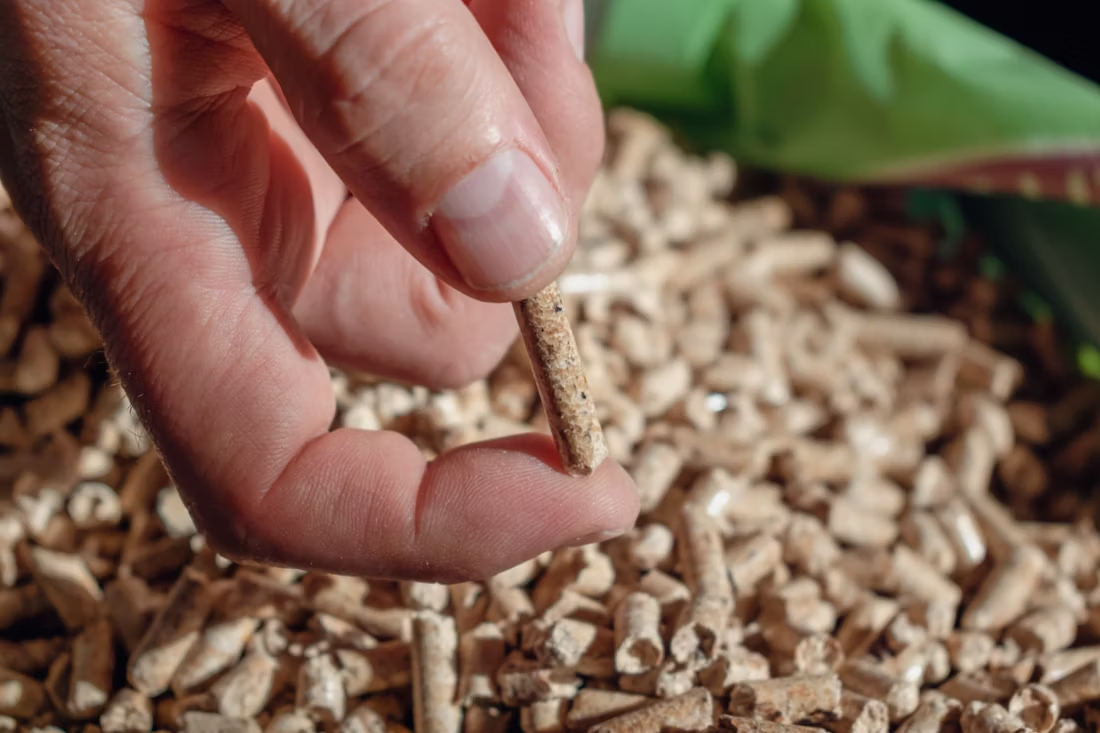
Pellet stoves fit that pattern well. There's no air quality non-attainment issue in Knox County, no winter inversion restrictions, and no curtailment periods to work around—you can run a pellet stove daily without regulatory hassle. Regional pellet supply is solid too, with brands like Indeck Energy Services, Lignetics, and Somerset Pellet Fuel distributed through the Midwest, so homeowners aren't stuck hunting for fuel or paying steep shipping premiums. For a county with plenty of hardwood in its landscape but not everyone wanting to split and stack cordwood, pellet heat offers a cleaner, more automated alternative that still delivers real, radiant supplemental warmth.
Three steps. No salesperson until you're ready.
Tell us about your project
Your zip code, your situation, and the fuel you're leaning toward—or let the answers point you to one.
See what's actually available
The brands dealers within 100 miles genuinely carry—real options, never a catalog mirage.
Get your dealer & Project Guide
A trusted local dealer, plus the free Project Guide & Parts List that names every component of the job.
Frequently Asked Questions
How much does a pellet stove installation cost in Knox County?
Pellet stove installations in Knox County typically run in the range most Midwest hearth retailers quote for standard venting—expect somewhere in the neighborhood of a few thousand dollars once the unit, wall or roof venting, and hearth pad are all factored in. Freestanding stoves venting through an exterior wall are usually on the lower end of the range; pellet inserts going into an existing masonry fireplace with a liner run a bit higher. Homes in rural parts of the county—out toward Wheatland or Bruceville—may see a modest travel charge added if the installer is coming from Vincennes or Terre Haute.
What size pellet stove do I need for my Knox County home?
Sizing depends on square footage, ceiling height, and how drafty the home is—a common issue in Knox County's stock of older farmhouses. As a rough guide: smaller units (under 1,000 sq ft rated) work for a single large room or add-on, mid-size units (1,000–1,800 sq ft) cover most main living areas, and larger units handle open floor plans or homes used for more than supplemental heat. Older two-story homes around Vincennes with less insulation often need the next size up compared to a newer, tightly built ranch of the same square footage. A local dealer will size this properly during an in-home visit rather than going off square footage alone.
Do I need a permit to install a pellet stove in Knox County?
Most pellet stove installations require a building permit, since venting penetrates an exterior wall or the roof and the unit needs to meet clearance requirements. There are no local air quality restrictions or curtailment periods in Knox County that would limit when you can run the stove—unlike counties with winter inversion concerns, Knox County has no listed air quality non-attainment issues. Most local installers pull the permit as part of the installation, so you generally don't have to navigate it yourself.
What's the difference between a pellet stove and a pellet insert?
A pellet stove is a freestanding unit that sits on a hearth pad and vents through an exterior wall or the roof—it can go almost anywhere in the home with the right clearances. A pellet insert is built to slide into an existing masonry fireplace opening, turning an old wood-burning fireplace into an automated, thermostat-controlled heat source. For Knox County homes with an existing fireplace—common in the older housing stock around Vincennes—an insert is often the more cost-effective path since it reuses the existing chimney chase for venting. Homes without an existing fireplace typically go with a freestanding stove instead.
How often do I need to feed and clean a pellet stove?
Most pellet stoves need the hopper refilled every 24 to 48 hours during steady winter use, depending on hopper size and how hard the stove is running. The burn pot should be cleaned every few days to keep combustion efficient, and a fuller ash cleanout is typically needed every one to two weeks. Given Knox County's roughly five-month heating season, most owners settle into a routine—feed in the morning, check the burn pot in the evening—pretty quickly. Compared to a wood stove, it's meaningfully less hands-on, which is a big part of the appeal for homeowners in the county who want heat without splitting and hauling cordwood.
Where can I buy pellets in Knox County?
Pellets are widely available in the region through brands like Indeck Energy Services, Lignetics, and Somerset Pellet Fuel, typically sold in 40-pound bags stacked on pallets at farm supply stores and hearth retailers. Buying a full ton (usually 50 bags) at the start of the season is the most common approach and often comes with a better per-bag price than buying a few bags at a time through the winter. Hardwood-based pellets tend to burn cleaner and leave less ash than softwood blends—worth asking about when you're stocking up, especially if you're running the stove daily through a full Knox County winter.
Will a pellet stove work if the power goes out?
No—this is the main tradeoff with pellet heat. Pellet stoves rely on an electric auger to feed fuel and a blower to distribute heat, so they shut down without power. For most Knox County homes this isn't a dealbreaker since outages tend to be short, but if you're in a rural area prone to longer outages after ice storms, it's worth having a backup plan—either a small battery backup/inverter setup sized for the stove's low draw, or a wood-burning option elsewhere in the house for true grid-down heat.
How does a pellet stove compare to wood heat in Knox County?
Knox County has plenty of oak, hickory, maple, and beech in its woodlots, so cordwood is genuinely available if you want to cut or buy it. Wood stoves burn for free (or near-free) if you're processing your own, work without electricity, and give you the classic fire experience—but they require more labor: splitting, stacking, seasoning, and daily tending. Pellet stoves trade that labor for convenience—load the hopper, set the thermostat, walk away—at the cost of needing electricity and buying fuel by the ton rather than the cord. For homeowners in town around Vincennes who don't have a wood source or storage space, pellet is often the simpler fit. For rural properties with access to their own timber, wood remains a strong option too.
How often should a pellet stove be professionally serviced?
An annual inspection and cleaning is recommended, ideally in late summer before the heating season starts. A technician will clean the venting, check the auger and blower motors, inspect the gaskets and seals, and make sure the burn pot and combustion chamber are operating efficiently. Heavy users running the stove daily through a full Knox County winter sometimes benefit from a mid-season check as well. This kind of maintenance is straightforward for a certified hearth technician and helps avoid mid-winter breakdowns when you're depending on the stove most.
Why is my open fireplace making my house colder?
Open fireplaces suck—literally. As the fire burns, it consumes air your furnace already paid to heat and pulls it out through the chimney, so the house is actually colder after the fire goes out than before you lit it. An insert fixes this: it seals the chimney, puts fixed glass across the front, and turns that hole in your house into a real heat source.
Are pellet stoves loud?
They make some noise—there are two fans running plus an auger motor that turns as it feeds pellets. But there's a real range: premium models are engineered quiet, and the best offer a whisper-quiet mode you can comfortably watch TV next to. If noise matters in your room, ask to hear a stove running before you buy—it's a five-minute test that saves years of annoyance.
Can a fireplace actually lower my heating bill?
Yes—by creating a comfort zone. A furnace heats every square foot of the house just to warm the one room you're in; a gas fireplace on low burns roughly a sixth of the gas a typical furnace does. Set the furnace around 55–60 degrees as a baseline, then heat the rooms your family actually uses. Families who heat this way commonly save $20–$60 a month.
Can I install a fireplace myself?
If you're putting a fire in your house on purpose, it's best to work with an expert. Unless you're genuinely experienced in framing, gas line, vent pipe, and the national code on clearances to combustibles, have a professional do it—and ideally the same company that sells you the fireplace, so warranty, service, and liability all live under one roof.
Stove and Fireplace Dealers in Knox County
Pellet Brands Stocked Around Knox County
Manufacturers will point you to the nearest stocking dealer.
Get your Knox County pellet stove Project Guide & Parts List.
Tell us about your home and we'll match you with a trusted local Knox County dealer and send over a free Project Guide & Parts List—the right pellet stove or insert, the exact vent kit, and a plan for getting it installed correctly.
Find Your Fireplace →