
Zone heat for Vincennes additions, sunrooms, and homes without a flue.
With 4,929 heating degree days and winter lows averaging 21°F, Knox County's heating season is real but not extreme—the kind of climate where a targeted electric unit in a cold room does more good than another trip to the furnace thermostat. I match you with a trusted local dealer who can size a genuine 120-volt or hardwired unit for your space, no chimney, no gas line, no burn permit required.
Every Project Starts From One of These Five Situations
No chimney, no gas line, no smoke to manage.
Knox County sits along the Wabash River in southwestern Indiana, anchored by Vincennes—the oldest city in the state, with a housing stock that spans 1800s brick and log construction through postwar additions and modern subdivisions. In climate zone 4A, with 4,929 heating degree days and winter lows averaging 21°F, the county has a genuine heating season running roughly October through April, but it's not the kind of brutal cold that demands a wood stove running around the clock. That makes electric fireplaces a standard, practical fit here—especially for additions, finished basements, sunrooms, and older Vincennes homes where an original fireplace opening has no working flue or was never built with one.
Plenty of Knox County households still burn oak, hickory, maple, and beech cut from local timber, and the county has no air quality restrictions that would push anyone away from wood or pellet heat. Electric wins on a different axis: zero permits, zero venting, and no fuel to store or haul. It's also the fallback of choice for rental properties near Vincennes University and for homeowners who want real supplemental warmth in one room without opening a wall for gas line or running new masonry. A local dealer can tell you quickly whether your space calls for a simple plug-in insert or a hardwired built-in unit on its own circuit.
Three steps. No salesperson until you're ready.
Tell us about your project
Your zip code, your situation, and the fuel you're leaning toward—or let the answers point you to one.
See what's actually available
The brands dealers within 100 miles genuinely carry—real options, never a catalog mirage.
Get your dealer & Project Guide
A trusted local dealer, plus the free Project Guide & Parts List that names every component of the job.
Frequently Asked Questions
How much does an electric fireplace installation cost in Knox County?
A plug-in electric insert or mantel package that runs on a standard household outlet typically costs $300 to $800 installed, since there's no wiring work involved beyond dropping it into an existing opening or setting it against a wall. A built-in electric fireplace or a larger linear unit that needs a dedicated 20-amp circuit runs higher—commonly $1,500 to $3,500 once you factor in an electrician to run new wiring, especially in older Vincennes homes with original knob-and-tube or undersized panels that need updating first. Framing a new niche into a wall for a built-in unit adds to that range.
Can an electric fireplace actually heat a room, or is it just for looks?
Most electric fireplaces put out 5,000 to 9,000 BTU, which is enough to noticeably warm a single room in the 300 to 400 square foot range—a sunroom, a finished basement family room, or a bedroom addition. It won't replace your furnace across a 4,929-HDD heating season, but as a zone heater for the room you actually spend time in, it lets you turn the thermostat down elsewhere in the house and heat only where you need it. For a drafty converted porch or an addition on the north side of an older Knox County farmhouse, that zone-heating approach can meaningfully cut a winter heating bill.
Do I need a permit or an electrician to install an electric fireplace?
A plug-in unit that draws on an existing household outlet needs no permit and no electrician—it's genuinely a DIY-friendly project. A built-in or wall-mounted unit that requires its own dedicated circuit is different: that's electrical work that should go through a licensed electrician, and if you're modifying a wall or framing a new niche, Knox County's building department may require a permit for the structural or electrical change. A local dealer who handles both the unit and the install will typically coordinate the electrician and any required inspection as one job.
What's the difference between an electric insert, a built-in, and a mantel package?
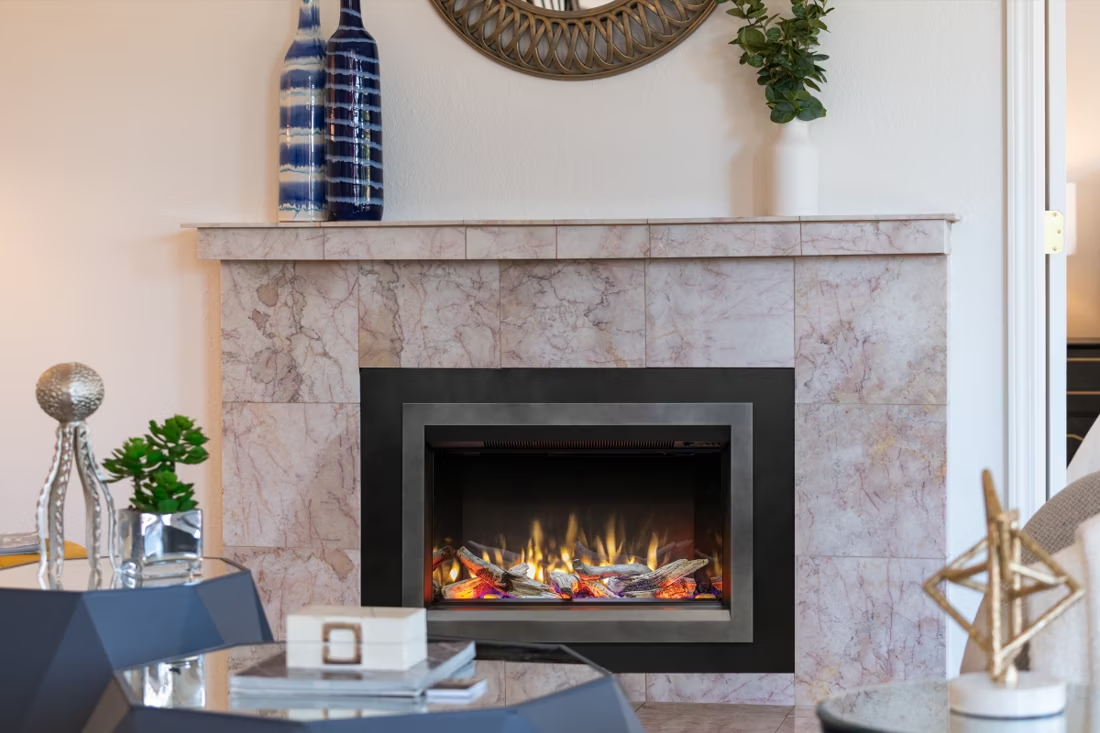
An electric insert is sized to drop into an existing masonry fireplace opening, which is a common project in older Vincennes homes with a fireplace that no longer has a safe or usable flue—you get the look of a working fireplace without touching the chimney. A built-in unit is framed directly into a wall, often in a new addition or during a remodel, and gives the cleanest, most seamless appearance. A mantel package is a freestanding cabinet with the electric firebox built in, which is the easiest option for a rental unit or a room where you don't want to modify a wall at all.
I have an old fireplace with a chimney that's not safe to use—can electric work there?
Yes, and it's one of the most common electric fireplace projects in Knox County's older housing stock, particularly around Vincennes where brick homes from the 1800s and early 1900s often have fireplace openings with deteriorated or unlined flues that aren't safe for a real wood fire. An electric insert sized to that opening restores the look and adds real supplemental heat without needing any chimney work, liner, or inspection of the flue at all—you're simply plugging into an outlet or running one dedicated circuit.
How much does it cost to run an electric fireplace through a Knox County winter?
A typical 1,500-watt electric fireplace run for a few hours a day as supplemental heat adds a modest amount to your monthly electric bill—generally less than running a portable space heater for the same hours, since most models let you run the flame effect without the heater engaged at all. Given the county's roughly six-month heating season, using it as a zone heater in one or two rooms rather than as a whole-home heat source is where the cost savings actually show up, since you can turn back the furnace thermostat while keeping the room you're in comfortable.
How much maintenance does an electric fireplace need?
Very little compared to a wood or gas system. There's no chimney to sweep, no venting to inspect, and no annual gas line check. Maintenance is mostly dusting the unit, occasionally cleaning the glass front, and replacing the LED light bulbs every few years as they dim—a fraction of the upkeep a wood-burning setup in oak or hickory country typically requires.
Electric vs. wood or pellet—which makes more sense for my Knox County home?
Wood cut locally from oak, hickory, maple, or beech, or pellets from regional suppliers like Indeck Energy Services, Lignetics, or Somerset Pellet Fuel, both deliver more raw heat output and work well as a primary or backup heat source through the county's full winter. Electric doesn't compete on total heat output or run during a power outage, but it wins on convenience: no ash, no fuel storage, no chimney, and no local burn restrictions to think about since Knox County has no air quality concerns limiting wood or pellet use either. Many homeowners here land on electric for a room where they want instant ambiance and light supplemental warmth, and keep a wood or pellet appliance elsewhere in the house for serious cold-weather heat.
What happens to my electric fireplace during a power outage?
It simply won't run—no battery backup, no manual override, since the heating element, blower, and flame effect all depend on grid power. Knox County sees occasional winter ice storms that knock out power along the Wabash corridor for a day or more, so if outage resilience matters to your household, an electric fireplace should be considered supplemental rather than your only backup heat plan. Homeowners who want both convenience and a true off-grid fallback often pair an electric unit in a main living space with a wood stove or pellet appliance elsewhere in the house.
Can I put a TV above my fireplace?
Yes—with an asterisk. Fireplaces are hot and TVs don't like heat. Either put a mantel between them to deflect rising warmth, or choose a fireplace with heat-management technology that creates a cool zone on the wall above—the wall stays around 125 degrees, barely warm, while the room still gets full heat. If you like clean lines and don't want a mantel, heat management is the answer.
Do electric fireplaces actually produce heat?
Yes—most put out around 4,800–5,000 BTUs from a standard outlet, which comfortably warms a bedroom, office, or den as a comfort-zone heater. What they won't do is carry a whole house the way wood, gas, or pellet can. Think of electric as ambiance-first with honest supplemental heat: flames on with no heat in July, flames plus warmth in January.
How much should I budget for a fireplace?
For an average home—covering the fireplace, the vent pipe, and basic installation—a budget between $3,900 and $5,500 gives you a lot of options across wood, gas, and pellet. By the time you add finish work, gas line, and electrical, the average complete installation lands between $5,000 and $12,000 all-in. In a remodel or new build, a good rule is to put about 2.5% of the total project cost toward the fireplace.
Can a fireplace actually lower my heating bill?
Yes—by creating a comfort zone. A furnace heats every square foot of the house just to warm the one room you're in; a gas fireplace on low burns roughly a sixth of the gas a typical furnace does. Set the furnace around 55–60 degrees as a baseline, then heat the rooms your family actually uses. Families who heat this way commonly save $20–$60 a month.
Stove and Fireplace Dealers in Knox County
Get your free Knox County electric fireplace Project Guide & Parts List.
Tell me about your room, your wall or fireplace opening, and how you plan to use the heat, and I'll match you with a trusted local Knox County dealer and send a free Project Guide & Parts List—the exact unit, wiring needs, and recommended installer for your electric fireplace project.
Find Your Fireplace →