
Keep Your Family Warm and Safe—No Matter What
Solid, reliable wood heat for the Ohio River valley—from Corydon to Elizabeth, Palmyra, and the rural stretches in between. Find the right stove or insert, and connect with a trusted local dealer.
Every Project Starts From One of These Five Situations
Wood heat rooted in the Ohio River valley.
Harrison County sits along the Ohio River in southern Indiana, home to about 7,200 residents spread across Corydon—Indiana's first state capital—and smaller communities like Elizabeth, Palmyra, and Lanesville. The county's climate is zone 4A, with an average winter low around 23°F and a solid heating season each year. That's a real heating season, running from October into April, though noticeably milder than what a Minneapolis or Bismarck homeowner deals with—Harrison County doesn't need extreme cold-climate engineering, but a properly sized wood stove or insert still earns its keep on the coldest January nights.
The county's hardwood forests—including Harrison-Crawford State Forest and O'Bannon Woods just outside Corydon—supply an abundance of oak, hickory, maple, and beech, all excellent firewood with high BTU output and long, steady burns. Harrison County has no air quality non-attainment designation and no winter burn restrictions, which means homeowners here don't deal with the curtailment periods that complicate wood burning in some other parts of the country. For rural Harrison County residents, wood heat also means backup warmth when an ice storm off the Ohio River knocks out power—something that happens most winters somewhere in the county.
Three steps. No salesperson until you're ready.
Tell us about your project
Your zip code, your situation, and the fuel you're leaning toward—or let the answers point you to one.
See what's actually available
The brands dealers within 100 miles genuinely carry—real options, never a catalog mirage.
Get your dealer & Project Guide
A trusted local dealer, plus the free Project Guide & Parts List that names every component of the job.
Frequently Asked Questions
How much does a wood stove installation cost in Harrison County?
A typical wood stove or insert installation in Harrison County runs roughly $3,500 to $8,500, depending on the unit, whether you're venting into an existing masonry chimney or running new Class A pipe, and whether a hearth pad upgrade is needed for clearance-to-combustible compliance. Older farmhouses around Elizabeth and Palmyra with existing masonry fireplaces are often on the lower end when an insert reuses the existing flue with a stainless liner. New installations without an existing chimney—common in newer construction near Corydon—run higher once full venting is factored in.
What size wood stove or insert do I need for my home?
Sizing depends on square footage, insulation, and whether the stove is your primary heat or a supplement. Harrison County's mix of older farmhouses and newer builds means the answer varies a lot house to house—a drafty two-story farmhouse near Lanesville with high ceilings will need more capacity than a well-insulated newer home of the same size. Given the county's moderate winter lows (averaging around 23°F), most homes do well with a small-to-medium stove rated for 1,000 to 2,000 square feet, but a local dealer should size your specific space rather than relying on general guidance—an oversized stove smolders and builds creosote, while an undersized one runs flat-out and still can't keep up.
Where can I find certified wood stove installers near me?
Look for installers with NFI (National Fireplace Institute) certification or CSIA (Chimney Safety Institute of America) credentials. Harrison County is served by hearth retailers in and around Corydon, with additional options a short drive across the Ohio River in the New Albany and Louisville metro area for homeowners in the eastern part of the county. Most of these companies handle both the sale and the installation, which keeps warranty coverage and code compliance under one roof. Skip general handyman installs for solid-fuel appliances—improper clearances and venting are the most common cause of chimney fires.
What's the difference between a wood stove and a wood insert?
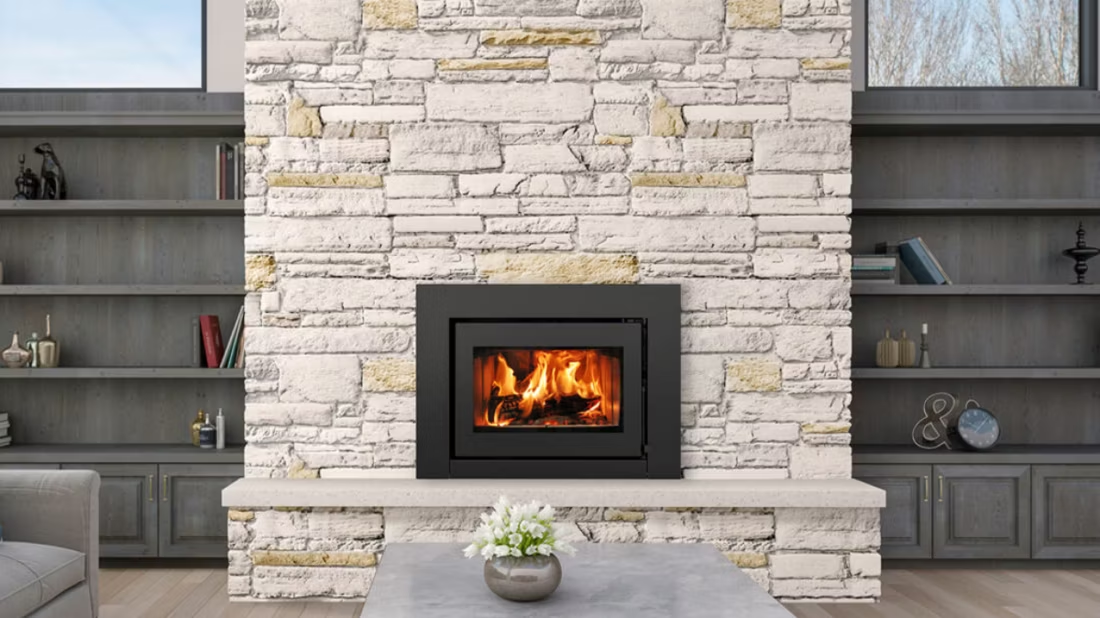
A wood stove is a freestanding unit that sits on a hearth pad and vents through a chimney, giving you flexibility on placement as long as clearances are met. A wood insert slides into an existing masonry fireplace opening and vents through that chimney with a stainless liner, turning a drafty open fireplace into a real heat source. Harrison County has plenty of older homes around Corydon, Elizabeth, and Palmyra with existing masonry fireplaces that are strong candidates for an insert. Newer homes or rooms without an existing fireplace are usually better matched to a freestanding stove.
Do I need a permit to install a wood stove in Harrison County?
Yes—new solid-fuel appliance installations in Harrison County require a building permit, issued through the county building department in Corydon (city permits apply if you're inside Corydon's limits). The stove itself needs to meet current EPA 2020 NSPS emissions standards. Most local hearth retailers pull the permit as part of the installation, so it's rarely something you have to manage yourself. Because Harrison County has no air quality non-attainment designation, there are no seasonal burn curtailment periods to work around—burning is straightforward once the stove is properly installed and inspected.
What's the best wood stove for Harrison County's climate?
Harrison County's winters are real but moderate—average lows around 23°F and a heating season closer to a typical Ohio Valley winter than the extreme cold of the northern Midwest. That means most homes do fine with a well-built non-catalytic stove sized for the space, without needing the 20-plus-hour catalytic burn times that homeowners in harsher climates chase. With oak and hickory as the dominant local firewood—both dense, high-BTU hardwoods—even a mid-size stove throws serious heat on a cold night. A local dealer can match you to a specific model based on your home's square footage and layout.
How often should my chimney be inspected and cleaned?
The CSIA recommends an annual inspection for any wood-burning appliance, and it's worth taking seriously in Harrison County given how much oak and hickory gets burned locally—dense hardwoods that, if burned too cool or unseasoned, can build creosote faster than softer woods. Plan on a sweep and inspection each late summer or early fall before the heating season starts, with chimney service available from sweeps serving Corydon and the wider New Albany area. Homes using wood as primary heat, or burning green or unseasoned firewood, should watch for a mid-season check if a lot of wood is going through the stove.
Where can I get firewood in Harrison County?
Local firewood suppliers around Corydon and Palmyra typically sell seasoned oak, hickory, maple, and beech by the cord, with prices generally in the $180 to $275 range depending on species mix and delivery distance. For homeowners interested in cutting their own, Harrison-Crawford State Forest and O'Bannon Woods, both within the county, are worth contacting directly about any permitted cutting or downed-wood removal programs, since rules and availability can change year to year. Oak and hickory need six months to a year of seasoning before they're ready to burn efficiently—buying a season ahead is common practice locally.
Wood stove vs. pellet stove—which is right for me?
Wood stoves burn cordwood, work without electricity, and pair naturally with Harrison County's abundant local oak and hickory—a real advantage when an Ohio River valley ice storm takes down power for a day or more. Pellet stoves burn compressed wood pellets from regional suppliers like Indeck Energy Services, Lignetics, and Somerset Pellet Fuel, and offer more convenience—load the hopper, set the thermostat, less ash to manage—but they need electricity to run the auger and blower, so they won't function as backup heat during an outage. For rural Harrison County homes where power reliability is a real concern, wood tends to be the more practical primary or backup choice. For homes prioritizing convenience with steady grid power, pellet is worth a look. A local dealer can walk you through both.
What's the difference between an insert and a zero-clearance fireplace?
An insert is a fireplace that slides into a pre-existing wood-burning fireplace—if you don't have one, there's nothing to insert it into. A zero-clearance fireplace is built into a framed wall, which makes it the answer for remodels and new construction. Simple test: existing masonry fireplace means insert; blank or framed wall means zero-clearance.
Why won't my new wood stove get going like my old one?
New wood stoves are 70%+ efficient, so far less heat goes up the flue—which also means less draft to get a fire established. The rule: build a genuinely hot fire for about 45 minutes before you choke it down. Skip that and you get smoke in the room, creosote in the chimney, and a fire that never takes off. Most performance complaints trace straight back to this.
Does a fireplace add value to my home?
On average, a fireplace adds back to the home about the same amount you spent installing it. Add the monthly savings from heating the rooms you actually use instead of the whole house—often hundreds of dollars a year—and the value case is strong before you even count what a fire does for how your family uses the room.
Can I install a fireplace myself?
If you're putting a fire in your house on purpose, it's best to work with an expert. Unless you're genuinely experienced in framing, gas line, vent pipe, and the national code on clearances to combustibles, have a professional do it—and ideally the same company that sells you the fireplace, so warranty, service, and liability all live under one roof.
Find your wood stove in Harrison County.
Tell us a bit about your home and we'll match you with a trusted local dealer and send over a free Project Guide & Parts List—a plan for your wood stove or insert project in Harrison County, with the exact parts, including the vent kit, and the dealer we recommend.
Find Your Fireplace →