
Zone heat that fits Harrison County's oldest homes.
With a long, cold winter season and winter lows averaging 23°F, Harrison County doesn't need a wood-heat culture to justify a fireplace—it needs supplemental warmth that doesn't require a chimney. Find the right electric unit and connect with a trusted local dealer.
Every Project Starts From One of These Five Situations
No chimney, no flue, no fuss.
Harrison County sits along the Ohio River in Indiana's climate zone 4A, home to Corydon—the state's first capital—and small communities like Lanesville, Elizabeth, and Milltown surrounded by the oak, hickory, maple, and beech forests of the Harrison-Crawford State Forest. Plenty of county residents still burn wood cut from that hardwood cover. But for the historic brick and limestone homes in downtown Corydon, adding a masonry chimney or running a gas line isn't always practical—and that's exactly where electric fireplaces earn their place. No venting, no flue, no clearance to combustibles beyond what the manual specifies, and no impact on a building's historic exterior.
Electricity in the county comes primarily through Harrison County REMC in the rural areas and Duke Energy Indiana closer to the river towns, and most electric fireplace inserts run on a standard 120-volt circuit that any licensed electrician can wire in an afternoon. That makes electric the practical choice for finished basements, room additions, apartments above Corydon's Main Street storefronts, and the manufactured and modular homes common throughout the county's rural townships—anywhere a family wants real zone heat without opening up a wall for venting.
Three steps. No salesperson until you're ready.
Tell us about your project
Your zip code, your situation, and the fuel you're leaning toward—or let the answers point you to one.
See what's actually available
The brands dealers within 100 miles genuinely carry—real options, never a catalog mirage.
Get your dealer & Project Guide
A trusted local dealer, plus the free Project Guide & Parts List that names every component of the job.
Frequently Asked Questions
How much does an electric fireplace installation cost in Harrison County?
A plug-in electric insert or freestanding unit can run as little as $400 to $800 installed, since it typically just needs a standard outlet and no permit. A hardwired built-in electric fireplace—set into a wall or existing mantel surround—usually runs $1,200 to $2,500 once you factor in an electrician to run a dedicated circuit and finish carpentry to frame the surround. Costs climb toward the higher end for larger units or installations in Corydon's older homes where knob-and-tube or aluminum wiring sometimes needs upgrading before a new circuit can be added safely.
Do I need a permit to install an electric fireplace in Harrison County?
A simple plug-in unit generally doesn't require a permit—it's no different than plugging in a space heater. A hardwired unit that requires a new dedicated circuit typically does need an electrical permit through the Harrison County Building Department, and the work should be done by a licensed electrician regardless of whether a permit is pulled. Local dealers who install electric fireplaces regularly can tell you which category your project falls into before work starts.
Will an electric fireplace actually heat a room in Harrison County's winters?
Most electric fireplaces are built to supplement, not replace, a home's primary heat source—they're rated to comfortably warm a single room of 400 to 1,000 square feet, not a whole house. With Harrison County facing a long, cold winter season and winter lows in the low 20s, that's still meaningful heat for a finished basement, a sunroom addition, or a bedroom that runs cold on the far end of a duct system. If you're trying to heat an entire home, look at a larger wall-mounted unit or talk to a dealer about pairing electric zone heat with your existing furnace rather than expecting it to carry the whole load.
Electric vs. wood—which makes more sense for my Harrison County home?
Wood has deep roots here—Harrison-Crawford's oak, hickory, maple, and beech supply plenty of local firewood, and a wood stove keeps working through an ice storm when the power lines along the Ohio River bottoms go down. Electric fireplaces can't do that; they're entirely dependent on grid power from Harrison County REMC or Duke Energy, so they go dark in an outage. What electric offers instead is simplicity: no cutting, stacking, or ash cleanup, no chimney to maintain, and instant on-off heat at the flip of a switch. For a primary heat source in an outage-prone rural property, wood still wins. For everyday supplemental warmth in town or in a home where nobody wants to deal with firewood, electric is the easier answer.
What size electrical circuit does an electric fireplace need?
Most electric fireplace inserts and freestanding units draw around 1,500 watts and run fine on a standard 120-volt, 15-amp household circuit—often the existing outlet is enough. Larger built-in units, especially wide linear models designed to look like a real hearth, sometimes call for a dedicated 20-amp circuit to avoid tripping breakers when other appliances are running on the same line. A licensed electrician can check your panel and existing wiring—this matters more in Corydon's older housing stock, where panels haven't always been updated to modern capacity.
Can I add an electric fireplace to a historic home in Corydon without altering the building?
Yes—that's one of the main reasons electric fireplaces do well in Indiana's first capital. A recessed or wall-mounted electric insert can go into an existing mantel opening, a built-in bookcase, or a simple surround without any masonry work, new flue, or exterior venting that would affect a historic facade. That makes it a practical option for the brick and limestone homes downtown, where owners often want the look of a hearth without touching the building envelope. A local dealer can walk through mounting options that respect an older home's finishes.
Are electric fireplaces a good fit for manufactured and rental homes in Harrison County?
Very much so. Manufactured and modular homes are common throughout the county's rural townships, and many rental leases don't allow modifications like adding a wood stove or gas line. A plug-in electric fireplace requires no permanent alteration, no venting through a manufactured home's roof or wall assembly, and can move with a tenant or homeowner if they relocate. It's the lowest-friction way to add real ambiance and zone heat without triggering a landlord conversation or a manufactured-home code review.
How much does it cost to run an electric fireplace in Harrison County?
A typical 1,500-watt electric fireplace costs somewhere around 15 to 20 cents per hour to run on full heat, depending on current Harrison County REMC or Duke Energy Indiana rates—cheaper than most portable space heaters of the same wattage, since electric fireplace heaters run on the same basic resistance-heating principle but with better distribution. Running it a few hours a night to take the chill off a room adds a modest amount to a monthly bill, well below what a whole-home electric furnace would cost to run continuously through a Harrison County winter.
Electric vs. pellet stove—which should I choose?
An electric fireplace is simpler: plug it in, no hopper to fill, no venting, and no combustion byproducts to manage. A pellet stove from a regional supplier like Lignetics or Somerset Pellet Fuel produces significantly more heat per hour and can serve as a real primary heat source, but it requires a vent through an exterior wall or roof, a hopper to refill regularly, and it still needs electricity to run its auger and blower—so it won't run during a power outage either. For a home that just needs supplemental warmth in one room, electric is the lower-effort choice. For a home that wants to meaningfully cut furnace use during Harrison County's coldest stretches, a pellet stove installed by a local dealer will do more work.
Can I put a TV above my fireplace?
Yes—with an asterisk. Fireplaces are hot and TVs don't like heat. Either put a mantel between them to deflect rising warmth, or choose a fireplace with heat-management technology that creates a cool zone on the wall above—the wall stays around 125 degrees, barely warm, while the room still gets full heat. If you like clean lines and don't want a mantel, heat management is the answer.
Does an electric fireplace need a vent or chimney?
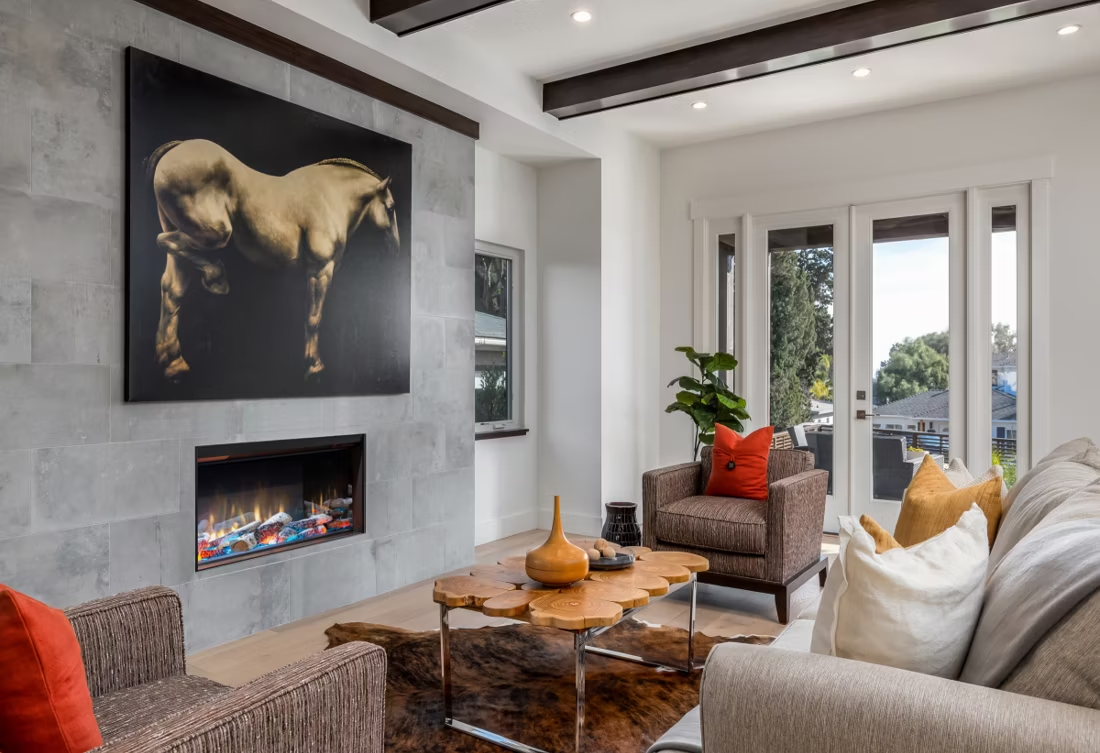
No—that's its superpower. An electric fireplace needs a wall and an outlet, period. No vent pipe, no gas line, no clearances to design around, which is why it works in bedrooms, offices, apartments, and walls where venting a gas or wood unit would be impractical or impossible. Installation is typically the simplest and least expensive of any fireplace type.
Can a fireplace actually lower my heating bill?
Yes—by creating a comfort zone. A furnace heats every square foot of the house just to warm the one room you're in; a gas fireplace on low burns roughly a sixth of the gas a typical furnace does. Set the furnace around 55–60 degrees as a baseline, then heat the rooms your family actually uses. Families who heat this way commonly save $20–$60 a month.
What is an in-home preview and do I need one?
It's a visit where a hearth professional measures your space, confirms the model you picked actually works in your home, and walks the specs—framing, gas line, venting, finish work—before anything is ordered. Some details you just can't know until you see the house. Never make a down payment without one; it's the single most-skipped step that burns buyers.
Find your electric fireplace in Harrison County.
Tell us a bit about your home and we'll match you with the right electric fireplace or insert, plus a free Project Guide & Parts List—the exact parts for your Harrison County project and the local dealer we recommend to install it.h
Find Your Fireplace →