
Keep Your Family Warm and Safe—No Matter What
Most homes in this corner of Lake County run on natural gas, but a handful of Hammond homeowners still want a wood stove for backup heat, ambiance, or an older bungalow with a fireplace already in place. Here's what's actually realistic.
Every Project Starts From One of These Five Situations
Hammond is built on natural gas infrastructure, not woodlots.
Hammond sits at the northwest corner of Indiana, packed into the dense Chicago-Gary-Hammond metro along Lake Michigan. Lot sizes are small, homes are close together, and Northern Indiana Public Service Co (NIPSCO) built out one of the most reliable natural gas networks in the state decades ago. There's no national forest land nearby, no Forest Service cutting permit office, and no local tradition of cutting your own firewood the way you'd find in a place like Duluth, MN. That combination—tight urban lots plus easy gas access—is why wood heat never became a default choice here the way it did in more rural, forested parts of the Midwest.
That said, Hammond isn't wood-free. Older brick bungalows and Cape Cods throughout the 46320, 46323, and 46327 zip codes often have an existing masonry fireplace, and some homeowners want a wood insert for supplemental heat or a real fire on cold nights. With average winter lows near 15°F and roughly 6,350 heating degree days a year, a properly installed wood stove or insert can genuinely help during a lake-effect cold snap or a NIPSCO outage—it's just a smaller, more deliberate decision here than in a place where every third house has one.
Three steps. No salesperson until you're ready.
Tell us about your project
Your zip code, your situation, and the fuel you're leaning toward—or let the answers point you to one.
See what's actually available
The brands dealers within 100 miles genuinely carry—real options, never a catalog mirage.
Get your dealer & Project Guide
A trusted local dealer, plus the free Project Guide & Parts List that names every component of the job.
Frequently Asked Questions
Is it even legal to install a wood stove in Hammond?
Yes. A new wood stove or insert install requires a building permit through the City of Hammond Building Department, and the appliance itself needs to meet current EPA emissions standards. There's no air quality non-attainment designation flagged for this part of Lake County, so you won't run into the kind of winter burn curtailment rules you'd see in a mountain valley town—but a licensed installer still needs to pull the permit and get the clearances and venting inspected. Most local hearth dealers who work in this niche handle that paperwork as part of the job.
Why don't more homes in Hammond have wood heat?
Mostly geography and infrastructure. Hammond is dense urban and inner-suburban housing stock, not the kind of large-lot, forest-adjacent property where wood heat is the obvious default. NIPSCO's natural gas network reaches nearly every block in the city, so gas became the standard heat source generations ago and stayed that way. Wood stoves show up here as a deliberate secondary or backup system—for an older home with a fireplace already built in, or a homeowner who specifically wants the ambiance or the outage-proof heat—rather than as a primary furnace replacement.
I already have a wood-burning fireplace in my Hammond home—what are my options?
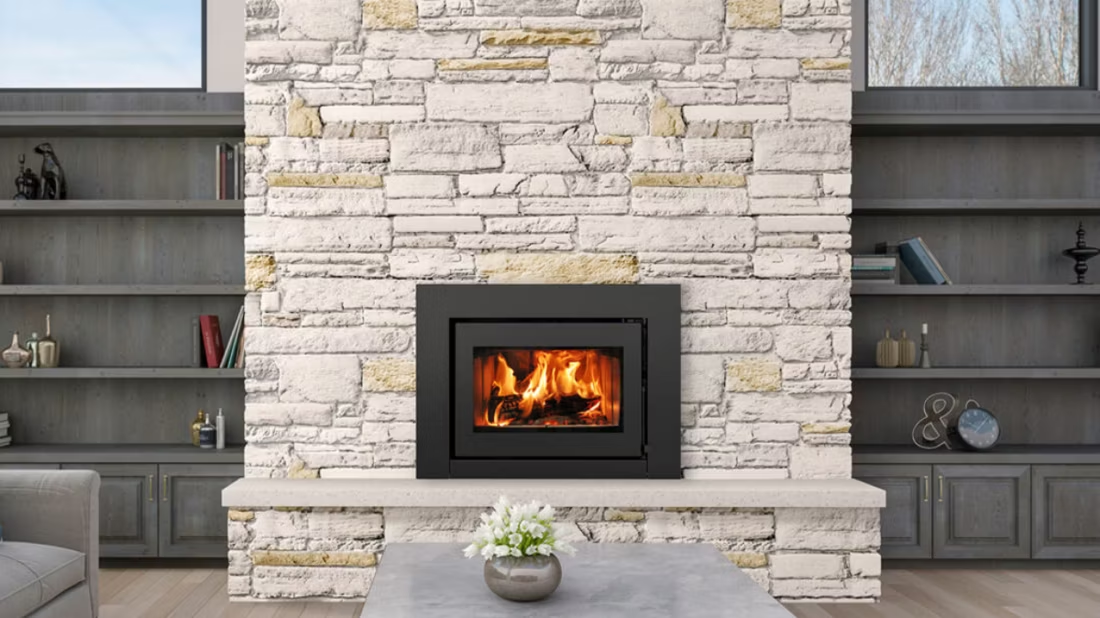
If your Hammond bungalow or Cape Cod has an existing masonry fireplace, the most practical upgrade is usually a wood-burning insert rather than tearing anything out. An insert slides into the existing firebox, uses a stainless liner through your current chimney, and turns a drafty, inefficient open hearth into a real heat source. It's a smaller-scale version of the same insert projects common in colder Midwest cities like Madison, WI—just less frequent here given how few Hammond homes lean on wood at all.
Are there local restrictions on burning wood in Hammond?
There's no formal wood-smoke non-attainment designation or seasonal curtailment program tied to Hammond, unlike some Western cities with winter inversion problems. That said, Hammond sits inside the greater Chicago airshed, so it's worth checking with the Hammond Building Department or the Lake County health department before a new install if you have specific concerns—but as of now, there's no burn-ban infrastructure to navigate here the way there is in, say, the Pacific Northwest.
Where would I even get firewood in Hammond?
There's no national forest or public cutting-permit land near Hammond, so self-cut firewood isn't really an option the way it is in forested parts of the country. Instead, Hammond homeowners buy split, seasoned hardwood from regional firewood dealers serving the Region—oak, hickory, maple, and beech are the common species sold locally, all dense hardwoods that burn hot and long. Expect to buy by the cord from a delivery service rather than pulling a permit and cutting your own.
Is a wood stove a good backup heat source for Hammond winters?
It can be, particularly if you're near Lake Michigan and dealing with lake-effect snow events that occasionally knock out power. With winter lows averaging around 15°F and over 6,300 heating degree days a season, a wood stove that runs without electricity is a legitimate hedge against a NIPSCO outage during a bad storm. It's not why most Hammond homeowners install one, but it's a real practical benefit for the ones who do—especially compared to a furnace or electric system that goes dark the moment the grid does.
What about a pellet stove instead—are those more common in Hammond?
Not really. Pellet stoves face the same headwind as wood stoves here: Hammond's gas infrastructure covers the practical need for heat, so neither fuel gets much traction. Regional pellet brands like Indeck Energy Services and Lignetics are available if someone wants one, but the local dealer network built around pellet appliances is thin compared to gas-heat specialists. If you're deciding between the two for a Hammond home, the choice usually comes down to whether you want a wood stove's outage-proof operation or a pellet stove's more hands-off, thermostat-style convenience—either way, you're outside the mainstream option for this city.
Should I get a freestanding wood stove or a wood insert for my Hammond home?
If you already have a working masonry chimney and fireplace—common in Hammond's older housing stock near 46320 and 46324—an insert is almost always the better fit, since it reuses venting you already have. A freestanding stove makes more sense in a home without an existing fireplace, like an addition, garage, or detached structure, where you're starting from scratch with clearances and a new Class A chimney run. Given how few Hammond homes have wood heat at all, this is exactly the kind of decision worth walking through with a local dealer who can look at your specific chimney and floor plan.
Wood vs. gas—what actually makes sense for a Hammond home?
For the vast majority of Hammond homeowners, gas wins by a wide margin—NIPSCO's natural gas network is already at the house, installation is simpler, and there's no firewood to source, split, or store on a typical city lot. Wood only makes sense in specific situations: an existing fireplace you want to actually use, a desire for heat that works without electricity during a lake-effect storm outage, or simply wanting a real fire for ambiance. If none of those apply to you, a gas insert or fireplace is almost certainly the more practical and more readily supported choice in this market.
What's the difference between an insert and a zero-clearance fireplace?
An insert is a fireplace that slides into a pre-existing wood-burning fireplace—if you don't have one, there's nothing to insert it into. A zero-clearance fireplace is built into a framed wall, which makes it the answer for remodels and new construction. Simple test: existing masonry fireplace means insert; blank or framed wall means zero-clearance.
Why is a fireplace insert so efficient?
An insert does two things: it seals the chimney completely, so you stop losing air you already paid to heat, and it radiates warmth into the room through the firebox and glass. Most add a heat-exchange fan that pulls cool room air underneath, wraps it around the hot firebox, and pushes it back out warm. Your home is more efficient before you've even lit the first fire.
Can a fireplace actually lower my heating bill?
Yes—by creating a comfort zone. A furnace heats every square foot of the house just to warm the one room you're in; a gas fireplace on low burns roughly a sixth of the gas a typical furnace does. Set the furnace around 55–60 degrees as a baseline, then heat the rooms your family actually uses. Families who heat this way commonly save $20–$60 a month.
What is an in-home preview and do I need one?
It's a visit where a hearth professional measures your space, confirms the model you picked actually works in your home, and walks the specs—framing, gas line, venting, finish work—before anything is ordered. Some details you just can't know until you see the house. Never make a down payment without one; it's the single most-skipped step that burns buyers.
Nearby Dealers
Hearth shops serving Hammond and the surrounding area.
See what a wood stove project actually looks like in Hammond.
Wood heat is a niche choice here, so it pays to get it right. Tell us about your home and we'll match you with a trusted local dealer and send over a free Project Guide & Parts List—the exact parts, venting, and recommended installer for your specific fireplace or insert project.
Find Your Fireplace →