
Real flame look, zero chimney, anywhere in Hamilton County.
From Carmel's new-construction subdivisions to Fishers, Noblesville, Westfield, and Zionsville, electric fireplaces deliver flame-effect ambiance and supplemental heat without a flue, a gas line, or a wood pile. Find the right unit and connect with a trusted local dealer.
Every Project Starts From One of These Five Situations
The convenience play for a fast-growing county.
Hamilton County is one of the fastest-growing counties in Indiana, home to more than 328,000 people across Carmel, Fishers, Noblesville, Westfield, Zionsville, Cicero, and Sheridan. Winters sit in climate zone 5A, with average lows around 19°F and a heating season noticeably longer and colder than Nashville or Louisville, but nowhere near what a Minneapolis or Duluth household plans for. That's a climate where supplemental heat matters on the coldest nights, but doesn't demand a wood-burning setup built for weeks of sub-zero cold.
Most of the county's housing stock is new or newer—subdivisions like Carmel's Village of WestClay, Fishers' Geist and the Fishers District, and Westfield's Grand Park corridor were built within the last two decades, often inside HOAs that restrict exterior chimneys or wood smoke. That makes electric fireplaces a natural fit: no venting, no gas line, no combustion byproducts, and an install that's often just a licensed electrician adding a circuit. They also solve a common problem in Hamilton County's finished basements and bonus rooms—spaces without an existing chimney or masonry hearth where a wood or gas unit would require expensive new venting. An electric insert or linear wall-mounted unit brings real flame appearance and genuine supplemental warmth into that room without touching the structure.
Three steps. No salesperson until you're ready.
Tell us about your project
Your zip code, your situation, and the fuel you're leaning toward—or let the answers point you to one.
See what's actually available
The brands dealers within 100 miles genuinely carry—real options, never a catalog mirage.
Get your dealer & Project Guide
A trusted local dealer, plus the free Project Guide & Parts List that names every component of the job.
Frequently Asked Questions
How much does an electric fireplace installation cost in Hamilton County?
Plug-in electric fireplace inserts and mantel packages typically run $300 to $1,500 including setup, since most plug into a standard 120V outlet and don't require new wiring. Built-in wall-mounted linear units or units going into a finished basement or bonus room often need a licensed electrician to add a dedicated circuit, which pushes the total closer to $800 to $2,500 depending on how far the run is from your panel. Custom surrounds, cabinetry, or a full media wall build-out in a newer Carmel or Westfield home can push a project past $3,500. Local dealers can quote a firm number after seeing your room and panel.
Do I need a permit to install an electric fireplace in Hamilton County?
A plug-in unit that runs off an existing standard outlet generally doesn't require a permit. If the install involves new wiring, a dedicated circuit, or is hardwired into the wall, it typically needs an electrical permit through your city's building department—Carmel, Fishers, Noblesville, or Westfield each issue their own, while unincorporated areas like Cicero or Sheridan go through the county. Most electricians and hearth dealers pull this as part of the job, so it's rarely something homeowners handle themselves.
What size electric fireplace do I need for my Hamilton County home?
Sizing an electric fireplace is really about the room, not the whole house—most units are supplemental heaters, not central heat. A 30-to-40-inch insert or wall unit comfortably handles a single living room, bonus room, or finished basement space in the 200-to-400-square-foot range, which covers most of the rooms Hamilton County homeowners are retrofitting in Carmel, Fishers, and Noblesville subdivisions. Larger linear units (50 inches and up) can serve open-concept great rooms common in newer Westfield and Zionsville construction, but they're still meant to supplement your furnace on the coldest nights, not replace it.
What's the difference between an electric fireplace insert, a mantel package, and a wall-mounted unit?
An electric insert is built to slide into an existing fireplace opening—common in older masonry fireplaces around the county that homeowners want to convert away from wood or open gas. A mantel package pairs a self-contained electric firebox with a surrounding cabinet or shelf and works anywhere there's a wall and an outlet, which is why it's popular in newer Hamilton County homes without an existing hearth. A wall-mounted or linear unit hangs flush on the wall like a large TV, with a slim profile that fits well in the open-concept great rooms common in Fishers District and Grand Park-area builds. All three plug in or hardwire—none needs a chimney or exterior vent.
Will an electric fireplace actually heat my house?
Not the whole house, and it's worth being honest about that. A typical unit draws around 1,500 watts, which translates to roughly 5,000 BTU—enough to noticeably warm a single room but not a substitute for your furnace on a 19°F morning, which is Hamilton County's average winter low. Where electric fireplaces earn their keep is exactly that kind of supplemental role: taking the edge off a chilly bonus room or basement so the thermostat doesn't have to work as hard, plus the ambiance of flame without any combustion.
Electric vs. gas fireplace—which is right for my home?
Gas fireplaces are common throughout Hamilton County and put out real, substantial heat, but they need a gas line and proper venting, which usually means more construction and a higher install cost. Electric fireplaces skip both of those requirements entirely—no gas line, no venting, and a much simpler install, which is why they're often the pick for finished basements, condos, and rooms without an existing chimney or hearth. If you want a room to feel genuinely warm on a cold night, gas usually wins on raw heat output. If you want flame-effect ambiance with minimal construction and maximum flexibility on where it goes, electric is the more practical call.
Can I install an electric fireplace in a condo or apartment in Carmel or Fishers?
Yes—this is one of the strongest use cases for electric fireplaces in Hamilton County. Growing mixed-use developments like Carmel City Center and the Fishers District include condos and apartments where a chimney or gas line simply isn't an option, and many HOAs restrict anything involving combustion or exterior venting. A plug-in electric insert or mantel unit sidesteps all of that—no permit, no structural changes, and it's easy to take with you if you move.
Are electric fireplaces safe to run unattended or overnight?
Most modern electric fireplaces include auto shutoff timers, overheat protection, and cool-touch glass or housing, and since there's no open flame or combustion, there's no carbon monoxide risk and no creosote buildup to worry about—a real difference from the oak, hickory, and maple cordwood burned in the wood stoves you'll still find in some of the county's older, more rural corners. That said, any electric heater running for hours should be on a properly rated circuit, which is why sizing the wiring correctly during install matters.
Does an electric fireplace need a dedicated circuit?
It depends on the unit. Smaller inserts and mantel units under 1,500 watts usually run fine on a standard 15-or-20-amp household outlet, which is common in most Hamilton County homes regardless of age. Larger built-in or linear units, especially if they're sharing a circuit with other appliances, often benefit from a dedicated 20-amp circuit to avoid tripped breakers—something a licensed electrician can confirm quickly by looking at your panel, whether you're in an older Noblesville home or new construction out toward Westfield's Grand Park corridor.
Can I put a TV above my fireplace?
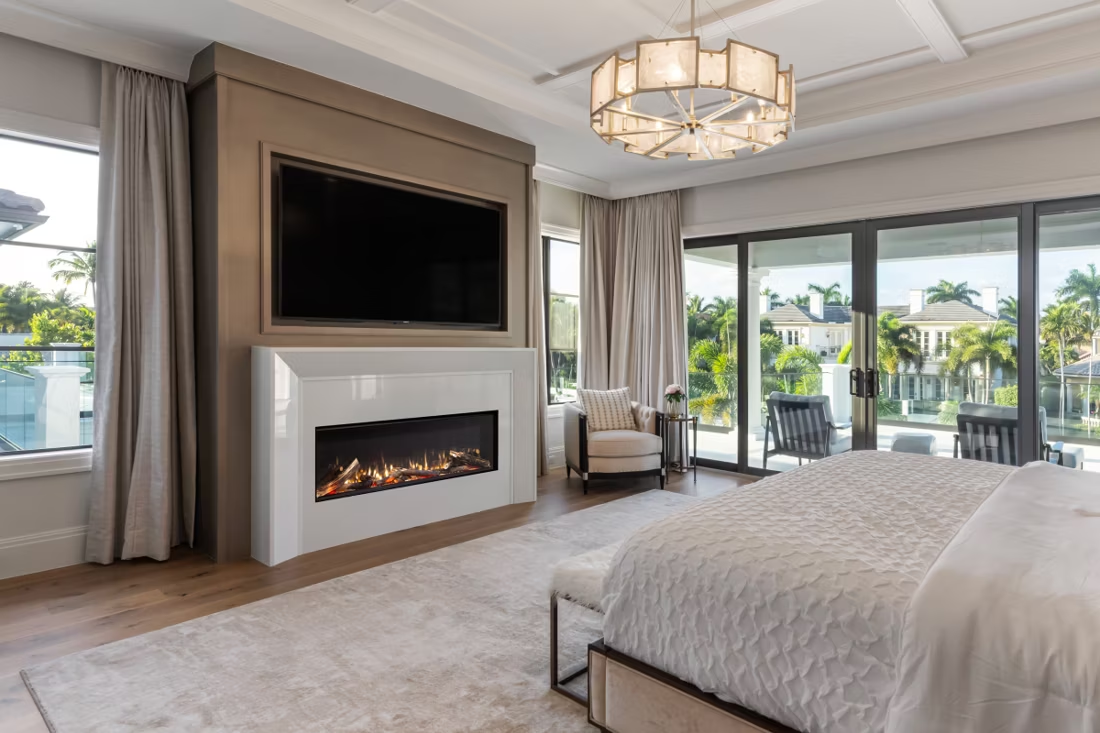
Yes—with an asterisk. Fireplaces are hot and TVs don't like heat. Either put a mantel between them to deflect rising warmth, or choose a fireplace with heat-management technology that creates a cool zone on the wall above—the wall stays around 125 degrees, barely warm, while the room still gets full heat. If you like clean lines and don't want a mantel, heat management is the answer.
Does an electric fireplace need a vent or chimney?
No—that's its superpower. An electric fireplace needs a wall and an outlet, period. No vent pipe, no gas line, no clearances to design around, which is why it works in bedrooms, offices, apartments, and walls where venting a gas or wood unit would be impractical or impossible. Installation is typically the simplest and least expensive of any fireplace type.
Does a fireplace add value to my home?
On average, a fireplace adds back to the home about the same amount you spent installing it. Add the monthly savings from heating the rooms you actually use instead of the whole house—often hundreds of dollars a year—and the value case is strong before you even count what a fire does for how your family uses the room.
Can I install a fireplace myself?
If you're putting a fire in your house on purpose, it's best to work with an expert. Unless you're genuinely experienced in framing, gas line, vent pipe, and the national code on clearances to combustibles, have a professional do it—and ideally the same company that sells you the fireplace, so warranty, service, and liability all live under one roof.
Stove and Fireplace Dealers in Hamilton County
Listings include WhyFire partner dealers, dealers we have verified as authorized for the brands we recommend, and established local businesses that carry hearth products. Every listing shows which one it is. The ones marked Preferred run on WhyFire's software, so they can show you real pricing and book your appointment right here. No manufacturer pays for placement. How we verify dealers →
Newco Dealers Wholesale
The Cinder Box
Pate's Pool Service & Supply
Mowery Inc.
Kindled Timber
Find your electric fireplace in Hamilton County.
Tell us about your room and your home, and we'll match you with a trusted local Hamilton County dealer and send over a free Project Guide & Parts List—the exact unit, mounting or insert kit, and circuit requirements for your electric fireplace project.
Find Your Fireplace →