
Electric heat built for Carmel's new-construction lifestyle.
Between master-planned neighborhoods, condos, and finished basements with no chimney in sight, a lot of Carmel homeowners want real ambiance and zone heat without venting, gas lines, or HOA headaches. I'll match you with a trusted local dealer who knows what actually fits your space.
Every Project Starts From One of These Five Situations
No chimney, no problem in Hamilton County's fastest-growing suburb.
Carmel sits in climate zone 5A with an average winter low around 19°F and a heavy annual heating load—a real Midwest winter, closer in feel to Madison, Wisconsin than to the Ohio Valley. But unlike a lot of Indiana towns with deep wood-burning roots, Carmel's housing stock is dominated by newer construction: master-planned communities like West Clay and Bridgewater, high-density condos and apartments around Midtown, and subdivisions built in the last two decades without a masonry chimney anywhere in the plan. That's a big part of why wood and pellet fireplaces see almost no demand here—there's no chimney to retrofit into, and most HOA covenants in these newer developments don't accommodate solid-fuel burning or cutting-permit logistics anyway.
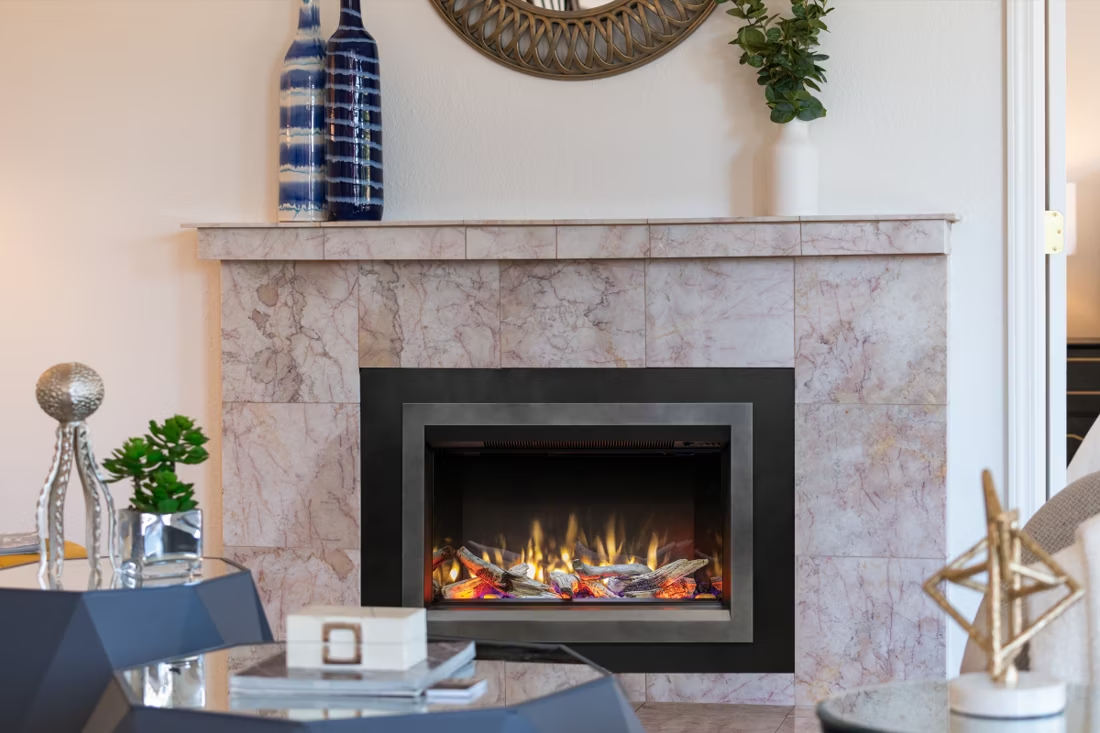
What fills that gap is electric and gas. Electric fireplaces in particular are a natural fit for Carmel's condo towers, finished basements, and remodeled great rooms, since they need no venting, no gas line, and no structural chimney work—just a standard or dedicated circuit. Duke Energy Indiana serves the city's residential accounts at roughly 12.75 cents per kWh, which keeps day-to-day running costs modest for a supplemental unit. For homeowners in a Carmel condo or a covenant-restricted subdivision where a real wood or pellet setup simply isn't on the table, electric is often the most realistic way to get a working fireplace at all.
Three steps. No salesperson until you're ready.
Tell us about your project
Your zip code, your situation, and the fuel you're leaning toward—or let the answers point you to one.
See what's actually available
The brands dealers within 100 miles genuinely carry—real options, never a catalog mirage.
Get your dealer & Project Guide
A trusted local dealer, plus the free Project Guide & Parts List that names every component of the job.
Frequently Asked Questions
How much does an electric fireplace installation cost in Carmel?
A plug-in electric insert or freestanding unit is the cheapest path—often $300 to $1,200 including the unit, since it runs on a standard 120V outlet and needs no new wiring. A built-in wall unit or a linear electric fireplace framed into a remodel typically runs $1,500 to $4,000 once you add a dedicated circuit, an electrician's time, and any surround or mantel work. Homes in newer Carmel subdivisions with finished basements tend to land in that built-in range, since owners usually want a flush, framed-in look rather than a portable unit sitting against the wall.
Will an electric fireplace actually heat a room during a Carmel winter?
It'll take the edge off a room, but it's not a substitute for your furnace when temperatures drop toward the winter average low of 19°F. Most electric fireplaces top out around 1,500 watts, which is roughly space-heater output—enough to comfortably warm a bedroom, den, or finished basement rec room, but not enough to carry a whole house through a Hamilton County cold snap. Most Carmel buyers use electric units as zone heat for a specific room or as a supplement alongside central HVAC, not as their only heat source.
Can I install an electric fireplace in my Carmel condo or apartment?
Yes, and it's one of the most common reasons people in Carmel go electric in the first place. Because units like those in Midtown Carmel's condo towers don't have chimneys and often have HOA rules against any venting or exterior modification, a plug-in or built-in electric fireplace is usually the only fireplace option that's actually allowed. Check your HOA's covenant language on electrical modifications before a built-in install, but a portable plug-in unit almost never needs approval.
Do I need an electrician for a built-in electric fireplace?
If you're installing a plug-in insert that runs on a regular outlet, no. If you're installing a linear or built-in wall unit that needs a dedicated 120V or 240V circuit—common with larger units in a great room remodel—yes, and that electrical work typically needs a permit through the City of Carmel Building Department. Most established local dealers coordinate the electrician and the permit as part of the install rather than leaving you to schedule both separately.
What's the difference between a plug-in insert and a built-in electric fireplace?
A plug-in insert or freestanding electric stove is portable, works on a standard outlet, and can move with you if you sell your Carmel home or relocate within one of the city's apartment communities. A built-in electric fireplace is framed into a wall like a real fireplace, wired to a dedicated circuit, and finished with a surround or mantel—it looks more permanent and is the more common choice for a full remodel or new-construction great room. Renters and condo owners tend toward plug-in units; homeowners doing a basement or living room build-out usually go built-in.
How much will an electric fireplace add to my Duke Energy bill?
At Duke Energy Indiana's residential rate of about 12.75 cents per kWh, a typical 1,500-watt electric fireplace costs roughly 19 cents an hour to run on full heat, or under $2 for a full evening of use. Most units also let you run the flame effect alone without the heater, which draws a fraction of that. Compared to running a portable space heater or supplementing with a whole-house furnace cycle, it's a fairly low-cost way to add warmth to one room.
Do I need a permit for an electric fireplace in Carmel?
A plug-in unit that uses an existing outlet typically doesn't need a permit. A built-in unit that requires new wiring or a dedicated circuit generally does, through the City of Carmel Building Department, since it's electrical work tied to the home's structure. If your install is part of a larger basement finish or remodel, the electrical permit is usually just one line item within the broader remodel permit your contractor already pulls.
Why don't more Carmel homes have wood or pellet stoves?
It comes down to housing stock and covenants more than climate—Carmel's winters are cold enough that wood heat would work fine, with oak, hickory, maple, and beech all common regional hardwoods. But the city's rapid growth over the last two decades means most homes are new construction without a masonry chimney, and many neighborhoods and condo buildings have HOA rules that don't accommodate solid-fuel burning or the venting it requires. There's also no local cutting-permit infrastructure like you'd find near state or national forest land, since Hamilton County is thoroughly suburban. That combination is why electric and gas dominate here instead.
Electric vs. gas fireplace—which makes more sense for a Carmel home?
Gas gives you more real heat output and works well as a supplemental source through a full Carmel winter, but it requires a gas line and proper venting, which is a bigger project in a condo or a home without existing gas fireplace rough-in. Electric skips all of that—no venting, no gas line, just a circuit—which makes it the more practical choice for condos, apartments, finished basements, and HOA-restricted communities across Carmel where a gas line simply isn't feasible. Homeowners with an existing gas line and a home built to accommodate a vented unit often lean gas for primary supplemental heat; everyone else tends to land on electric.
Does an electric fireplace need a vent or chimney?
No—that's its superpower. An electric fireplace needs a wall and an outlet, period. No vent pipe, no gas line, no clearances to design around, which is why it works in bedrooms, offices, apartments, and walls where venting a gas or wood unit would be impractical or impossible. Installation is typically the simplest and least expensive of any fireplace type.
Can I put a TV above my fireplace?
Yes—with an asterisk. Fireplaces are hot and TVs don't like heat. Either put a mantel between them to deflect rising warmth, or choose a fireplace with heat-management technology that creates a cool zone on the wall above—the wall stays around 125 degrees, barely warm, while the room still gets full heat. If you like clean lines and don't want a mantel, heat management is the answer.
Can a fireplace actually lower my heating bill?
Yes—by creating a comfort zone. A furnace heats every square foot of the house just to warm the one room you're in; a gas fireplace on low burns roughly a sixth of the gas a typical furnace does. Set the furnace around 55–60 degrees as a baseline, then heat the rooms your family actually uses. Families who heat this way commonly save $20–$60 a month.
Can I install a fireplace myself?
If you're putting a fire in your house on purpose, it's best to work with an expert. Unless you're genuinely experienced in framing, gas line, vent pipe, and the national code on clearances to combustibles, have a professional do it—and ideally the same company that sells you the fireplace, so warranty, service, and liability all live under one roof.
Preferred Dealers in Carmel
Marked Preferred because they run on WhyFire's software—so they can show you real pricing and book your appointment right here. No manufacturer pays for placement. How we verify dealers →
Electric Service in Carmel
An electric fireplace's heater draws about 1,500 watts—pennies per hour at local rates.
Duke Energy Indiana, LLC
Get your free Project Guide & Parts List for an electric fireplace in Carmel.
Tell me about your space—condo, basement, or great room remodel—and I'll match you with a trusted local dealer and send a free Project Guide & Parts List with the right unit, circuit requirements, and parts for your Carmel home.
Find Your Fireplace →