
Steady, Hopper-Fed Warmth for Greene County Homes.
Clean, consistent heat for the farmhouses and rural stretches between Bloomfield, Linton, and Worthington. Find the right pellet stove or insert, and connect with a trusted local dealer.
Every Project Starts From One of These Five Situations
A clean-burning fit for Greene County's cold nights.
Greene County covers roughly 544 square miles of southwestern Indiana farmland and former coal country along the White River, with Bloomfield as the county seat and Linton, Jasonville, Worthington, and Switz City rounding out the rural mix. Winters here sit in Climate Zone 4A—average lows around 21°F and about 5,043 heating degree days a year. That's a real heating season, roughly late October through March, though nowhere near the severity of a place like Fargo, ND. It's the kind of steady, moderate cold that rewards a stove you can load once or twice a day and largely ignore.
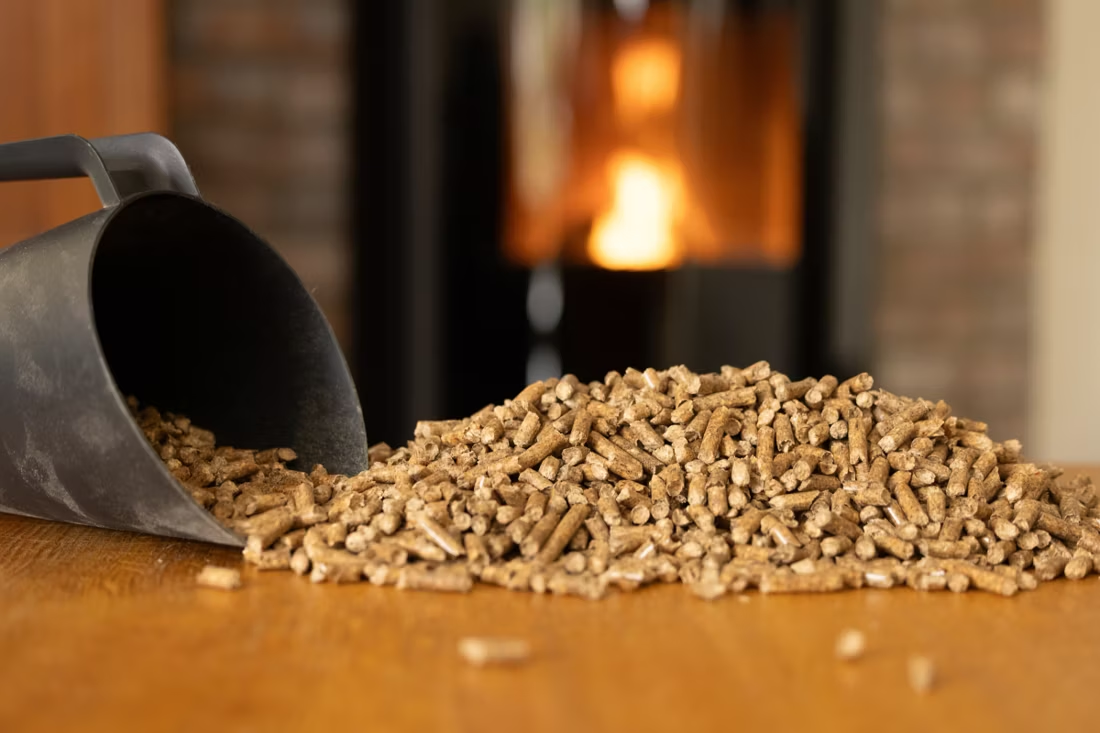
A lot of Greene County's housing stock is older farmhouses and rural ranch homes, many sitting outside any natural gas service area and running on propane or wood as their fallback heat. Pellet stoves fill a useful gap: they burn cleaner and more consistently than an open wood fireplace, don't require a woodlot or a chainsaw, and feed themselves from a hopper instead of needing tending every hour. Regional pellet suppliers—Indeck Energy Services, Lignetics, and Somerset Pellet Fuel—keep hardwood pellets reasonably available through local dealers, which matters in a county this rural where you don't want to be driving to Bloomington or Terre Haute every time you're low on fuel.
Three steps. No salesperson until you're ready.
Tell us about your project
Your zip code, your situation, and the fuel you're leaning toward—or let the answers point you to one.
See what's actually available
The brands dealers within 100 miles genuinely carry—real options, never a catalog mirage.
Get your dealer & Project Guide
A trusted local dealer, plus the free Project Guide & Parts List that names every component of the job.
Frequently Asked Questions
How much does a pellet stove installation cost in Greene County?
A typical pellet stove installation in Greene County runs about $3,000 to $6,000, depending on the unit and whether you're venting through an exterior wall or tying into an existing chimney chase. A freestanding pellet stove with a straightforward horizontal vent kit through a rim joist or wall is usually on the lower end. Converting an existing masonry fireplace with a pellet insert, or running vent pipe through a second-story wall, pushes toward the higher end. Because so much of the county is rural, expect installers based out of Bloomington or Terre Haute to factor in some travel time for jobs out toward Switz City or Lyons.
What size pellet stove do I need for a Greene County farmhouse?
Sizing depends on square footage, ceiling height, and how drafty the home is—and a lot of Greene County's older farmhouses lose more heat than a newer build of the same size. As a rough guide: small units (up to 1,000 sq ft) suit a single room or a mobile home, medium units (1,000-1,800 sq ft) cover most main living areas, and larger units (1,800-2,500+ sq ft) can carry a whole-home heating load in a reasonably tight house. If the goal is supplemental heat alongside a propane furnace, you can often size down. A local dealer will walk your home and size it properly rather than guessing off square footage alone.
Where can I find certified pellet stove installers near Greene County?
Look for installers with NFI (National Fireplace Institute) certification, which covers proper venting, clearances, and hopper/auger setup for pellet appliances. Because Greene County's population is under 14,000, most certified hearth dealers are based in nearby Bloomington (Monroe County) or Terre Haute (Vigo County) and service the county on a route basis—it's worth asking about their typical response time for Bloomfield, Linton, or Jasonville addresses specifically. Avoid having a pellet stove installed by a general handyman; improper vent pipe slope or clearance is the most common cause of poor draft and nuisance shutdowns.
Pellet stove vs. wood stove—which makes more sense in Greene County?
Greene County has plenty of oak, hickory, maple, and beech in its woodlots, so wood heat is a realistic option for anyone with land or a source of split cordwood. Wood stoves also keep working without electricity, which matters during winter storms. Pellet stoves trade that off for convenience: no splitting or stacking, a cleaner burn, and a hopper that can run 24-40 hours on a fill instead of reloading every few hours. For a working farm or rural property with access to a woodlot, wood often wins on cost. For a homeowner in town or without the time to process firewood, pellet is usually the easier day-to-day choice—just plan for a backup heat source or battery setup for outages, since the auger and blower need power to run.
Do I need a permit to install a pellet stove in Greene County?
Yes—a new pellet stove installation typically requires a building permit through the Greene County Building Department, and the unit needs to meet current EPA emissions standards for wood and pellet appliances. Most local dealers handle the permit paperwork as part of the installation quote, so it's rarely something the homeowner has to file directly. There's no air quality non-attainment designation in Greene County, so there aren't burn curtailment periods to plan around the way there are in some western states—day-to-day burning is straightforward here.
Where does pellet fuel come from for Greene County homes, and how much does it cost?
Regional producers including Indeck Energy Services, Lignetics, and Somerset Pellet Fuel supply hardwood pellets that are commonly stocked by dealers and farm supply stores serving southwestern Indiana. Expect to pay somewhere in the $250 to $300 per ton range, usually sold in 40-pound bags, roughly 50 bags to a ton. A typical Greene County home burns 2 to 3 tons over a full winter depending on how much of the home's heat load the stove is carrying. Buying pellets in the fall before demand picks up, and storing bags off the ground in a dry outbuilding or garage, keeps quality consistent through the season.
How often does a pellet stove need maintenance?
Plan on emptying and vacuuming the ash pot weekly during regular use, and a deeper cleaning of the burn pot, auger, and glass every few weeks depending on pellet quality. Most manufacturers recommend a full professional service annually—checking the exhaust fan, gaskets, and vent pipe for creosote or ash buildup—typically before the start of the heating season in October. Pellet stoves need far less chimney maintenance than a wood-burning appliance, but the mechanical components (auger motor, igniter, blower) are what tend to need attention over time.
Will my pellet stove work during a power outage?
No—pellet stoves rely on electricity to run the auger that feeds fuel and the blower that distributes heat, so a standard unit shuts down when the power goes out. For rural Greene County homes where outages can stretch longer during winter storms, a small battery backup unit or a portable generator sized to run the stove's low draw (usually under 100 watts) is a common workaround. If uninterrupted heat during outages is a priority, a wood stove or a propane-fired unit that doesn't depend on power may be a better fit—some homeowners here keep one of each.
Are there rebates or tax credits available for a pellet stove in Greene County?
Federal tax credits are the main incentive to check: biomass stoves (including pellet stoves) with a thermal efficiency of 75% or higher, as rated by the manufacturer, currently qualify for a 30% federal tax credit up to $2,000 under the current residential energy efficiency credit. Indiana doesn't have a state-level wood or pellet stove rebate program at this time, so the federal credit is typically the primary savings a Greene County homeowner can count on. Keep your manufacturer's certification statement and installation receipt, since both are needed when filing.
What does it take to replace an existing fireplace?
Fireplaces are like icebergs—bigger behind the wall than in front of it. Replacement means removing the surrounding tile or stone (the finish material laps onto the fireplace face), pulling the old unit, setting the new one in the same enclosure, and re-finishing the wall. A hearth professional can determine what's behind your wall without demolition during an in-home preview.
Can a pellet stove heat a whole house?
It genuinely can. I burned a pellet stove as my only heat source for years after a furnace died, and it kept the entire house warm. Pellets feed automatically from a hopper, so you get wood-heat economics with thermostat-style control. Two honest caveats: it needs weekly cleaning during the season, and most models need electricity to run—ask about battery backup if outages are a concern.
Does a fireplace add value to my home?
On average, a fireplace adds back to the home about the same amount you spent installing it. Add the monthly savings from heating the rooms you actually use instead of the whole house—often hundreds of dollars a year—and the value case is strong before you even count what a fire does for how your family uses the room.
Can I install a fireplace myself?
If you're putting a fire in your house on purpose, it's best to work with an expert. Unless you're genuinely experienced in framing, gas line, vent pipe, and the national code on clearances to combustibles, have a professional do it—and ideally the same company that sells you the fireplace, so warranty, service, and liability all live under one roof.
Pellet Brands Stocked Around Greene County
Manufacturers will point you to the nearest stocking dealer.
Find your pellet stove in Greene County.
Tell us a bit about your home and we'll match you with a trusted local dealer and send over a free Project Guide & Parts List—the exact parts, vent kit included, for your Greene County pellet project.
Find Your Fireplace →