
Electric Heat That Works Where the Gas Line Doesn't Reach.
From the farmhouses outside Bloomfield to apartments in Linton and Jasonville, electric fireplaces bring zone heat and real ambiance to any Greene County home—no chimney, no gas line, no permit headaches. Find the right unit and connect with a trusted local dealer.
Every Project Starts From One of These Five Situations
Heat that plugs in—no chimney required.
Greene County sits in Indiana's climate zone 4A, with average winter lows around 21°F and roughly 5,043 heating degree days a year—cold enough that supplemental heat matters, but not so extreme that a full wood-burning system is the only answer. Across the county's 13,000-plus residents, spread out from Bloomfield and Linton to Worthington and the rural townships along the White River, a lot of housing stock is older farmhouses, manufactured homes, and rentals—many without an existing chimney or the wiring for a big built-in gas unit. That's exactly where electric fireplaces earn their place.
Electricity in Greene County comes through a mix of providers—Greene County REMC serves much of the unincorporated rural area, while towns like Linton run their own municipal electric utility. Either way, an electric fireplace or insert plugs into standard household circuits (or a dedicated 120V/240V line for larger built-ins) with no venting, no gas hookup, and no annual chimney sweep. For a county where a lot of homes already burn oak, hickory, or hickory-maple mixes in a wood stove for primary heat, electric units are the practical choice for the rooms that don't have—or don't need—a flue: a converted sunroom, a finished basement, a bedroom, or a rental unit where a real fire simply isn't an option.
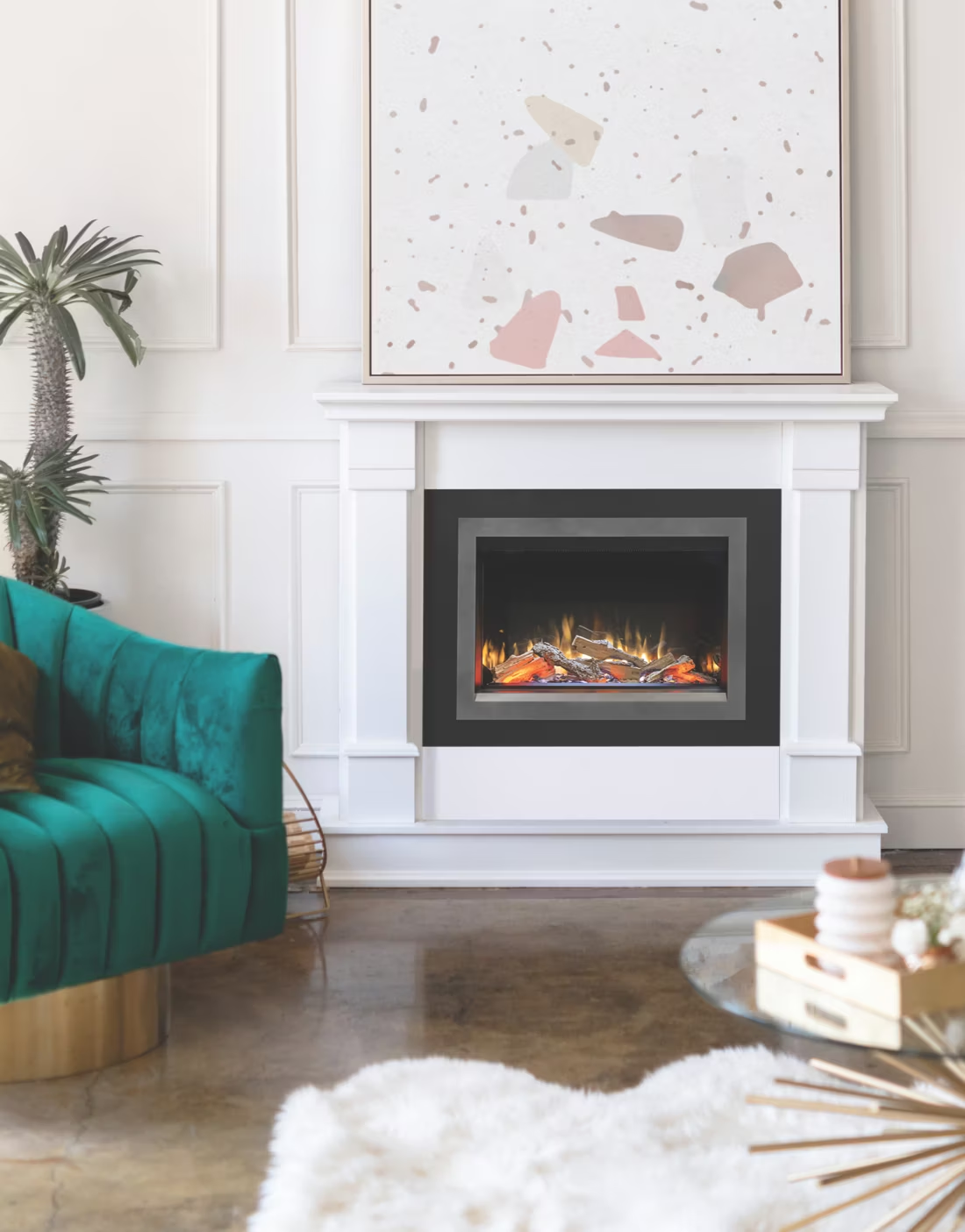
Three steps. No salesperson until you're ready.
Tell us about your project
Your zip code, your situation, and the fuel you're leaning toward—or let the answers point you to one.
See what's actually available
The brands dealers within 100 miles genuinely carry—real options, never a catalog mirage.
Get your dealer & Project Guide
A trusted local dealer, plus the free Project Guide & Parts List that names every component of the job.
Frequently Asked Questions
How much does an electric fireplace installation cost in Greene County?
Electric fireplaces are the most affordable hearth project available, and Greene County is no exception. A plug-in insert or freestanding electric stove that drops into an existing opening can run as little as a few hundred dollars installed, since no venting or gas line work is involved. A built-in wall unit or mantel-style electric fireplace that requires new framing and a dedicated circuit typically lands between $1,500 and $3,000, including a licensed electrician's time. Because there's no combustion to vent, costs stay well below wood or gas installs—the main variable is whether your electrical panel can handle a new circuit without an upgrade, which a local dealer or electrician can confirm during a quick site visit.
Will an electric fireplace actually heat my house, or is it just for looks?
Most electric fireplaces are built for zone heating, not whole-house heating—they're rated to warm a single room, typically 400 to 1,000 square feet depending on the model. In a Greene County home with winter lows averaging 21°F and around 5,000 heating degree days a season, an electric unit works best as a supplement to your existing furnace or wood stove: heating the room you're actually using so you can turn the thermostat down elsewhere. It won't replace primary heat in an older, drafty farmhouse, but it's an efficient way to cut propane or electric baseboard costs in the rooms where you spend the most time.
Do I need a permit or an electrician to install an electric fireplace in Greene County?
Small plug-in electric fireplace inserts that run off a standard 120V outlet generally don't require a permit—they're treated like any other appliance. Built-in units that need a new dedicated circuit do require licensed electrical work, and depending on the scope, Greene County's building department may require an electrical permit for the new wiring. If you're inside Linton or another incorporated town, check with that town's building office since requirements can differ slightly from the unincorporated county. Most local dealers coordinate with a licensed electrician as part of the install, so you're not left tracking down a separate contractor.
Is an electric fireplace a good fit for a manufactured or mobile home in Greene County?
Yes, and it's one of the more common installs in this part of the county, where manufactured and modular housing makes up a meaningful share of the housing stock. Electric units avoid the clearance, venting, and structural concerns that come with wood or gas installations in a mobile home—there's no chimney to run through the roof and no combustion air to worry about. A slim electric insert or wall-mounted unit can be added to a manufactured home with minimal modification, as long as the electrical panel has capacity for the additional draw. A local dealer can check your panel and recommend a model sized to your space.
What's the difference between an electric insert, a built-in, and a freestanding electric stove?
An electric insert is designed to slide into an existing fireplace opening—a common choice for Greene County homes with an old, unused wood-burning fireplace that the owner wants to convert to easy, no-mess heat. A built-in unit is framed into a wall like a real fireplace, usually for new construction or a remodel, and can include a mantel surround. A freestanding electric stove sits on the floor like a traditional wood stove and can go almost anywhere with an outlet—a popular option for finished basements, additions, or manufactured homes without an existing hearth. Which one fits depends on whether you're working with an existing opening or starting from scratch.
How does an electric fireplace compare to the wood stoves a lot of homes here already have?
Plenty of Greene County homes already burn oak, hickory, maple, or beech in a wood stove for primary winter heat, and that's not changing—wood remains the go-to for serious cold-weather heat output and for keeping a house warm if the power goes out. Electric fireplaces don't compete with that; they fill a different role. They're a clean, no-maintenance way to add ambiance and supplemental warmth to rooms where running a chimney isn't practical, like a converted porch, a bedroom, or a basement family room. The tradeoff is that electric units go dark in a power outage, so they're not a backup heat source the way a wood stove is—something to keep in mind if reliable off-grid heat matters for your home.
Can I put an electric fireplace in an older farmhouse without a chimney?
Yes—this is actually one of the most straightforward electric fireplace projects. Since there's no venting requirement, an electric insert, built-in, or freestanding stove can go into almost any room of an older Greene County farmhouse, including additions or rooms where a chimney was never built. The main consideration is electrical capacity: older farmhouse wiring sometimes needs a panel check or a new circuit run before installing a larger built-in unit. A local dealer can walk through your home, check the panel, and recommend a unit sized for the room and your existing electrical service.
Who installs and services electric fireplaces near me in Greene County?
Because electric fireplaces don't involve combustion or venting, installation is typically handled by the hearth dealer's own crew or a licensed electrician, rather than a chimney specialist. Service needs are minimal compared to wood or gas units—mostly cleaning the heater element and checking the electronics, which most dealers can walk you through or handle during an occasional service visit. Whether you're in Bloomfield, Linton, Worthington, or a rural township, the key is working with a dealer who actually installs and stands behind the unit locally, rather than a big-box store that ships a box and leaves the wiring to you.
What size electric fireplace do I need for my room?
Electric fireplace heaters are rated by square footage, and most manufacturers list a coverage area for their heating element separately from the visual size of the unit. For a typical Greene County living room or bedroom in the 200-400 square foot range, a mid-size unit with a 1,500-watt heater is usually enough. Larger open rooms or drafty older farmhouse spaces may need a bigger unit or a secondary heat source layered in. Keep in mind the heater and the flame effect are often sold as separate features—some homeowners choose a larger visual unit but keep the heater on a lower setting, or skip the heat function entirely for rooms that already have adequate heating. A local dealer can size the right unit to your actual room, not just the wall space available.
Can I put a TV above my fireplace?
Yes—with an asterisk. Fireplaces are hot and TVs don't like heat. Either put a mantel between them to deflect rising warmth, or choose a fireplace with heat-management technology that creates a cool zone on the wall above—the wall stays around 125 degrees, barely warm, while the room still gets full heat. If you like clean lines and don't want a mantel, heat management is the answer.
Do electric fireplaces actually produce heat?
Yes—most put out around 4,800–5,000 BTUs from a standard outlet, which comfortably warms a bedroom, office, or den as a comfort-zone heater. What they won't do is carry a whole house the way wood, gas, or pellet can. Think of electric as ambiance-first with honest supplemental heat: flames on with no heat in July, flames plus warmth in January.
Can a fireplace actually lower my heating bill?
Yes—by creating a comfort zone. A furnace heats every square foot of the house just to warm the one room you're in; a gas fireplace on low burns roughly a sixth of the gas a typical furnace does. Set the furnace around 55–60 degrees as a baseline, then heat the rooms your family actually uses. Families who heat this way commonly save $20–$60 a month.
Can I install a fireplace myself?
If you're putting a fire in your house on purpose, it's best to work with an expert. Unless you're genuinely experienced in framing, gas line, vent pipe, and the national code on clearances to combustibles, have a professional do it—and ideally the same company that sells you the fireplace, so warranty, service, and liability all live under one roof.
Find your electric fireplace in Greene County.
Tell us a bit about your home and we'll put together a free Project Guide & Parts List for your electric fireplace project—sized right and matched with a trusted local dealer in Greene County.
Find Your Fireplace →